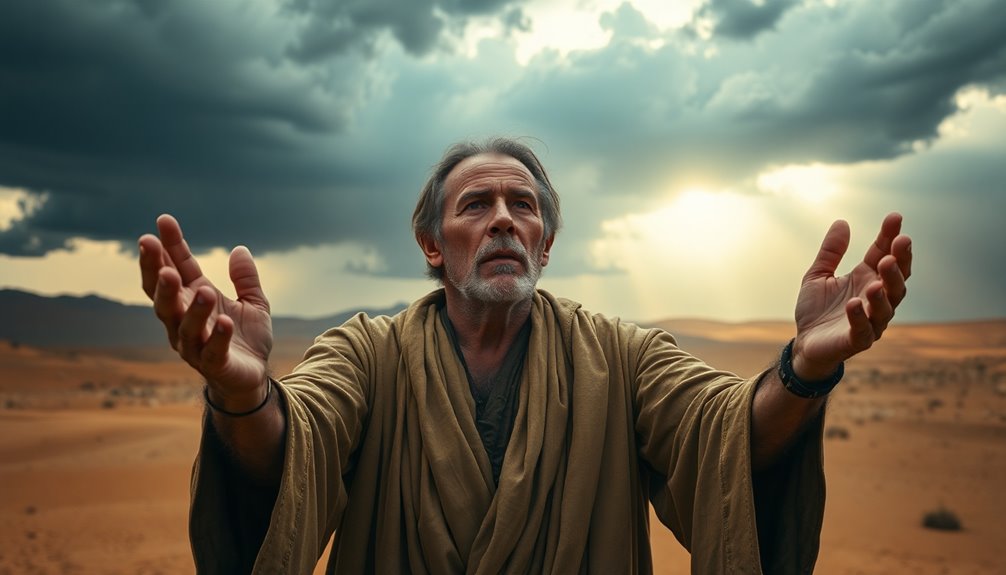
God draws you through both His sovereign choice and gracious invitations. He works behind the scenes to sovereignly select and pursue, while also extending an open call for you to respond willingly. This divine dance invites you to trust His love and grace, knowing both your response and His plan work together. If you want to understand how these mysteries fit together, keep exploring this profound truth.

Turn your quiet moments into listening time
- Thousands of audiobooks, podcasts and originals
- Listen on your phone, tablet or Echo — also offline
- Cancel anytime
Key Takeaways
- God’s drawing is described as both irresistible and gracious, extending universally through His love and Spirit.
- Scripture portrays God’s sovereignty ensuring His plans succeed while inviting human response freely.
- God’s election is rooted in divine purpose and knowledge, often involving His loving initiative toward individuals.
- Human response involves willingly trusting and repenting, participating in God’s overarching divine plan.
- The mystery of how divine sovereignty and human free will coexist invites believers to trust God’s purpose while responding in faith.

Have you ever wondered how God’s sovereignty intersects with human free will? It’s a question that has sparked countless predestination debates and left many believers pondering the balance between divine control and human responsibility. On one side, some teach that God’s election is entirely sovereign, meaning God unilaterally chooses who will be saved, independent of human actions or decisions. On the other side, many affirm that humans bear responsibility for their response to God’s call, emphasizing free will as central to salvation. Steering this tension can feel complex, but understanding that both truths are present in Scripture can bring clarity. God’s sovereignty means He is in ultimate control of all things, including salvation. Yet, Scripture also repeatedly urges individuals to repent and believe, highlighting human responsibility. This duality is at the heart of predestination debates—how can both be true? The key lies in recognizing that God’s election isn’t arbitrary but rooted in His divine purpose and knowledge. Some believe that God’s choice is based on His foreknowledge of who would freely respond to His grace, suggesting that election is conditioned on human faith. Others argue that God’s sovereign will predetermines salvation, independent of human actions, emphasizing God’s freedom and authority. Regardless of the perspective, it’s essential to see that God’s drawing of people is an active, loving pursuit. When Scripture describes God’s drawing, it often portrays it as an irresistible act—yet it’s also presented as a gracious invitation extended to all. This means that while God’s sovereignty ensures His plans succeed, He still commands people to respond, making human responsibility a vital piece of the puzzle. As a believer, you’re called to trust in God’s divine plan while also embracing your role in responding to His grace. God’s drawing isn’t about coercion but about drawing people through His Spirit in a way that awakens faith and repentance. This divine initiative doesn’t negate human responsibility; instead, it invites you to participate willingly in God’s overarching purpose. When you consider the predestination debates, remember that Scripture affirms both God’s sovereign election and the importance of human response. Your role isn’t diminished but amplified—by trusting God’s sovereignty, you’re called to respond faithfully, knowing that your decision to follow Christ fits within His sovereign plan. Ultimately, God’s drawing is an act of divine love and grace, calling you into relationship. While the mystery of election and free will remains, what’s clear is that God’s sovereignty and your responsibility work together in a divine dance—one that invites you to trust and respond with faith, knowing that God’s purpose will prevail. Recognizing the role of custodian services in managing Gold IRA accounts can help believers plan their financial security while contemplating spiritual truths.
Christian books on divine election and free will
As an affiliate, we earn on qualifying purchases.
As an affiliate, we earn on qualifying purchases.
Frequently Asked Questions
How Do Different Christian Denominations Interpret Election and Free Will?
You see that different Christian denominations interpret election and free will through predestination debates, emphasizing God’s sovereignty versus human responsibility. Some, like Calvinists, stress God’s absolute sovereignty, believing election is predestined. Others, like Arminians, focus on free will, asserting individuals choose salvation. These views reflect the ongoing tension between God’s control and human responsibility, shaping each denomination’s understanding of how God draws people toward salvation.
Can Election and Free Will Coexist Without Contradiction?
Imagine you’re at a futuristic city’s launch event, where choices and destiny collide. Election and free will can coexist through predestined grace and divine choice. You’re free to make decisions, yet God’s divine plan guides and predestines the outcome. It’s like a masterpiece painted with intentional strokes, blending divine sovereignty with human freedom seamlessly, showing that both can coexist without contradiction in the grand design of faith.
What Role Does Human Effort Play in Salvation?
Human effort plays a crucial role in salvation cooperation, but it doesn’t earn your salvation. You’re called to respond in faith, repentance, and obedience, actively cooperating with God’s grace. Your effort is a recognition of His work in your life, not a means to achieve salvation. Ultimately, salvation involves both God’s initiative and your willing response, creating a partnership rooted in grace and faith.
How Does God’s Sovereignty Influence Human Responsibility?
God’s divine sovereignty guides the process of salvation, yet you still hold human responsibility. His control doesn’t negate your choice; instead, it guarantees His plans unfold perfectly. You’re called to respond in faith and obedience, knowing that His sovereignty works through your actions. This balance invites you to trust His sovereignty while actively participating in your spiritual journey, embracing both divine control and personal responsibility.
Are There Biblical Examples Illustrating the Balance Between Election and Free Will?
You see biblical examples like God’s predestined choices in Romans 8:29-30, where He predestines believers, and individuals like Pharaoh, whose free will is evident in Exodus 7-14. These stories show divine influence guiding outcomes while allowing human responsibility. God’s sovereignty shapes destinies, yet people still make free choices, illustrating a balance between divine predestined plans and personal free will that you can trust.
Conclusion
Ultimately, God’s drawing is like a gentle lighthouse guiding ships home through a storm. You might wonder how free will and election dance together, but remember, God’s love is the steady beacon that pulls you closer. As you navigate life’s waters, trust that His grace is always there, steering you toward His perfect plan. Embrace His call, knowing that His pull is gentle yet unstoppable, leading you into a divine embrace beyond understanding.
Halloween Picks
halloween
As an affiliate, we earn on qualifying purchases.