
To nurture a culture of prayer in your church, start by establishing a clear prayer-centered vision that prioritizes prayer in all activities and decision-making. Incorporate meaningful prayer moments into worship services and create regular opportunities for corporate and personal prayer, such as prayer groups or retreats. Equip leaders with prayer training and develop prayer teams, encouraging reflection through journals and small group prayer. Keep fostering growth by celebrating answered prayers and continuously inspiring your congregation—there’s more to discover as you proceed.
Key Takeaways
- Establish a church-wide prayer-centered vision that integrates prayer into decision-making, outreach, and daily routines.
- Incorporate meaningful prayer practices into worship services to actively engage the congregation.
- Schedule regular prayer gatherings, prayer chains, and personal routines to foster ongoing prayer habits.
- Train leaders and prayer teams to model prayerfulness and equip others with prayer strategies.
- Use small groups, prayer journals, and technology to encourage reflection, accountability, and a vibrant prayer culture.
Establishing a Prayer-Centered Vision for Your Church

To establish a prayer-centered vision for your church, you need to prioritize prayer as the foundation of everything you do. Emphasize prayer evangelism, encouraging your congregation to see prayer as a powerful tool for outreach and transformation. Cultivate prayer as a spiritual discipline that shapes your church’s culture, guiding leaders and members alike to seek God’s guidance regularly. Make prayer a core value, integrating it into decision-making, planning, and daily activities. By doing so, you set a clear direction that prayer isn’t just an activity but the heartbeat of your church’s mission. This intentional focus will inspire a collective commitment to seek God’s presence, fostering a community rooted in divine guidance and spiritual growth. Furthermore, recognizing the transformative power of curiosity can inspire your congregation to explore new spiritual practices and deepen their faith journeys.
Incorporating Prayer Into Worship Services and Gatherings
Incorporating prayer into your worship services can deepen engagement and foster connection with God. You might start with opening prayers to set a reverent tone, include responsive prayers that involve the congregation, and create post-service prayer moments for reflection. These practices help transform your gatherings into spaces where prayer becomes a natural and integral part of worship. Additionally, understanding effective trailer music techniques can inspire the atmosphere you aim to cultivate during prayer times.
Opening Prayer Practices
Starting your worship service with a meaningful opening prayer sets the tone and invites God’s presence from the outset. To foster engagement, consider these practices:
- Begin with a public prayer that welcomes everyone and focuses hearts on God’s greatness.
- Incorporate moments of silent prayer to allow personal reflection and individual connection.
- Keep the prayer concise but heartfelt, emphasizing gratitude and openness.
- Invite the congregation to join in, either aloud or silently, encouraging active participation.
- Utilizing color accuracy in prayer presentation materials can help create a more engaging and visually welcoming environment.
Responsive Prayer Elements
Responsive prayer elements serve as powerful tools to engage your congregation actively in worship. By incorporating responsive prayer and interactive prayer into your services, you invite participation rather than passive listening. These elements foster a sense of community, allowing members to voice shared concerns, hopes, and gratitude together. You can create meaningful moments by alternating between leader-led prayers and congregation responses, making worship more dynamic. Responsive prayer encourages personal reflection while strengthening collective faith. When done intentionally, it transforms worship from a monologue into a dialogue, deepening spiritual connection. Use scripted responses, open-ended invitations, or call-and-response formats to keep the congregation involved. Incorporating interactive elements can further enhance engagement and connection during worship. These interactive prayer practices help nurture a vibrant, prayerful culture that resonates throughout your church community.
Post-Service Prayer Moments
Post-service prayer moments offer a meaningful way to extend worship beyond the main service and deepen spiritual connections within your congregation. By intentionally creating space for prayer, you encourage ongoing intercessory outreach and foster unity. Consider these approaches:
- Invite attendees to participate in a collective prayer, focusing on community needs or global concerns.
- Offer a dedicated time for personal prayer and reflection, allowing individuals to seek guidance or healing.
- Organize short prayer retreats periodically, where members can retreat from daily routines to deepen their prayer life.
- Incorporate prayer teams that remain available after services for one-on-one intercession or prayer ministry.
- Incorporate prayerful names into your church culture to inspire ongoing engagement and growth in faith.
These practices help embed prayer into your church culture, inspiring ongoing engagement and growth in faith.
Creating Opportunities for Corporate and Personal Prayer

To foster a vibrant prayer culture, you should create intentional opportunities for both corporate and personal prayer. Consider establishing scheduled prayer gatherings, prayer chains, and groups that encourage active participation. Additionally, promote personal prayer practices that individuals can incorporate into their daily routines to deepen their connection with God. Incorporating the versatility of hybrid bikes as an analogy, encouraging diverse prayer practices can help cater to different spiritual needs and preferences, enriching the overall prayer culture in your church.
Scheduled Prayer Gatherings
Scheduling regular prayer gatherings provides your church with intentional opportunities for both corporate and personal prayer. Effective prayer scheduling fosters consistency and builds a culture of prayer. Consider these strategies:
- Set specific days and times for fellowship prayer to encourage participation.
- Rotate prayer focus themes to keep engagement fresh and relevant.
- Promote prayer events through multiple channels to maximize attendance.
- Encourage personal reflection before and after gatherings to deepen prayer life.
- Incorporate scheduled prayer with other church activities to reinforce the importance of consistent prayer.
Prayer Chains and Groups
Creating prayer chains and groups offers your church dynamic avenues for both corporate and personal prayer. These prayer chains connect members through continuous prayer support, fostering unity and spiritual growth. Prayer groups provide regular gatherings to pray intentionally for specific needs, encouraging accountability and shared faith. To organize effectively, consider different prayer group formats, such as morning prayer, prayer walks, or focused prayer sessions. Use prayer chains to mobilize your congregation quickly during urgent needs. Encourage members to participate actively, building a culture of prayer that permeates daily life. Here’s a simple overview of key prayer group types:
| Type | Focus | Frequency |
|---|---|---|
| Prayer Chain | Urgent requests | As needed |
| Prayer Group | Personal & community needs | Weekly or monthly |
| Prayer Walks | Outreach & intercession | Monthly |
| Focused Prayer | Specific topics | Bi-weekly |
| Prayer Partners | Accountability & support | Ongoing |
Additionally, understanding the meaning of angel numbers can inspire your congregation to seek divine guidance and encouragement during prayer sessions.
Personal Prayer Practices
Building personal prayer practices alongside organized prayer groups deepens individual faith and strengthens the church community. To foster this, consider these steps:
- Dedicate daily time for meditative silence, allowing you to listen and reflect on God’s voice.
- Develop a personal devotion routine that includes scripture reading and prayer journaling.
- Create a quiet space at home for focused prayer, free from distractions.
- Set achievable goals, like praying twice a day or memorizing scripture, to nurture consistency.
- Be aware of divorce statistics in your region, which can remind you of the importance of prayer for healing and guidance during challenging times.
These practices make prayer a personal journey, enriching your spiritual life and encouraging others to follow suit. Personal devotion becomes an essential part of your faith walk, reinforcing the collective prayer culture within your church.
Training and Equipping Leaders to Foster Prayer
To effectively foster a prayerful culture in your church, it’s essential to equip your leaders with the skills and understanding they need to model and promote prayer. Focus on developing strong prayer leadership by providing training that emphasizes personal prayer, spiritual mentorship, and leading by example. Encourage leaders to be intentional about cultivating a prayerful environment, where they can guide others through prayer practices and spiritual growth. Offer workshops, resources, and ongoing support to deepen their understanding of prayer’s role in ministry. When leaders are well-equipped, they become credible models of prayerfulness, inspiring others to follow suit. Prioritizing prayer leadership helps embed prayer into the church’s DNA, creating a ripple effect that nurtures a vibrant prayer culture. Recognizing the significance of spiritual mentorship can further strengthen the community’s prayer life and overall spiritual health.
Developing Prayer Committees and Prayer Teams

Empowering leaders through prayer training naturally leads to the formation of dedicated prayer committees and teams. To guarantee effective prayer committee formation, you should focus on strategic prayer team recruitment. Consider these steps:
Empowering leaders through prayer training fosters dedicated, effective prayer teams through strategic recruitment and clear purpose.
- Identify passionate individuals committed to prayer’s role in the church.
- Clearly define the purpose and responsibilities of the prayer team.
- Invite church members through personal encouragement and church-wide notices.
- Provide training to equip team members with prayer strategies and tools.
Using Prayer Journals and Resources to Encourage Reflection

Incorporating prayer journals and other reflection resources into your church’s prayer life can deepen members’ spiritual growth and foster a more intentional prayer practice. Prayer journal benefits include helping individuals track their spiritual journey, recognize answered prayers, and identify growth areas. Using reflection prompts encourages participants to pause and consider God’s work in their lives, making prayer more meaningful. These prompts can guide users to explore gratitude, seek guidance, or process challenges. By providing journals and prompts, you create a safe space for honest reflection, strengthening personal prayer habits. Over time, this practice nurtures a more thoughtful and committed prayer culture within your church, encouraging members to engage more deeply with God and each other.
Promoting Prayer Through Small Groups and Discipleship Programs

Building on the practice of reflection through prayer journals, small groups and discipleship programs offer a powerful platform to foster a culture of prayer. To deepen engagement, consider:
- Integrating prayer technology like apps or online prayer chains to connect members beyond meetings.
- Creating prayer art installations in common areas that inspire reflection and communal prayer.
- Encouraging group prayer challenges that motivate consistent practice.
- Facilitating guided prayer sessions that incorporate visual or technological tools to enhance focus.
These approaches help normalize prayer as a crucial part of daily life, making it accessible and engaging. When small groups embrace prayer tech and art, they cultivate a vibrant environment where prayer becomes natural and contagious, strengthening your church’s prayer culture.
Celebrating Testimonies and Answered Prayers to Build Faith

Sharing testimonies and answered prayers can considerably strengthen your church’s culture of faith by inspiring others and reaffirming God’s work in everyday life. When you encourage testimony sharing, members see tangible evidence of God’s power, which boosts faith building across your congregation. Highlighting these stories during services or small groups invites others to reflect on God’s faithfulness, creating a ripple effect of encouragement. Personal stories of breakthroughs and answered prayers serve as reminders that prayer truly makes a difference, fostering a sense of hope and trust. Celebrating these moments openly not only deepens individual faith but also cultivates a vibrant atmosphere where faith is actively nurtured and reinforced through shared experiences. This practice helps embed a culture of prayer rooted in gratitude and divine intervention.
Sustaining a Prayer Culture Through Continual Encouragement
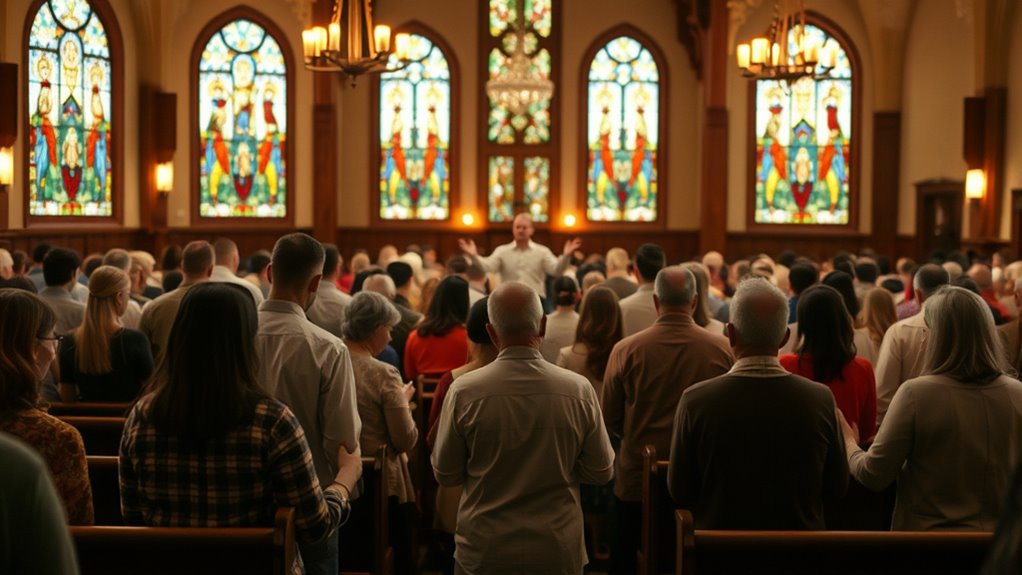
Celebrating testimonies and answered prayers creates a powerful foundation for a vibrant prayer culture, but maintaining that momentum requires ongoing encouragement. To sustain this, you need consistent reinforcement of the importance of both corporate prayer and personal devotion. Consider these strategies:
Celebrating answered prayers builds faith; ongoing encouragement sustains a vibrant prayer culture.
- Share regular stories of answered prayers to inspire faith.
- Organize prayer challenges that encourage daily personal devotion.
- Create small groups focused on prayer, fostering accountability.
- Recognize and celebrate prayer milestones during church gatherings.
Frequently Asked Questions
How Can I Motivate Reluctant Members to Participate in Prayer Initiatives?
To motivate reluctant members, use encouragement strategies like highlighting the impact of prayer and sharing personal testimonies that show its power. Invite them gently and create a welcoming atmosphere where they feel safe to participate. Recognize small efforts publicly, which boosts confidence. When members see real stories of transformation through prayer, they’re more likely to join in, realizing prayer’s significance in their spiritual growth and community strength.
What Are Effective Ways to Measure the Impact of Prayer on Church Growth?
Did you know churches that track prayer analytics see a 30% increase in spiritual growth metrics? You can measure prayer’s impact by monitoring participation levels, prayer requests, and community feedback. Regular surveys and spiritual growth metrics help you gauge how prayer fosters unity and transformation. By analyzing this data, you gain clear insights into how prayer influences church growth, encouraging further engagement and strengthening your congregation’s faith journey.
How Do I Address Spiritual Burnout Among Prayer Leaders?
To address spiritual burnout among prayer leaders, prioritize their spiritual renewal by offering regular encouragement, prayer retreats, and mentorship. Recognize their efforts and create a supportive environment where they can share struggles openly. Invest in prayer leadership development, ensuring they stay connected to God and each other. By fostering this spiritual renewal, you help prevent burnout and sustain passionate, effective prayer leadership in your church.
What Role Does Technology Play in Fostering a Prayer Culture?
Ironically, technology’s role in fostering a prayer culture isn’t just about screens. You can boost digital prayer through prayer app engagement, making prayer accessible anytime and anywhere. Use apps to send daily prompts, share prayer requests, and connect members in real-time. While some may doubt its effectiveness, technology acts as a bridge, encouraging consistent prayer habits and creating a vibrant, connected prayer community within your church.
How Can I Balance Structured Prayer Programs With Spontaneous Prayer Moments?
You can balance structured prayer programs with spontaneous moments by incorporating guided prayer within scheduled prayer times, giving people a framework to focus their prayers. Encourage flexibility by allowing space for spontaneous prayer during these sessions, and promote prayer scheduling that includes both planned and unplanned opportunities. This approach helps cultivate a vibrant prayer culture where tradition and spontaneity coexist, fostering genuine connection with God.
Conclusion
If you think a few prayer meetings will magically transform your church into a spiritual powerhouse, think again. Without genuine commitment and a culture that values prayer, you’ll just be rearranging chairs on a sinking ship. Embrace the challenge, keep encouraging prayer, and maybe, just maybe, your church will actually become a place where heaven feels a little closer. Or you’ll keep praying for miracles while missing the real one—transformation from the inside out.