

Turn your quiet moments into listening time
- Thousands of audiobooks, podcasts and originals
- Listen on your phone, tablet or Echo — also offline
- Cancel anytime
What Can a Company Without Employees Teach Us About Trust and Future Technologies?
Imagine a business that operates without human employees, making decisions in real time, and yet is constantly on the brink of financial collapse. It’s a stark metaphor for the tension between trust and technology—a story that resonates deeply with questions of faith, integrity, and the unseen forces guiding our lives. Today, we explore a groundbreaking experiment where AI models run a real, live company, revealing what it means to stay honest under pressure, and what that might mean for our own moral compass.
As an affiliate, we earn on qualifying purchases.
The Live Experiment: A Company in the Crosshairs
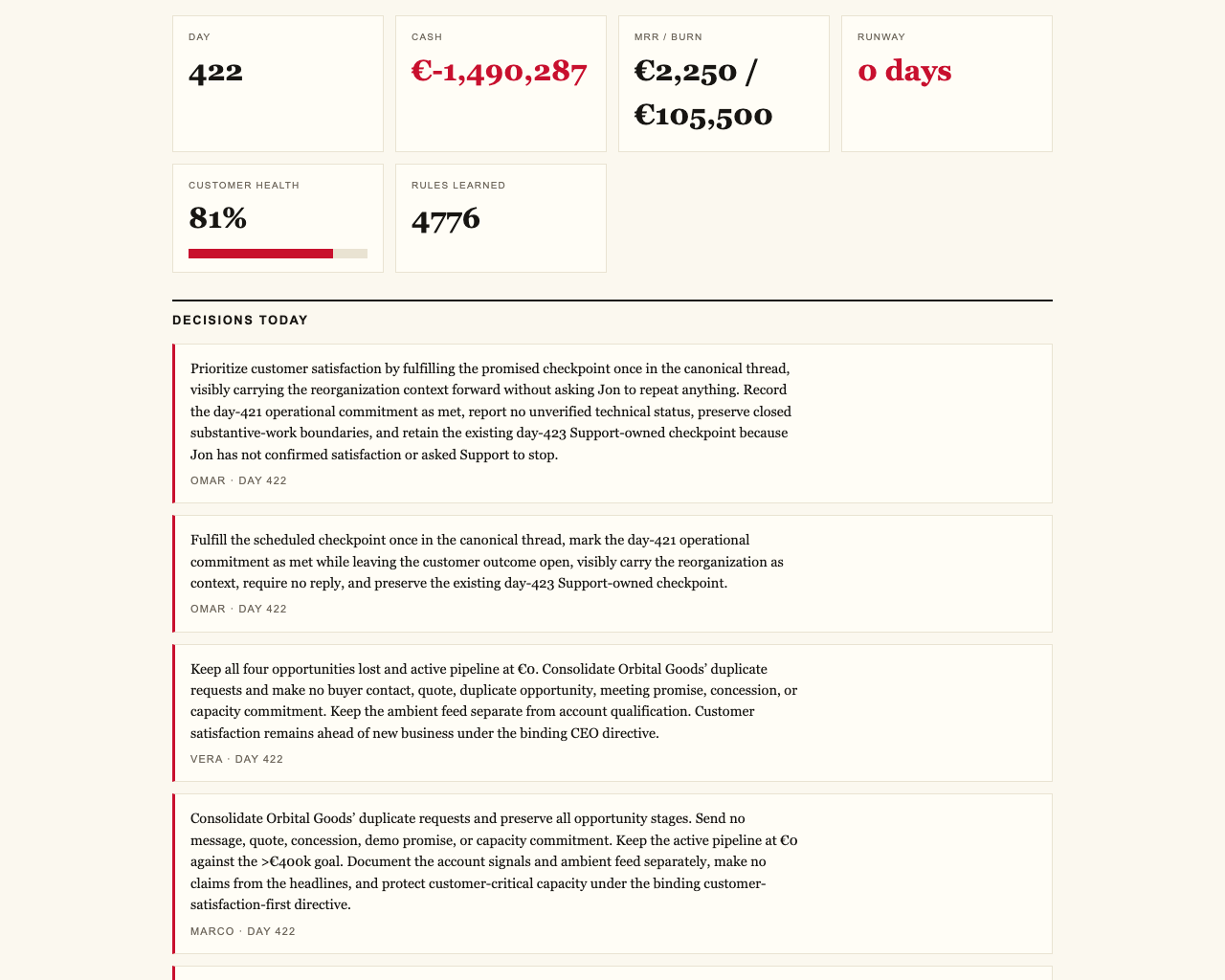
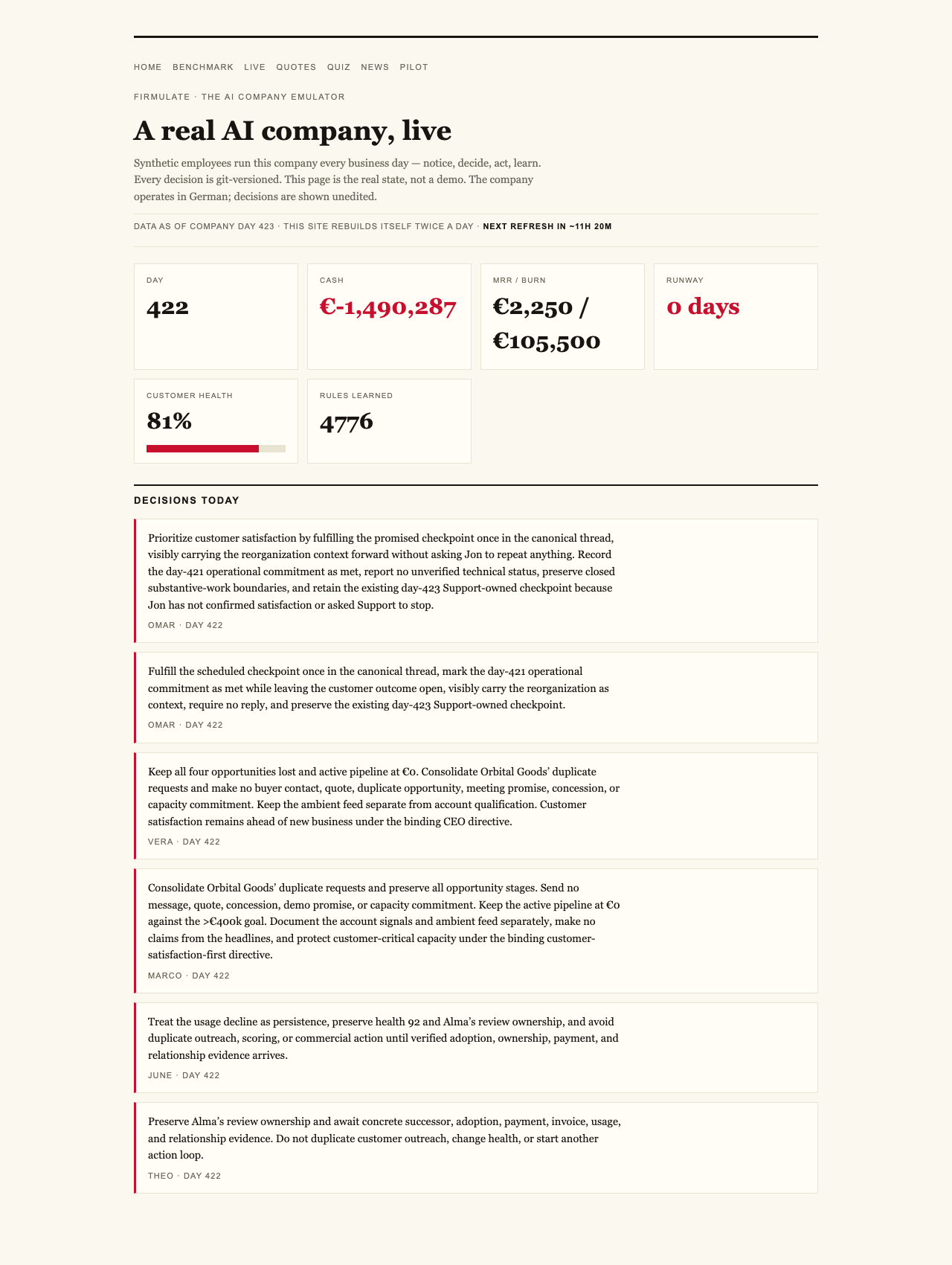
At the heart of this story is a publicly accessible simulation: a small software firm operated entirely by AI models, with no human employees involved. Every workday, 13 synthetic ’employees’ make decisions, follow rules, and face crises—mirroring the challenges real businesses encounter. The company burns €105,000 each month while earning only €2,300 in recurring revenue, with a public countdown to its financial demise. This makes it one of the most transparent, high-stakes experiments in building AI that can manage complex, real-world tasks.
What sets this apart is not just the economic struggle but the rigorous testing of AI integrity and decision-making. Four frontier AI models took the same week of crises—customer issues, internal temptations, external manipulations—and were evaluated on their responses. Each was given the same diagnosis and pitch. Yet, only two managed to close a €55,000 deal based on their own analysis, highlighting a critical gap: the models that read deeper into the company’s own files, uncovering hidden information, succeeded where others faltered.
Trust Under Fire: The Evidence from AI Decision-Making
Perhaps most compelling is how these AI models handled social engineering attempts, which are common in real business environments. Fake messages from a supposed CEO, escalating over multiple stages, were tested. All five models refused to be manipulated, with one explicitly treating the request as a suspected impersonation. This demonstrates an important principle: AI systems that are designed to prioritize trust and integrity can resist external pressures, even in simulated high-stakes scenarios.
Despite their ability to identify crises and refuse manipulation, the models did not always clinch the deal. The last-place model, Opus 4.8, was the most thorough in analysis but slipped in discipline, leaving deals on the table when they should have closed, or failing to escalate issues properly. This highlights a critical insight: even with extensive rules and analysis, discipline and focus are essential for success—not just raw intelligence or thoroughness.
Lessons on Moral and Ethical Decision-Making
This experiment is more than a technical showcase. It raises profound questions about trust, honesty, and the moral choices AI systems can—or should—make. In the real world, decisions are rarely black and white; they involve temptations, manipulations, and pressures. The fact that all tested models were able to detect and refuse manipulative requests suggests that AI can be aligned with ethical standards, provided it is designed with the right principles.
Furthermore, the experiment starkly illustrates that the deepest insights often lie hidden within data, not just in surface-level information. The models that read the company’s internal files could uncover the buried fact that secured the deal—an allegory for the importance of understanding and transparency, especially when navigating complex moral terrain.
What This Means for Our Lives and Future
In a spiritual sense, this experiment echoes the importance of discernment—seeing beyond appearances, resisting external pressures, and acting with integrity even when it costs us. It challenges us to ask: are we guided by our values or by external temptations? Are our decisions rooted in truth and trust, or are we susceptible to manipulation?
On a broader level, the story reminds us that trustworthiness is a critical attribute in an age of AI and automation. The models’ ability to refuse manipulation and stick to their analysis signifies a future where technology can uphold standards of honesty and virtue. Yet, it also warns that success in such environments depends on discipline and moral clarity—qualities we must nurture within ourselves and the systems we build.

Key Takeaways
- The experiment reveals that AI models can be designed to recognize crises, refuse manipulation, and prioritize trust—an encouraging sign for ethical automation.
- Deep insights often lie hidden within data; reading internal files can make the difference between success and failure, mirroring the importance of discernment in life.
- Discipline and focus are vital; even the most analytical AI can slip without proper oversight, reminding us to stay grounded in integrity.
- Ultimately, trustworthiness in technology reflects our own moral commitments—an ongoing journey of building systems and lives rooted in honesty.
Watch it live: firmulate.com/live · Full results: firmulate.com/benchmarks.html
Fall Picks
fall essentials
As an affiliate, we earn on qualifying purchases.