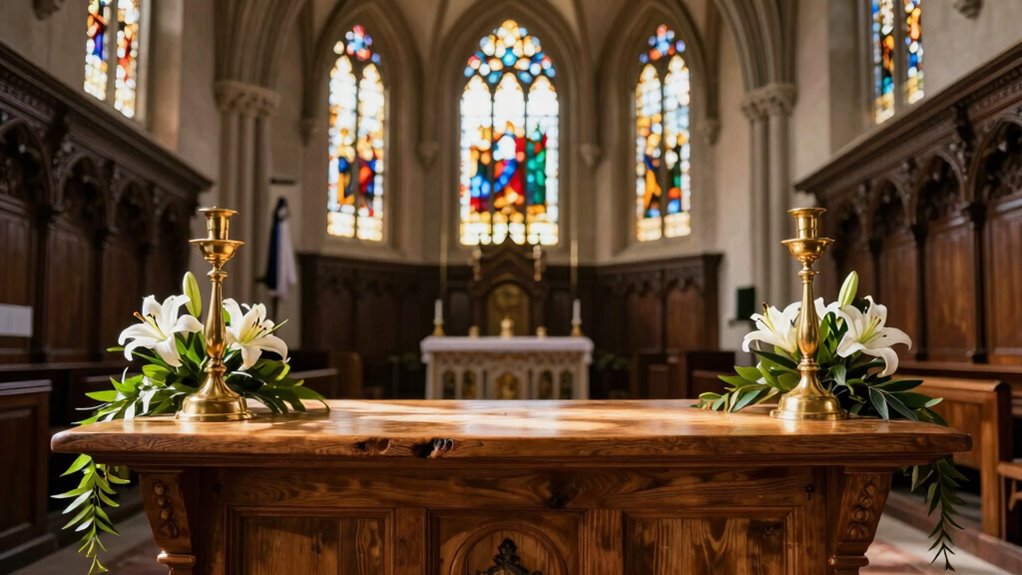
Your decision on where to place the communion table and what materials to use shapes both the look and feel of your sanctuary. Positioning it centrally or along a wall influences how your congregation engages during worship and creates different atmospheres of reverence or community. Material choices like wood, stone, or metal can symbolize spiritual themes and affect the space’s overall tone. Exploring these decisions further helps you design a sanctuary that nurtures reflection, participation, and sacredness.
Key Takeaways
- The placement of the communion table influences sightlines, congregation flow, and overall sanctuary atmosphere.
- Material choices for the table reflect spiritual symbolism, tradition, and aesthetic tone.
- Central or wall-mounted positioning affects accessibility, participation, and the sense of reverence.
- Design and proportions of the communion table contribute to visual harmony and spiritual focus.
- Material and placement decisions shape the sanctuary’s welcoming, reflective, and community-oriented environment.
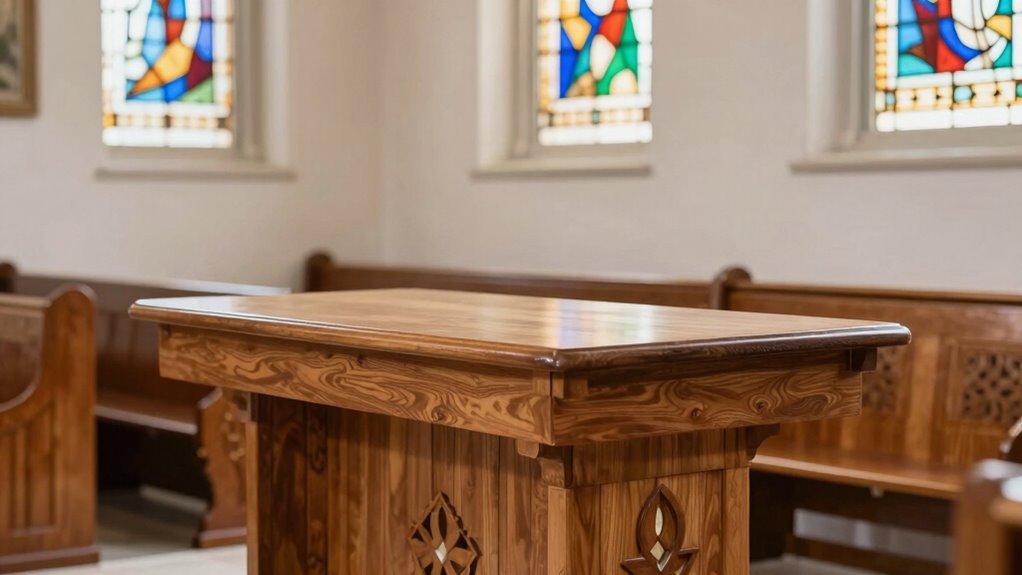
When designing a sanctuary, choosing the right communion table is an essential decision that shapes the worship space’s overall feel and function. The placement of the altar influences how congregants engage during services, so you want it to foster an atmosphere of reverence, community, and accessibility. Think about how the altar’s location affects sightlines and movement — whether it’s positioned centrally to highlight its importance or placed along a wall for a more intimate setting. Altar placement isn’t just about tradition; it’s about creating a focal point that invites participation and reflection. You’ll need to evaluate the flow of the service, ensuring the table’s position allows for seamless shifts during communion, and that it complements the overall layout of the sanctuary. Additionally, consider how the content formats of the worship experience can be enhanced by the physical setup, ensuring the space supports various forms of engagement. Material selection plays a pivotal role in defining the character of your worship space. The materials you choose for the communion table should resonate with the overall design and spiritual tone you want to convey. For example, a solid wood table offers warmth and tradition, reinforcing a sense of stability and timelessness. Conversely, a sleek stone or marble table can introduce a modern, elegant feel, emphasizing purity and strength. Metal accents or glass can add contemporary touches, symbolizing transparency and divine light. When selecting materials, also consider durability and maintenance — you want a piece that withstands frequent use without sacrificing aesthetic appeal. The tactile qualities of the table can enhance the worship experience, so think about how the material invites touch and interaction, making the act of communion more meaningful. Incorporating spiritual symbolism into your material choices can deepen the worship experience and reinforce the sacredness of the space. Understanding how altar placement influences congregation engagement can help you make more intentional design choices. Additionally, paying attention to architectural details like proportions and symmetry can significantly impact the overall harmony of the sanctuary. Research supports that design principles such as balance and focal points can greatly enhance the spiritual atmosphere. In the end, the decisions you make about altar placement and material selection aren’t just about aesthetics; they influence how the congregation interacts with the space and each other. You want the communion table to serve as a sacred focal point that embodies the spiritual purpose of the service. By carefully evaluating where you place the altar, you can create a space that feels welcoming and reverent, encouraging active participation. When selecting materials, aim for a choice that aligns with your church’s identity and the atmosphere you want to cultivate. Whether it’s a traditional wooden table or a sleek modern design, your choices will help shape the sanctuary into a sanctuary of worship, reflection, and community.
wood communion table
As an affiliate, we earn on qualifying purchases.
As an affiliate, we earn on qualifying purchases.
Frequently Asked Questions
How Does Table Size Influence Worship Space Layout?
A larger communion table creates a prominent altar symbolism, making it a central visual focal point in your worship space. It influences your sanctuary layout by requiring more room, which can lead to a spacious, open feel or a more intimate setting depending on placement. Conversely, a smaller table allows for flexibility and intimacy, subtly emphasizing the sacred without overpowering the overall design.
What Materials Are Most Durable for Communion Tables?
Think of your communion table as a steadfast oak—durability is key. Granite and marble stand out, embodying strength and ceremonial significance, symbolizing the enduring nature of faith. These materials resist wear and tear, much like the sacred traditions they support. Choosing durable options like hardwoods or metal also reflects material symbolism, emphasizing resilience and reverence. Your table’s longevity reinforces its essential role in worship and community unity.
Should the Communion Table Be Movable or Fixed?
You should opt for a fixed communion table if you prioritize symbolic significance and a sense of permanence in your sanctuary. A fixed table emphasizes tradition and unity, making it a central focus. However, if accessibility considerations are paramount—such as accommodating different heights or mobility needs—then a movable table might be better, allowing flexibility and inclusivity. Ultimately, balance these factors to align with your congregation’s values.
How Do Cultural Differences Impact Table Placement?
Cultural differences considerably influence where you place the communion table, as cultural symbolism and ritual significance guide your decision. In some traditions, you might position the table centrally, emphasizing unity and community, while others prefer a more reverent, side placement to highlight solemnity. Consider your congregation’s cultural background and spiritual practices to determine the most meaningful and respectful table placement that aligns with their rituals and symbolism.
What Are Common Design Trends for Communion Tables?
You’ll notice that contemporary communion tables often feature sleek, minimalist designs inspired by liturgical symbolism emphasizing humility and unity. Many incorporate historical influences like ornate carvings or simple wooden structures, reflecting tradition’s reverence. Trends also favor movable or adaptable tables to enhance participation and accessibility. These design choices aim to deepen spiritual connection while respecting historical roots, creating a meaningful focal point in the sanctuary that balances tradition with modern aesthetics.
marble altar table
As an affiliate, we earn on qualifying purchases.
As an affiliate, we earn on qualifying purchases.
Conclusion
Choosing the right communion table isn’t just about tradition; it’s about shaping your sanctuary’s heart. Your decision influences how the space feels—welcoming, reverent, or modern. Think of it like selecting the perfect lighthouse for a stormy night—guiding everyone’s focus and spirit. So, trust your instincts, embrace the process, and remember, this isn’t just a piece of furniture but a symbol that unites your congregation in faith and community.
metal sanctuary altar
As an affiliate, we earn on qualifying purchases.
As an affiliate, we earn on qualifying purchases.
wall-mounted communion table
As an affiliate, we earn on qualifying purchases.
As an affiliate, we earn on qualifying purchases.