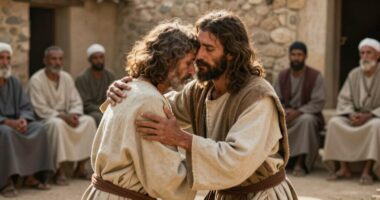

Jesus fulfills Old Testament prophecies through specific symbols and expectations, such as being born in Bethlehem, suffering for our sins, and entering Jerusalem humbly on a donkey. His life perfectly aligns with the images and patterns foretold by prophets like Isaiah, Micah, and Zechariah. These fulfillments confirm His divine role as Savior and King. If you want to explore how each prophecy points to His life and mission, there’s more to uncover.

Turn your quiet moments into listening time
- Thousands of audiobooks, podcasts and originals
- Listen on your phone, tablet or Echo — also offline
- Cancel anytime
Key Takeaways
- Jesus’s birth in Bethlehem fulfilled Micah 5:2’s prophecy of the Messiah’s humble origins.
- His suffering and death align with Isaiah 53’s imagery of the suffering servant.
- Jesus’s entry into Jerusalem on a donkey fulfilled Zechariah 9:9’s messianic act.
- His role as a spiritual King establishing an everlasting kingdom matches Old Testament expectations.
- The prophetic symbols in His life confirm His divine role as Savior and King.

Many people find it remarkable how Jesus’s life and mission align with numerous Old Testament prophecies, which were written centuries before his birth. These prophecies set clear expectations for the coming Messiah, and as you examine Jesus’s life, you see how precisely he fulfills them. The Jewish people held Messianic expectations rooted in prophetic symbolism—images and patterns pointing toward a Savior who would bring salvation and restore Israel. These symbols include the humble birth in Bethlehem, the suffering servant, and the triumphant King riding on a donkey. When you consider Jesus’s life, it becomes evident that he embodies these ancient images, fulfilling the prophetic symbolism woven throughout Scripture.
Jesus’s life perfectly fulfills Old Testament prophecies and Messianic symbols, confirming His divine role as Savior and King.
Prophetic symbolism plays a crucial role in illustrating how Jesus fulfills the Old Testament’s Messianic expectations. For instance, the prophecy in Isaiah about a suffering servant (Isaiah 53) predicts a figure who would bear the sins of many and suffer in silence. Jesus’s crucifixion aligns perfectly with this imagery, as he willingly endures pain and death to offer salvation. Similarly, the prophecy in Micah about the Messiah being born in Bethlehem (Micah 5:2) finds its fulfillment in Jesus’s birth there, affirming his royal descent and divine purpose. These symbols aren’t just coincidences; they are deliberate pointers designed to guide believers and skeptics alike toward recognizing him as the promised Savior.
The Messianic expectations didn’t just concern Jesus’s birth and suffering but also his role as a spiritual king. The Old Testament describes a king who would establish an everlasting kingdom, a prophecy fulfilled when Jesus enters Jerusalem on a donkey, echoing Zechariah’s vision of the king coming in humility (Zechariah 9:9). This act wasn’t accidental; it was a deliberate fulfillment of Messianic prophecy, demonstrating that Jesus was the King foretold by the prophets. His life, death, and resurrection all serve as a testament to how the biblical symbols and expectations converge in him, revealing that he is indeed the promised Messiah.
In essence, understanding how Jesus fulfills Old Testament prophecies deepens your appreciation for the consistency of Scripture. Every detail—from his humble birth to his sacrificial death—aligns with the Messianic expectations set centuries earlier. These prophetic symbols aren’t just ancient stories but vivid indicators pointing directly to Jesus, confirming his identity as the Savior foretold long ago. Recognizing these connections helps you see the unity of God’s plan and the faithfulness of His promises throughout history.
As an affiliate, we earn on qualifying purchases.
Frequently Asked Questions
How Do Old Testament Laws Relate to Jesus’ Teachings?
You see, Old Testament laws laid the foundation for understanding God’s covenant renewal and the sacrificial system. Jesus’ teachings fulfill these laws by emphasizing love, mercy, and forgiveness, moving beyond strict rituals. He embodies the ultimate sacrifice, replacing animal offerings, and shows that true obedience comes from the heart. Through Jesus, the old laws are transformed into a new covenant rooted in grace, guiding you toward spiritual renewal and deeper relationship with God.
Were Any Old Testament Prophecies Misunderstood Before Jesus’ Time?
You might visualize ancient hopes as fragile lanterns, sometimes mistaken for guiding stars. Old Testament prophecies, filled with Messianic expectations and prophetic symbols, were often misunderstood, leading people astray. They anticipated a different kind of savior, missing the deeper spiritual meaning. These misinterpretations shaped expectations, but Jesus fulfilled these prophetic symbols perfectly, revealing the true nature of God’s plan and aligning expectations with divine reality.
How Does Jesus’ Fulfillment Impact Jewish Beliefs Today?
Jesus’ fulfillment reshapes your understanding of Messianic expectations and influences Jewish identity today. Many Jews see Jesus as the fulfillment of prophecy, challenging traditional views, while others maintain their beliefs without accepting this. This divergence impacts community conversations, faith practices, and how individuals relate to their identity. Ultimately, Jesus’ fulfillment prompts ongoing debate about the nature of the Messiah and deepens the exploration of faith and tradition in Jewish life.
What Role Do Typologies Play in Old Testament Predictions?
Typologies are like the secret language of the Old Testament, revealing predictive symbolism that points directly to Jesus. Their significance lies in illustrating how events, figures, and rituals foreshadow Christ’s life and mission. You see, these types aren’t just stories—they’re divine clues, guiding believers to recognize Jesus’s fulfillment of Old Testament promises. Without understanding typologies, you’d miss the deep connections woven through scripture, like missing the fire behind the sparks.
Are There Prophecies Jesus Did Not Fulfill?
You might wonder if Jesus fulfilled every Messianic expectation or prophetic symbolism. While many prophecies, like being born in Bethlehem or suffering for others, are fulfilled, some Messianic expectations, such as reigning as a political king, remain unfulfilled in his first coming. These unfulfilled prophecies hint at future fulfillment, emphasizing the layered nature of Messianic expectations and the ongoing unfolding of prophetic symbolism in God’s plan.
Conclusion
You’ve seen how Jesus embodies the promises of the Old Testament, fulfilling prophecies and revealing God’s plan. His life, death, and resurrection confirm that the Bible’s words are true. Remember, actions speak louder than words—what Jesus did shows God’s unwavering love and faithfulness. When you understand this, you realize that faith isn’t just about belief; it’s about trusting in a covenant kept and a love that never fails.
Fall Picks
fall essentials
As an affiliate, we earn on qualifying purchases.