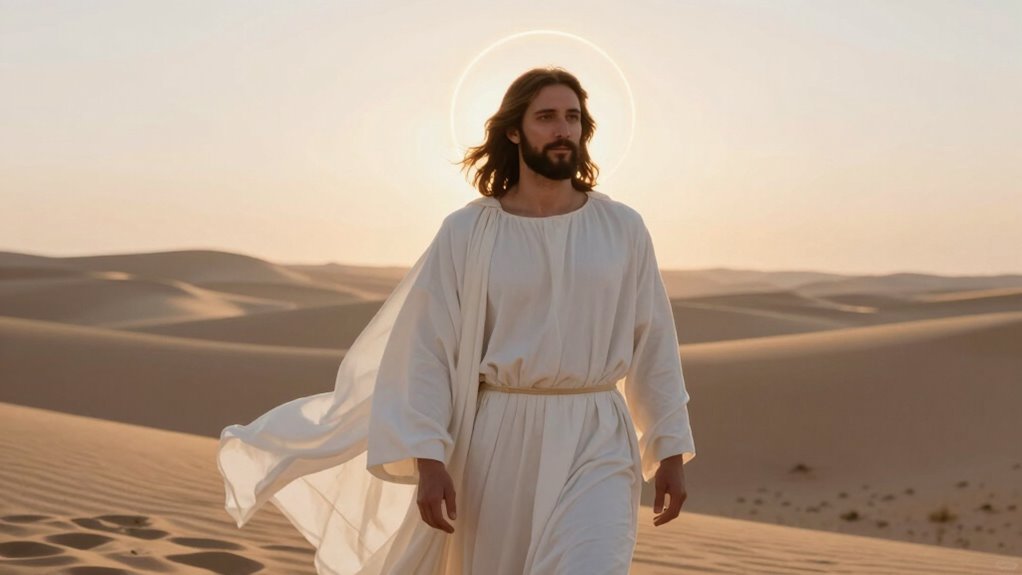

What sets Jesus apart from other religious figures is His clear claim to divine authority, backed by miracles like healing and raising the dead that no one else performs. His resurrection is unique, proving His power over life and death, and confirming His divine nature. While others teach moral principles, Jesus’s life, claims, and miracles reveal a divine identity that remains unmatched. If you’re curious, there’s much more to discover about what makes Him truly different.

Turn your quiet moments into listening time
- Thousands of audiobooks, podcasts and originals
- Listen on your phone, tablet or Echo — also offline
- Cancel anytime
Key Takeaways
- Jesus uniquely claims and demonstrates divine authority through miracles and resurrection, setting Him apart from other spiritual leaders.
- His resurrection serves as tangible, historical proof of His divinity and power over death.
- Jesus’s teachings are deeply intertwined with His divine identity, unlike other leaders who focus solely on moral principles.
- Miracles performed by Jesus are extraordinary in scale and nature, confirming His divine origin.
- His claims of being the Son of God and His divine acts distinguish Him as uniquely divine in origin and authority.

When comparing Jesus to other religious figures, what sets Him apart is not just the teachings He delivered but His unique claim to divinity. While many religious leaders offer profound insights and moral guidance, Jesus distinguishes Himself through His assertion that He is the Son of God. This claim is rooted in His divine authority, which He demonstrates through numerous miraculous claims that go beyond human capabilities. You might notice that other figures often focus solely on spiritual principles or ethical conduct, but Jesus’s message is intertwined with His identity as divine, giving His teachings a different weight and authority.
His miraculous claims serve as compelling evidence of His divine authority. For example, Jesus healed the sick, calmed storms, and even raised the dead—acts that ordinary humans cannot perform. These miracles are not just random acts of kindness but are presented in the Gospels as signs pointing to His divine nature. When you consider these acts, it becomes clear that Jesus isn’t just a wise teacher but someone who possesses power that originates from God Himself. This divine authority underpins His entire ministry and offers believers a foundation rooted in supernatural reality. Other religious figures might have performed miracles, but the consistency and nature of Jesus’s miracles, coupled with His claims of being one with God, set Him apart.
Furthermore, His miraculous claims aren’t isolated incidents but are woven into His identity and mission. His resurrection from the dead is the ultimate demonstration of His divine authority, confirming His claim to be the Son of God. This event is unique in history and provides a tangible, historical proof that His claims are genuine. It’s not just about the miracles themselves, but what they signify: Jesus’s authority over life and death, His divine nature, and His power to offer salvation. When you compare this to other religious figures, who typically do not claim divine authority or perform miracles on such a scale, the distinction becomes even clearer.
In essence, what makes Jesus different is that His divine authority is embedded in His life, teachings, and miraculous claims. These elements distinguish Him from other religious leaders who may teach moral principles but do not claim to be divine or demonstrate supernatural power as evidence of their divine identity. When you examine His life and the claims He made, it’s impossible to ignore that Jesus stands apart—not just as a moral teacher but as the divine Son of God with power and authority that surpass all human understanding. His miracles and resurrection are proof of divine authority, setting Him apart from all other figures in history.
As an affiliate, we earn on qualifying purchases.
Frequently Asked Questions
Was Jesus a Founder of a Religion or a Spiritual Teacher?
You see, Jesus was primarily a spiritual teacher rather than a founder of a religion. In historical context, his teachings focused on love, compassion, and spiritual connection, which influenced culture deeply. While some see him as establishing Christianity, he didn’t set out to create a new religion but to inspire personal faith and moral living. His message’s enduring cultural influence shows how his role transcended mere religious founder to become a spiritual guide.
How Do Jesus’s Teachings Compare to Other Prophets?
Imagine a teacher whose words transform lives, like Jesus’s parable teachings that reveal profound truths through simple stories. His teachings emphasize love, forgiveness, and humility, unlike many prophets who focus on law or rituals. Miraculous healings showcased his divine authority, setting him apart from others. You see, Jesus’s message is both practical and supernatural, inviting you to experience a personal connection with the divine, unlike any other prophetic figure.
Did Jesus Claim to Be Divine or Just a Moral Leader?
You might wonder if Jesus claimed to be divine or just a moral leader. He made significant divinity claims, such as forgiving sins and calling himself the Son of God, which demonstrate his belief in his divine nature. While he also taught moral authority, his assertions of divinity set him apart from other religious figures, emphasizing that he saw himself as more than a moral guide—he was the divine savior.
What Historical Evidence Exists for Jesus’s Life Outside Religious Texts?
Sure, because historical sources and archaeological evidence are just waiting in the shadows, right? In reality, non-Christian historical texts like Tacitus and Josephus mention Jesus, giving some outside confirmation of his life. Archaeological evidence is scarce but suggests a historical figure rooted in reality. While not definitive, these sources help separate myth from fact, making Jesus’s existence more than just religious legend.
How Do Different Religions Interpret Jesus’s Role and Significance?
Interfaith perspectives view Jesus differently—Christians see him as the savior, while Muslims regard him as a prophet, and others see him as a wise teacher. Cultural portrayals influence these interpretations, highlighting his divine or human qualities across traditions. You’ll notice these varied views shape how each religion emphasizes his significance, fostering understanding or dialogue. Recognizing these differences helps you appreciate the rich, diverse portrayals of Jesus across cultures and faiths.
Conclusion
You see, Jesus isn’t just another name in history’s crowded hall; He’s the heartbeat that echoes in every faith. His love, like an unending river, carves through the rocky landscapes of doubt, offering hope and grace. Unlike others, He’s the dawn breaking darkness, the song that lingers long after the last note. In Him, you find a light that guides, a truth that endures—forever different, forever divine.
Fall Picks
fall essentials
As an affiliate, we earn on qualifying purchases.