

The Parable of the Ten Virgins teaches you to stay spiritually alert and prepared for Christ’s return at all times. It emphasizes the importance of maintaining your faith, keeping your “oil”—or spiritual readiness—full so you’re ready when the Messiah comes. Focusing on consistent prayer, reflection, and living faithfully helps prevent spiritual complacency. If you want to explore how to apply these lessons daily, you’ll find practical tips that can keep your heart vigilant.

Get books, candles and calm essentials delivered free — and shop member deals
- Fast, free delivery on millions of items
- Access to Prime Big Deal Days deals on October 6–7
- Prime Video, Amazon Music and more included
Key Takeaways
- The parable emphasizes the importance of spiritual vigilance and constant readiness for Christ’s return.
- Maintaining an adequate supply of oil symbolizes ongoing faith and reliance on the Holy Spirit.
- Wise virgins are prepared by staying spiritually alert, while foolish ones neglect ongoing preparedness.
- Regular spiritual disciplines like prayer and Bible study help ensure one’s lamps remain lit.
- Being prepared involves consistent effort and discipline to avoid spiritual complacency at critical moments.
As an affiliate, we earn on qualifying purchases.
The Context and Setting of the Parable
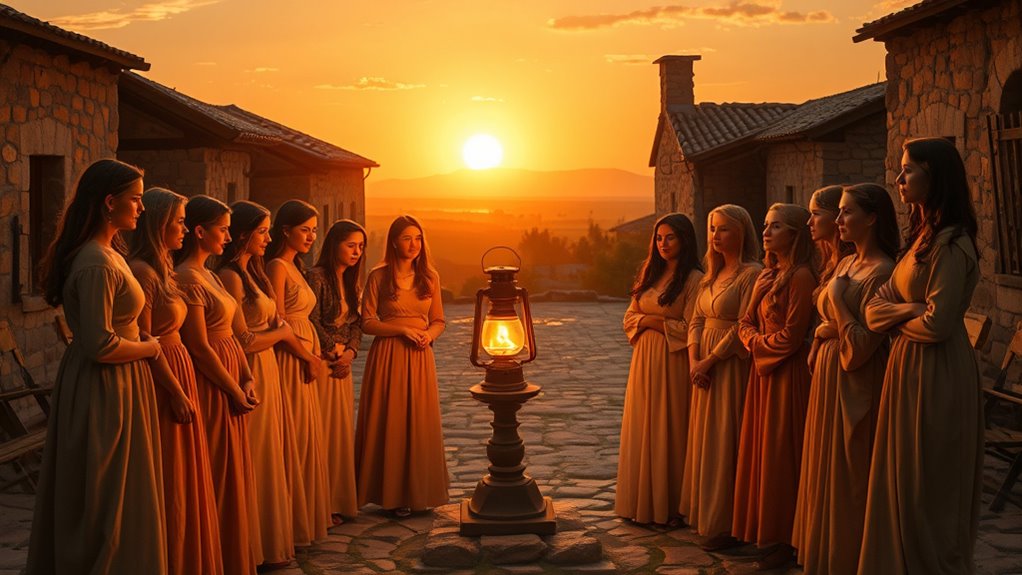
The Parable of the Ten Virgins is set within the cultural and social context of ancient Jewish weddings, where preparations for the bridegroom’s arrival played a central role. This setting emphasizes eschatological themes, highlighting the importance of readiness for the coming of the Messiah. In this cultural context, brides and bridesmaids prepared for an uncertain and often late arrival, symbolizing the anticipation of divine intervention. The story reflects the Jewish understanding of the end times, stressing vigilance and preparedness. As you explore this parable, recognize how the cultural backdrop shapes its message about spiritual alertness. The setting underscores that just as the wedding feast depended on timely preparation, so too must you stay spiritually prepared for Christ’s return. Additionally, understanding the cultural importance of timing and readiness helps deepen the comprehension of the parable’s message about vigilance.
The Characters and Their Significance

The characters in the Parable of the Ten Virgins each embody different lessons about spiritual preparedness and response to Christ’s return. The virgins symbolize individuals awaiting the Lord, with their actions reflecting different attitudes toward readiness. In the context of marriage customs of the time, bridesmaids were expected to be prepared, highlighting the importance of vigilance. Cultural interpretations emphasize that the wise virgins represent those who stay spiritually alert, while the foolish ones overlook the need for ongoing vigilance. Their varying responses underscore the need for consistent preparation, not just momentary readiness. These characters remind you that spiritual preparedness requires ongoing effort and awareness, aligning with the cultural values of anticipation and readiness in marriage customs, which serve as a powerful analogy for your own spiritual journey. Additionally, choosing office chairs for neck pain relief can symbolize the importance of comfort and support in maintaining ongoing alertness and well-being.
The Symbolism of Oil and Lamps

Your oil represents your readiness to meet the bridegroom, highlighting the importance of staying prepared. The lamps symbolize vigilance, reminding you to remain alert and watchful at all times. Together, they emphasize that spiritual preparedness requires both active watchfulness and ongoing devotion. Regularly assessing and organizing your spiritual resources can help maintain a state of readiness and prevent clutter or neglect in your spiritual life.
Oil as Readiness
Have you ever wondered what the oil in the parable truly represents? It symbolizes your readiness and spiritual preparation for Christ’s return. Without enough oil, your lamp stays unlit, just as a believer unprepared misses the moment. To stay prepared, you need to actively cultivate your faith. Imagine:
- Maintaining a close relationship through prayer and study
- Practicing consistent evangelism strategies to deepen your witness
- Engaging in church outreach to build community and support
- Staying vigilant and spiritually alert daily
- Recognizing the importance of Grocery Savings Strategies to free up resources for spiritual growth and service.
This oil isn’t just about personal faith but also about being ready to share it. Being prepared means more than just personal devotion; it involves actively living out your faith and helping others do the same, ensuring your lamp stays lit when the moment arrives.
Lamps as Vigilance
Lamps in the parable symbolize vigilance, emphasizing the importance of staying alert and prepared at all times. Just as a lamp needs proper maintenance to shine brightly, your vigilance routines keep you ready for Christ’s return. Regularly check your lamp’s wick and oil levels to guarantee it stays lit when needed. Failing to maintain your lamp can lead to darkness at a critical moment, symbolizing spiritual unpreparedness. Incorporate daily habits that foster alertness, such as prayer and reflection, to strengthen your vigilance. Remember, it’s not just about having oil, but also about consistently tending to your lamp to remain watchful. Proper equipment maintenance ensures that your lamp remains reliable, preventing unexpected darkness. Staying attentive and prepared ensures you won’t be caught unready when the moment arrives.
Lessons on Spiritual Vigilance and Preparedness

The parable of the ten virgins teaches an important lesson about staying alert and prepared for unexpected events. You must prioritize spiritual vigilance over fleshly desires, recognizing that faith sustains your spiritual lamp, not works alone. To remain ready, picture:
- Filling your lamp with oil, symbolizing the Spirit’s guidance
- Staying alert, avoiding spiritual drowsiness
- Balancing fleshly comfort with spiritual discipline
- Trusting in faith, not just outward actions
Additionally, cultivating spiritual vigilance helps you remain attentive to your spiritual journey and ensures you are prepared for Christ’s return. This parable reminds you that preparedness isn’t about works alone; it’s about nurturing your spirit daily. Being vigilant means cultivating genuine faith, not just relying on external appearances. Stay spiritually alert; your salvation depends on it.
Applying the Parable to Modern Christian Life

Applying the parable to modern Christian life means actively cultivating daily spiritual habits that keep your faith vibrant and ready for unexpected challenges. To stay prepared, focus on faithful service and consistent spiritual discipline. These practices help you remain alert and spiritually ready, just like the wise virgins. Incorporate routines like prayer, Bible study, and acts of kindness into your daily life. Here’s a simple reminder:
| Daily Habits | Spiritual Discipline | Faithful Service |
|---|---|---|
| Morning prayer | Regular Bible reading | Helping others in need |
| Reflective journaling | Fasting or solitude for reflection | Serving in your community |
| Gratitude practice | Attending worship and fellowship | Sharing your faith |
Staying disciplined and committed ensures you’re always prepared for Christ’s return. Retail hours today can help you plan your day to include spiritual activities or service opportunities.
How to Maintain Readiness for Christ’s Return

To stay ready for Christ’s return, you need to stay spiritually alert and attentive to your faith. Regularly nurture your relationship with God and stay committed to prayer and study. Remember, maintaining your spiritual oil guarantees you’re prepared when the moment comes. Practicing mindfulness practices can help reduce emotional distractions and keep your focus on spiritual growth.
Cultivate Spiritual Vigilance
Maintaining spiritual vigilance requires intentional effort and consistent focus on your relationship with Christ. To stay alert, develop a routine that strengthens your faith daily. Visualize:
- Falling to your knees in prayer, seeking guidance and strength.
- Gathering with others for community accountability, sharing struggles and encouragement.
- Reading scripture regularly, filling your mind with truth.
- Reflecting quietly, listening for God’s voice amid life’s distractions.
Engaging in regular spiritual practices can deepen your connection and help you remain prepared for Christ’s return.
Maintain Oil Supplies
Staying spiritually prepared means ensuring your oil supply remains full, so you’re ready when Christ returns. To maintain this, practice faithfulness in your daily walk and develop consistent spiritual discipline. Regular prayer, reading scripture, and reflecting on God’s promises keep your faith active and vibrant. Avoid neglecting your spiritual habits, as they serve as the oil that sustains your readiness. Staying attentive to your relationship with God ensures your spiritual supplies don’t run low, even during busy or challenging times. By intentionally nurturing your faith and maintaining discipline, you build a reserve of spiritual strength that allows you to remain vigilant. This ongoing commitment prepares you to meet Christ confidently, just as the wise virgins were prepared with ample oil. Additionally, understanding the 19th-century industrial influences in biblical parables can deepen your appreciation for the need to stay prepared and vigilant in your faith journey.
Frequently Asked Questions
What Historical Events Influenced the Parable’s Message?
Historical events like the rise of religious movements and fears about End Times influenced the parable’s message. You’re reminded to stay vigilant and prepared for Christ’s return, reflecting the urgency felt during times of upheaval and messianic expectations. These events pushed early Christians to emphasize readiness, warning believers to avoid complacency. The parable underscores that being spiritually prepared is essential, especially amid uncertain times and growing religious movements emphasizing salvation and divine judgment.
How Do Different Christian Denominations Interpret the Parable?
Like a kaleidoscope shifting colors, denominational perspectives vary widely in interpreting this parable. Some see it as a call for constant readiness, emphasizing personal faith and vigilance. Others focus on the oil as representing good deeds or spiritual preparedness. This interpretive diversity reflects how different Christian groups understand salvation, grace, and the return of Christ, encouraging you to explore multiple viewpoints and deepen your spiritual understanding.
Are There Cultural Differences in Understanding the Parable Globally?
You’ll find that cultural interpretations and global perspectives shape how you understand this parable. In some cultures, the emphasis might be on community and hospitality, while others focus on individual preparedness. These differences influence your view of the story’s meaning, highlighting varied values and traditions. As you explore, you’ll see that cultural backgrounds enrich your understanding, making the parable’s lessons resonate differently across diverse societies worldwide.
What Are Common Misconceptions About the Parable’s Meaning?
You might think the parable just warns about being prepared for Christ’s return, but misinterpretation misconceptions often overlook its symbolic symbolism. Some believe it’s solely about salvation, while others see it as a call to be morally vigilant. The true message emphasizes spiritual readiness and wisdom, using the oil and lamps as powerful symbols of faith and perseverance, not just literal preparations. Recognizing these symbolic elements clarifies its deeper meaning.
How Can This Parable Impact Daily Decision-Making?
You might find that this parable dramatically influences your decision-making priorities, urging you to stay spiritually prepared at all times—like always having enough oil for your lamp. It reminds you to focus on consistent spiritual preparedness rather than last-minute efforts, shaping your daily choices. By aligning your actions with this lesson, you guarantee you’re ready for life’s unexpected moments and the ultimate return, making your faith a constant priority.
Conclusion
So, next time you’re tempted to hit snooze on your faith, remember the ten virgins. Don’t be the one caught in the dark, fumbling for oil while everyone else parties with joy. Stay prepared, keep your lamps full, and avoid the grand surprise of missing out on the wedding feast. After all, nobody wants to be the guest who shows up late, empty-handed, and left outside in the cold — especially when eternity’s at stake.
Evergreen bestsellers Picks
bestsellers
As an affiliate, we earn on qualifying purchases.