
The virgin birth matters because it confirms Jesus’ divine origin, fulfilling prophecy and demonstrating God’s direct intervention in human history. It shows that Jesus is both fully human and fully divine, essential for understanding salvation. This miraculous event strengthens faith, emphasizing God’s power and mystery. Recognizing its cultural background and theological importance can deepen your view of Jesus’ role. To learn more about its significance and impact, explore how this event shapes Christian belief and worship.
Key Takeaways
- It confirms Jesus’ divine identity, emphasizing His role as God’s Son and the fulfillment of biblical prophecy.
- The virgin birth signifies divine intervention, highlighting God’s power to bring salvation beyond natural laws.
- It underscores Jesus’ sinless nature, essential for His role as Savior and redeemer in Christian faith.
- The event connects to cultural and mythological themes, reinforcing Jesus’ divine origin in a familiar spiritual context.
- It affirms the miraculous nature of Jesus’ mission, inspiring reverence and deepening believers’ understanding of divine mysteries.

Prayers To Mary
Prayers to Mary: The Most Beautiful Marian Prayers Taken from the Liturgies of the Church and Christ
As an affiliate, we earn on qualifying purchases.
As an affiliate, we earn on qualifying purchases.
The Biblical Roots of the Virgin Birth
The biblical roots of the virgin birth are primarily found in the Gospel of Luke and the Gospel of Matthew, which both recount the event as a fulfillment of prophecy and divine intervention. You’ll see angelic intervention play a key role, as an angel appears to Mary to announce she will conceive Jesus through the Holy Spirit. This divine message confirms the prophetic fulfillment of Isaiah’s prophecy about a virgin bearing a child. In Matthew’s account, an angel also appears to Joseph in a dream, reaffirming that Mary’s pregnancy results from God’s miraculous plan. These stories highlight how the virgin birth isn’t just a miracle but a fulfillment of God’s promises, emphasizing divine intervention in human history and the biblical foundation for Jesus’ unique nature. Furthermore, the concept of divine intervention underscores the importance of divine promise fulfillment within biblical theology, reinforcing the significance of Jesus’ birth as a divine act.

Bible Study Guide for Women & Men – Beginner-Friendly Study of All 66 Books with Life Application & Reflection Notes | Premium Lay-Flat Hardcover Devotional Journal
UNDERSTAND ALL 66 BOOKS WITH CLARITY: Feeling lost when reading the Bible? This Bible study guide walks you…
As an affiliate, we earn on qualifying purchases.
As an affiliate, we earn on qualifying purchases.
Theological Significance of the Miraculous Conception
The miraculous conception of Jesus carries profound theological significance because it affirm His divine nature and unique role in salvation history. In ancient times, marriage customs often involved symbolic acts representing purity and divine approval. Jesus’ conception defies these traditional symbols, emphasizing His divine origin rather than human intervention. This event highlights the fulfillment of ancient symbolism, where divine intervention signifies a new covenant and divine authority. It underscores that Jesus is not just a prophet or teacher but uniquely God’s Son, conceived by the Holy Spirit. This understanding elevates His role, affirming that salvation isn’t achieved through human effort alone but through divine action. The miraculous conception therefore becomes a cornerstone for grasping Jesus’ divine identity and His purpose in God’s redemptive plan. Additionally, the concept of divine intervention in His birth underscores the extraordinary nature of His mission and divine authority within Christian theology. Recognizing the miraculous nature of His conception also reinforces the belief in His sinless nature and divine origin, which are central to Christian faith.

2 Pcs Framed red canvas wall art depicting the Virgin Mary and Jesus,religious Christian poster spiritual faith image gallerystyle print Living Room Bedroom Church Decoration ready to hang 12×16 in
Premium Quality Canvas Prints: This set of 3 religious wall art pieces features high-quality, gallery-wrapped canvas prints, showcasing…
As an affiliate, we earn on qualifying purchases.
As an affiliate, we earn on qualifying purchases.
The Virgin Birth and Jesus’ Divine Identity
The virgin birth highlights Jesus’ divine identity and confirms His special relationship with God. It fulfills ancient prophecies, emphasizing His role as God’s Son. Recognizing this connection deepens your understanding of Jesus’ true nature and mission. Additionally, the virgin birth serves as a powerful symbol illustrating how powerful symbolism can enhance our comprehension of divine mysteries. This symbolism is reinforced by the perfecting of specific tea processes, which demonstrate how precise details can reveal deeper meanings.
Divine Conception Significance
The virgin birth holds profound significance because it affirms Jesus’ divine identity from the very beginning. Unlike typical marital traditions and birth rituals that involve human unions, Jesus’ conception defies natural processes, highlighting His divine origin. This miraculous event signals that His identity isn’t rooted in earthly lineage but in divine intervention. This divine conception confirms that Jesus is uniquely divine, not merely a prophet or teacher, but the incarnate Son of God, chosen to bring salvation. It’s a pivotal truth that shapes our understanding of His divine authority. Recognizing the spiritual symbolism behind this event helps deepen the understanding of His divine nature and mission. The event also underscores the importance of divine intervention in fulfilling biblical prophecy and establishing Jesus as the Savior. Additionally, the virgin birth exemplifies the fulfillment of biblical prophecy, reinforcing its significance within the broader narrative of salvation history. The miraculous nature of the virgin birth also emphasizes the divine origin of Jesus, setting Him apart from all other figures in history. Furthermore, the event demonstrates how divine spiritual power can intervene in human history to fulfill God’s plan.
Fulfillment of Prophecy
Because Scripture explicitly foretells the virgin birth, it serves as a key fulfillment of prophecy that confirms Jesus’ divine identity. The miraculous conception, prophesied in Isaiah 7:14, highlights God’s plan and His promise of a Savior. When Mary’s virginity was preserved through the divine intervention, it fulfilled this prophecy precisely. This prophetic fulfillment isn’t just a coincidence; it demonstrates that Jesus’ birth wasn’t ordinary but divinely orchestrated. The miraculous conception establishes Jesus as both truly human and divine, fulfilling God’s promises long foretold. It confirms that His identity aligns with God’s plan for salvation, making the virgin birth a crucial sign of His divine nature and the fulfillment of biblical prophecy. Additionally, this event underscores the divine intervention necessary to bring about God’s salvation plan. Recognizing the virgin birth as a fulfillment of prophecy affirms its significance as a divine act orchestrated by God’s power. The virgin birth also emphasizes the miraculous nature of Jesus’ conception, which distinguishes it from natural processes and underscores its divine origin. This event, therefore, not only affirms Jesus’ divine identity but also reveals the profound supernatural aspect of God’s intervention in human history.
Identity as God’s Son
The fulfillment of prophecy through the virgin birth directly points to Jesus’ divine identity, setting Him apart from ordinary human beings. Recognizing Jesus as God’s Son carries significant moral implications, shaping your understanding of His authority and purpose. It challenges you to contemplate ethical considerations around divine authority and human humility, urging humility and reverence. This divine origin affirms that Jesus’ teachings aren’t just moral ideals but rooted in divine truth. Accepting His divine identity influences how you live daily—embracing moral integrity and acknowledging a higher moral authority. It prompts reflection on your own moral responsibilities and the importance of aligning your life with divine standards. Additionally, understanding the significance of the virgin birth highlights the importance of payment processing and security measures in maintaining integrity and trust in divine and human contexts. Ultimately, Jesus’ divine identity as God’s Son calls you to a deeper, more authentic spiritual relationship grounded in truth and humility.

Prayer & Gratitude Journal for Women | 90-Day Christian Devotional with Bible Verses, Guided Prompts, Daily Reflections, Affirmations & Prayer Tracker | Faith-Based Journal for Spiritual Growth
Daily Gratitude & Prayer Prompts Start and end your day with spiritual intention. Use it as a Prayer…
As an affiliate, we earn on qualifying purchases.
As an affiliate, we earn on qualifying purchases.
How the Birth of Jesus Fulfills Prophecy

How did the birth of Jesus fulfill ancient prophecy? It signified more than a miracle; it symbolized divine intervention and hope. Prophecies in Isaiah and Micah predicted a virgin birth, emphasizing God’s plan to bring salvation through a miraculous event. This fulfilled miracle symbolism highlights God’s power and purpose. The cultural implications were profound, challenging existing beliefs and affirming Jesus as the Messiah. Understanding these connections deepens your appreciation of God’s promises. Here’s a look at how prophecy, miracle symbolism, and cultural implications intertwine:
| Prophecy | Miracle Symbolism | Cultural Implications |
|---|---|---|
| Virgin Birth in Isaiah | Divine intervention | Challenged societal norms |
| Messiah’s birth predicted | God’s power displayed | Affirmed Jesus’ divine role |
Additionally, the Korean zodiac compatibility guide offers insight into how cultural beliefs influence perceptions of divine events, enriching our understanding of biblical symbolism. Recognizing the divine intervention involved in the birth underscores the significance of this event within the broader context of biblical history and theology. Moreover, the prophetic fulfillment demonstrates God’s consistent plan across centuries, affirming the trustworthiness of biblical prophecy. Furthermore, understanding the fulfillment of prophecy provides a deeper appreciation of how divine promises are realized across generations.
The Role of the Virgin Birth in Christian Doctrine
The virgin birth plays a crucial role in shaping Christian doctrine by affirming Jesus’ divine origin. It fulfills prophecy and highlights God’s power to bring about salvation in an extraordinary way. Understanding this helps you grasp why the virgin birth remains a vital element of Christian faith. Recognizing the significance of divine intervention in this miraculous event underscores its importance in Christian theology. Additionally, the virgin birth is a testament to the miraculous nature of Christ’s conception, setting it apart from ordinary human birth and emphasizing the unique divine nature of Jesus. The phenomenon of biological uniqueness underscores the extraordinary aspect of Jesus’ conception, reinforcing the belief in His divine identity.
Significance in Doctrine
Have you ever wondered why the virgin birth holds such essential importance in Christian doctrine? It affirms that Jesus’ birth was a result of divine intervention, emphasizing his divine nature. This belief underscores Mary’s purity, highlighting her role as a vessel for God’s plan without human sin tainting her. The virgin birth affirms Jesus’ identity as both fully human and fully divine, fundamental for understanding salvation. It also guards against the idea that Jesus’ authority came solely from human lineage. The following table visualizes key ideas:
| Concept | Explanation | Significance |
|---|---|---|
| Mary’s purity | Unblemished by sin | Reinforces Jesus’ divine origin |
| Divine intervention | God’s direct action | Confirms Jesus’ special nature |
| Jesus’ identity | Fully human and divine | Central to Christian salvation |
Additionally, the belief in the virgin birth emphasizes the significance of divine intervention in the conception of Jesus, setting it apart from ordinary human birth.
Fulfillment of Prophecy
The virgin birth fulfills specific Old Testament prophecies that Christians believe point directly to Jesus as the Messiah. These prophecies highlight the miraculous conception, emphasizing that Jesus’s birth was a result of divine intervention rather than human effort. The prediction from Isaiah 7:14 predicts a virgin will conceive and give birth to a son, affirming the miraculous nature of Jesus’s birth. This divine intervention signals that Jesus’s arrival was orchestrated by God to fulfill His promises. As you consider these prophecies, it becomes clear that the virgin birth isn’t just a miracle but a key fulfillment of God’s plan for salvation. It underscores the divine authority behind Jesus’s identity and His role as the promised Savior. Additionally, the divine intervention involved in Jesus’s birth demonstrates the significance of prophecy fulfillment in the foundation of Christian faith.
Symbol of Divine Power
Why does the virgin birth stand as a powerful symbol of divine power in Christian doctrine? It signifies that Jesus’ origin isn’t limited by human means but is a direct act of divine power. This miraculous birth demonstrates God’s ability to intervene beyond natural laws, emphasizing His spiritual authority over creation. By choosing a virgin for Jesus’ birth, Christian teaching highlights that His authority is rooted in divine, not earthly, origins. The virgin birth affirms that Jesus embodies God’s power made flesh, reinforcing His divine nature. It underscores that His authority surpasses human limitations, marking Him as uniquely empowered by God Himself. This symbol of divine power assures believers that Jesus’ spiritual authority is rooted in God’s sovereign will, not human lineage or effort.
Differences Between Natural Birth and Miraculous Conception
While natural birth involves the usual biological processes of conception and gestation, miraculous conception defies these laws through divine intervention. In natural childbirth, conception occurs when a sperm fertilizes an egg, leading to a pregnancy that develops over time. Miraculous conception, however, happens without typical biological mechanisms, highlighting divine power at work. This means Jesus’ birth wasn’t the result of human union but a unique act of divine will. The key difference is that natural childbirth follows biological laws, while miraculous conception emphasizes divine intervention beyond natural laws. This distinction underscores the extraordinary nature of Jesus’ birth, setting it apart from ordinary human experience and emphasizing its spiritual significance.
The Virgin Birth and the Nature of Salvation
The virgin birth signifies more than a miraculous event; it underscores the unique nature of Jesus’ identity and his role in salvation. In Christian soteriology, this event highlights that salvation isn’t achieved by human effort alone but through divine intervention. It affirms Jesus’ divine origins, making him the perfect mediator between God and humanity. By being born of a virgin, Jesus embodies both fully divine and fully human nature, essential for redeeming sins. This miracle emphasizes that salvation is rooted in God’s power, not human achievement.
- Reinforces Jesus’ divine authority
- Confirms the necessity of divine intervention in salvation
- Ensures Jesus’ sinless nature
- Highlights the supernatural aspect of the salvation story
Cultural and Historical Context of the Miracle

You might notice that stories of miraculous births appear in many ancient myths and beliefs, shaping how people understood divine intervention. Roman culture, in particular, influenced the way these stories were told, blending pagan traditions with emerging religious ideas. Recognizing this context helps you see the virgin birth as part of a broader pattern of cultural and religious expression.
Ancient Beliefs and Myths
Have you ever wondered how ancient cultures explained miraculous births? Many myths and ancient narratives feature divine figures born through extraordinary means, often to emphasize their special status. These stories reflect the mythical origins of gods and heroes, shaping cultural beliefs about divine intervention. For example, you might find:
- Demigods born from unions between gods and humans
- Births resulting from divine intervention or supernatural events
- Mythical origins used to legitimize rulers and religious figures
- Stories that symbolize cosmic or spiritual truths beyond literal history
These narratives served to reinforce the idea that some individuals, including founders of faiths like Christianity, originate from divine or supernatural sources. Recognizing these ancient myths helps you understand why the virgin birth held such significance in early traditions.
Roman Cultural Influences
Roman culture deeply influenced how miraculous events like the virgin birth were understood and communicated. Roman mythology often depicted gods performing extraordinary acts, reinforcing beliefs in divine intervention. These stories served as imperial propaganda, emphasizing divine right and authority of rulers. When early Christians spoke of Jesus’s virgin birth, they used familiar concepts to highlight his divine origin, subtly contrasting Roman mythological tales of gods and heroes. This context helped shape perceptions, making the miracle resonate within a culture accustomed to divine claims. Understanding this influence shows how the virgin birth wasn’t just a religious event but also a response to Roman ideas about divinity and power.
| Roman Mythology | Imperial Propaganda |
|---|---|
| Gods performing miracles | Rulers claiming divine right |
| Heroic divine origins | Promoting political authority |
| Miracles as divine acts | Reinforcing imperial power |
Contemporary Perspectives and Challenges to the Doctrine
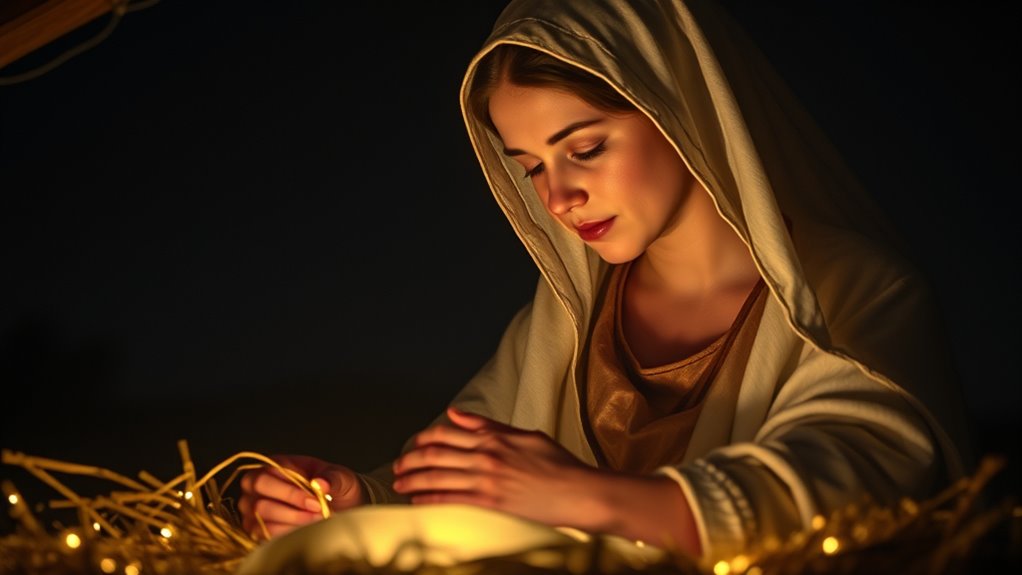
Contemporary perspectives on the doctrine of the Virgin Birth often challenge traditional interpretations, prompting theologians and scholars to reexamine its significance. Modern skepticism and scientific challenges question how a virgin birth aligns with biological and historical facts. Some argue that these issues undermine the credibility of the story, while others see it as a matter of faith beyond scientific explanation. Key points include:
- The difficulty reconciling scientific understanding with supernatural claims
- Debates over the historical accuracy of biblical accounts
- The role of metaphor versus literal truth in faith
- The influence of modern skepticism on theological discussions
These perspectives push you to contemplate whether the doctrine is a literal event or a symbol of divine intervention, shaping ongoing theological debates.
The Impact of the Virgin Birth on Christian Worship and Faith

The doctrine of the Virgin Birth deeply influences how you approach worship and your understanding of divine intervention. It reinforces the belief that Jesus’ origins are miraculous, highlighting God’s direct involvement in human history. This truth shapes worship practices by inspiring reverence and awe, reminding you of God’s power and sovereignty. It also strengthens your faith foundation, anchoring your trust in God’s ability to intervene beyond natural laws. Celebrations like Christmas emphasize this mystery, fostering a sense of wonder and humility. Recognizing the Virgin Birth helps you see Jesus as both fully divine and fully human, deepening your connection to the divine mystery. Overall, it challenges you to embrace a faith rooted in divine intervention, inspiring worship that honors God’s miraculous acts.
Frequently Asked Questions
How Do Different Christian Denominations View the Virgin Birth?
You might wonder how different Christian denominations view the virgin birth. Biblical interpretations vary, shaping their denominational beliefs. Many, like Catholics and Orthodox, see it as a divine miracle essential to Jesus’ identity. Protestants generally accept it as a key doctrine, but some interpret it symbolically. Overall, your understanding depends on how your denomination emphasizes scriptural authority and tradition in shaping its views on this foundational event.
What Scientific Explanations Have Been Proposed for the Virgin Birth?
Some skeptics suggest scientific scenarios like a miraculous conception involving divine intervention, but no verified scientific explanation exists. You might consider biological boundaries broken by divine power, or explore theories like parthenogenesis, which is a natural form of asexual reproduction. Still, these ideas don’t fully explain the miraculous conception, as many see it as a divine mystery beyond scientific scope, emphasizing faith over factual explanation.
Are There Any Historical Records Outside the Bible Supporting the Virgin Birth?
You might wonder if ancient texts or archaeological evidence support the virgin birth. Unfortunately, there are no direct references outside the Bible that confirm it. Some early Christian writings mention it, but these are not considered independent historical sources. Archaeological evidence related to the event also doesn’t exist. Therefore, while the idea is central to Christian belief, historical records outside scripture are lacking.
How Does the Virgin Birth Influence Christian Views on Jesus’ Resurrection?
Like a cornerstone in a grand cathedral, the virgin birth underscores divine intervention in Jesus’ life. It boosts your faith significance, affirming His divine nature and power over death. This belief strengthens your confidence in His resurrection, showing it’s not just a miracle but evidence of God’s direct involvement. Without the virgin birth, the resurrection might seem less miraculous, but with it, you see a divine plan, inspiring trust and hope.
What Are the Ethical Implications of the Virgin Birth Doctrine?
You might wonder about the ethical implications of the virgin birth doctrine, especially as it sparks moral dilemmas and theological debates. It challenges you to contemplate issues like purity, divine intervention, and the nature of truth. These debates can influence your understanding of faith and morality, prompting you to reflect on how beliefs shape ethical standards and moral choices within your community and personal life.
Conclusion
So, next time you hear about the virgin birth, remember it’s not just a fairy tale but the cornerstone of Christian faith, proving Jesus’s divine identity and fulfilling ancient prophecies. Without it, Santa might be more believable than a Savior born of a miracle. Embrace the wonder, challenge skeptics, and keep the mystery alive—after all, it’s pretty miraculous that anyone still debates whether a virgin can give birth!