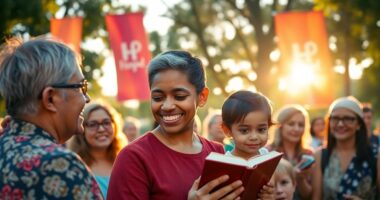
When you witness God’s power overseas, you see how faith challenges and transforms both you and the communities you serve. Cultural encounters require humility, patience, and respect as you adapt to local traditions while sharing your message. These moments deepen your understanding of faith, helping you grow personally and spiritually. Overcoming obstacles through prayer and perseverance reveals God’s strength at work. Keep exploring, and you’ll discover how these encounters build lasting connections rooted in love and grace.
Key Takeaways
- Cultural immersion fosters genuine relationships, allowing missionaries to witness God’s transformative power in diverse communities.
- Overcoming faith and cultural barriers deepens personal conviction and highlights God’s work amid challenges.
- Respectful engagement and adaptation demonstrate Christ’s love while honoring local traditions and customs.
- Faith challenges in cross-cultural settings strengthen perseverance, patience, and trust in God’s guidance.
- Sharing love through culturally sensitive approaches builds bridges that reveal God’s power to unite and transform.
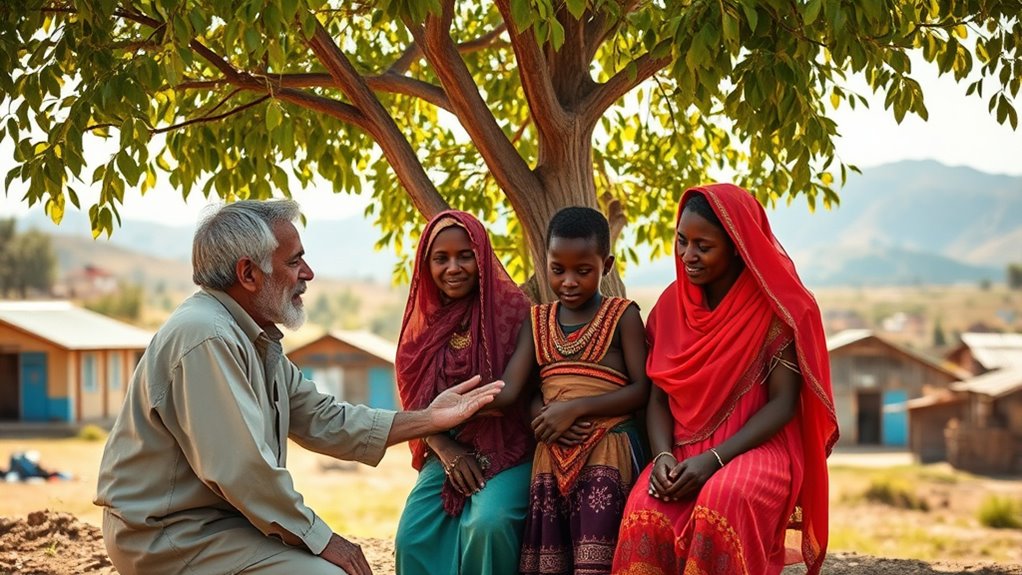
Have you ever wondered what happens when different cultures meet through missionary work? It’s a profound encounter, filled with opportunities for growth, understanding, and sometimes, unexpected challenges. When you step into a new community with the intention of sharing your faith, you quickly realize that cultural adaptation plays an essential role. People have deeply rooted traditions, languages, and worldviews that shape their daily lives. As a missionary, you’re called to navigate these differences respectfully and thoughtfully. This process isn’t always smooth; it often involves confronting faith challenges—not just from the community but within yourself. You might find that some beliefs clash with your own or that certain customs seem incompatible with your message. It’s in these moments that your patience, humility, and willingness to listen become indispensable. You learn that effective communication isn’t just about sharing your beliefs but understanding where others are coming from. You might discover that your approach needs to be flexible, adapting to local customs without compromising your core message. This balance is delicate but necessary for genuine connection and acceptance.
Cultural adaptation isn’t simply about language or dress; it’s about truly immersing yourself in the community’s way of life, respecting their values, and showing genuine interest. Sometimes, this means participating in local traditions or adjusting your methods of outreach. You may face resistance or skepticism, especially when deeply held beliefs are challenged. This can lead to faith challenges that test your resolve and convictions. You might question whether your efforts are making a difference or wonder if cultural barriers are too high to overcome. These moments can be difficult, but they also serve as catalysts for personal growth. They push you to deepen your understanding of faith—both your own and others’. Overcoming these challenges requires patience, perseverance, and an open heart. As you witness the power of God working through you and the community, you realize that transformation is possible even amidst difficulty. Additionally, embracing subconscious power during sleep can help you process and strengthen your faith experiences, enriching your ability to connect spiritually with others.
In the end, these encounters aren’t just about converting others; they’re about building bridges, fostering respect, and sharing the love of Christ in ways that resonate across cultural divides. The process of cultural adaptation and facing faith challenges becomes a affirmation to the strength of your conviction and the power of God’s grace. Every obstacle you face and every connection you make reinforces your belief that, with faith and humility, true understanding and change can happen, no matter where you are in the world.
Top picks for "missionary encounter witness"
Open Amazon search results for this keyword.
As an affiliate, we earn on qualifying purchases.
Frequently Asked Questions
How Do Missionaries Adapt to Different Cultural Norms?
You adapt to different cultural norms by practicing cultural sensitivity and embracing contextual adaptation. You listen actively to local customs and traditions, showing respect and openness. You tailor your message to resonate within the cultural framework, avoiding assumptions or judgments. By understanding and integrating local values, you build trust and foster genuine relationships, enabling your mission to be more effective and respectful of the community’s unique identity.
What Logistically Supports International Missionary Work?
You can support international missionary work through effective fundraising strategies and logistical coordination. Fundraising strategies include engaging local communities, online campaigns, and partnerships with churches or organizations. Logistical coordination involves planning travel, securing supplies, and managing accommodations. By focusing on these areas, you guarantee missionaries have the resources they need and can navigate the complexities of international work smoothly, ultimately making a more impactful witness of God’s power overseas.
How Do Missionaries Handle Language Barriers?
Did you know that over 7,000 languages are spoken worldwide? You handle language barriers by immersing yourself in local culture and language, which helps you connect deeper with people. You also rely on translation challenges, working closely with native speakers and interpreters to overcome misunderstandings. This hands-on approach allows you to communicate effectively, build trust, and share your message despite the complexities of language differences.
What Safety Concerns Do Missionaries Face Abroad?
You face safety concerns abroad like health risks and political instability. To stay safe, you monitor local news and health advisories closely, taking precautions like vaccinations and safe practices. You also avoid risky areas during protests or unrest. Staying connected with your organization and local contacts helps you navigate unpredictable situations. Prioritizing your safety guarantees you can continue your mission effectively while minimizing dangers from health threats and unstable political environments.
How Is Success Measured in Missionary Encounters?
You’ll find success in missionary encounters through subtle yet powerful signs of spiritual impact, like transformed lives or newfound faith. It’s not just about numbers but also cultural sensitivity—respecting local customs fosters genuine connections. When your efforts lead to meaningful change and deepen community trust, you know you’ve truly succeeded. The real victory lies in hearts touched and lives forever changed, making every challenge worth it.
Conclusion
As you reflect on your missionary encounters, you realize that witnessing God’s power overseas is like planting seeds in unfamiliar soil. Your efforts may seem small at first, but with faith, they grow into mighty trees that shelter and nourish others. Remember, even a small spark can ignite a great blaze. Keep trusting in God’s plan, for His work through you can turn the tide and light up the darkest corners of the world.