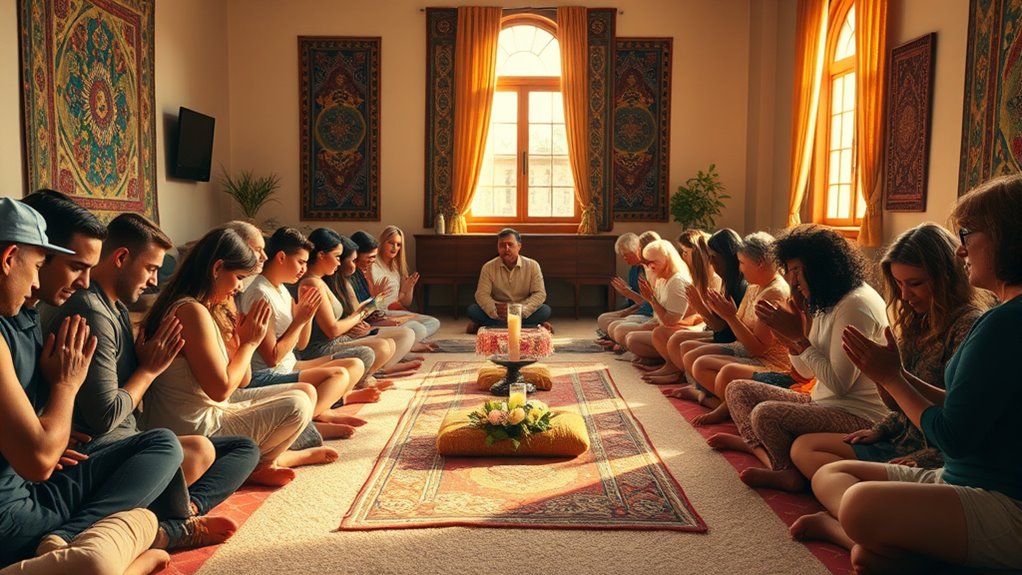

Praying with others through forming prayer groups strengthens your faith and deepens your connection with God. It creates a sense of community and shared purpose, making prayer more powerful and focused. Group prayer also encourages consistency, accountability, and offers support during tough times. As you join or start a prayer group, you’ll experience mutual encouragement, new perspectives, and lasting bonds of faith. Keep exploring how this communal approach can transform your spiritual journey.
Key Takeaways
- Establish a consistent schedule and choose a comfortable, private location for group prayer sessions.
- Invite trusted friends or community members who share similar spiritual goals and commitment.
- Define clear prayer topics or needs to focus collective prayer efforts effectively.
- Foster an environment of openness, accountability, and encouragement to strengthen bonds and sincerity.
- Use shared devotionals or prayer guides to enhance focus and deepen the spiritual experience.
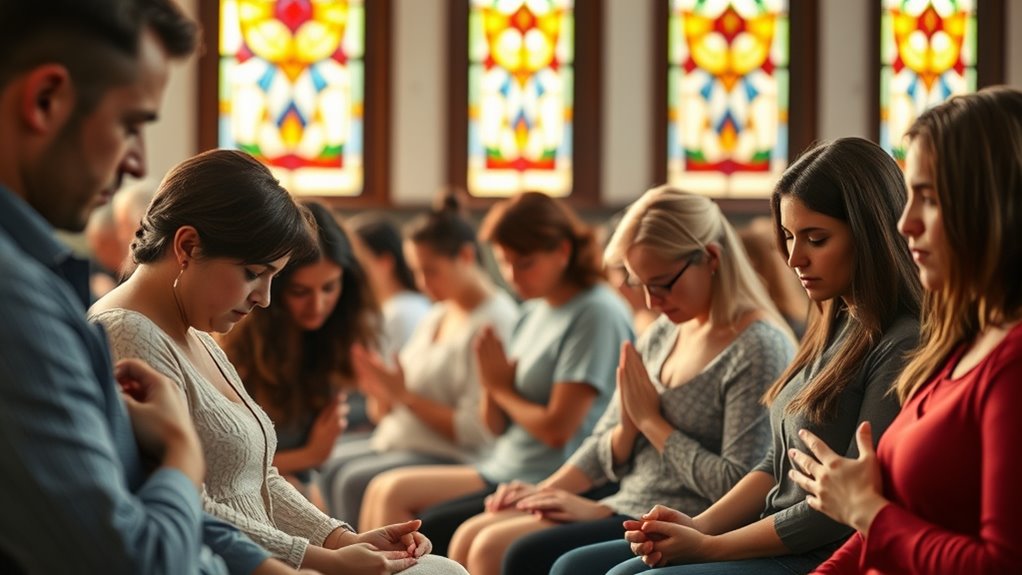
Have you ever experienced the power of praying with others? There’s something truly transformative about coming together with a group to lift up your concerns, hopes, and gratitude. When you join a prayer group, you tap into a collective spiritual energy that can deepen your connection with God and strengthen your faith. One of the key advantages of praying with others is the sense of group accountability. Knowing that others are counting on you to pray and participate can motivate you to stay committed, especially during busy or difficult times. It creates a shared responsibility that encourages consistency, making prayer a regular part of your life rather than something you do sporadically. This accountability also helps you stay focused and sincere in your prayers, knowing others are praying with you and for you.
Another significant benefit of prayer groups is the array of prayer partner benefits. When you pray with a partner or in a group, you benefit from different perspectives, insights, and encouragement. You might find that others’ testimonies or struggles resonate with your own, inspiring you to grow spiritually and foster empathy. Prayer partners can hold you accountable, remind you of your spiritual goals, and provide encouragement when you feel spiritually dry or overwhelmed. The mutual support creates a safe space where vulnerability is welcomed, and faith is nurtured. It’s easier to stay motivated when you’re not praying alone, especially during challenging seasons. Additionally, prayer groups often incorporate spiritual disciplines, enhancing your overall prayer experience and fostering deeper growth.
Furthermore, praying with others often leads to more specific and targeted prayers. When you share your needs and concerns, the group can pray intentionally and with more focus. The collective voice amplifies the power of prayer, which can feel more impactful than praying alone. Plus, praying as a group allows for immediate spiritual support; you can lift up urgent needs in real time, knowing others are standing with you in faith. This shared experience fosters a sense of community, reminding you that you’re not alone in your spiritual journey. The bonds formed through prayer groups often extend beyond the prayer itself, creating friendships rooted in faith and mutual care.
In essence, joining or forming a prayer group enriches your prayer life by providing accountability and a multitude of prayer partner benefits. It’s about more than just asking for help; it’s about building a supportive spiritual community that encourages growth, resilience, and hope. When you pray with others, you discover a powerful, uplifting force that can sustain you through life’s challenges and deepen your relationship with God.

A Guidebook to Prayer: 24 Ways to Walk with God
As an affiliate, we earn on qualifying purchases.
As an affiliate, we earn on qualifying purchases.
Frequently Asked Questions
How Do I Start a Prayer Group in My Community?
To start a prayer group in your community, first identify a convenient time and place for group activities. Invite friends or neighbors who share your faith, and decide on prayer formats that suit everyone, like shared readings or silent prayer. Promote your group through flyers or social media, emphasizing inclusivity and fellowship. As you gather regularly, encourage open sharing and support, helping your prayer group grow spiritually and community-wise.
What if Members Have Different Prayer Styles?
When members have different prayer styles, you should respect diverse prayer practices by encouraging open-mindedness and flexibility. Create a safe space where everyone feels comfortable sharing their unique approaches, whether silent meditation, spoken prayers, or song. Emphasize common goals like connection and faith, rather than uniformity. This way, your group fosters unity amid diverse prayer style differences, enriching everyone’s spiritual experience.
How Can I Keep Prayer Groups Inclusive and Welcoming?
Think of your prayer group as a vibrant garden, where every flower adds unique beauty. To keep it inclusive and welcoming, embrace diversity appreciation and use inclusive language that respects everyone’s background and prayer style. Encourage open sharing without judgment, and create a safe space where all voices are valued. By doing so, you’ll foster unity and deepen everyone’s spiritual journey, making your group a true reflection of love and acceptance.
What Are Common Challenges Faced by Prayer Groups?
You might face challenges like maintaining group cohesion and fostering spiritual growth. Differences in beliefs or schedules can create tension, making it hard to stay connected. Some members may feel hesitant to share or participate fully. To overcome these, encourage open communication, respect diverse views, and set regular, inclusive practices. This helps strengthen bonds, promotes spiritual growth, and keeps your prayer group united and meaningful for everyone involved.
How Do I Handle Disagreements Within the Group?
When disagreements arise, you should focus on conflict resolution by calmly listening to everyone’s perspective and encouraging respectful dialogue. Keep the group’s mission in mind and promote understanding to strengthen group cohesion. Address issues privately if needed, and avoid blame. By fostering open communication and patience, you help resolve conflicts effectively, ensuring the prayer group remains united and supportive in its spiritual journey.

Juvale Prayer Journals for Women – 6-Pack, 5 x 8 In, Floral Cover, 80 Pages – Christian Notebook for Women
Inspiring Journals: Discover our prayer journal for women, an ideal companion for daily reflection and spiritual growth. These…
As an affiliate, we earn on qualifying purchases.
As an affiliate, we earn on qualifying purchases.
Conclusion
When you pray with others, you create a powerful bond that can strengthen your faith and provide support during tough times. Imagine Sarah, who started a small prayer group and found comfort and clarity she never experienced alone. Praying together helps you share burdens, celebrate joys, and grow spiritually. So, don’t hesitate to gather with others—your collective faith can transform individual struggles into shared blessings. Together, you’ll discover the true power of prayer.

You're Going to Make It: 50 Morning and Evening Devotions to Unrush Your Mind, Uncomplicate Your Heart, and Experience Healing Today (A 50-Day Devotional)
As an affiliate, we earn on qualifying purchases.
As an affiliate, we earn on qualifying purchases.

828 Verse Box for Your Soul, Read Me When You Need Comfort – 108 Bible Verse Cards in 4 Categories (Fear, Struggle, Blessing, Healing) with Devotionals, Scripture Card for Daily Encouragement, Christian Gift Set, Religious Gifts for Woman, Easter Basket Stuffers, Valentines Day Gifts For Him, Her, Baptism Birthday Gifts for Women, Get Well Prayer Gift for Mother, Mom, Daughter, Best Friend
【 PULL A CARD. EXPERIENCE HIS COMFORT. 】 There are moments when you don't know what to do…
As an affiliate, we earn on qualifying purchases.
As an affiliate, we earn on qualifying purchases.