

Start by evaluating your past outreach efforts to see what worked best in inspiring faith and community involvement. Next, identify pressing needs within your neighborhood and develop inclusive programs that resonate with diverse groups. Rally volunteers and form meaningful partnerships to expand your reach. Monitor your progress regularly and stay flexible to make adjustments. For more ideas on how to craft effective ministry initiatives this year, keep exploring ways to energize your outreach plans.
Key Takeaways
- Evaluate past outreach efforts to identify successful strategies and areas needing improvement for targeted planning.
- Understand community needs through listening and observation to tailor relevant ministry initiatives.
- Develop inclusive, creative programs by collaborating with local organizations and congregation input.
- Mobilize volunteers and build partnerships by clearly communicating goals and recognizing contributions.
- Monitor progress regularly and adjust strategies based on feedback and data to ensure ongoing effectiveness.
Assessing Past Outreach Efforts and Setting New Goals

To effectively plan your future outreach efforts, you need to start by thoroughly evaluating what your church has done in the past. Review previous initiatives to identify what fostered faith renewal and spiritual growth within your congregation. Consider which programs resonated most and led to increased engagement or deeper connections with faith. Reflect on areas where outreach fell short or missed opportunities for spiritual renewal. Set clear, measurable goals based on these insights, focusing on strengthening faith and encouraging spiritual growth. This process helps you recognize effective strategies and avoid repeating ineffective ones. By understanding your past efforts, you can develop targeted, impactful outreach plans that nurture faith renewal and stimulate ongoing spiritual growth among your members and community. Additionally, maintaining a transparent affiliate disclosure can help build trust with your congregation when sharing resources or recommended programs.
Identifying Community Needs and Opportunities for Engagement

Building on your reflection of past outreach efforts, the next step is to identify the specific needs and opportunities within your local community. Start by listening to community members and observing patterns to understand pressing issues. Prioritize cultural sensitivity, ensuring your outreach respects diverse backgrounds and traditions. This approach helps build trust and fosters genuine engagement. Evaluate your current resources and consider how best to allocate them to address identified needs effectively. Focus on areas where your church can make a meaningful impact, such as supporting local schools, helping homeless populations, or addressing health disparities. Developing Cultural Intelligence can greatly enhance your ability to connect authentically across diverse groups. By clearly understanding these needs and opportunities, you set a strong foundation for impactful and respectful outreach initiatives that truly serve your community.
Developing Creative and Inclusive Program Ideas
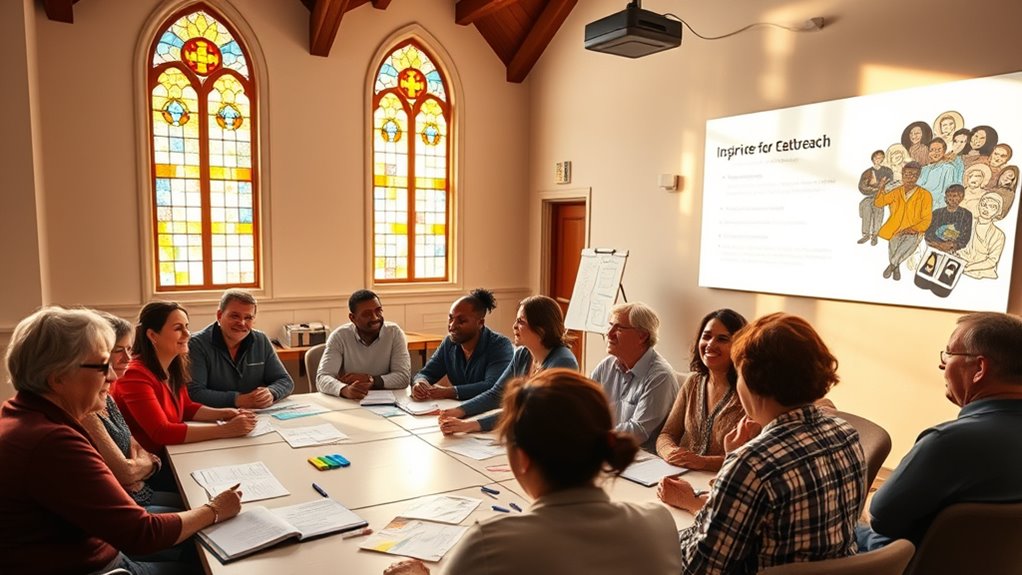
How can you guarantee your church’s programs resonate with everyone in the community? Start by fostering faith-based collaborations that bring diverse groups together, creating a sense of unity. Then, focus on developing innovative programming that addresses current needs creatively. Here are four ways to do this:
- Brainstorm with your congregation to generate fresh, inclusive ideas.
- Partner with local organizations to expand your reach and resources.
- Incorporate cultural and social elements to make programs more relatable.
- Use feedback to refine and adapt initiatives, ensuring they remain relevant.
Mobilizing Volunteers and Building Partnerships
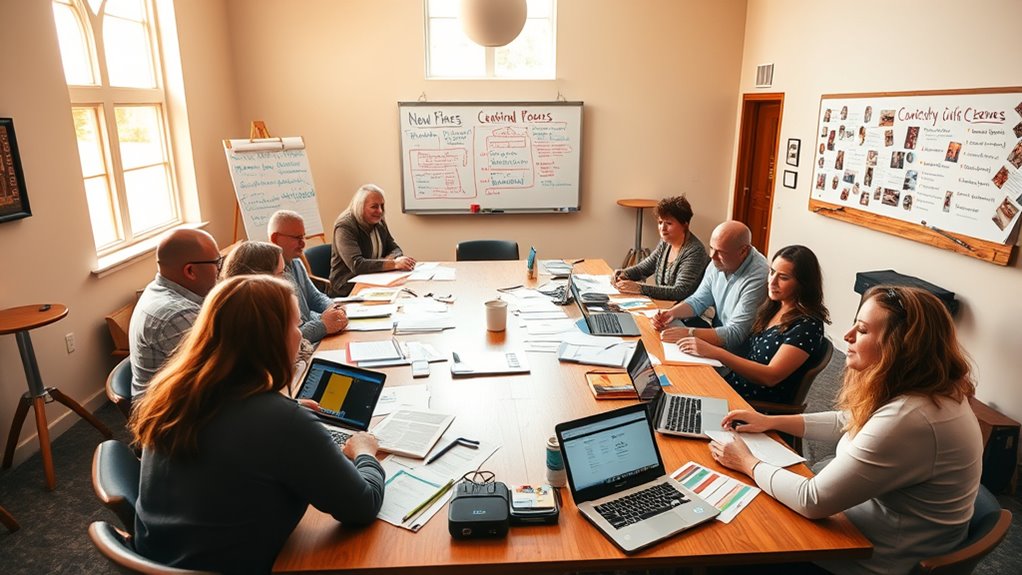
Mobilizing volunteers and forging strong partnerships are key steps in turning your inclusive programs into lasting community impacts. Effective volunteer recruitment guarantees you have passionate people ready to serve and support your initiatives. Building partnerships with local organizations, businesses, and community leaders expands your reach and resources. To succeed, communicate your vision clearly, highlight mutual benefits, and involve potential partners early in the planning process. Consider using the table below to identify key steps:
| Volunteer Recruitment | Partnership Development | Engagement Strategies |
|---|---|---|
| Create targeted outreach efforts | Network at community events | Regular meetings and updates |
| Offer clear roles and training | Share resources and goals | Celebrate successes together |
| Recognize volunteers’ contributions | Build long-term relationships | Foster mutual trust and respect |
This approach maximizes your ministry’s impact and sustainability. Additionally, understanding support hours for various entertainment venues can help you schedule community outings effectively, ensuring maximum participation and enjoyment.
Monitoring Progress and Adjusting Strategies Throughout the Year

To guarantee your ministry stays on track and achieves its goals, regularly monitoring progress is essential. It helps you identify what’s working and what needs adjustment. Start by collecting data consistently to track key metrics. Next, gather stakeholder feedback to understand the community’s needs and perceptions. Then, review your ministry’s activities against your goals, adjusting strategies as necessary. Finally, communicate progress with your team to maintain motivation and clarity. Using data collection and stakeholder feedback ensures you’re making informed decisions. Always be open to tweaking your approach based on insights gained. Incorporating emotional support strategies can also enhance your engagement with the community during this process. This ongoing process keeps your ministry dynamic and responsive, helping you stay aligned with your mission and serve your congregation effectively.
Frequently Asked Questions
How Can We Ensure Our Outreach Aligns With Our Church’s Core Values?
To guarantee your outreach aligns with your church’s core values, focus on mission alignment by clearly defining your church’s mission. Regularly evaluate your initiatives to maintain value consistency, asking if each activity reflects your core beliefs. Engage your congregation for feedback, and prioritize outreach efforts that resonate with your church’s purpose. This approach keeps your ministry authentic and ensures your outreach truly embodies what your church stands for.
What Are Effective Ways to Involve Youth in Ministry Planning?
Did you know that churches with active teen leadership see a 40% higher engagement rate? To involve youth in ministry planning, encourage their feedback and create leadership roles tailored for teens. Invite them to participate in brainstorming sessions and decision-making. Empower their voice, and you’ll foster a sense of ownership, making ministry initiatives more vibrant and relevant. Your youth will feel valued, leading to a stronger, more connected congregation.
How Do We Measure Long-Term Impact of Outreach Initiatives?
You measure long-term impact by regularly analyzing data analysis and success metrics. Track changes in community engagement, spiritual growth, and how outreach efforts influence behaviors over time. Set clear goals and review progress periodically, adjusting strategies as needed. This approach helps you see if your initiatives foster sustained relationships and meaningful change, ensuring your outreach remains effective and aligned with your church’s mission.
What Strategies Foster Inclusivity Among Diverse Community Groups?
You can foster inclusivity by actively engaging in multicultural outreach, showing genuine curiosity about different traditions and perspectives. Collaborate with diverse community groups to build trust and create shared spaces where everyone feels valued. Keep the door open for ongoing dialogue and adapt your programs based on feedback. This approach not only strengthens relationships but also reveals unexpected connections, making your outreach efforts truly transformative and welcoming for all.
How Can We Secure Funding for New Outreach Projects?
You can secure funding for your outreach projects by honing your grant writing skills and building strong partnerships. Focus on crafting compelling grant proposals that highlight your project’s impact and community benefits. Simultaneously, nurture relationships with local organizations, businesses, and donors to create collaborative opportunities. These partnerships can provide additional funding, resources, or in-kind support, giving your outreach initiatives a better chance of success and sustainability.
Conclusion
By thoughtfully evaluating your past efforts and setting clear goals, you can create meaningful outreach that truly impacts your community. Remember, some might think new initiatives require extensive resources, but often, simple, intentional actions make the biggest difference. Stay flexible, monitor your progress, and adapt as needed. With your dedication and strategic planning, your church’s ministry initiatives can flourish this year, fostering deeper connections and lasting change.