

As part of your community, you can help address the opioid crisis by creating safe spaces through outreach, prayer groups, and mentorship programs. Educate others about addiction risks, dispel myths, and promote compassionate understanding. Partner with health professionals and support local prevention efforts. Your active involvement can inspire hope, reduce stigma, and guide those affected toward recovery resources. To discover more ways you can make a difference, learn how faith-based actions create lasting change.
Key Takeaways
- Churches can create prayer groups, mentorship programs, and peer support networks to provide spiritual guidance and emotional support for those affected.
- Organize community workshops and seminars to educate and dispel myths about opioid addiction, reducing stigma.
- Promote safe medication practices and disposal, tailoring outreach for different age groups to prevent misuse.
- Collaborate with health professionals and advocacy groups to connect individuals with treatment and recovery resources.
- Foster a compassionate, accepting environment within faith communities to rebuild hope and strengthen families impacted by addiction.
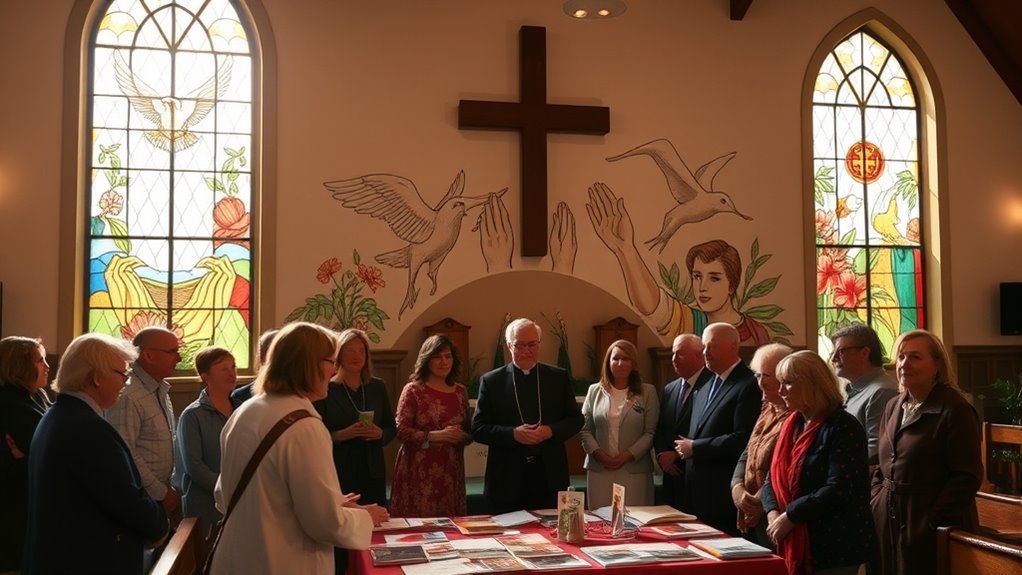
The opioid crisis continues to devastate communities across the country, demanding urgent and coordinated action. As a member of your faith community, you have an essential role to play in addressing this epidemic. Churches can serve as safe havens and catalysts for change by actively engaging in faith-based outreach and community education. These efforts not only provide critical support but also foster understanding, compassion, and resilience among those affected.
Faith-based outreach allows you to connect with individuals struggling with addiction in a meaningful way. Your church can create programs that offer hope, spiritual guidance, and practical assistance. By reaching out directly, you demonstrate that no one is alone in their fight against addiction. This outreach might include prayer groups, mentorship programs, or peer support networks, all rooted in compassion and faith. These initiatives help break down the stigma surrounding addiction, encouraging individuals to seek help without fear of judgment.
Community education is equally essential. Many people lack awareness of the scope of the opioid crisis, the signs of addiction, and available resources. As part of your church’s response, you can organize workshops, seminars, or informational sessions that dispel myths and provide factual knowledge. These educational efforts empower community members to recognize the early warning signs of opioid misuse and understand how to respond appropriately. By partnering with local health agencies or addiction specialists, your church can serve as a trusted source of information, helping to reduce stigma and misinformation.
In addition to education, your church can promote preventative measures, such as safe prescribing practices and proper medication disposal. Educational campaigns can be tailored to different age groups, ensuring that youth, parents, and seniors all receive relevant, age-appropriate information. When the community understands the risks and how to prevent addiction, it becomes easier to foster a proactive approach to combating the crisis.
You can also leverage faith-based outreach and community education to connect individuals with treatment options, recovery programs, and support groups. Your church’s role isn’t just about raising awareness but actively guiding those in need toward resources that can help them regain control of their lives. By fostering an environment of acceptance and hope, your faith community can become a beacon of recovery and resilience.
Understanding the importance of thorough due diligence and evidence-based strategies, your church can also collaborate with health professionals and advocacy groups to implement effective programs. Ultimately, your church’s involvement in faith-based outreach and community education can transform the narrative around addiction. It’s about creating a culture of compassion, understanding, and proactive support—one that empowers individuals, strengthens families, and rebuilds communities in the face of this ongoing crisis.

Overcoming Opioid Addiction: The Authoritative Medical Guide for Patients, Families, Doctors, and Therapists
As an affiliate, we earn on qualifying purchases.
As an affiliate, we earn on qualifying purchases.
Frequently Asked Questions
How Can Churches Collaborate With Healthcare Providers Effectively?
You can collaborate with healthcare providers by engaging in community outreach and developing faith-based initiatives that promote awareness and prevention. Partner with local clinics to organize educational events, offer support groups, and share resources. By actively working together, you create a supportive environment that reduces stigma and encourages people to seek help. This partnership strengthens your church’s role in healing and recovery efforts, making a meaningful impact on the community.
What Training Do Church Leaders Need to Address Opioid Issues?
You need training in prevention strategies and spiritual counseling to effectively address opioid issues. Focus on learning about substance abuse signs, overdose prevention, and how to guide individuals through recovery spiritually. By developing skills in prevention strategies, you can better support affected community members. Incorporate spiritual counseling techniques to offer hope and emotional healing, creating a compassionate environment that encourages recovery and reduces stigma around addiction.
How Can Churches Support Families Affected by Addiction?
Think of your church as a lighthouse guiding families through stormy seas of addiction. You can support them through faith-based outreach and building strong family support networks. Offer counseling, prayer groups, and resources to help loved ones heal and rebuild. By standing together, you create a safe harbor where hope flourishes, showing families they’re not alone and that recovery is possible with faith and community by their side.
What Are Successful Examples of Church-Led Recovery Programs?
You can implement successful church-led recovery programs by focusing on faith-based outreach and peer support groups. These programs often include prayer circles, mentorship, and education that strengthen participants’ spiritual growth. You might also organize regular meetings where individuals share experiences and encourage one another. By fostering a supportive community rooted in faith, you help people find hope and motivation to overcome addiction, making your church a crucial part of their recovery journey.
How Can Churches Combat Stigma Around Addiction Within Their Communities?
You can combat stigma around addiction by promoting faith-based outreach and community education. Share stories of recovery and emphasize compassion to break down misconceptions. Encourage your congregation to understand addiction as a health issue rather than a moral failing. Hosting workshops and open dialogues fosters understanding and support. By actively engaging in these efforts, you create a more accepting environment that empowers those struggling with addiction to seek help.

RX Pill Disposal XL, Safe Effective Solution, Destroy and Deactivate Prescription Medication Drug Medicines, XLarge 64oz Capacity – 4 Pack with 1 Funnel
As an affiliate, we earn on qualifying purchases.
As an affiliate, we earn on qualifying purchases.
Conclusion
You can make a real difference by supporting those affected by the opioid crisis. Did you know that over 10 million people worldwide misuse opioids? By volunteering, advocating, and fostering compassionate communities, you help save lives and offer hope. Your actions can break the cycle of addiction and bring healing. Together, churches have the power to turn the tide and show love in tangible ways that truly matter.

The Christian 12 Step Addiction Recovery Workbook:: A Biblical Study Guide to Faith-Based Healing, Sobriety, and Spiritual Freedom Through Scripture (Incl. 4th and 10th Step Inventory Worksheets)
As an affiliate, we earn on qualifying purchases.
As an affiliate, we earn on qualifying purchases.

ALGRA Fentanyl Facts Poster 24 x 36 Laminated – Drug Awareness Educational Wall Chart for Schools, Classrooms & Community – Opioid Overdose Prevention & Safety Guide
LIFE-SAVING EDUCATION TOOL Clearly explains what fentanyl is, why it’s extremely potent (50x stronger than heroin, 100x stronger…
As an affiliate, we earn on qualifying purchases.
As an affiliate, we earn on qualifying purchases.