Three Kings Day, or Día de Reyes, is a lively Hispanic celebration that marks the biblical visit of the Magi to Jesus. It celebrates faith, divine recognition, and community traditions. You’ll see colorful parades, enjoy special treats like Rosca de Reyes, and share in customs passed down through generations. The holiday features rich symbolism, honoring the Wise Men’s gifts and journey. If you explore further, you’ll discover how this meaningful event continues to evolve today.
Key Takeaways
- Día de Reyes celebrates the visit of the Magi to baby Jesus, emphasizing Christian faith and recognition of Jesus as the Savior.
- It features colorful parades, community gatherings, and traditional foods like Rosca de Reyes.
- The holiday symbolizes spiritual gifts and divine wisdom, highlighting humility and reverence.
- Customs include gift-giving, nativity displays, and cultural performances rooted in Hispanic tradition.
- Modern celebrations incorporate virtual events and social media to engage younger generations while preserving cultural significance.
Top picks for "three king epiphany"
Open Amazon search results for this keyword.
As an affiliate, we earn on qualifying purchases.
The Origins and Religious Significance of Día De Reyes
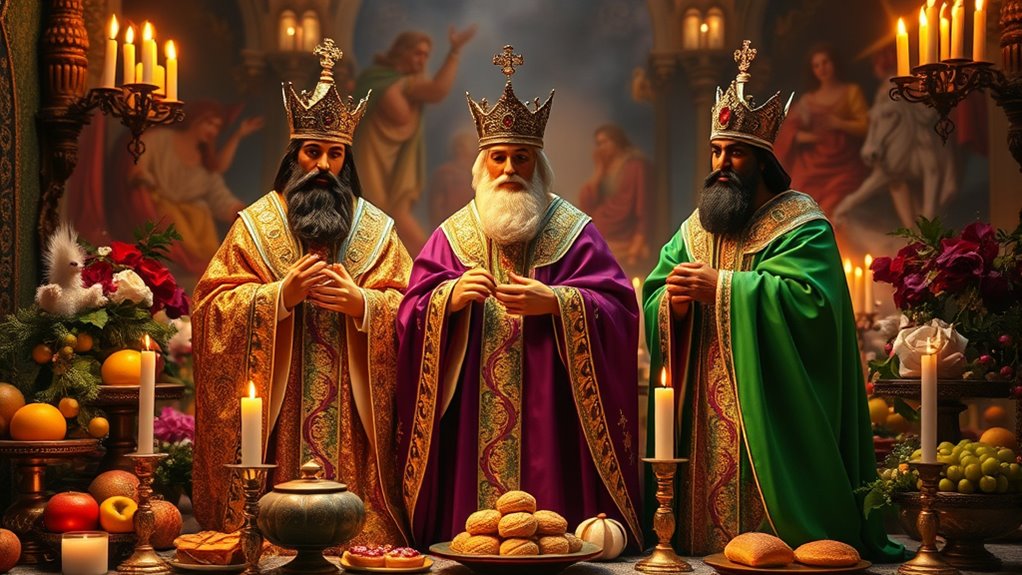
Día de Reyes, also known as Three Kings Day, traces its origins to Christian traditions that celebrate the visit of the Magi to the infant Jesus. This event is depicted in the nativity scene, which illustrates the biblical story of their journey. The Magi, guided by a star, bring gifts of gold, frankincense, and myrrh, symbolizing Jesus’ significance. This celebration emphasizes the religious importance of recognizing Jesus as the Savior. Historically, it marks the Epiphany, a day dedicated to acknowledging Jesus’ divine nature. The biblical story underscores the Magi’s role as the first non-Jews to honor Christ, highlighting themes of faith and revelation. The Epiphany also symbolizes the manifestation of divine light to the world, reinforcing its spiritual significance for many Hispanic communities.
Traditional Celebrations and Customs Across Hispanic Countries

Across Hispanic countries, you’ll find vibrant Three Kings Day parades that fill streets with music and colorful floats. Traditional foods and treats are shared among families, highlighting regional flavors and customs. You’ll also notice gift-giving practices that reflect deep-rooted traditions, making each celebration uniquely special. Many communities incorporate cultural and religious significance into their festivities, emphasizing the holiday’s spiritual importance.
Three Kings Day Parades
Throughout many Hispanic countries, Three Kings Day parades are vibrant, lively celebrations that bring communities together to honor the arrival of the Wise Men. These parades showcase spectacular floats, lively music, and cultural performances that captivate spectators. You’ll notice how musical traditions, like mariachi bands or traditional drumming, fill the streets with energy. To fully enjoy these festivities, keep an eye out for:
- Colorful floats representing different countries or regions
- Performers dressed as the Wise Men and angels
- Live performances of traditional dances and music
These elements create an atmosphere of joy and unity, emphasizing cultural pride. The parades serve as a reminder of the significance of the event, blending tradition with community spirit in a truly unforgettable way. Incorporating traditional decor and festive costumes further enhances the celebratory ambiance.
Traditional Foods and Treats
On Three Kings Day, families and communities indulge in special foods and treats that celebrate the occasion. One popular tradition is baking the “roscón de reyes,” a sweet bread often decorated with candied fruits and sometimes hiding a small figurine or a bean inside. This treat symbolizes the star symbolism that guided the Wise Men to the nativity scene, representing hope and guidance. In many households, nativity scenes are also central, with food displays arranged around them, highlighting the story of Jesus’ birth. Sharing these foods fosters community spirit and honors cultural customs. The star motif appears in various treats, reminding everyone of the journey of the Wise Men, emphasizing the spiritual significance of the celebration. Additionally, asset division strategies can be important in various aspects of life, including planning for future celebrations or managing family assets during significant events.
Gift-Giving Customs
During Three Kings Day celebrations, gift-giving is a cherished tradition that varies across Hispanic countries. You might notice different gift exchange traditions, but the goal remains the same: to celebrate generosity and faith. Here are some ideas to inspire your holiday gift ideas:
- Small, meaningful toys or books for children, symbolizing the gifts brought by the Wise Men.
- Personalized or homemade gifts that reflect family traditions.
- Practical items or treats, like sweets or crafts, shared during family gatherings.
These customs emphasize thoughtfulness over extravagance. Whether exchanging presents in Mexico, Puerto Rico, or Spain, the focus is on creating joyful moments and honoring cultural traditions. Incorporating traditional customs such as community sharing and meaningful symbolism can enhance the festive spirit. Keep these ideas in mind to make your gift exchange memorable and heartfelt.
Festive Foods and Treats Associated With the Holiday

Festive foods and treats play a central role in celebrating Three Kings Day, bringing families and communities together to enjoy delicious traditions. As you gather around nativity scenes, you’ll notice special foods that symbolize the holiday’s spirit. The star-shaped bread called Rosca de Reyes is a highlight, often decorated with candied fruits and hidden surprises inside. Sharing these treats is a joyful activity, often accompanied by lively holiday music that enhances the festive atmosphere. Kids enthusiastically search for the tiny figurine hidden in the bread, symbolizing the King’s visit. These culinary traditions create lasting memories and deepen connections, making the holiday not just about religious significance but also about celebrating togetherness through flavorful, meaningful customs. Additionally, culinary customs during this celebration often include traditional beverages like hot chocolate and tamarind drinks that warm everyone during festive gatherings.
Parades, Processions, and Community Events
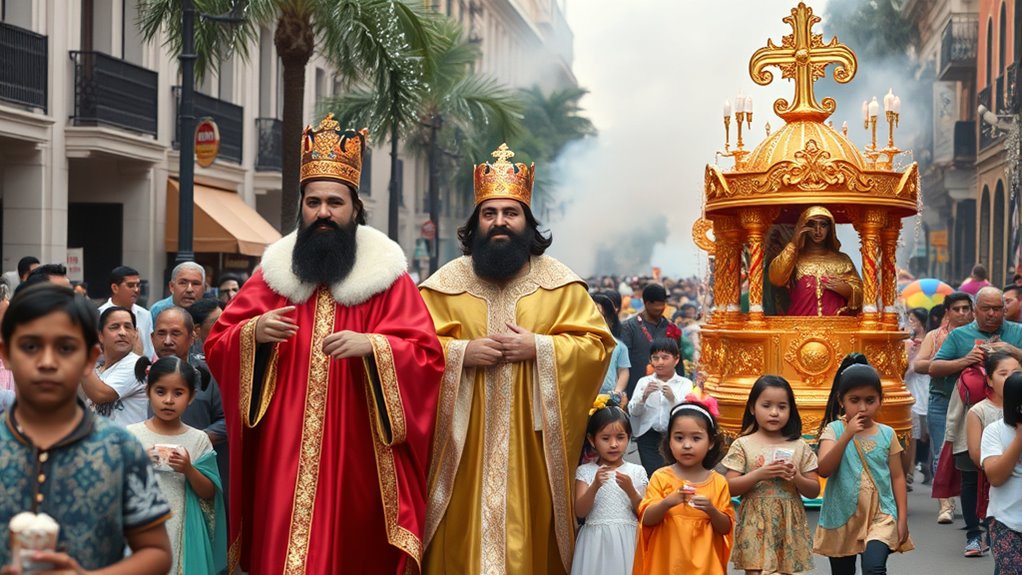
Parades, processions, and community events bring Three Kings Day celebrations to life, transforming neighborhoods into vibrant displays of culture and faith. You’ll see participants dressed in colorful cultural attire, adding authenticity and flair. The streets come alive with lively musical performances, creating an energetic atmosphere. Here are three highlights to look out for:
- Elaborate parades featuring floats and performers
- Community processions honoring the Three Wise Men
- Cultural dance and music showcases
These events foster a sense of unity and tradition, inviting everyone to participate and enjoy. The combination of vibrant costumes and spirited music makes these celebrations unforgettable, emphasizing the community’s shared heritage and devotion. Additionally, embracing spirituality and mindfulness during these festivities can deepen the sense of connection and reverence.
Symbolism and Meaning Behind the Three Wise Men

The gifts the Three Wise Men bring—gold, frankincense, and myrrh—each carry deep symbolic meaning. These offerings represent their recognition of Jesus’ kingship, divinity, and suffering. Understanding these symbols helps you appreciate the spiritual significance behind the tradition. Additionally, the secure payment processing used during gift exchanges reflects the importance of trust and integrity in cultural celebrations.
Gifts of Gold, Frankincense, Myrrh
The gifts brought by the Three Wise Men—gold, frankincense, and myrrh—carry deep symbolic meaning rooted in both tradition and spiritual significance. These gifts reflect the cultural significance of honor and reverence for the newborn king. Each gift has a special purpose:
- Gold symbolizes kingship and wealth, honoring Jesus as a spiritual ruler.
- Frankincense represents divinity and worship, emphasizing Jesus’s divine nature.
- Myrrh signifies suffering and death, foreshadowing Jesus’s future sacrifice.
These gift traditions highlight the importance of symbolic offerings during Epiphany celebrations. They serve as more than material presents; they embody respect, reverence, and spiritual insight, reinforcing the cultural significance of honoring the Christ child during Three Kings Day. Additionally, understanding the role of these gifts deepens our appreciation for their historical and cultural context.
Symbols of Spiritual Kingship
The gifts of gold, frankincense, and myrrh do more than symbolize offerings; they embody the deeper meaning of spiritual kingship represented by the Three Wise Men. Their royal crowns and regal robes reflect their authority and divine recognition. These symbols highlight that true kingship isn’t about wealth or power but about spiritual guidance and humility. The Wise Men’s journey signifies the pursuit of divine wisdom, emphasizing humility over earthly riches. Additionally, understanding the significance of Efficient General Ledger Coding can help organizations better interpret such symbolic gestures within their own financial and spiritual contexts.
Modern Celebrations and How They Evolve Today

As communities continue to celebrate Three Kings Day, modern traditions blend with centuries-old customs, creating vibrant and evolving festivities. Today, you’ll notice several ways celebrations adapt to contemporary times:
- Modern adaptations include themed parades and virtual events that reach wider audiences.
- Social media influence amplifies the celebration, with families sharing photos, recipes, and stories online.
- Interactive activities like online gift exchanges and digital storytelling keep traditions alive while engaging younger generations.
These changes help preserve the cultural significance of Día de Reyes while making it relevant in today’s digital age. You become part of a dynamic tradition that honors history and embraces innovation, ensuring these celebrations continue to thrive.
Frequently Asked Questions
How Do Different Countries Uniquely Celebrate Día De Reyes?
You’ll notice cultural variations and festive customs across countries celebrating Día de Reyes. In Spain, you might enjoy parades and the tradition of leaving shoes out for gifts, while in Mexico, children enthusiastically await the arrival of the Three Kings with special pastries called Rosca de Reyes. In Puerto Rico, community parades and musical celebrations are common. Each country adds its unique flair, making Día de Reyes a vibrant, cherished event worldwide.
What Are the Historical Origins of the Three Wise Men Figures?
Imagine scrolling through social media in biblical times—this is where the biblical origin of the Three Wise Men begins. These figures symbolize the cultural symbolism of honoring gift-giving and guidance. Historically, they represent the Magi, who visited Jesus after his birth, guided by a star. Their story has evolved into a tradition that highlights reverence and celebration, blending ancient beliefs with modern festivities in many cultures today.
How Has Commercialization Affected Traditional Día De Reyes Celebrations?
Commercial influences have considerably impacted traditional Día de Reyes celebrations, shifting focus toward gift exchanges and consumerism. You might notice that stores promote special sales or that children anxiously anticipate presents from the Three Wise Men, sometimes overshadowing the holiday’s cultural and religious roots. This commercialization encourages spending and materialism, which can dilute the original meaning of the holiday, making it more about shopping than celebrating the historical and spiritual significance.
Are There Specific Regional Legends Associated With the Holiday?
You’ll find that regional folklore and local traditions make Día de Reyes unique across different areas. In some places, children leave out grass for the camels, while others tell stories of the Wise Men’s journey or the star guiding them. These legends and customs vary, giving each community a special way to celebrate. Embracing these local traditions keeps the holiday meaningful and deeply rooted in regional culture.
How Do Children Participate in and Anticipate Día De Reyes Festivities?
You enthusiastically participate in Día de Reyes festivities by preparing your shoe or special box for the Three Wise Men’s gifts, dreaming of sweet treats and toys. You watch festive parades, often with colorful floats and music, anticipating the arrival of the Kings. On January 6th, you exchange gifts with family, celebrating the holiday’s spirit of giving, and enjoy traditional sweets like roscón de reyes.
Conclusion
As you celebrate Día de Reyes, you step into a vibrant world bursting with color, tradition, and joy that could light up the entire universe! The parades, the sweet treats, and the heartfelt customs create a magic so powerful, it feels like the stars themselves are dancing just for you. This holiday isn’t just a day—it’s an explosion of culture and love that will stay with you forever, shining brighter than a thousand suns!