You’ll discover how Our Lady of Guadalupe’s appearance to Juan Diego in 1531 transformed Mexican faith and culture. Her image, seen on the tilma, symbolizes hope, humility, and divine intervention, blending indigenous traditions with Christianity. This miraculous event inspired devotion, led to widespread pilgrimages, and became a powerful cultural symbol. If you keep exploring, you’ll uncover the deeper significance of her story and her lasting impact on society today.
Key Takeaways
- The story of Our Lady of Guadalupe begins with Juan Diego’s 1531 encounter with the Virgin Mary on Tepeyac Hill.
- The miraculous image appeared instantly on Juan Diego’s tilma and has remained intact for centuries, symbolizing divine intervention.
- The image’s vibrant colors and symbolic motifs foster faith, hope, and cultural unity among Mexican communities.
- Her story and image merged indigenous and Spanish traditions, strengthening cultural identity and spiritual resilience.
- Celebrated annually on December 12th, her feast day features processions, rituals, and artwork, affirming her ongoing significance.

DICAFU Our Lady of Guadalupe Religious Statue, 11.6 inch Virgin Mary Figurine, Resin Sculpture, Inspirational Religious Art for Home Decor/Catholic Gift, Mother Mary Statue
Handcrafted Virgin Mary Statue: Each 11.6-inch resin sculpture is meticulously handmade by artisans, requiring hours of detailed work…
As an affiliate, we earn on qualifying purchases.
As an affiliate, we earn on qualifying purchases.
The Historical Context of 16th Century Mexico
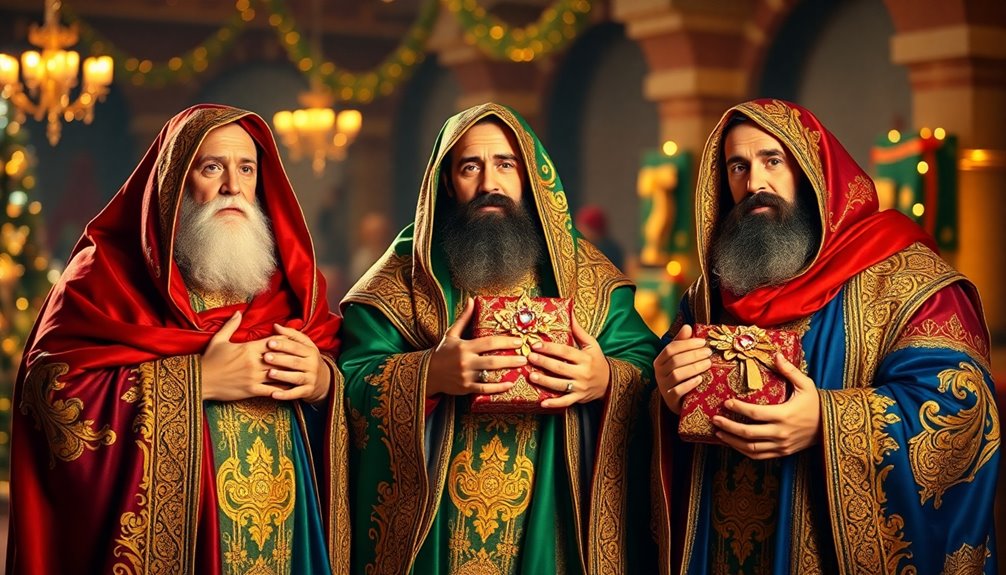
In the 16th century, Mexico was undergoing profound changes as Spanish explorers and conquistadors arrived, bringing new political structures, religious beliefs, and cultural influences. Colonial influence transformed indigenous societies, replacing their traditional governance with Spanish authority. This period also saw religious syncretism, where indigenous beliefs blended with Catholic practices, shaping Mexico’s spiritual landscape. You would notice how native traditions merged with Christian iconography, creating a unique cultural fabric. The arrival of Christianity was not just about conversion; it involved adapting local customs into a new religious framework. This complex interaction between colonial powers and indigenous peoples set the stage for Mexico’s rich, layered history, influencing everything from social hierarchies to spiritual life. It was a time of profound cultural transformation, laying the groundwork for the stories that would follow. Additionally, the use of diverse religious artifacts reflected this cultural blending, emphasizing the syncretic nature of Mexican spirituality.

Magnet Our Lady Of Guadalupe Tilma Replica Magnet Vinyl Decal Sticker 5"
Size: 5 Inches – Each magnet is meticulously cut to perfection, ensuring clean and smooth edges
As an affiliate, we earn on qualifying purchases.
As an affiliate, we earn on qualifying purchases.
Juan Diego and the First Apparition

Juan Diego, a humble indigenous peasant, played a crucial role in the story of Our Lady of Guadalupe when he encountered the Virgin Mary on Tepeyac Hill in December 1531. This first apparition marked the beginning of a profound spiritual event that inspired miraculous healings and renewed faith. After his encounter, countless pilgrims traveled to Tepeyac to witness the site of the apparition, fostering vibrant festivals honoring Our Lady. These pilgrimages became an essential part of Mexican culture, drawing people from all walks of life. The story of Juan Diego’s vision spread quickly, strengthening devotion and inspiring acts of charity. His encounter with the Virgin Mary continues to symbolize hope and unity, making the Guadalupe story one of the most significant religious events in Mexico’s history.

Vintage Gold Framed Virgin Mary Wall Art Lady of Guadalupe Portrait Canvas Prints Blessed Mother Catholic Picture Religious Beliefs Painting Poster Artwork for Living Room Church Prayer Room
Gold Framed Catholic Wall Art: This framed Our Lady wall decor measures 9×11 inches (23×28 cm), please choose…
As an affiliate, we earn on qualifying purchases.
As an affiliate, we earn on qualifying purchases.
The Miraculous Image on the Tilma
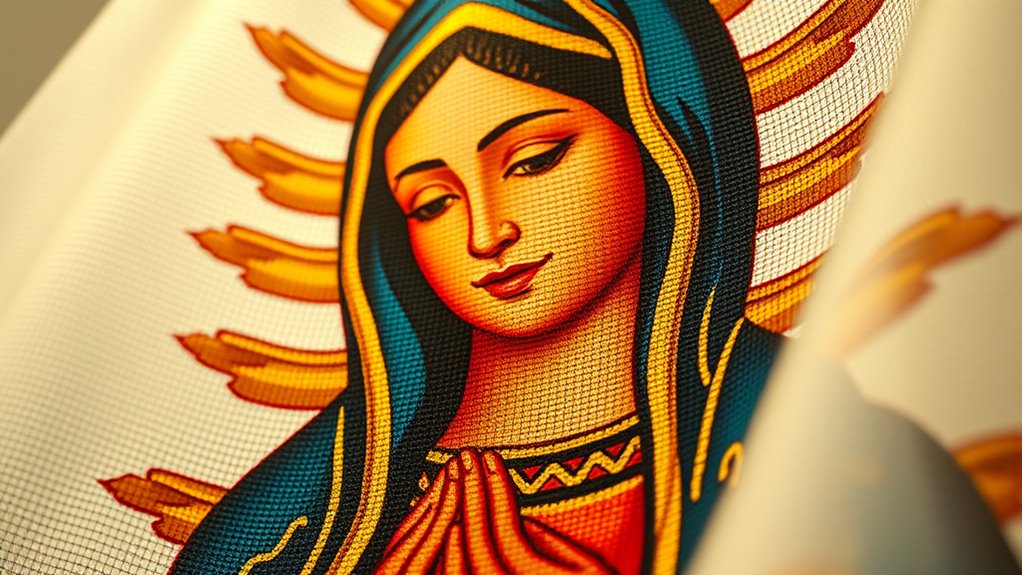
The story of Our Lady of Guadalupe extends beyond Juan Diego’s encounter; it is also centered around the miraculous image that appeared on his tilma, or cloak. This miraculous image is remarkable because it formed instantly and has remained intact for centuries, despite exposure to various elements. The image depicts Our Lady with vibrant colors, detailed features, and symbolic elements that convey deep meaning. The tilma symbolism highlights the importance of humility and faith, as it was an ordinary garment transformed into a divine message. The image’s authenticity and preservation continue to astonish many, serving as a powerful testament to the miracle that reinforced faith and unity among countless believers. The preservation of the image also underscores the importance of cybersecurity vulnerabilities in safeguarding valuable religious and cultural artifacts in digital formats. This miraculous image remains a central symbol of hope and divine intervention.

BrightRow 12 Pcs Our Lady of Guadalupe Statues Virgen De Guadalupe Figurine Resin Virgin Mary Statue Home Tabletop Decoration Small Virgin Mary Religious Gifts First Communion Keepsake Party Favors
Sufficient Quantity: you will receive a total of 12 packs of statues of Our Lady of Guadalupe, enough…
As an affiliate, we earn on qualifying purchases.
As an affiliate, we earn on qualifying purchases.
Symbolism Behind Our Lady of Guadalupe’s Appearance
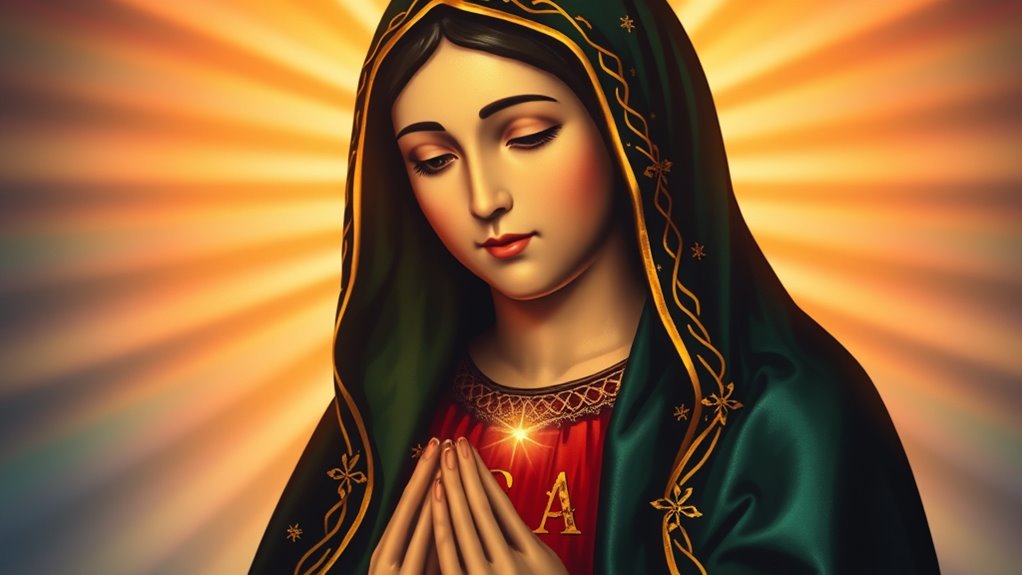
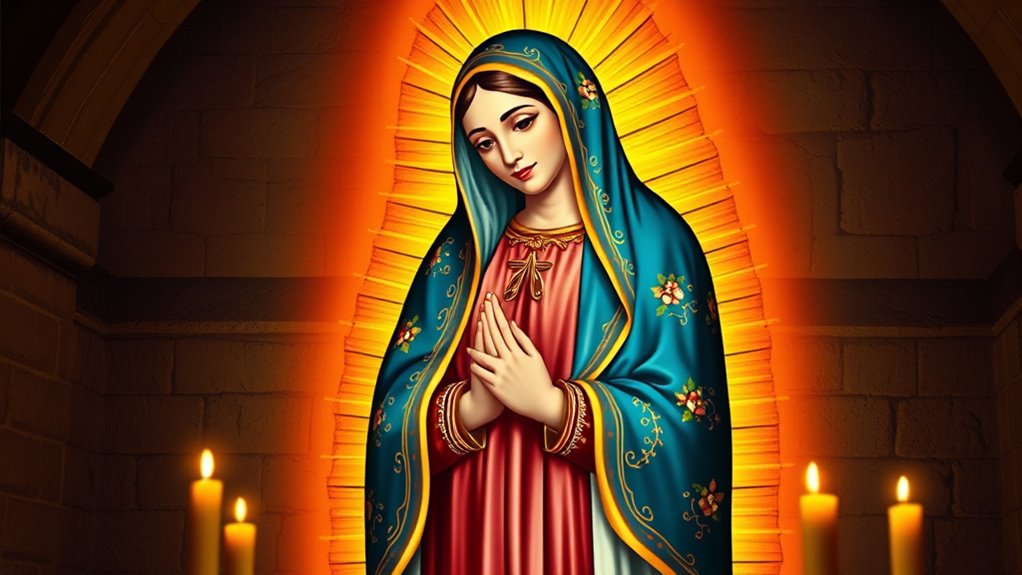
When you look at Our Lady of Guadalupe’s image, you notice the vibrant colors that carry deep meaning, like the turquoise and pink that symbolize purity and divinity. Her appearance also includes Marian symbols such as the moon and the stars, which connect her to biblical and cultural traditions. These elements work together to reflect the rich cultural integration and spiritual significance behind her depiction. Additionally, the depiction often incorporates symbolic elements that enhance its spiritual and cultural resonance.
Color Significance
The colors present in Our Lady of Guadalupe’s appearance carry deep symbolic meaning, emphasizing her spiritual significance and cultural importance. Through color symbolism, her attire communicates messages of faith, purity, and divine connection. The vibrant azurite blue cloak signifies her role as a heavenly figure, while the rose-colored tunic symbolizes love and compassion. These colors are carefully chosen in artistic interpretation to evoke reverence and hope. As you observe her image, notice how the colors enhance her aura of holiness, bridging the earthly and spiritual domains. The careful use of color in her depiction underscores her revered status, making her a powerful symbol of faith for millions. Her appearance’s colors serve as a visual language that deepens your understanding of her divine mission. Additionally, the color symbolism used in her depiction aligns with cultural traditions that further reinforce her significance as a unifying and inspirational figure.
Marian Symbols
Our Lady of Guadalupe’s appearance is rich with symbols that convey her divine message and spiritual significance. These marian symbols, embedded in her religious iconography, reveal her role as a compassionate mother and protector. Her cloak, decorated with stars, symbolizes her connection to the heavens, while her gentle posture and humble attire emphasize her humility and approachability. The roses she holds are signs of divine revelation and grace. The tilma’s design includes specific colors and patterns that reflect her spiritual authority and cultural roots. Every element in her appearance carries meaning, reinforcing her status as the Mother of all. These sacred symbols help believers understand her divine presence and foster a deeper connection to her message of hope and salvation. Additionally, her aesthetic wall organization and the harmonious arrangement of symbols serve to inspire reverence and reflection among devotees.
Cultural Integration
Have you ever noticed how Our Lady of Guadalupe’s appearance seamlessly blends religious symbolism with indigenous cultural elements? She wears a mantle with stars, representing the cosmos, while her tilma features indigenous patterns. This integration honors native languages and traditional rituals, making her relatable to the local people. Recognizing the symbolic significance of her attire enhances understanding of her cultural importance.
| Indigenous Elements | Religious Symbols |
|---|---|
| Native languages spoken | Virgin Mary’s image |
| Traditional rituals honored | Starry mantle design |
| Cultural patterns woven | Divine message conveyed |
This blending creates a powerful connection, respecting native traditions while emphasizing faith. It’s a visual reminder that faith and culture can coexist, strengthening community identity and spiritual devotion.
The Impact on Indigenous and Spanish Communities
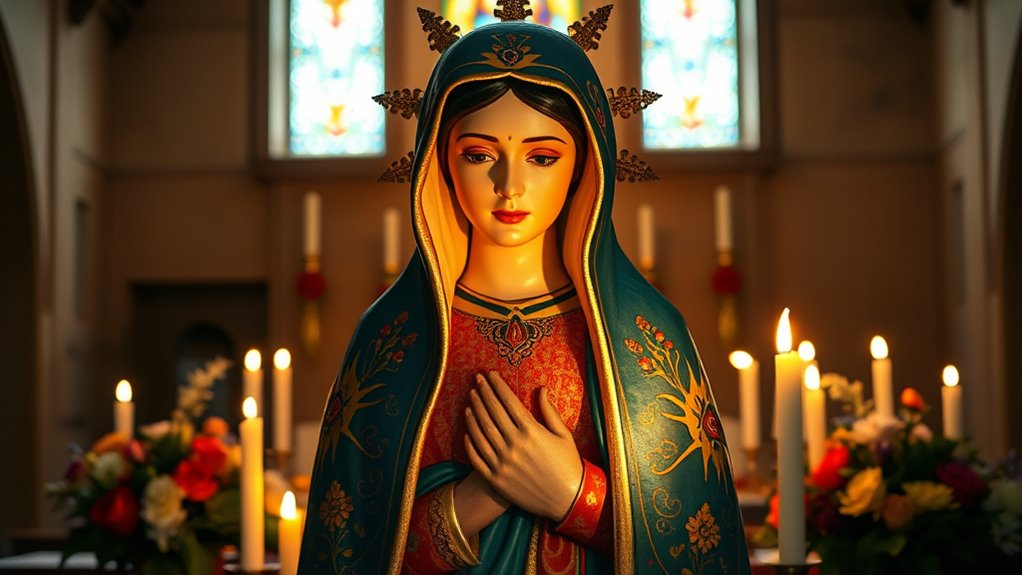
You can see how Our Lady of Guadalupe fostered cultural integration, blending indigenous traditions with Spanish faith. This shared symbol helped unify diverse communities and strengthen their spiritual heritage. Together, they found a common identity that still resonates today. Embracing creativity in their expressions, both communities enriched their shared traditions and reinforced their unity.
Cultural Integration and Identity
The story of Our Lady of Guadalupe has profoundly shaped the cultural identities of both indigenous and Spanish communities. You can see this influence in indigenous art, where depictions of Our Lady blend traditional motifs with Catholic symbolism, creating a unique visual language. The image reflects indigenous artistic styles, honoring local heritage while integrating Spanish religious influence. This fusion fostered a shared identity, allowing indigenous communities to embrace Christianity without losing their cultural roots. Conversely, Spanish influence introduced new artistic techniques and religious iconography that enriched indigenous expressions. As a result, Guadalupe became a symbol of cultural resilience and unity, embodying a harmonious blend of indigenous traditions and Spanish faith, shaping Mexico’s cultural landscape and community identities for generations.
Spiritual Unity and Heritage
Despite their different origins, both indigenous and Spanish communities have found a shared sense of spiritual unity through Our Lady of Guadalupe. This unity fosters interfaith dialogue, bridging cultural divides and encouraging mutual respect. It also sparks diverse theological interpretations, enriching the understanding of her significance. As you explore her story, consider how she symbolizes hope and unity for all. Key aspects include:
- Promoting interfaith dialogue between indigenous and Catholic traditions
- Inspiring diverse theological interpretations across communities
- Strengthening cultural heritage through shared devotion
- Serving as a symbol of spiritual harmony and reconciliation
- Connecting different faith perspectives into a unified narrative
- The role of color accuracy in creating visually compelling representations of her image across various cultural artworks.
The Spread of Devotion and Miracles
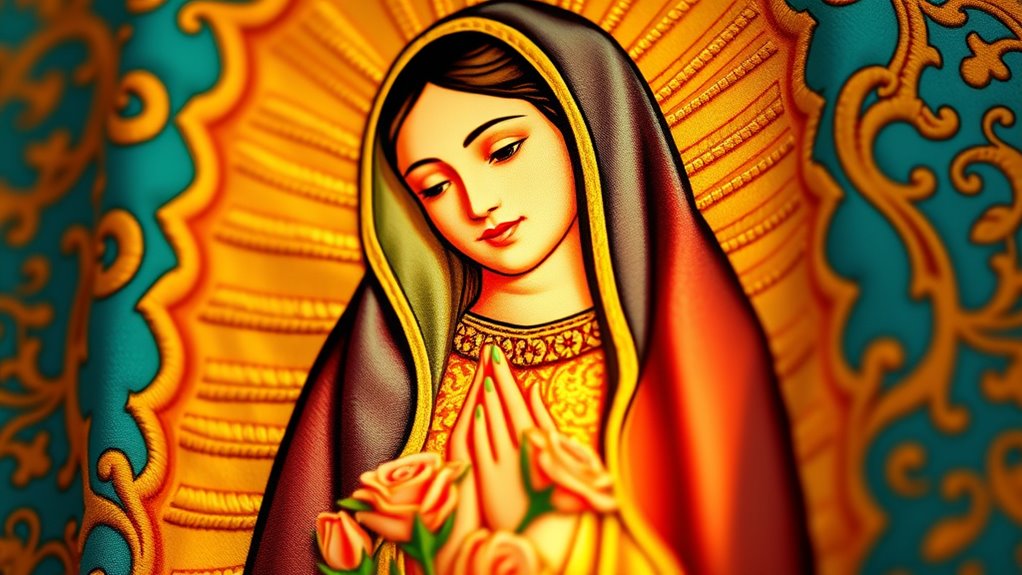
How did the devotion to Our Lady of Guadalupe rapidly spread across Mexico and beyond? It happened through vibrant pilgrimage traditions where believers journeyed to the basilica, strengthening their faith and sharing stories of miracles. Artistic representations played a essential role, as images of Our Lady appeared in paintings, textiles, and sculptures, inspiring awe and devotion. These visual expressions helped spread her story, making her image a powerful symbol of hope and cultural identity. As pilgrims traveled and shared their experiences, the story of her miraculous appearance reached distant communities. This combination of pilgrimage traditions and compelling artwork created a ripple effect, transforming her into a national icon and inspiring devotion that continues to grow. The official hours of the basilica also facilitated larger gatherings, enabling more pilgrims to participate and deepen their spiritual connection. Your own participation in these traditions connects you to a centuries-old spiritual movement.
Cultural Significance in Modern Mexico

Our Lady of Guadalupe remains a powerful symbol of Mexican identity and cultural pride today. You’ll see her influence across various aspects of life, especially in religious practices and artistic representations. She inspires devotion in daily prayers and community gatherings. Artistic expressions like murals, sculptures, and traditional clothing often depict her image, reinforcing her importance. Her image is also central to national symbols, echoing her role in uniting Mexicans. Celebrations like the feast day highlight her ongoing relevance. Whether through vibrant murals or personal altars, her presence continues to shape cultural identity. The cultural significance of Our Lady of Guadalupe is evident in how she unites and inspires the Mexican people today. This enduring connection showcases her lasting significance in modern Mexico’s spiritual and artistic landscape.
Celebrations and Traditions Honoring Our Lady

Celebrations and traditions honoring Our Lady of Guadalupe are vibrant expressions of Mexican faith and cultural identity. During feast celebrations, you’ll witness colorful processions, music, and dance that draw communities together in devotion. Many people participate in traditional rituals, such as offering flowers, candles, and prayers at her basilica or family altars. On December 12th, the feast day of Our Lady of Guadalupe, thousands gather to honor her with Masses, pilgrimages, and street festivals. These customs reflect deep reverence and gratitude, connecting you to centuries of faith and cultural heritage. Whether you’re part of a local procession or praying quietly at home, these traditions serve as powerful reminders of her significance in Mexican life and spirituality.
Frequently Asked Questions
How Has Our Lady of Guadalupe Influenced Mexican Identity?
You see how Our Lady of Guadalupe shapes Mexican identity through cultural symbolism and national pride. Her image unites people across generations, representing faith and resilience. As a powerful symbol, she embodies Mexico’s history, indigenous roots, and religious devotion. Her story inspires patriotism and strengthens cultural bonds, making her an enduring icon that reminds you of your heritage and shared values, fostering a deep sense of belonging and pride within the nation.
Are There Documented Miracles Associated With Our Lady of Guadalupe?
You’ll find numerous miracle accounts and healing stories linked to Our Lady of Guadalupe. Many believers report physical and spiritual healings after prayer and devotion, attributing these miracles to her intercession. These documented miracles strengthen faith among followers and highlight her role as a powerful symbol of hope and divine intervention in their lives. Such stories continue to inspire devotion and reinforce her significance in Mexican and global Catholic communities.
What Controversies Surround the Origin of the Miraculous Image?
You might find the origin of the miraculous image controversial due to iconography debates and questions about its historical authenticity. Some believe the image was painted by divine intervention, while others suggest it was created by human hands centuries ago. These debates challenge the story’s origins, sparking ongoing discussions about whether the image’s miraculous qualities are genuine or a result of cultural symbolism and artistic techniques from the period.
How Has the Vatican Officially Recognized Our Lady of Guadalupe?
The Vatican officially recognizes Our Lady of Guadalupe through papal proclamations and doctrinal affirmations. Pope Pius XII declared her the Patroness of the Americas in 1946, reaffirming her significance. In 1979, Pope John Paul II emphasized her importance in Catholic devotion, celebrating her as a symbol of faith and unity. These actions demonstrate the Vatican’s acknowledgment of her spiritual and cultural significance within the Church and worldwide.
In What Ways Does the Feast Day Impact Contemporary Celebrations?
On her feast day, you’ll see vibrant processions and lively community gatherings, like a colorful tapestry woven with cultural traditions. This day strengthens your faith and connects you to centuries of devotion. The celebrations serve as a reminder of unity, inspiring acts of charity and prayer. It’s a time when families and neighborhoods come together, creating a shared sense of identity, much like a mosaic that reflects collective hope and faith.
Conclusion
Imagine standing in 16th-century Mexico, where a humble tilma became a beacon of hope and unity. Just like Juan Diego’s unwavering faith, the story of Our Lady of Guadalupe reminds you that even in the darkest times, miracles can shine through. Her image, now a symbol embraced by millions, continues to inspire devotion and cultural pride—proving that faith, like a guiding light, can transform lives and bridge worlds across centuries.