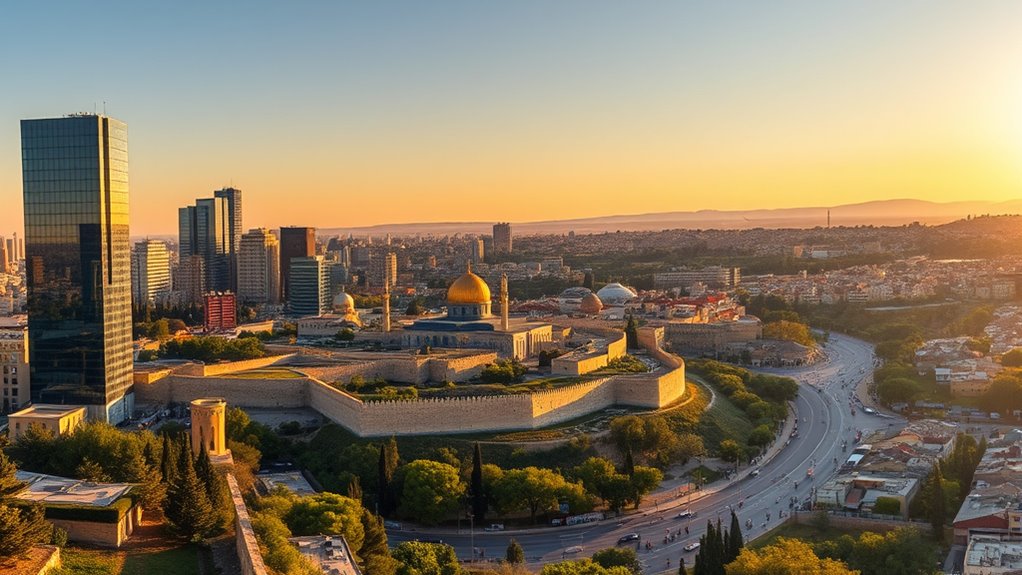

Many believe that modern Israel’s establishment and ongoing developments fulfill biblical prophecy rooted in God’s promises to His people. Biblically, passages like Ezekiel 37 and Isaiah 43 describe Israel’s regathering and restoration, which some see as happening today. Jerusalem also holds prophetic significance in biblical literature. While interpretations vary, understanding these connections can deepen your grasp of current events and future expectations in biblical prophecy. Keep exploring to discover how these ancient texts relate to today’s Israel.
Key Takeaways
- Many interpret Israel’s modern rebirth as a fulfillment of biblical prophecies like Ezekiel 37 and Isaiah 43.
- Biblical symbols such as dry bones and Jerusalem represent spiritual and national restoration aligning with current events.
- The re-establishment of Israel in 1948 is seen by some as the fulfillment of prophetic promises for land and nationhood.
- Differing perspectives exist; some view modern Israel as a literal fulfillment, others see symbolic or ongoing prophetic processes.
- Ongoing geopolitical developments in Israel influence eschatological expectations regarding biblical prophecy fulfillment.
Biblical Foundations for the Prophecy of Israel

Have you ever wondered where the prophecy of Israel originates in the Bible? It begins with covenant promises God made to Abraham, Isaac, and Jacob, establishing Israel’s enduring significance. These promises include land, nationhood, and blessings for all nations through their descendants. Prophetic symbolism plays a crucial role, often depicting Israel as a chosen vineyard or olive tree, representing God’s ongoing relationship and promises. These symbols help illustrate God’s faithfulness and the future fulfillment of His plans. The biblical foundations emphasize that Israel’s destiny is rooted in divine covenant promises, which serve as a basis for prophetic understanding. Recognizing these elements clarifies why Israel holds such a central place in biblical prophecy and why many believe these promises continue to influence modern events. Additionally, biblical symbolism provides a visual language that underscores God’s unwavering commitment to His people and His ultimate plan for their future.
Historical Context of Israel’s Rebirth in 1948

The biblical promises and prophetic symbolism surrounding Israel set the stage for a remarkable event in modern history: the re-establishment of the nation in 1948. This moment marked Israel’s political independence after nearly two millennia of dispersion. The rebirth sparked a cultural revival among Jewish communities worldwide, reconnecting them to their heritage and identity. The United Nations’ decision to partition Palestine created a legal foundation for Israel’s sovereignty. Key factors include the Zionist movement’s persistent efforts and international support, which helped transform biblical prophecy into political reality. The 1948 declaration of independence symbolized hope fulfilled, aligning with biblical visions of restoration. This event laid an essential foundation for Israel’s ongoing significance in biblical prophecy and modern geopolitics. Residency requirements and political stability played crucial roles in establishing the new nation.
Key Biblical Passages Referencing the Restoration of Israel

Biblical scriptures contain numerous passages that speak directly to the future restoration of Israel, highlighting its significance in divine prophecy. In the Old Testament, prophetic symbols often depict Israel’s revival as a divine promise fulfilled. You’ll find verses in Ezekiel, Isaiah, and Jeremiah that emphasize God’s plan to gather scattered Israelites and restore their land. These passages serve as key biblical references, illustrating God’s unwavering commitment. The table below highlights some essential prophetic symbols and their meanings:
| Prophetic Symbol | Scripture Reference | Significance |
|---|---|---|
| Dry Bones | Ezekiel 37:1-14 | Revival and national resurrection |
| Return of Exiles | Isaiah 43:5-6 | Gathering and restoration |
| Restored Land | Amos 9:14-15 | Prosperity and divine blessing |
The Significance of Jerusalem in Prophetic Literature

Jerusalem holds a central place in prophetic literature because it symbolizes divine promises, spiritual significance, and future hope for Israel. Its symbolism runs deep, representing God’s eternal covenant and His plan for restoration. In prophetic symbolism, Jerusalem often stands as the focal point of God’s future kingdom, embodying both judgment and redemption. You see this in verses that depict Jerusalem as a place of divine presence and reconciliation. Its significance extends beyond physical location, serving as a spiritual emblem of God’s promises fulfilled. Additionally, many prophetic visions highlight Jerusalem as a symbol of divine sovereignty, emphasizing its role in the ultimate fulfillment of God’s redemptive plan.
Interpretations of “Dry Bones” and National Revival

Interpreting the “Dry Bones” vision reveals a powerful message of national renewal and hope. This prophetic symbolism symbolizes Israel’s spiritual revival and restoration, emphasizing that even when the nation feels lifeless, renewal is possible through divine intervention. Many see this vision as a promise that, despite setbacks, God can breathe new life into His people and restore their land. The image of dry bones coming together and gaining flesh reflects a future where Israel experiences spiritual awakening, unity, and revival. Additionally, understanding the signs of spoiled lemon juice can serve as a reminder that renewal and restoration often require careful discernment and patience. This interpretation encourages believers to view Israel’s modern history as a fulfillment of God’s promise of renewal, inspiring hope that the nation’s spiritual revival aligns with biblical prophecy and God’s divine plan for His people’s rebirth.
Modern Events Versus Ancient Predictions: A Comparative Analysis

Many modern events in Israel closely resemble predictions found in ancient prophecies, prompting discussions about their significance and accuracy. You observe how cultural shifts in Israel mirror biblical descriptions of societal changes, hinting at fulfillment of prophecy. Additionally, political alliances formed today often align with ancient predictions of regional cooperation and conflicts. These parallels invite you to analyze how current developments fit into biblical timelines and themes. Moreover, the rustic aesthetic of the region’s architecture and decor echoes traditional farmhouse styles, emphasizing simplicity and natural materials.
The Role of Israel in Eschatological Expectations

Israel holds a central place in biblical prophecy, shaping many eschatological expectations. You’ll see how its significance influences beliefs about future events and divine plans. Understanding Israel’s role helps clarify what many anticipate in the end times. Additionally, some scholars emphasize the importance of ongoing SQA best practices in ensuring the accuracy and reliability of prophetic interpretations and related studies.
Israel’s Biblical Significance
Because of its central role in biblical prophecy, Israel often stands at the heart of eschatological expectations. Its cultural significance has shaped religious narratives for centuries, reinforcing its spiritual importance. You recognize that Israel’s biblical status influences global perceptions and faith-based hopes. Its political implications are also profound, as many believe its future is tied to prophetic events. Israel’s land and people symbolize divine promises, fueling both spiritual and geopolitical debates. This connection makes Israel a focal point for believers and skeptics alike, keen to see if modern developments align with biblical predictions. Additionally, the ongoing geopolitical significance of Israel continues to impact how prophetic narratives are understood and interpreted worldwide. The nation’s biblical significance continues to influence worldwide religious thought, affecting how people interpret current events and future expectations. This ongoing relevance keeps Israel central to understanding prophecy’s role in history.
Eschatological Expectations and Israel
Eschatological expectations often place Israel at the center of prophetic fulfillment, shaping how believers and skeptics interpret current events. Many see Israel’s political geopolitics and cultural integration as signs of biblical prophecy unfolding. These perspectives suggest that Israel’s recent developments align with end-times scenarios, fueling anticipation of future events. Some interpret Israel’s alliances and conflicts as part of divine plan, while others view them through geopolitical lenses. This focus heightens the significance of Israel in eschatology, making it a key indicator for many. Here’s a quick comparison:
| Perspective | Interpretation of Israel’s Role |
|---|---|
| Prophetic Fulfillment | Signs of biblical prophecy coming true |
| Political Geopolitics | Strategic regional influence and conflicts |
| Cultural Integration | Merging of ancient traditions with modern society |
Additionally, the increasing use of digital technology in global diplomacy and communication influences perceptions of Israel’s role in prophecy, linking modern advancements with ancient biblical themes.
The Influence of Theological Perspectives on Prophecy Fulfillment

Theological perspectives deeply shape how believers interpret prophecy, influencing both understanding and expectations of future events. Your interpretative frameworks, shaped by doctrinal backgrounds, determine how you see biblical promises unfolding. These frameworks often reflect underlying theological biases that can color your view of modern Israel’s role in prophecy. For example, some interpretive approaches emphasize literal fulfillment, while others see symbolic or spiritual meanings. Your perspective can lead you to prioritize certain scriptures over others, affecting your overall outlook. Additionally, News about current events can sometimes be interpreted through these frameworks to support particular prophetic views.
Challenges and Criticisms of the Prophecy-Modern Israel Connection

Interpretative frameworks and underlying biases can influence how believers connect biblical prophecy to modern Israel, but this linkage is not without its critics. Secular skepticism questions whether current events truly fulfill biblical predictions or are coincidental. Critics argue that seeing modern Israel as a prophetic sign often reflects political bias, aligning with specific ideological agendas rather than objective analysis. They caution against reading current geopolitical developments through a strictly prophetic lens, which can distort the complex realities on the ground. Some suggest that emphasizing prophecy fulfillment may oversimplify history and ignore broader socio-economic factors. Additionally, tools like the world clock can help contextualize global events and time zones, providing a more comprehensive understanding of the geopolitical landscape. While many find personal or spiritual significance in these connections, skeptics warn that such interpretations can be driven more by bias than by factual evidence, leading to contentious debates about the true relationship between Israel and biblical prophecy.
Implications of Israel’s Status for Future Biblical Prophecies

Israel’s current geopolitical status considerably influences how many believers interpret future biblical prophecies. Its stability, conflicts, and diplomatic moves shape expectations about events like the Battle of Armageddon or the rise of the Antichrist. The cultural implications are significant, as the Jewish heritage and religious sites impact prophetic symbolism and understanding. Political ramifications also play a pivotal role, affecting alliances and regional tensions that could fulfill specific prophecies. You might see some interpret Israel’s increasing influence as a sign of end-time events, while others question its prophetic relevance. These factors lead to diverse views on how Israel’s present status could accelerate or delay future biblical fulfillments. Ultimately, Israel’s geopolitical stance remains central to many believers’ eschatological outlooks.
Frequently Asked Questions
How Do Different Religious Traditions Interpret Israel’s Prophetic Significance?
Different religious traditions interpret Israel’s prophetic significance through religious symbolism and eschatological views. You’ll find that some see modern Israel as a fulfillment of biblical prophecy, symbolizing divine promises, while others view it as part of a larger spiritual or end-times narrative. These interpretations shape your understanding of Israel’s role in future events, emphasizing either its historical or eschatological importance depending on your faith’s teachings.
What Role Do Geopolitical Factors Play in Israel’s Prophetic Fulfillment?
Geopolitical factors like tensions in the region and international alliances critically influence Israel’s prophetic role. You see, ongoing conflicts and shifting alliances can accelerate or delay the fulfillment of biblical prophecies. These tensions often draw global attention, shaping Israel’s strategic importance. As you observe these dynamics, you realize they serve as essential indicators of how prophecy might unfold, highlighting Israel’s pivotal place in future geopolitical and spiritual events.
Are There Alternative Interpretations of Key Biblical Prophecies About Israel?
Think of biblical prophecies as a tapestry with many threads. Yes, there are alternative interpretations that view these scriptures through different lenses. Some focus on historical context, suggesting they refer to past events, while others see cultural symbolism representing spiritual truths. These diverse perspectives add depth, showing that biblical prophecies can be understood in multiple ways, enriching your understanding of Israel’s role in divine plans.
How Does Modern Israeli Policy Influence Prophetic Narratives?
Your understanding of modern Israeli policy is shaped by its historical context and cultural influence, which directly impact prophetic narratives. When Israel adopts policies rooted in its history and culture, it can reinforce certain interpretations of biblical prophecy. Conversely, shifts in policy may challenge or support these narratives, depending on how they align with prophetic expectations. Your awareness of these factors helps you see the dynamic relationship between current events and biblical prophecy.
What Are the Potential Future Scenarios for Israel’s Prophetic Role?
You might see Israel playing a key role in future prophecy, especially as Messianic expectations grow and end time alliances form. These alliances could bring nations together against Israel, fulfilling biblical predictions. As events unfold, stay alert to signs of divine purpose, trusting that Israel’s prophetic role may deepen, guiding you through these significant end-time developments. This perspective keeps you aware of how biblical prophecy continues to shape modern geopolitical realities.
Conclusion
As you consider whether modern Israel fulfills biblical prophecy, remember it’s like watching a seed grow into a mighty tree—full of hope and complexity. While many see the nation’s rebirth as a sign of prophecy’s fulfillment, others question the interpretive details. Ultimately, understanding Israel’s role in prophecy invites you to explore faith, history, and future with an open heart, like a traveler discovering a new horizon on an uncharted path.