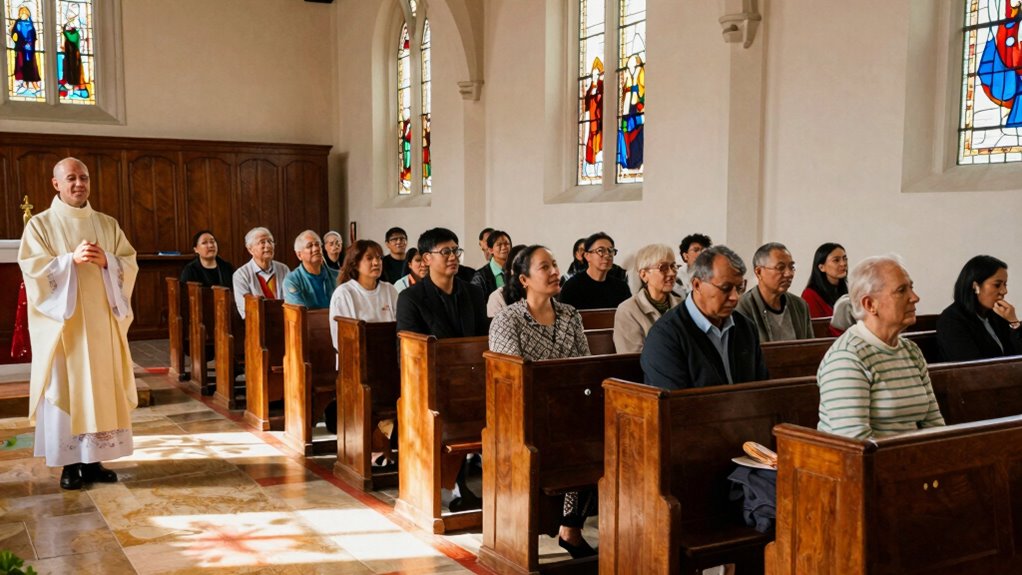

To discern a healthy church without expecting perfection, look for genuine community outreach and engagement, where members actively serve others and create an inclusive environment. Notice volunteers involved in leadership and mission-driven activities, reflecting vibrant spiritual life. Evaluate the biblical quality of teaching, ensuring it’s relevant and rooted in Scripture. Pay attention to worship that fosters sincere connection with God and respects tradition. If you want to uncover specific signs of a thriving church, keep exploring these essential indicators.

Turn your quiet moments into listening time
- Thousands of audiobooks, podcasts and originals
- Listen on your phone, tablet or Echo — also offline
- Cancel anytime
Key Takeaways
- Look for genuine community outreach and authentic relationships that demonstrate love and service beyond the church walls.
- Assess the congregation’s active volunteer involvement and leadership that reflect spiritual vitality and mission focus.
- Ensure biblical teaching is sound, integrated into daily life, and promotes spiritual growth and literacy.
- Observe worship that fosters heartfelt connection, participation, and aligns with biblical principles without relying on spectacle.
- Consider the church’s respect for tradition and history, maintaining doctrinal integrity and a comfortable environment for worship.

When choosing a church, it’s important to look beyond surface appearances and assess its health through core indicators. One of the key signs of a healthy church is how actively it engages in community outreach. A church that prioritizes outreach shows a genuine desire to serve others, share faith, and make a positive impact beyond its walls. Look for programs that serve the needy, support local initiatives, or invite outsiders to participate. These efforts demonstrate a church’s commitment to living out its values and fostering a sense of community. Outreach isn’t just about numbers; it’s about authentic relationships and making a difference in people’s lives. If a church regularly steps outside itself to help others, it’s a strong sign of spiritual vibrancy and a healthy congregation. Additionally, observing the volunteer engagement within the church can reveal how deeply members are committed to its mission and whether the leadership encourages active participation. A healthy church also cultivates an environment where biblical teaching is emphasized and integrated into daily life, which helps maintain doctrinal integrity. Incorporating biblical literacy initiatives can further support this effort by ensuring members understand and apply Scripture in their daily walk. Furthermore, a church that actively promotes spiritual growth through discipleship and mentorship programs often indicates a focus on nurturing faith in its members. Another important indicator is the worship style. While personal preference varies, a healthy church offers a worship experience that encourages genuine connection with God. It shouldn’t be overly focused on entertainment or spectacle, but rather on heartfelt praise, Scripture, and prayer. Observe whether the worship style fosters participation and reflection or if it’s primarily performance-driven. A healthy church adapts its worship to meet the needs of its congregation while remaining rooted in biblical principles. An understanding of church history and tradition can also provide insight into how a church maintains doctrinal consistency and respects foundational teachings. The goal is to create an atmosphere where people feel comfortable expressing their faith and drawing closer to God, whether through traditional hymns, contemporary songs, or a mix of both. The worship style should help unify the congregation and inspire spiritual growth, not just entertain or distract.
Popular right now

Dyson Ball Animal Total Clean Upright Vacuum

Sony WH-1000XM6 Wireless Noise-Canceling Over-Ear Headphones, Blue, Bundle

Ninja CREAMi 7-in-1 Ice Cream Maker, NC301
As an affiliate, we earn on qualifying purchases.
Frequently Asked Questions
Can a Church Be Healthy but Still Make Mistakes?
Yes, a church can be healthy but still make mistakes. Spiritual growth and strong leadership accountability are key indicators of a healthy church. Mistakes happen, but if leaders acknowledge errors, seek forgiveness, and prioritize learning, the church can continue to grow spiritually. You should look for a church that encourages open correction and humility, showing that progress, not perfection, defines its health.
How Important Are Church Traditions in Assessing Health?
Church traditions play a crucial role in evaluating health because they reflect liturgy significance and ritual preservation. If a church values its traditions, it shows respect for its history and faith practices, fostering unity and stability. However, be cautious if traditions hinder growth or exclude others. A healthy church balances honoring rituals with openness to change, ensuring traditions serve their purpose without becoming rigid barriers.
Should I Expect a Perfect Church Community?
You shouldn’t expect a perfect church community, as no congregation is without flaws. Instead, look for signs of genuine church growth and active community outreach, which reflect a healthy church’s focus on spiritual development and service. A good church encourages accountability, love, and humility, even amid imperfections. Recognize that growth and outreach efforts often indicate a church’s commitment to living out faith authentically and positively impacting its members and surroundings.
How Do I Handle Disagreements Within a Healthy Church?
When disagreements arise, address disagreements directly, respectfully, and promptly. Focus on fostering faithfulness through leadership accountability, encouraging honest conversations, and listening with love. Embrace differing perspectives on worship style without losing unity. By promoting patience, prayer, and open dialogue, you create a culture of Christian community that resolves conflicts healthily, helping everyone grow spiritually and stay committed to Christ’s calling, even amid disagreements.
Is a Large Church Automatically Healthier Than a Small One?
A large church isn’t automatically healthier than a small one. Instead, focus on church growth and community engagement. A bigger congregation might have more resources, but it can also face challenges like less personal connection. Smaller churches often foster closer relationships. You should observe how the church nurtures spiritual growth, encourages involvement, and actively serves its community. These factors matter more than size when evaluating a church’s health.
Conclusion
Just like a sturdy tree bears abundant fruit despite occasional storms, a healthy church remains rooted in love, truth, and community. Don’t expect perfection, but look for signs of growth—people genuinely caring, scripture guiding actions, and grace amid struggles. When you see these, you’re witnessing a vibrant, life-giving tree. Trust that, with time, its branches will continue to reach upward, nourishing all who seek shelter beneath its shade.