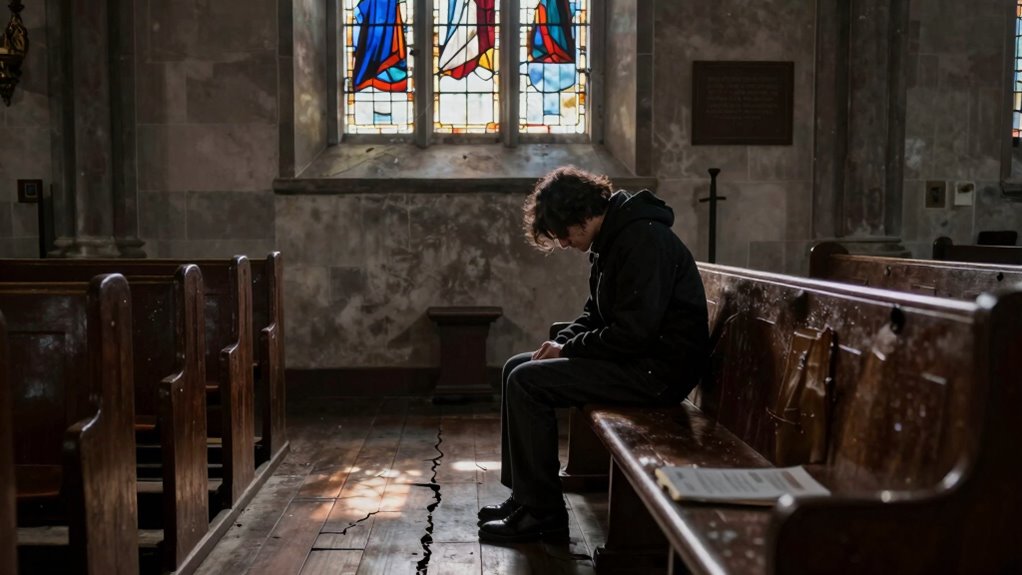

When church hurt makes community hard, begin by acknowledging your pain without letting it define you. Seek support from trusted friends or a counselor and focus on spiritual healing through prayer, reflection, and reconnecting with God’s love. Rebuilding trust takes time, so be patient and gentler with yourself. Remember, healing involves community, forgiveness, and renewed hope. If you continue, you’ll find more guidance on overcoming these challenges and restoring your spiritual connections.

Turn your quiet moments into listening time
- Thousands of audiobooks, podcasts and originals
- Listen on your phone, tablet or Echo — also offline
- Cancel anytime
Key Takeaways
- Acknowledge your feelings without letting them define your faith or community experience.
- Seek support from trusted individuals or a counselor to process hurt and rebuild trust.
- Engage in prayer and reflection to reconnect with your faith and find spiritual healing.
- Practice forgiveness to release resentment and promote emotional and spiritual restoration.
- Take gradual steps to rebuild community connections, focusing on healthy relationships and renewed hope.
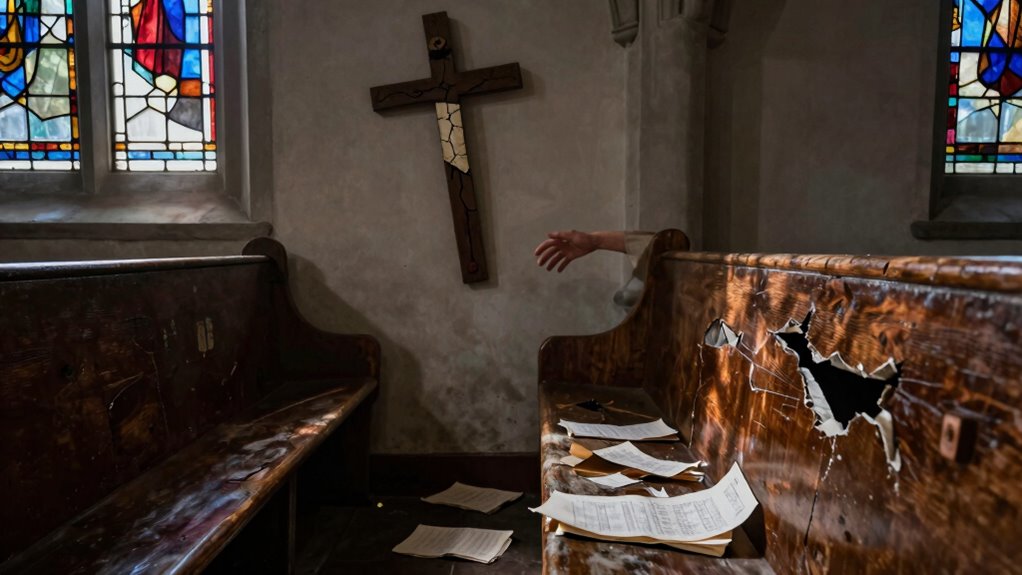
Have you ever felt betrayed or isolated after experiencing hurt within your church community? It’s a painful place to be, especially when your faith is intertwined with feelings of betrayal or disappointment. When trust is broken, it can feel like your spiritual foundation is shaken, making it difficult to see your community as a place of support and love. Yet, healing is possible, and it begins with acknowledging your pain without letting it define you. One of the most vital steps in overcoming church hurt is pursuing spiritual healing. This process isn’t about ignoring your feelings or pretending everything is okay, but rather about actively seeking restoration for your soul. It involves prayer, reflection, and sometimes seeking guidance from a trusted spiritual advisor who can help you navigate your emotions. Spiritual healing is about reconnecting with your faith on a deeper level, understanding that God’s love remains constant—even when human relationships falter. Recognizing the importance of self-care tips for caregivers can also support your emotional well-being during this healing journey. Additionally, understanding the role of community support can be instrumental in rebuilding trust and connection after hurt.
As you work through your feelings, the forgiveness process becomes essential. Forgiveness isn’t about excusing what happened or forgetting the pain; it’s about freeing yourself from the burden of resentment and bitterness. Forgiving those who hurt you doesn’t mean you have to reconcile or forget the offense—it’s a decision to let go of the pain that keeps you trapped. This step can feel impossible at first, especially when anger or disappointment still run deep. But forgiving is a gift you give yourself to reclaim your peace and emotional well-being. It’s a journey that may take time, and that’s okay. You might find it helpful to pray for strength and clarity, asking God to help you release the hurt and to guide your heart toward forgiveness. Recognizing that emotional health in faith communities is vital can encourage you to seek support and healing from trusted sources.
A deeper understanding of trust restoration can also help you in this process, guiding you toward healthier relationships and renewed hope.
Christian prayer journal for healing
As an affiliate, we earn on qualifying purchases.
As an affiliate, we earn on qualifying purchases.
Frequently Asked Questions
How Can I Forgive Those Who Hurt Me in Church?
To forgive those who hurt you in church, start your forgiveness journey by acknowledging your pain and allowing yourself to feel it. Pray for emotional healing and ask God for strength to let go of resentment. Remember, forgiveness is a process, not an instant event. By choosing to forgive, you release yourself from bitterness, opening the door to peace and reconciliation, and ultimately, deepening your faith and community bonds.
What Steps Can I Take to Rebuild Trust in My Church Community?
To rebuild trust in your church community, start with personal reflection to understand your feelings and set spiritual boundaries that protect your emotional well-being. Communicate openly with trusted leaders or friends about your concerns, and give yourself time to heal. Engage gradually in activities, focusing on genuine connections. By maintaining honesty with yourself and others, you can restore trust while honoring your spiritual needs and boundaries.
How Do I Handle Feelings of Betrayal From Church Leaders?
When you feel betrayed by church leaders, focus on building spiritual resilience by praying and seeking guidance through scripture. Allow yourself space to process your emotions without rushing into forgiveness. Practice faith restoration by reconnecting with your personal relationship with God, rather than solely relying on church figures. Remember, healing takes time, and trusting in God’s plan can help you move forward with renewed strength and clarity.
When Is It Time to Leave a Church After Hurt?
When church gossip and unchecked leadership accountability hurt you deeply, it’s time to leave if these issues persist despite addressing them. For example, if leadership dismisses concerns or enables harmful gossip, your spiritual well-being suffers. Staying may hinder healing or growth. Trust your gut—if the environment remains toxic and reconciliation seems unlikely, seeking a healthier community becomes essential for your faith journey.
How Can I Find Healing and Peace After Church Conflict?
To find healing and peace after church conflict, focus on building your spiritual resilience and setting emotional boundaries. Pray and seek support from trusted friends or a counselor to process your feelings. Take time to reflect and reconnect with your faith outside the church community. Remember, healing is a journey—prioritize self-care, stay patient, and trust that peace will gradually return as you nurture your spirit and protect your emotional well-being.
Conclusion
As you navigate these stormy waters, imagine planting seeds in a rugged, yet fertile ground. Though church hurt may have cracked your roots, remember that healing is a slow, steady rain nourishing new growth. With patience, your spirit will blossom again, reaching toward the sun’s warm embrace. Trust that even in the darkest clouds, the dawn’s light will break through, guiding you toward a community where grace and understanding can once more flourish.
Fall Picks
fall essentials
As an affiliate, we earn on qualifying purchases.