TL;DR

Turn your quiet moments into listening time
- Thousands of audiobooks, podcasts and originals
- Listen on your phone, tablet or Echo — also offline
- Cancel anytime
Spooky religious decor combines sacred symbols with Gothic and eerie elements, creating atmospheric interiors. It’s important to understand their meanings, sources, and ethical boundaries for respectful styling.
Imagine walking into a dimly lit room where the air hums with a sense of history and reverence, yet tinged with something darker. That’s the essence of spooky religious decor. It’s a style that fuses sacred symbols with Gothic, vintage, and supernatural aesthetics, creating spaces that feel both haunted and hallowed. But it’s more than just spooky vibes—it’s a delicate dance of respect, history, and personal expression.
Whether you’re drawn to the mysterious beauty of old church relics or want a dramatic aesthetic with meaningful roots, understanding the nuances is key. This guide will explore what makes this style so compelling, how to incorporate it thoughtfully, and the importance of respecting its origins. Ready to add a touch of the sacred and the spooky to your space?
Understand the symbolism behind religious objects—skulls symbolize mortality, not just horror.
Use authentic-looking reproductions and focus on materials, textures, and lighting to set the mood.
Research provenance and buy from reputable sources to avoid ethical pitfalls.
Balance dark, antique elements with respectful intent—avoid trivializing sacred symbols.
Treat religious symbols with care; their spiritual significance remains for believers, even when used decoratively.
What Exactly Is Spooky Religious Decor? Here’s the Easy Breakdown
Spooky religious decor mixes sacred symbols—like crucifixes, saints, skulls, and candles—with Gothic, vintage, or supernatural styles. It’s not a single tradition or a specific religious practice but a visual language that taps into themes of mortality, transcendence, and mystery.
Think of it as a visual mashup: a tarnished brass crucifix, a stained-glass window replica, a skull candle holder. These pieces often sit amid dark velvet drapes, aged wood, and flickering candlelight. The goal? To evoke a sense of reverence, history, and sometimes, a hint of the otherworldly.
For example, a Victorian mourning altar might feature black velvet, a tarnished silver cross, and a faded photograph of a loved one—creepy yet respectful. It’s about capturing a mood that’s both somber and beautiful.
Deeply, this style matters because it creates a space that invites reflection on mortality and the divine, emphasizing the transient nature of life. It challenges viewers to confront mortality in a way that’s contemplative rather than morbid, acknowledging the sacredness of life and death. The tradeoffs involve balancing the aesthetic appeal with cultural sensitivity and avoiding trivialization of sacred symbols, which can lead to misunderstandings or offense.
Popular right now

Samsung 43-Inch M70H Series 4K Mini LED Smart TV (2026)

Vitamix Touch & Go Advance 32-Ounce Bar Blender, White

Samsung 48 4K OLED Smart TV (2026) with WireLogic 8ft Ultra High Speed HDMI Cable
As an affiliate, we earn on qualifying purchases.
The Symbols That Make It Spooky (And What They Really Mean)
Many symbols appear in spooky religious decor, each with layered meanings. Here’s a quick rundown:
- Skulls & Bones: Not just Halloween props. In Christian art, skulls symbolize mortality and the hope of resurrection. They serve as memento mori—reminders of life’s impermanence and the promise of spiritual rebirth, encouraging humility and reflection rather than fear.
- Relics & Reliquaries: Containers holding saints’ bones or personal objects—though real relics are rare and often contested. They symbolize the tangible connection to the divine and the saints, serving as physical reminders of faith’s historical depth. Using them thoughtfully can evoke reverence, but misuse or trivialization risks disrespecting sacred traditions and beliefs.
- Candles: Represent light in darkness, spiritual guidance, or the presence of the divine. They symbolize hope, prayer, and the divine illumination that guides souls through darkness—both literal and spiritual. Their flickering nature also echoes the fragile, transient nature of life and faith.
- Angels & Saints: Figures of protection, judgment, or intercession, often depicted with a Gothic flair. They embody divine guardianship and moral virtues, serving as intermediaries between heaven and earth. Their presence can evoke comfort or solemnity, depending on context.
- Gargoyles & Architectural Details: Gothic church elements that channel both protection and ominous watchfulness. They originally served to ward off evil spirits and direct water away, but their grotesque forms also symbolize the boundary between the sacred and profane, making them powerful symbols of protection and mystery.
Understanding these symbols’ layered meanings helps prevent superficial or disrespectful use, fostering a deeper appreciation for their spiritual significance rather than mere aesthetic appeal. When incorporated thoughtfully, they deepen the ambiance and invite viewers to reflect on mortality, faith, and the divine connection that these symbols represent.
Materials & Colors That Set the Haunted Sacred Mood
Creating the right atmosphere is all about materials and colors. Think dark, aged, and textured. Materials like tarnished brass, distressed wood, antique glass, and waxy candles evoke a sense of age and reverence.
The color palette leans heavily into deep, moody shades—black, burgundy, oxblood, deep green, and smoky gray. These hues mimic candlelit shadows and stone churches, creating an environment that feels both mysterious and holy. Incorporating aged gold or candlelit ivory adds a sacred elegance that elevates the space beyond mere gloom to one of reverence and reflection.
Choosing materials and colors with intention enhances the spiritual ambiance, allowing the space to resonate with layers of meaning—history, mortality, and divine presence. The textures evoke tactile memories of sacred relics and ancient architecture, anchoring the decor in a rich historical context. The tradeoffs include the risk of leaning into stereotypes or creating a space that feels overly dark or oppressive, so balance is key to maintaining respect and beauty.
How to Style Spooky Religious Decor Without Being Disrespectful
Styling this look thoughtfully matters. Here’s a step-by-step plan:
- Choose a clear theme: Gothic cathedral, Victorian mourning, or dark curiosity cabinet. Clarifying your theme helps focus your choices and avoid random or superficial decor.
- Focus on architecture details: Pointed arches, tracery, stained-glass-inspired panels—these set the mood but should be used with an understanding of their historical and cultural significance. Incorporating these elements thoughtfully creates authenticity and respect.
- Pick meaningful objects: Authentic religious artifacts or well-made reproductions. Know what symbols mean to prevent trivialization or misrepresentation. For example, a crucifix should be treated as a sacred object, not just a decorative motif.
- Balance light and shadow: Use warm, low lighting—candles, fairy lights, or soft lamps. Proper lighting enhances the mysterious atmosphere while maintaining a respectful tone.
- Group with intention: Display objects in meaningful clusters, considering their symbolism and narrative. Avoid clutter or random scattering, which can diminish respect and coherence.
- Respect origins: Buy from reputable sources, ask for provenance, and avoid appropriating sacred objects or symbols from cultures or religions you’re not part of. This demonstrates awareness and sensitivity, preventing cultural insensitivity.
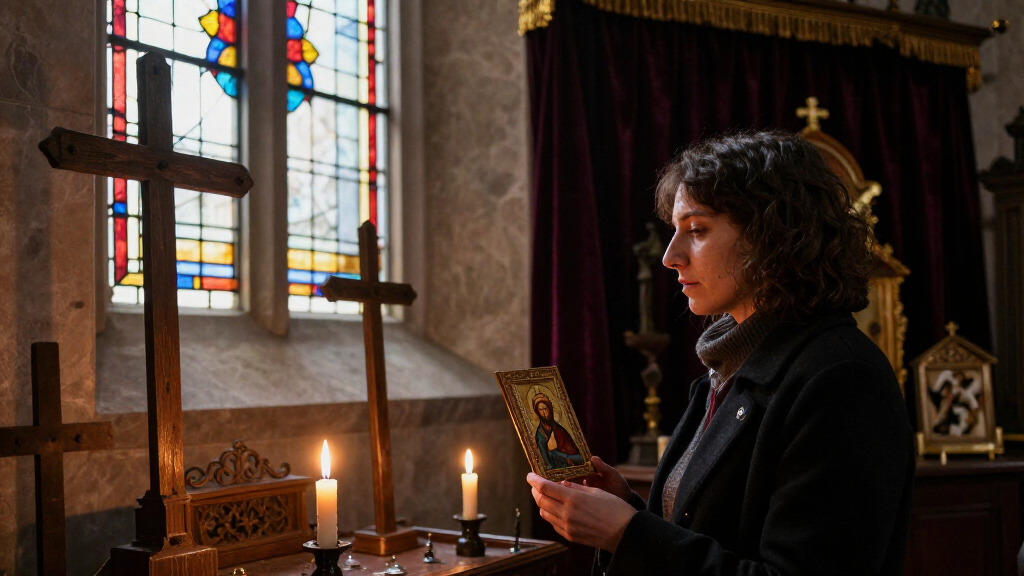
For example, creating a dark altar with vintage crucifix, a carved wooden angel, and a flickering candle can evoke reverence without crossing into disrespect. The key is to approach the decor as a form of respectful homage rather than trivialization, honoring the profound meanings behind the symbols.
The Ethical Side: Respect, Provenance, and Cultural Sensitivity
Not all religious objects are meant for decoration. Provenance matters. Buying genuine relics, bones, or funerary items without clear history can be unethical and even illegal. Such objects often come from contexts where their use is sacred or culturally significant, and removing them risks cultural erasure or offense.
Many antique religious objects originate from sensitive settings—cemeteries, monasteries, or cultural sites—and their sale or display without proper permission can perpetuate exploitation or cultural harm. Using these objects carelessly can also diminish their spiritual significance, reducing them to mere aesthetic props and disregarding their sacred purpose.
Reproductions and replicas are safer options. They allow you to evoke the aesthetic and mood without risking disrespect or legal issues. When sourcing, always verify provenance, ask about the origins, and prefer items from reputable dealers who respect cultural and religious sensitivities. This approach demonstrates awareness, responsibility, and respect for the spiritual significance of these objects, fostering a more ethical engagement with the style.
The Modern Twist: How Today’s Trends Are Making It Cooler & Safer
In the 2020s, spooky religious decor has become part of broader aesthetics like dark academia, whimsigoth, and vintage maximalism. Social media has fueled the trend, turning sacred symbols into stylish statements.
People now craft DIY stained glass panels, distressed antique frames, and candle-lit altar setups—often mixing genuine relics with well-made reproductions. This approach keeps the vibe dark and mysterious without cultural insensitivity.
For example, a popular DIY project involves creating faux stained-glass windows using colored tissue paper and clear plastic—easy, affordable, and respectful. The key? Focus on craftsmanship and intent, not shock value.
Today’s trends emphasize personal expression within a framework of respect and ethical sourcing. By blending historical reverence with modern aesthetics, decor enthusiasts can craft spaces that are both visually striking and culturally sensitive, fostering appreciation rather than appropriation.
Frequently Asked Questions
Is it disrespectful to display religious symbols as decoration?
It depends on your intent and context. Respectful displays that acknowledge the symbols’ meanings are usually fine, but mocking or trivializing them can offend believers. Research and thoughtful presentation matter.Can I use authentic relics in my decor?
Authentic relics often have legal and ethical restrictions. It’s safer and more respectful to use reproductions or well-documented antiques from reputable sources.Are skulls and bones always inappropriate?
Not necessarily. In Christian art, they symbolize mortality and resurrection. But sourcing real human remains can be ethically complex and legally risky; replicas are a good alternative.How do I avoid cultural insensitivity when decorating?
Learn the origins and meanings of symbols. Avoid mixing unrelated symbols without understanding their significance. Always respect the cultural and religious context.What are some safe ways to create a spooky religious ambiance?
Use dark textiles, gothic architecture motifs, candlelight, and high-quality reproductions. Focus on atmosphere—shadows, textures, and lighting—rather than shock or disrespect.Conclusion
Spooky religious decor can transform a space into a hauntingly beautiful sanctuary—if approached with respect and thoughtfulness. It’s about capturing the mood without erasing the meaning.
So, next time you choose that vintage crucifix or skull candle holder, ask yourself: what story does this tell? Let your decor whisper stories of mortality, faith, and history—beautifully and respectfully.