

The gifts of the Magi—gold, frankincense, and myrrh—hold deep symbolic meaning. Gold signifies Jesus’s kingship and divine authority, while frankincense highlights his divine nature and role in worship. Myrrh foreshadows his suffering and death, acknowledging his human vulnerability. Together, these gifts reflect his dual identity as King and Savior. If you’d like to explore more about their spiritual and cultural significance, there’s much more to uncover.
Key Takeaways
- The gifts symbolize Jesus’ divine nature, kingship, and future sacrifice, reflecting their spiritual and cultural importance.
- Gold represents Jesus’ royalty and eternal value as King of Kings.
- Frankincense signifies his divinity and role as a divine worshipped figure.
- Myrrh foreshadows his suffering, death, and the necessity of spiritual purification.
- Collectively, the gifts honor Jesus’ dual human and divine identity, emphasizing reverence and recognition of his significance.

Easter Basket Stuffers Gold Cross Necklace for Women Teen Girls Dainty Cute 14K Gold Plated Small Cross Pendant Trendy Jewelry Non Tarnish Waterproof Simple Necklace Religious Christian Baptism Jesus Faith Gifts
[Dainty Gold Cross Pendant for Women] This small gold cross necklace features a minimalist trendy 3D pendant that…
As an affiliate, we earn on qualifying purchases.
As an affiliate, we earn on qualifying purchases.
The Meaning Behind the Gift of Gold
Gold, traditionally associated with wealth and royalty, symbolizes more than just material riches; it represents divine kingship and eternal value. When you think of the gift exchange involving gold, you see a declaration of respect and recognition of authority. Its wealth symbolism emphasizes that this gift isn’t merely about material gains but about honoring divine or royal status. The Magi’s gift of gold highlights the acknowledgment of Jesus as king, making it a powerful symbol of sovereignty and divine right. By offering gold, you participate in a meaningful act that reflects admiration and reverence. This gift elevates the act of gift exchange from simple generosity to a profound gesture of acknowledging divine kingship and eternal worth. Additionally, understanding the symbolic significance of gold enhances our appreciation of its role in spiritual and cultural traditions.

Frankincense – Box of Six 20 Sticks Tubes, 120 Sticks Total – HEM Incense From India
Trusted Quality: HEM is a globally recognized incense brand known for authentic, high-quality fragrances.
As an affiliate, we earn on qualifying purchases.
As an affiliate, we earn on qualifying purchases.
Symbolism of Frankincense in Worship and Divinity
Have you ever wondered why frankincense was such a significant gift in the story of the Magi? Its symbolism of divinity and worship runs deep, especially in medieval art and incense rituals. Frankincense was used to honor gods and sanctify sacred spaces, highlighting its spiritual importance. When the Magi presented it to the newborn Jesus, it signified His divine nature and role as a divine figure. Additionally, the self-watering properties of frankincense in incense burning helped sustain its aromatic qualities over time, reinforcing its role in creating a sacred atmosphere during worship.

Majestic Pure Essential Oil with Glass Dropper – 100% Pure and Natural – Essential Oils for Diffuser, Aromatherapy, Soap and Candle Making, Myrrh Essential Oil, Myrrh Oil, 4 Fl Oz
MYRRH OIL – Majestic Pure Blends oils are exactly that! Many oils being sold make that claim but…
As an affiliate, we earn on qualifying purchases.
As an affiliate, we earn on qualifying purchases.
Myrrh: An Ancient Sign of Sacrifice and Death
While frankincense symbolized divinity and worship, myrrh carried a different, more somber meaning in ancient rituals. It played a vital role in ancient trade, valued for its fragrance and medicinal properties. But beyond commerce, myrrh was used in ritual purification, signifying the need for cleansing before sacred acts. Its association with sacrifice and death stems from its use in embalming and funerary practices, highlighting its connection to mortality. When the Magi brought myrrh, it symbolized recognition of Jesus’ future suffering and sacrifice. This gift reminds you of the inevitable human experience of death and the importance of spiritual purification in preparing for eternal life. The use of myrrh in these contexts reflects its symbolic significance in religious and cultural traditions, underscoring its role as a profound emblem of sacrifice woven into history.

3 Arches USA Three Kings Gifts – Gold,Frankincense and Myrrh Gift Set from Holy Land – Nativity Keepsake Set – Christian Faith Worship Display Box & Scripture Card
Sacred Recreation – This handcrafted collection recreates the 3 wise men's gifts of gold, frankincense and myrrh, bringing…
As an affiliate, we earn on qualifying purchases.
As an affiliate, we earn on qualifying purchases.
The Gifts as a Reflection of Jesus’ Kingship and Humanity
The gifts of gold, frankincense, and myrrh each reveal different aspects of Jesus’ identity—his kingship and his humanity—highlighting the depth of their symbolic meaning. Gold emphasizes royal symbolism, signifying Jesus as king and ruler. Frankincense reflects his divine nature, used in worship and prayer, underscoring his spiritual authority. Myrrh points to his humanity, foreshadowing his suffering and death. These gifts carry cultural significance, linking Jesus to both earthly power and spiritual reverence. Their combination reminds you that Jesus embodies both divine sovereignty and human vulnerability, making his role unique. The gifts serve as a visual representation of his dual nature, inviting you to see him as the King who also shares in human experiences. Natural materials like linen and wood further underscore the importance of authenticity and humility in his earthly life.
Cultural Significance of the Gifts in the Ancient World
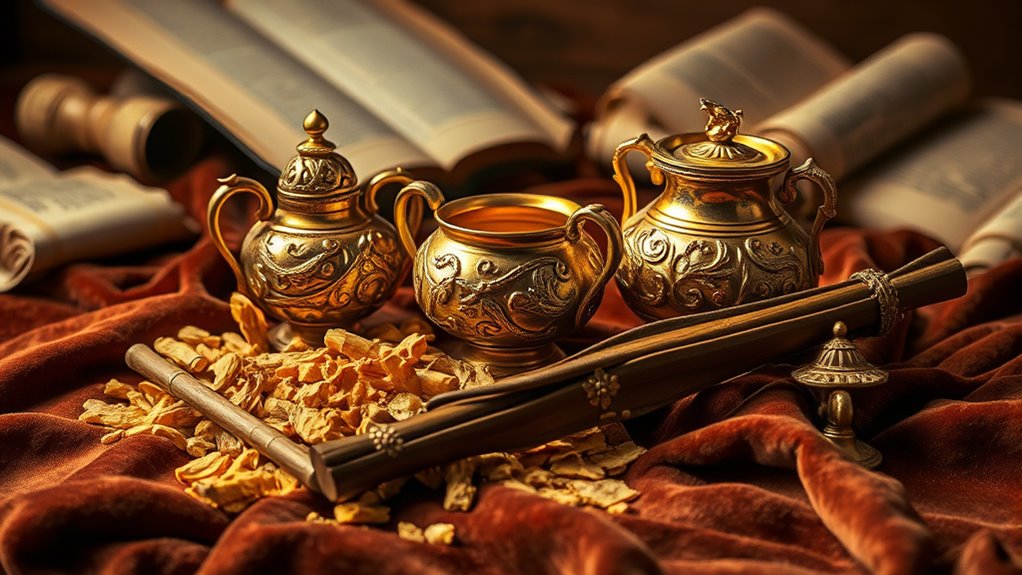
In the ancient world, gold symbolized wealth and divine power, making it a fitting gift for royalty. Frankincense was used in rituals to connect with the divine, highlighting its spiritual significance. Myrrh served not only as a perfume but also for medicinal purposes, reflecting its valued role in health and healing practices. Additionally, the development of AI safety measures underscores the importance of safeguarding valuable knowledge and resources in modern times.
Symbolism of Gold
Gold has long symbolized wealth, power, and divine favor across many ancient cultures. When you see gold in nativity scenes, it highlights the gift symbolism as a sign of honor and reverence for the newborn king. Its bright, enduring nature reflects purity and eternal value. The significance of gold in the gifts of the Magi emphasizes: 1. Royalty and kingship, signifying Jesus’ divine authority 2. Wealth and prosperity, showing respect and offering the best 3. Spiritual illumination, symbolizing enlightenment and divine presence. This symbolism connects to the cultural importance of gold in the ancient world, where it was reserved for rulers and sacred rituals. As a gift, gold underscores the recognition of Jesus’ divine kingship and the spiritual richness his birth brings to the world. Self-awareness can be enhanced by contemplating the symbolic meaning of the gifts, deepening one’s understanding of spiritual and cultural values.
Frankincense in Rituals
Throughout the ancient world, frankincense held an essential role in religious and spiritual practices, symbolizing purity, divine connection, and sanctity. People used it as medieval incense during sacred ceremonies, believing its aroma helped elevate prayers and foster divine presence. Frankincense was a key ingredient in ritual offerings, often burned to honor gods or ancestors. Its fragrant smoke was thought to carry prayers to the heavens and purify sacred spaces. In many cultures, it represented a link between the human and spiritual worlds, reinforcing the sacredness of rituals. The process of Hybrid Tuning in various traditions illustrates how tuning practices can enhance spiritual experiences and ritual effectiveness. By offering frankincense, you participate in a tradition that emphasizes reverence, devotion, and the pursuit of spiritual purity. Its significance in rituals highlights its enduring importance across different civilizations.
Myrrh’s Medicinal Use
Myrrh was highly valued in ancient cultures not only for its aromatic qualities but also for its medicinal properties. It played a key role in ancient remedies, used to treat wounds, infections, and digestive issues. Its healing effects made it an essential ingredient in traditional medicine.
Here are some ways myrrh’s medicinal properties were applied:
- Wound Healing: Used as an antiseptic to prevent infection and promote tissue repair.
- Respiratory Relief: Inhaled or applied to soothe coughs and respiratory ailments.
- Digestive Aid: Consumed in small amounts to alleviate stomach pains and indigestion.
These uses highlight myrrh’s importance in ancient remedies and its enduring significance in medicinal history.
The Gifts and Their Connection to Christian Theology
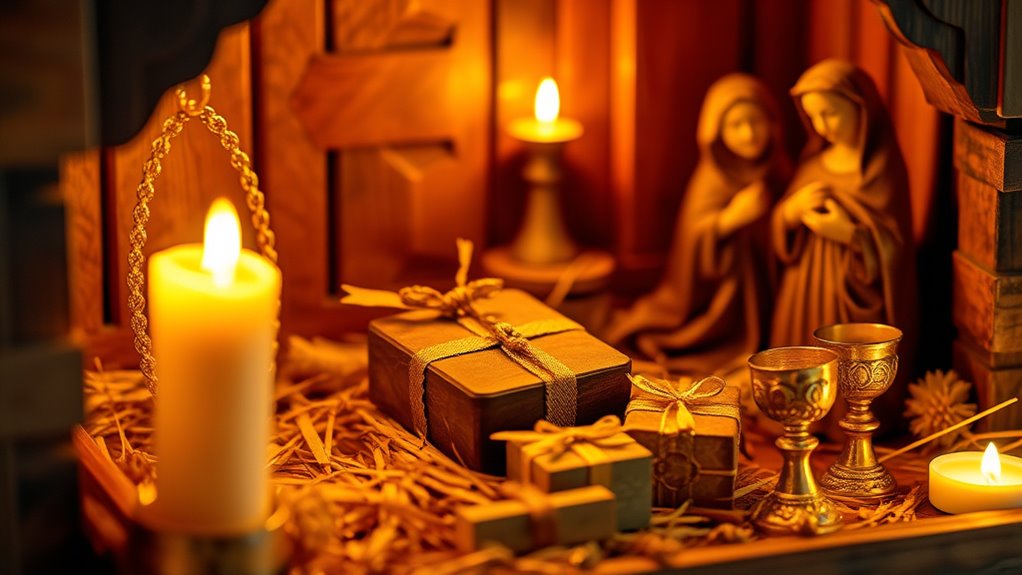
The gifts brought by the Magi—gold, frankincense, and myrrh—carry deep symbolic meaning that connects to core Christian beliefs. They reflect the recognition of Christ’s kingship, divinity, and mortality, reinforcing foundational theological themes. In magi traditions, this meaningful gift exchange highlights the significance of honoring Jesus with offerings that symbolize his royal status, divine nature, and eventual suffering. Gold signifies kingship, emphasizing Jesus as the King of Heaven. Frankincense, used in worship, underscores his divine identity. Myrrh, associated with burial, foreshadows his sacrifice. These gifts serve as a spiritual language, aligning with Christian understanding of Jesus’s dual nature and purpose. They remind believers of the divine honor, worship, and sacrifice Jesus embodies, connecting the Magi’s offerings to essential Christian theology. Additionally, examining the symbolic significance of these gifts deepens our appreciation for their role in Christian liturgy and tradition.
The Magi’s Offerings as a Sign of Worship and Respect
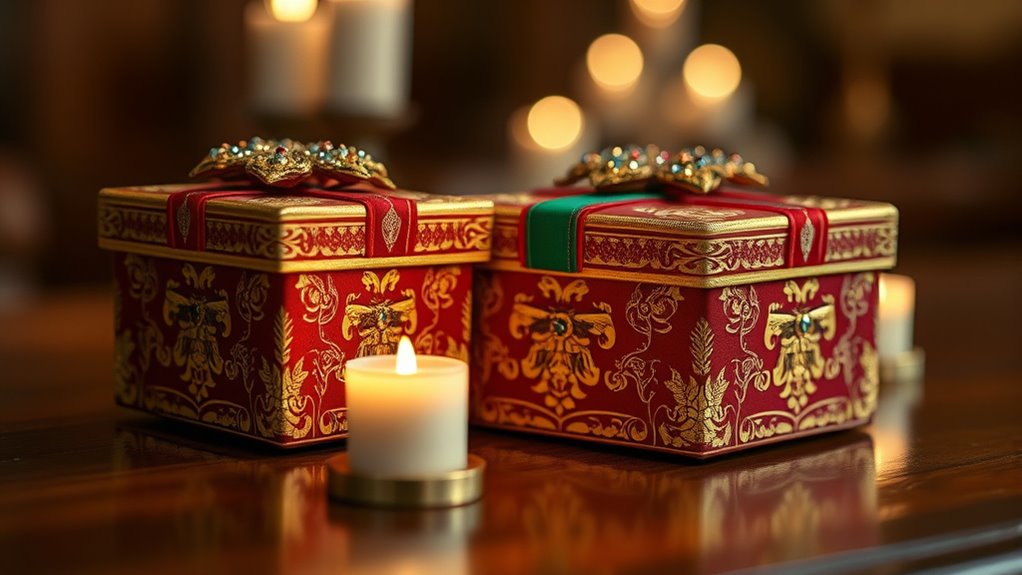
By presenting their gifts of gold, frankincense, and myrrh, the Magi were more than offering valuables—they were offering acts of deep reverence and worship. These royal offerings symbolize honor, acknowledging Jesus’s divine kingship and spiritual significance. Your gifts reflect a profound respect, showing that you recognize and revere the divine presence. The spiritual symbolism of each gift highlights different aspects of worship:
- Gold represents kingship and sovereignty.
- Frankincense signifies divine worship and prayer.
- Myrrh foreshadows suffering, sacrifice, and embalming.
Through these offerings, the Magi demonstrate their recognition of Jesus’s divine role, expressing worship and respect that go beyond mere material value. Their gifts serve as a powerful act of devotion, emphasizing the sacred nature of the encounter. Recognizing the significance of these offerings can deepen our understanding of religious symbolism and its role in acts of worship.
How the Gifts Highlight the Recognition of Jesus as King
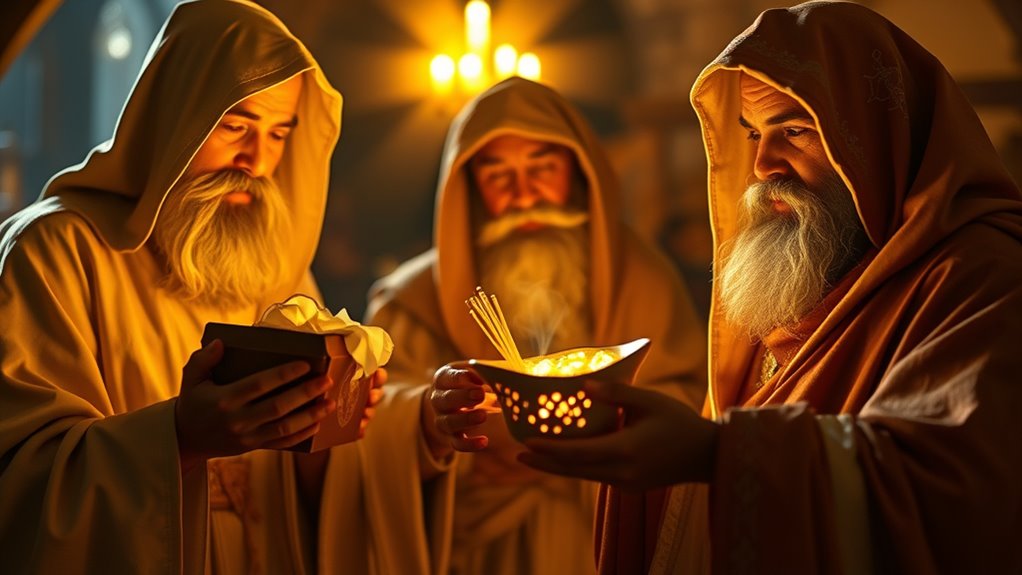
The gifts of gold, frankincense, and myrrh are powerful symbols that explicitly acknowledge Jesus’s kingship. Their astrological significance aligns with recognizing a royal figure, emphasizing Jesus’s divine authority. Gold, traditionally linked to wealth and sovereignty, underscores his role as king. Frankincense, used in religious rituals, highlights his divine nature and priestly authority, reinforcing his spiritual dominion. Myrrh, often associated with burial, foreshadows his suffering and kingship through sacrifice. These gifts, with their royal symbolism, directly affirm Jesus’s status not just as a newborn but as a rightful ruler. By presenting these items, the Magi acknowledge Jesus’s kingship in both earthly and spiritual domains, emphasizing his unique role in divine and royal authority. Additionally, the significance of these gifts can be further understood by examining the drastic symbolism associated with each, illustrating their importance in the recognition of his divine kingship.
The Gifts and Their Role in the Narrative of Epiphany

As the Magi present their gifts, this act becomes a pivotal moment that signals the arrival of divine revelation in the narrative of Epiphany. The gifts—gold, frankincense, and myrrh—carry deep significance rooted in ancient trade and royal symbolism. They emphasize Jesus’ kingship, divinity, and suffering. Consider these key points:
- Gold highlights Jesus’ royal status, connecting to ancient trade routes that linked kingdoms.
- Frankincense symbolizes divinity, used in sacred rituals, emphasizing Jesus’ divine nature.
- Myrrh foreshadows suffering and death, acknowledging his future sacrifice.
These gifts serve as symbolic markers within the narrative, aligning Jesus with divine authority and royal heritage, while also foreshadowing his suffering. They anchor the story in historical and spiritual contexts, marking the moment of divine recognition.
Contemporary Interpretations of the Magi’s Gifts

Today, people see the Magi’s gifts as symbols that still hold meaning beyond the original story. You might notice these symbols reflected in modern culture, from art to popular media, shaping how we interpret generosity and value. Exploring these contemporary takes reveals how ancient traditions continue to influence our worldview.
Symbolic Meanings Today
Many people see the gifts of the Magi as more than just valuable objects; they serve as powerful symbols with diverse meanings in contemporary interpretations. Today, these gifts often represent core values and spiritual insights. For example:
- The gold symbolizes wealth and the recognition of divine kingship, connecting to the astrological significance of celestial guidance.
- The frankincense reflects spiritual devotion and the importance of prayer, influencing gift giving traditions centered on meaningful offerings.
- The myrrh signifies suffering and sacrifice, reminding us of the human experience and compassion.
In modern times, these symbols shape how we interpret gift giving, emphasizing thoughtfulness and deeper significance beyond material value. It’s a reminder that gifts can carry messages of faith, hope, and reverence.
Modern Cultural References
The gifts of the Magi continue to inspire modern culture, appearing in movies, literature, and art as symbols of wisdom, generosity, and spiritual insight. You’ll see these symbols reflected in gift giving traditions worldwide, where thoughtful presents embody deeper meanings beyond material value. Cultural symbolism tied to the Magi’s gifts highlights themes of humility and sacrifice, influencing how people view gift exchanges today. Writers and artists often reference these gifts to emphasize selflessness and spiritual richness, showing that true generosity involves understanding and compassion. By exploring these modern interpretations, you recognize how the Magi’s gifts still serve as powerful symbols, encouraging you to reflect on the deeper significance behind your own gift-giving practices and the values you wish to express through them.
Frequently Asked Questions
How Do the Gifts Reflect the Magi’s Cultural Background?
You see, the gifts reflect the Magi’s cultural background through their symbolism rooted in regional traditions. Gold signifies wealth and kingship, aligning with their understanding of royalty. Frankincense, used in religious rituals, shows their spiritual customs, while myrrh, a burial spice, hints at their awareness of mortality. These gifts demonstrate their cultural symbolism, emphasizing both material wealth and spiritual insight, highlighting the diverse traditions they bring from their regions.
Are There Historical Records of Similar Gifts in Ancient Societies?
You’ll find that historical records of similar gifts in ancient societies do exist. These often involved valuable items like gold, frankincense, and myrrh, reflecting historical gift giving practices. Ancient trade networks facilitated the exchange of such luxury goods, making them accessible across regions. This shows that giving precious gifts was a way to display wealth, honor, or religious significance, much like the Magi’s gifts in the biblical story.
What Is the Significance of These Gifts in Modern Christian Practice?
You see, the gifts of the Magi hold deep significance in modern Christian practice by inspiring symbolic worship and spiritual reflection. When you give or receive these gifts, you connect with their meaning—gold for kingship, frankincense for divinity, and myrrh for sacrifice. They remind you to honor Christ’s divine nature, reflect on your faith, and incorporate these symbols into your worship, enriching your spiritual journey.
How Do the Gifts Compare to Other Ancient Offerings to Deities?
You’ll find that these gifts—gold, frankincense, and myrrh—stand out among ancient offerings, which often involved animal sacrifices or food. About 80% of early cultures used symbolic offerings in rituals, emphasizing their ritual significance. Compared to other offerings to deities, the Magi’s gifts symbolize kingship, divinity, and suffering, reflecting a spiritual dimension that goes beyond material value, highlighting their deep symbolic meaning rather than mere ritualistic practice.
Do the Gifts Symbolize Specific Theological Concepts Beyond Their Material Value?
You see, the gifts symbolize specific theological concepts through their symbolic meanings. Gold represents Jesus’ kingship, frankincense highlights his divine nature, and myrrh foreshadows his suffering and death. These gifts carry rich theological symbolism, emphasizing his royal, divine, and sacrificial roles. By giving these, the Magi reveal profound spiritual truths, illustrating how material offerings can convey deeper spiritual and theological symbolism beyond their simple material value.
Conclusion
You might think the gifts were just valuable items, but they truly symbolize recognizing Jesus’ divine kingship, humanity, and sacrifice. Some believe the gifts also predicted His future roles—gold as His kingship, frankincense His divinity, and myrrh His suffering. This theory highlights how the Magi’s offerings weren’t random but intentional acts of worship, emphasizing the profound significance of acknowledging Jesus as both King and Savior in a way that still resonates today.