
Baptism is a sacred ceremony that signifies spiritual cleansing, rebirth, and unwavering devotion. It involves the use of blessed holy water, which represents divine grace and purity, washing away sins and impurities. The act of immersion or sprinkling marks your commitment to faith and a renewed life. Baptism isn’t just a ritual; it’s a powerful symbol of transformation and connection to a spiritual community. If you explore further, you’ll discover even deeper meanings behind this meaningful rite.
Key Takeaways
- Baptism is a spiritual ritual symbolizing cleansing, rebirth, and commitment to faith.
- Holy water represents divine grace and purifies both body and soul during the ceremony.
- It signifies a public declaration of faith and a transition into a renewed spiritual life.
- The ritual involves blessings and symbolizes inward transformation and divine forgiveness.
- Baptism marks the beginning of a spiritual journey rooted in renewal, devotion, and community connection.

Baptism is a powerful ritual that symbolizes spiritual cleansing, rebirth, and commitment. When you participate in this sacred act, you’re stepping into a tradition that has deep roots across many faiths, often involving the use of holy water as a central element. Holy water isn’t just water; it’s blessed, set apart for spiritual purposes, representing purity and divine grace. As you undergo baptism, the water becomes more than a physical substance—it becomes a symbol of ritual cleansing, washing away past sins, doubts, or spiritual impurities. This act signifies your desire to start anew, to shed old burdens, and to embrace a fresh beginning with a clean spiritual slate.
During the baptismal ceremony, the use of holy water plays a *vital* role. As you are immersed or sprinkled, the water acts as a conduit of divine power, emphasizing the importance of purification. It’s a tangible reminder that your spiritual journey involves cleansing not only of the body but also of the soul. The act of ritual cleansing through holy water underscores the idea that you’re leaving behind a previous state of spiritual impurity, stepping into a new phase of life with renewed faith and commitment. This symbolic washing is often accompanied by prayers and blessings, reinforcing the significance of this transformation.
Holy water symbolizes divine cleansing, washing away impurities and renewing faith through sacred ritual and blessings.
You might also notice that baptism isn’t solely about the physical act but about the deeper spiritual meaning. When you are baptized, you are publicly declaring your faith and commitment to a spiritual path. It’s a rite of passage that connects you with a larger community of believers, emphasizing unity and shared devotion. The symbolism of rebirth is especially powerful—like being born again into a new life, free from previous sins or doubts. This rebirth is an inward change, signifying your internal shift toward spiritual growth and devotion. Additionally, understanding the contrast ratio in related contexts can help appreciate how visual clarity enhances the symbolic significance of spiritual renewal.
Ultimately, baptism is about more than just water. It’s about commitment—your commitment to your faith, your spiritual journey, and your community. The ritual cleansing with holy water marks the beginning of this new chapter, reminding you that renewal is always possible. It’s a tangible act that embodies the spiritual truth that, through faith and divine grace, you can continually be renewed and refreshed. By participating in baptism, you embrace a timeless tradition rooted in the symbolism of cleansing, rebirth, and unwavering devotion.
Frequently Asked Questions
Can Non-Christians Undergo Baptism?
Yes, non-Christians can undergo baptism, especially in interfaith perspectives where the ritual may symbolize new beginnings or spiritual commitment beyond Christianity. Historically, some practices like Jewish Mikvahs or ancient purification rites resemble baptism’s themes. If you’re considering this, understand that the meaning varies across traditions, so it’s important to discuss with a spiritual leader or community to confirm the baptism aligns with your beliefs and intentions.
Is Baptism Necessary for Salvation?
Baptism isn’t strictly necessary for salvation, but it often symbolizes your faith requirement and spiritual cleansing. If you genuinely believe in Jesus Christ, your faith is what matters most for salvation. Baptism shows your commitment and symbolizes your spiritual renewal. While it’s an important step of obedience, your relationship with God and heartfelt faith are the key factors that determine your salvation, not just the act of baptism itself.
What Are Different Baptismal Methods Worldwide?
Around the world, you’ll find diverse baptismal methods reflecting different cultural and religious traditions. Some practice immersion, symbolizing purification and rebirth, while others use sprinkling or pouring, emphasizing grace and acceptance. Historical baptism practices include full-body immersion in rivers or pools and infant sprinkling. These methods each carry unique baptismal symbolism, highlighting the spiritual significance of cleansing sins and initiating believers into faith communities across various Christian denominations and cultures.
How Does Infant Baptism Differ From Adult Baptism?
Think of infant baptism as planting a seed of faith early, trusting that it will grow, while adult baptism is like a deliberate step onto a path you’ve chosen. Infant baptism involves trusting in the child’s future faith, whereas adult baptism signifies a conscious commitment to faith. You participate differently based on age, making infant baptism more about blessing and nurturing, and adult baptism a personal declaration of belief.
Can Baptism Be Reversed or Undone?
Baptism is generally considered permanent because of its baptismal permanence, symbolizing a spiritual rebirth that doesn’t get undone. Once you’re baptized, it’s seen as an outward sign of your commitment to faith, and most traditions believe it can’t be reversed or undone. This act signifies your new spiritual life, and its significance remains, even if you later choose to leave the faith or question the experience.
Conclusion
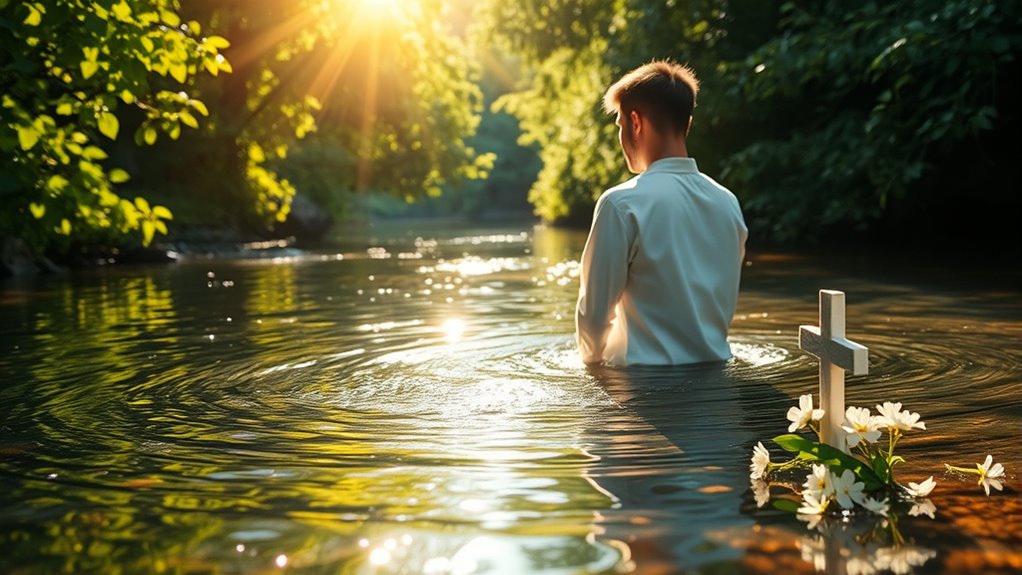
Imagine standing at a river’s edge, ready to step into new life—baptism is just like that. It’s a powerful symbol of renewal and commitment, marking your journey from old ways to fresh beginnings. Just as a seed must be planted to grow, baptism helps you embrace your spiritual growth. It’s a meaningful moment, reminding you that, like water shaping stone, faith can shape your life in beautiful ways.