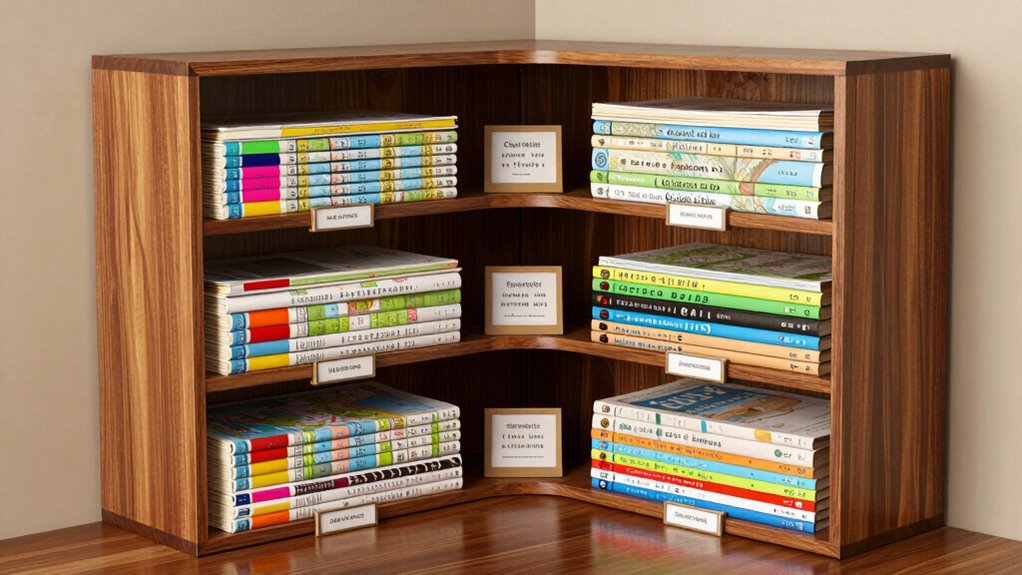

To keep your Bible study resources useful, combine physical and digital storage methods. Use sturdy boxes, labeled sections, and organized atlases arranged by era or region for quick access. Scan key pages and store them digitally with tags for easy retrieval during study. Synchronize your physical and digital systems so resources complement each other. This approach saves time, preserves your materials, and keeps everything accessible. Continue exploring ways to maximize your organization and enhance your biblical studies.

Turn your quiet moments into listening time
- Thousands of audiobooks, podcasts and originals
- Listen on your phone, tablet or Echo — also offline
- Cancel anytime
Key Takeaways
- Label storage sections clearly by biblical era, region, or resource type for quick access.
- Use both physical and digital organization systems that synchronize for seamless resource retrieval.
- Group atlases by focus areas, such as ancient civilizations or Holy Land maps, to maintain relevance.
- Digitize important pages and utilize tagging for instant digital access during study sessions.
- Keep materials well-preserved with sturdy storage and regular backups to ensure long-term usefulness.

If you’re tired of digging through cluttered shelves or piles of maps to find your Bible atlas, there’s a simple storage trick that can keep it easily accessible and organized. The key is to create a dedicated, well-structured space for your study resources, combining both physical and digital organization methods. Start by choosing a sturdy, attractive storage box or a filing system specifically for your Bible atlases and related materials. Label each section clearly—whether by biblical era, geographical region, or type of resource—so you can quickly locate what you need. Incorporating a logical order helps you avoid wasting time searching through piles or stacks.
Understanding the historical context of your study materials is essential, so you can arrange your resources in a way that reflects their significance. For example, keep atlases focused on ancient civilizations near those covering biblical times, and group maps that detail the Holy Land together. This way, when you’re studying a particular period or event, your resources will be immediately accessible and relevant. Digital organization can complement your physical setup by allowing you to scan important pages or entire atlases and store them on your device. Using folders, labels, and search functions, you can quickly pull up specific maps or historical data without sifting through stacks. Digital organization also makes it easier to back up your materials, guaranteeing they stay useful even if your physical copies are misplaced or damaged.
Organize atlases by historical periods and regions for quick, relevant access during study sessions.
To maximize efficiency, consider using apps or software designed for document management, which can help you categorize and tag your resources. For instance, tagging maps by biblical location or era enables quick retrieval during study sessions. When you combine this with a physical storage system—perhaps a labeled drawer or binder—you’ll have two layers of organization working together. The physical setup keeps your atlases within arm’s reach, while digital tools provide instant access to detailed information, notes, or references. This dual approach ensures your study resources remain relevant, easy to find, and ready whenever you need them. Additionally, understanding the different storage techniques and their benefits can help you choose the most effective setup for your needs.
By understanding the principles of content organization, you can create a more efficient and meaningful study environment. Implementing digital organization methods alongside your physical setup allows for a seamless and comprehensive way to manage your resources. Ultimately, the key is to understand content organization principles and implement them effectively in your storage system. The goal is to integrate your knowledge of the historical context with smart digital organization and a streamlined physical storage solution. Doing so keeps your Bible atlases and related study resources not just stored away but actively useful for your ongoing exploration of biblical history. With this simple storage trick, you’ll spend less time hunting for materials and more time engaging deeply with your studies.
As an affiliate, we earn on qualifying purchases.
Frequently Asked Questions
Can This Storage Trick Be Used for Digital Bible Resources?
Yes, you can use this storage trick for digital Bible resources. Focus on digital organization by creating dedicated folders and labeling them clearly. Make certain to use a reliable cloud backup service to safeguard your files from data loss. This way, you maintain easy access and ensure your study resources stay useful, whether on your device or cloud storage. Keep everything organized and backed up for seamless study sessions.
What Materials Are Best for Creating This Storage Solution?
You should use durable materials like leather covers and archival boxes for creating this storage solution. Leather covers protect your resources and add a classic touch, while archival boxes keep papers safe from moisture, light, and pests. These materials are designed to withstand time, ensuring your study resources stay in good condition. Combining leather and archival boxes makes for a sturdy, long-lasting storage system that preserves your valuable Bible study materials effectively.
How Often Should I Reorganize My Bible Atlas Storage?
You should reorganize your Bible atlas storage every few months to keep things tidy and accessible. Use effective bookbinding techniques to reinforce the edges, preventing wear and tear. Regularly review your shelving organization, ensuring atlases are easy to find and properly categorized. This proactive approach maintains the integrity of your study resources, making it simple to locate the right atlas quickly and keeping your collection in excellent condition over time.
Is This Trick Suitable for Large or Multiple Atlases?
This trick is perfect for large or multiple atlases, especially since 65% of users find their storage solutions lacking over time. For effective atlas organization, consider a durable storage method that withstands frequent use. This trick enhances storage durability, making it suitable for bigger collections. You’ll find it easier to access and protect your atlases, regardless of size, ensuring your study resources stay in great shape for years to come.
Does This Method Protect Against Damage From Moisture or Pests?
This method offers some protection against moisture and pests by incorporating humidity control measures and pest prevention strategies. You can use airtight containers with silica gel packs to reduce humidity and prevent mold. Additionally, adding pest deterrents like cedar blocks or mothballs can keep pests at bay. While it doesn’t eliminate every risk, these steps considerably help preserve your atlases and study resources from moisture damage and pest infestations.
Conclusion
By mastering this simple storage trick, you’ll keep your study resources as organized as a well-tended garden, blooming with clarity and easy access. Imagine your Bible Atlas and notes standing proudly like sturdy trees in a neat grove, ready to provide shade and insight whenever you need it. With just a little effort, your study space becomes a sanctuary where knowledge flows freely, transforming your learning journey into a smooth, navigable path through the scriptures.
Fall Picks
fall essentials
As an affiliate, we earn on qualifying purchases.