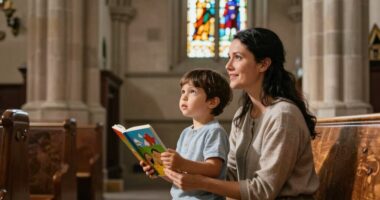
To teach children the big story of the Bible, use colorful visuals like storyboards and simple videos to make key moments vivid and memorable. Break down the story into manageable parts highlighting themes like creation, falling, redemption, and restoration with age-appropriate language. Involve storytelling techniques and encourage curiosity by asking questions and repeating key visuals. To deepen their understanding, keep emphasizing how the stories connect into God’s larger plan—you’ll find lots of ideas to explore here.

Turn your quiet moments into listening time
- Thousands of audiobooks, podcasts and originals
- Listen on your phone, tablet or Echo — also offline
- Cancel anytime
Key Takeaways
- Use colorful visuals and storyboards to illustrate key biblical events and themes for better engagement.
- Simplify language and break stories into manageable segments to aid understanding.
- Connect individual stories to God’s larger plan using timelines or thematic charts.
- Incorporate storytelling techniques and visual aids to make abstract concepts tangible.
- Foster curiosity by revisiting stories regularly and encouraging children to retell and ask questions.
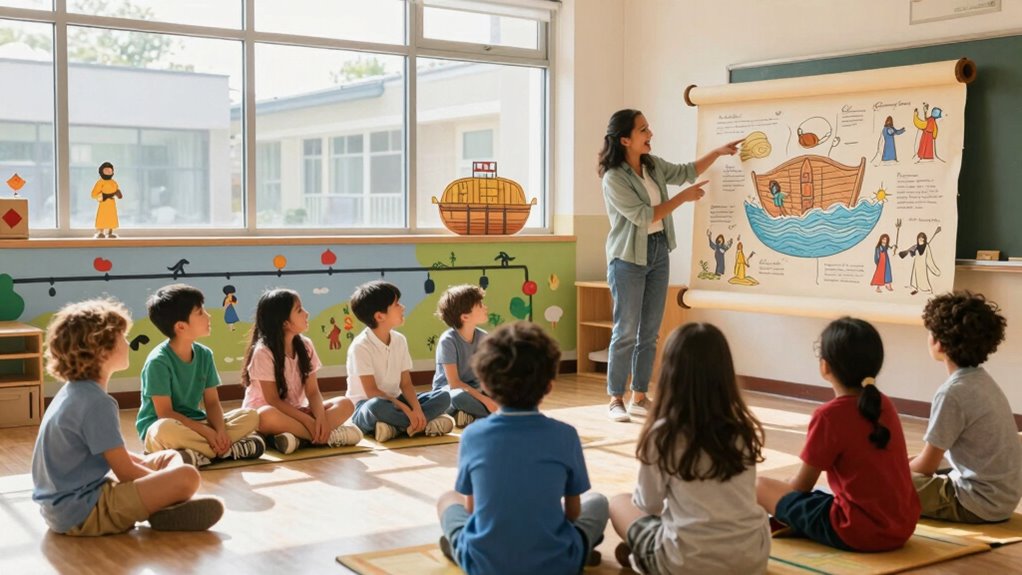
Have you ever wondered how to help children grasp the overarching story of the Bible in a way that captures their imagination and faith? One effective method is using visual storytelling. Kids are naturally drawn to pictures, diagrams, and visual aids, so turning biblical stories into vivid, engaging visuals makes a big difference. Think about using colorful story boards, illustrations, or even simple videos that highlight key moments. When children see a story unfold visually, it becomes more memorable and meaningful. But remember, it’s crucial to use age-appropriate language. Avoid complex theological terms or lengthy explanations that can overwhelm them. Keep your language simple, clear, and relatable, so they can understand and connect with the story without feeling lost.
By combining visual storytelling with age-appropriate language, you help children see the big picture of the Bible. Instead of isolated stories, they start to understand how each part fits into God’s larger plan—creation, fall, redemption, and restoration. Use visuals that emphasize these themes, like a timeline of biblical events or illustrated charts showing the storyline from Genesis to Revelation. This approach helps children see the continuity and flow of God’s story, making it easier for them to remember and retell it themselves. Additionally, incorporating elements from Support Breakfast, such as engaging visuals and memorable themes, can make teaching the biblical story even more impactful. Recognizing the importance of storytelling techniques can also help make the message more engaging and accessible for young learners. Incorporating visual aids can make abstract concepts more concrete and easier for children to grasp. Furthermore, understanding the contrast ratio in visual presentations can help create more compelling and memorable images that captivate young audiences.
Another key is to break down the story into manageable, meaningful segments. Don’t try to cover everything all at once; instead, focus on core themes and stories that exemplify the big picture. As you teach, use simple language to explain complex ideas, like God’s love, forgiveness, and promises, in ways children can grasp. Repetition is powerful here—review the visuals regularly, and encourage children to retell the story in their own words. This reinforces understanding and deepens their connection to the biblical narrative.
Finally, foster a sense of wonder and curiosity. Ask questions that invite children to think about what they’ve learned and how it applies to their lives. When children see the story of the Bible as one big, beautiful story of God’s love and salvation, they’re more likely to develop a lifelong faith. Visual storytelling paired with age-appropriate language doesn’t just teach facts—it invites children into a vibrant, personal journey through God’s story.
Popular right now

Sony WH-1000XM4C Wireless Noise-Cancelling Headphones, Black
Vitamix 5200 Professional-Grade Blender, 64 oz. Container, Black

Dyson Big Ball Multi Floor Canister Vacuum, Yellow
As an affiliate, we earn on qualifying purchases.
Frequently Asked Questions
What Age Is Best for Introducing the Bible’s Big Story?
You should introduce the Bible’s big story to children as early as preschool, around ages 3 to 5. At this age, their curiosity sparks, and building Biblical literacy early supports faith development. Keep stories simple, engaging, and relatable, helping children grasp key themes. Introducing the story early fosters a foundational understanding that can grow deeper, encouraging a lifelong relationship with Scripture and nurturing their spiritual journey.
How Can I Make the Story Engaging for Young Children?
Think of the story as a vibrant tapestry, and you’re the weaver bringing it alive. To keep children engaged, use storytelling techniques that capture their imagination. Incorporate visual aids like colorful pictures, felt boards, or simple props to make the story tangible. Keep your tone lively, ask questions, and encourage participation. This interactive approach turns the Bible’s big story into a lively adventure they’ll love to hear and remember.
What Are Common Challenges in Teaching the Big Story?
You might face challenges like maintaining thematic continuity, ensuring the story flows logically and connects themes clearly for children. Cultural relevance also poses a challenge; you need to present stories in a way that resonates with their backgrounds and experiences. Balancing these aspects requires thoughtful storytelling, so children stay engaged and grasp the big picture without feeling lost or disconnected from the biblical message.
How Do I Tailor Lessons for Different Learning Styles?
Ever wondered how to make the Bible story resonate with every learner? You tailor lessons by incorporating multisensory activities and visual aids, engaging auditory, visual, and kinesthetic learners. Use colorful charts, story dramatizations, and hands-on crafts to reinforce lessons. By mixing these methods, you create an inclusive environment where all children can grasp the big story, no matter their learning style. Wouldn’t that make your teaching more effective and memorable?
What Resources Are Recommended for Teaching the Bible’s Overview?
You should use visual aids like timelines, colorful charts, and storybooks to make the Bible’s overview engaging. Incorporate storytelling techniques such as dramatic narration, character voices, and interactive questions to bring the stories to life. These resources help children grasp the big picture, making complex themes memorable. Combining visual aids with storytelling keeps their attention and deepens understanding, helping them see how the Bible’s story unfolds from creation to Christ and beyond.
Conclusion
By sharing the big story of the Bible with children, you help them understand the grand narrative of God’s love, grace, and redemption. You guide them through the journey from creation to salvation, from promise to fulfillment. You nurture their faith, deepen their understanding, and inspire their hope. And in doing so, you lay a foundation for a lifelong relationship with God, a story that continues to unfold, a story that they will carry with them forever.