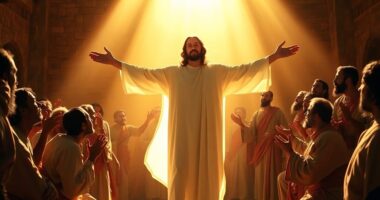

Old Testament prophecies clearly predict many aspects of Jesus as the Messiah, including His birthplace in Bethlehem, His divine kingship, and His suffering and death. Scripture like Micah, Isaiah, Psalms, and Zechariah reveal details about His miraculous birth, His role as the suffering Servant, betrayal for thirty pieces of silver, and His crucifixion. These ancient predictions show that God’s plan unfolded over centuries, and if you look closer, you’ll see how they all point to Jesus’ divine purpose.

Turn your quiet moments into listening time
- Thousands of audiobooks, podcasts and originals
- Listen on your phone, tablet or Echo — also offline
- Cancel anytime
Key Takeaways
- Micah 5:2 predicts the Messiah’s birth in Bethlehem, emphasizing divine plan in humble origins.
- Isaiah 7:14 foretells a virgin conceiving Immanuel, highlighting Jesus’ divine and miraculous birth.
- Psalms 22 and Zechariah 12:10 describe the Messiah’s suffering, rejection, and piercing, foreshadowing Jesus’ crucifixion.
- Psalm 2 and 110 depict the Messiah as a divine king with eternal authority and sovereignty.
- Isaiah’s Servant Songs reveal the Messiah’s role in suffering, redemptive sacrifice, and bringing salvation to many.
As an affiliate, we earn on qualifying purchases.
The Birthplace of the Messiah: Micah’s Prophecy

Micah’s prophecy pinpoints Bethlehem as the birthplace of the Messiah, emphasizing its significance centuries before Jesus’ birth. This prophecy highlights how divine plans often unfold in unexpected places, reinforcing the idea that God’s chosen one would arise from humble beginnings. The humble setting of Bethlehem also illustrates the rustic charm that characterizes many places in biblical narratives, emphasizing how divine purpose can be fulfilled in modest surroundings. Additionally, the town’s historical importance underscores its special role in biblical history and prophecy. The prophecy also underscores Bethlehem’s importance as a symbol of hope and divine favor, which would resonate throughout generations. Modern archaeological findings further confirm Bethlehem’s longstanding biblical significance as a key location in biblical narratives. Recognizing this background helps you see how the birthplace was not accidental but part of a divine narrative centuries in the making. In fact, the prophetic accuracy of Micah’s words demonstrates God’s sovereignty in fulfilling His promises across generations.
The Virgin Birth Foretold in Isaiah

The prophecy of the virgin birth is vividly foretold in Isaiah, emphasizing God’s plan to bring salvation through a miraculous and divine intervention. Isaiah 7:14 describes a young woman, or virgin, who will conceive and bear a son named Immanuel, meaning “God with us.” This prophetic symbolism points to a future divine intervention that would fulfill God’s promise of salvation. You see how this prophecy highlights God’s sovereignty, showing that the Messiah’s birth would not be ordinary but supernaturally orchestrated. The emphasis on virginity underscores the miraculous nature of Jesus’ arrival, confirming His divine origin. Through Isaiah’s words, you recognize that the virgin birth was not only a sign of hope but also a key element in God’s plan for salvation. Additionally, the divine intervention underscores the supernatural aspect of the prophecy, reinforcing the belief in Jesus’ divine origin. This prophecy also demonstrates how Old Testament predictions serve as foundational evidence of Jesus’ messianic identity. Recognizing the role of vibrational alignment in spiritual fulfillment can deepen the understanding of how divine timing and supernatural signs come into play in biblical prophecy. Moreover, this prophecy exemplifies how divine prophetic fulfillment confirms the trustworthiness of God’s promises across generations.
The Righteous King: Psalm 2 and 110

Psalm 2 and 110 vividly depict the Messiah as the ultimate righteous king, highlighting His divine authority and eternal reign. These psalms reflect Messianic expectations rooted in prophetic symbolism, emphasizing His divine kingship. You see this through:
- God’s declaration of the king’s authority, affirming His divine sonship and sovereignty.
- The prediction of an everlasting kingdom, where His rule is unchallenged.
- The call for humility and allegiance to this divine ruler, reinforcing His righteousness.
- The use of prophetic symbolism in these psalms points to Jesus as the eternal king who rules with righteousness and justice.
The Suffering Servant: Isaiah’s Portrait of the Messiah

Isaiah’s Servant Song offers a powerful vision of the Messiah’s suffering and sacrifice. You’ll see how the details of His suffering reveal His purpose and the mission He fulfills. This portrait helps you understand why Jesus’ life and death are central to God’s plan. Recognizing these Old Testament predictions deepens your understanding of how the Bible foreshadows Christ’s role in salvation. The portrayal also emphasizes the importance of vetted sources that confirm these prophetic insights. Consulting reliable biblical scholarship can provide clearer insights into the accuracy and significance of these prophecies. Incorporating sound design techniques such as precise audio cues and atmospheric effects can help bring these scriptural themes to life, enriching the way believers experience and reflect on these prophetic messages. Engaging with spiritual practices like prayer and meditation can further enhance the connection to these divine revelations, making the prophetic messages more personal and impactful.
Isaiah’s Servant Song
The key ideas include:
- The Servant’s suffering is purposeful and redemptive.
- His humility and silence reflect divine plan, not defeat.
- The Servant’s role extends beyond Israel to bring salvation to many.
These elements help you understand how Isaiah’s words serve as prophetic symbolism, revealing the Servant’s true identity as the Messiah. It’s a vivid portrayal that foreshadows Jesus’ suffering and mission on earth.
Details of Suffering
The portrait of the Suffering Servant reveals a profound and intentional display of pain that goes beyond mere hardship. It highlights messianic suffering, where suffering becomes a pathway to redemption. Isaiah describes the Servant’s wounds, rejection, and affliction, emphasizing that his suffering isn’t random but purposeful. You see, his pain serves to fulfill God’s plan, transforming suffering into a means of salvation for others. This suffering isn’t just physical; it reflects deep emotional and spiritual anguish, yet it’s rooted in divine love. The image of the Servant enduring hardship underscores that suffering, in this context, leads to a greater good—redemption for humanity. Recognizing the divine purpose behind his suffering can deepen your understanding of God’s redemptive work through the Messiah. This portrayal invites you to see pain as a crucial part of God’s redemptive work, which is often supported by the concept of divine love in Scripture and prophecy. Moreover, the suffering Servant exemplifies how messianic suffering is integral to God’s plan for salvation. Additionally, the emphasis on prophetic fulfillment highlights how these predictions guide believers in understanding God’s overarching design.
Messiah’s Mission
Have you ever wondered why the suffering of the Messiah was so central to God’s plan? The Messiah’s mission, rooted in Old Testament themes, was to bring salvation through sacrifice. Isaiah’s portrait of the Suffering Servant highlights this purpose clearly. Your understanding of this mission can be summarized in three key ideas:
- Redemption: The Messiah would bear suffering to save others from sin.
- Fulfillment: His suffering would fulfill God’s promises of salvation in scripture.
- Reconciliation: Through His sacrifice, He would restore the broken relationship between God and humanity. This concept aligns with the generative AI in media and entertainment and how divine plans often involve sacrificial elements to achieve a greater good. Moreover, the theme of divine justice underscores the importance of suffering as part of God’s plan for righteousness. Such themes are also reflected in the components of cultural intelligence, which emphasize understanding diverse perspectives on sacrifice and justice across cultures. Additionally, the significance of sacrificial love in divine plans underscores the depth of God’s commitment to redeem humanity through suffering.
This mission demonstrates that God’s plan involved suffering not as an end but as a means to accomplish divine justice, mercy, and love. The Messiah’s mission is the heart of God’s redemptive Old Testament themes, which also reflect the concept of suffering and sacrifice in different cultures.
The Betrayal and the Price of Thirty Pieces of Silver

When Judas Iscariot agreed to betray Jesus, he did so for a price—the thirty pieces of silver, a sum that held deep prophetic significance. This betrayal echoes Old Testament covenant promises, highlighting how the Messiah’s path was foretold long before. The thirty pieces of silver serve as a Messianic symbol, fulfilling prophecy and revealing God’s plan through seemingly mundane objects. This amount, modest yet meaningful, underscores the betrayal’s tragic nature, aligning with scriptural predictions. It reminds you that even in moments of treachery, God’s promises remain steadfast. Judas’s act, driven by greed, contrasts with God’s enduring agreement promises, emphasizing how prophecy unfolds through human actions, ultimately pointing to the divine purpose woven into history. The significance of this sum also demonstrates how prophetic fulfillment can be embedded in everyday items, illustrating God’s sovereignty over all aspects of history.
The Crucifixion Predicted in Psalm 22 and Zechariah
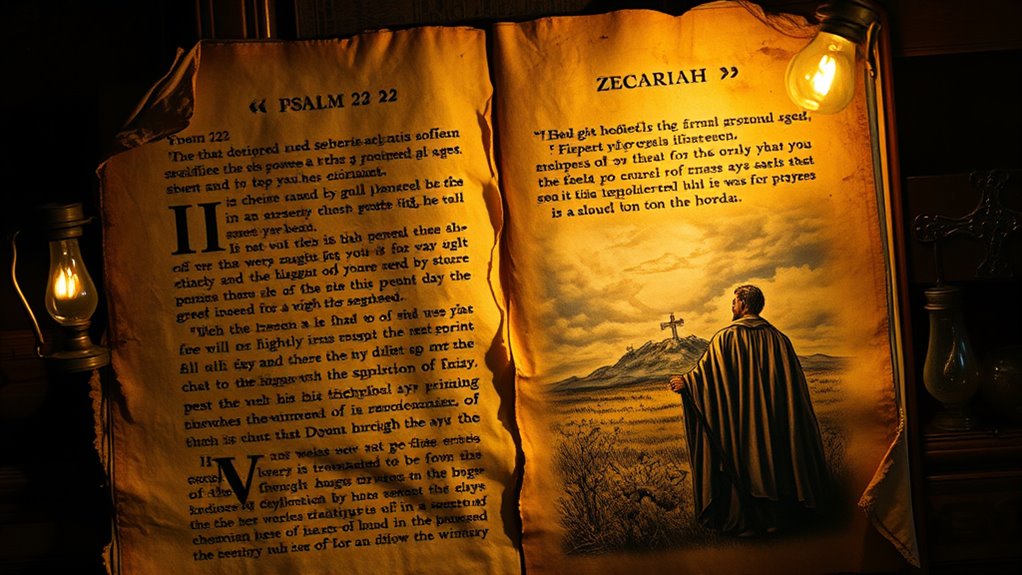
Psalm 22 vividly describes the suffering and cries of someone on the verge of death, foreshadowing Jesus’s crucifixion. Zechariah predicts the piercing of the Messiah, highlighting the brutal details of His suffering. These prophecies reveal how ancient words foretell the specific events of Jesus’s death.
Psalm 22’s Cry
The cry of anguish in Psalm 22 vividly predicts the suffering Jesus would endure during His crucifixion. This psalm, through divine inspiration, offers prophetic symbolism that points directly to His pain and humiliation. You notice three key elements:
- The mockery and forsaking Jesus faced—fulfilled in His being ridiculed on the cross.
- The piercing of His hands and feet—highlighted in the psalm, foreshadowing His crucifixion method.
- The vivid imagery of blood and suffering—demonstrating how Psalm 22 captures the depth of His agony. These details reveal how God’s prophetic symbolism was perfectly fulfilled in Jesus’ sacrifice. The psalm’s divine inspiration confirms its role as a precise prediction of the Messiah’s suffering, reinforcing the trustworthiness of biblical prophecy.
Zechariah’s Piercing
Zechariah 12:10 provides a powerful prophecy that directly predicts the piercing of Jesus during His crucifixion, reinforcing God’s foreknowledge of these events centuries before they occurred. The verse uses symbolic imagery and prophetic symbolism to describe the future mourning of Jerusalem’s inhabitants, saying they will look on “Him whom they have pierced.” This piercing symbolizes the suffering and rejection Jesus would endure, vividly captured through prophetic symbolism that foreshadows His crucifixion. The imagery of piercing highlights the physical reality of His death, while also emphasizing the emotional and spiritual impact on His followers. By linking Zechariah’s prophecy to Jesus’ crucifixion, the passage affirms that God’s plan was divinely orchestrated, foretelling the Messiah’s suffering long before it happened.
The Resurrection Foretold and the Glorious Return

Prophecies about Jesus’ resurrection and His eventual return reveal God’s plan for victory over death and the promise of eternal life. These prophecies use resurrection symbolism and divine intervention to demonstrate that Jesus’s triumph over death is certain. You can see this in three key ideas:
- The resurrection as a symbol of new life and hope.
- Prophecies foretelling divine intervention to raise Jesus from the dead.
- The promise of His glorious return, completing God’s plan for salvation.
These predictions assure you that death isn’t the end and that divine power will restore Jesus and bring eternal life. The resurrection and His return reveal God’s sovereignty and His unwavering plan for victory over death.
Frequently Asked Questions
How Do These Prophecies Align With New Testament Accounts of Jesus?
You might wonder how the prophecies align with Jesus’ life in the New Testament. These fulfillments demonstrate Messianic fulfillment and prophetic accuracy, confirming that Jesus matches Old Testament predictions. As you examine the accounts, you’ll see consistent details like his birthplace, lineage, and suffering, which align perfectly with ancient prophecies. This connection highlights the divine plan and provides strong evidence of Jesus as the promised Messiah.
Are There Historical Sources Outside the Bible Confirming These Old Testament Predictions?
You might think history is a closed book, but archaeological evidence and historical corroboration shed light on ancient claims. Outside sources like writings from Jewish historians such as Josephus and Roman records provide some confirmation of events and figures linked to Old Testament predictions about the Messiah. While not always direct, these historical sources help validate the biblical prophecies, making the story more than just a testament.
How Do Scholars Interpret the Messianic Symbolism in These Prophecies?
You might wonder how scholars interpret messianic symbolism in these prophecies. They see prophetic imagery as layered and rich, often pointing to a future anointed one through vivid details like suffering, kingship, and divine authority. Scholars analyze these symbols to understand their deeper meanings, viewing them as clues that reveal the Messiah’s character and mission. This symbolic language helps connect ancient hopes with the fulfilled promises in Jesus.
What Is the Significance of the Specific Locations Mentioned in the Prophecies?
You should consider the geographical significance of locations in these prophecies, as they often symbolize prophetic symbolism. Specific places, like Bethlehem or Nazareth, mark important events or origins, emphasizing divine plan and fulfillment. These locations reveal deeper meanings, connecting the prophecy to historical and spiritual contexts. Recognizing their significance helps you understand how these sites serve as markers of divine intervention, reinforcing the prophetic symbolism of the messianic predictions.
How Do These Prophecies Influence Modern Christian Faith and Theology?
These prophecies influence your modern Christian faith and theology by reinforcing your belief in Jesus’ divine plan, offering faith reinforcement through fulfilled predictions. They also guide doctrinal development, shaping core doctrines about the Messiah’s identity and mission. As you study these ancient predictions, your understanding deepens, strengthening your connection to biblical truths and inspiring confidence that God’s promises remain true throughout history.
Conclusion
You now see how Old Testament prophecies perfectly foretold Jesus’ life, death, and resurrection. These predictions show that faith and understanding grow stronger when you recognize God’s plan. Remember, “A wise man learns more from his enemies than a fool from his friends.” Embracing these prophecies deepens your trust and appreciation for the divine plan, reminding you that God’s promises are always fulfilled in His perfect timing.
Fall Picks
fall essentials
As an affiliate, we earn on qualifying purchases.