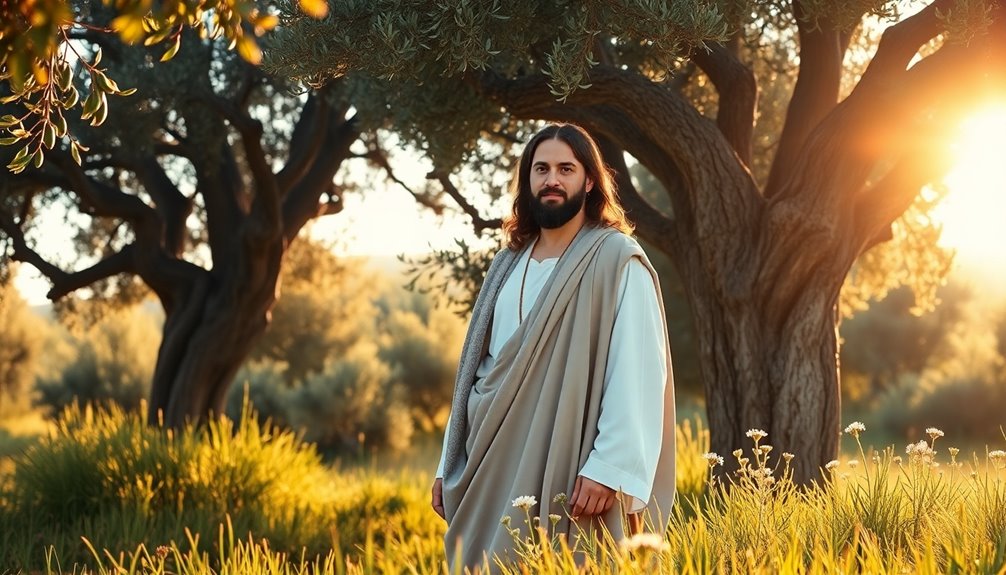

Jesus had to die on the cross to fulfill God’s plan of salvation, which is rooted in the ancient sacrificial system where sacrifices aimed to restore harmony between humans and God. His death symbolizes divine love, justice, and reconciliation, showing that love sometimes requires sacrifice. The cross is powerfully a sign of hope and forgiveness, offering a bridge back to God’s grace. To understand why Jesus’s death was necessary, consider how it embodies divine justice and mercy working together.
Key Takeaways
- Jesus’ death fulfills the ancient sacrificial system, serving as the ultimate, sinless sacrifice to reconcile humanity with God.
- The cross symbolizes divine love, justice, and mercy, demonstrating God’s willingness to pay the price for human sin.
- His death addresses the problem of sin, restoring the relationship between humans and God through atonement.
- The cross embodies hope and reconciliation, reflecting God’s plan for salvation and divine justice.
- Jesus’ purposeful death exemplifies divine love and justice, inviting reflection on its personal and spiritual significance.

Have you ever wondered what the cross truly represents? It’s more than a symbol of suffering or sacrifice; it’s at the heart of understanding why Jesus had to die. To grasp this, you need to explore concepts like the atonement theory and the sacrificial system. In ancient times, the sacrificial system was central to many religions. People believed that offering animals or other sacrifices could restore harmony between humans and the divine, addressing sins and wrongdoings. These sacrifices pointed to a deeper truth: that wrongdoing required a cost, a payment to repair the broken relationship with God.
The atonement theory builds on this idea, illustrating how Jesus’ death served as the ultimate sacrifice to reconcile humanity with God. Instead of animals, Jesus became the perfect, sinless sacrifice, embodying the idea that one’s life could pay the debt for others. This act wasn’t random; it fulfilled the long-standing expectations of the sacrificial system. Jesus’ death was necessary because it addressed the fundamental problem of sin—something that couldn’t be fixed by human effort alone. His death became a bridge, closing the gap created by humanity’s disobedience and restoring the possibility of relationship with God.
You might see the cross as a symbol of suffering, but at its core, it’s about atonement. It’s about Jesus willingly laying down his life to absorb the penalty for sin, making it possible for you to be forgiven and restored. The sacrificial system in the Old Testament pointed forward to this moment, where Jesus’ death would serve as the final, all-encompassing sacrifice. This act exemplifies that true atonement involves more than just punishment; it’s about love, justice, and mercy working together. Jesus’ death wasn’t a tragic accident but a purposeful act rooted in divine love and justice. It’s a demonstration of God’s willingness to pay the ultimate price so that you might be free from the burden of sin and guilt.
Understanding why Jesus had to die helps you see the cross as more than a symbol of pain—it’s a symbol of hope, reconciliation, and divine love. It reminds you that God’s plan for salvation was always rooted in the sacrificial system, fulfilled perfectly through Jesus’ death. This truth invites you to reflect on the depth of that love and the significance of the cross in your own life.
Top picks for "jesu understand cros"
Open Amazon search results for this keyword.
As an affiliate, we earn on qualifying purchases.
Frequently Asked Questions
Was Jesus’s Death Necessary for Salvation?
Yes, Jesus’s death was necessary for salvation because it holds profound significance in the atonement. His divine sacrifice bridges the gap between humanity and God, offering redemption for sins. By willingly dying, Jesus demonstrates God’s love and fulfills divine justice. This act of sacrifice provides believers with the opportunity for eternal life, making his death a pivotal moment in Christian faith and salvation history.
How Does Jesus’s Death Relate to Old Testament Prophecies?
Like a sacrificial lamb fulfilling God’s plan, Jesus’s death directly relates to Old Testament prophecies. Messianic prophecies foretold a suffering servant who would bear the sins of many. You see this in Isaiah 53, where the suffering servant’s sacrifice would bring salvation. Jesus’s death is the ultimate fulfillment of these promises, showing that His sacrifice was necessary to fulfill God’s prophetic plan for redemption.
Did Jesus Willingly Choose to Die?
Yes, Jesus willingly chose to die. He exercised his free will to become a divine sacrifice for humanity’s sins. Jesus understood the purpose of his death and accepted it out of love and obedience to God’s plan. His decision wasn’t forced; it was an act of intentional sacrifice to restore the relationship between God and people, demonstrating his deep compassion and commitment to salvation.
What Was the Significance of Jesus’s Resurrection?
The resurrection’s symbolism screams, “Hey, death isn’t the boss!” You realize it’s a powerful sign of eternal life, proving Jesus conquered the grave. It’s like a cosmic high-five, showing that life triumphs over death. This event offers you hope, a promise of renewal beyond the grave. So, when you ponder it, remember: Jesus’s resurrection isn’t just an event; it’s your ticket to everlasting life and divine victory.
How Does Jesus’s Death Impact Modern Faith Practices?
Your faith practices are deeply impacted by Jesus’s death as it symbolizes a sacrifice that offers forgiveness and reconciliation with God. You participate in forgiveness practices like prayer and communion, remembering his ultimate sacrifice. This act encourages you to seek grace and extend forgiveness to others, reinforcing your spiritual journey. Jesus’s death reminds you of the importance of love, mercy, and redemption in your daily walk of faith.
Conclusion
So, now that you understand the significance of Jesus’ sacrifice, it’s clear His death wasn’t just about suffering but about offering redemption. His love and sacrifice open a path for you to be forgiven and restored. Do you truly grasp the depth of His love and what it cost Him? The cross isn’t just an event in history; it’s a call to respond, to accept His gift, and to live in the freedom His sacrifice provides.