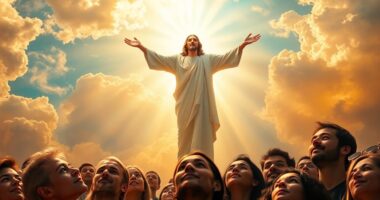

The resurrection of Jesus is a core belief for many, backed by accounts of miraculous events and transformed followers, but it’s also debated due to challenges in verifying supernatural claims. Skeptics see it as legend or faith-based storytelling, while believers see divine proof. The evidence is mainly biblical and historical references, yet leaves much open to interpretation. To understand the complexities and different perspectives, keep exploring the facts and beliefs behind this profound event.
Key Takeaways
- The resurrection is a central Christian belief supported primarily by biblical accounts and faith-based interpretations.
- Independent historical sources mention Jesus but provide limited or contested references to the resurrection event.
- Miraculous claims, such as the empty tomb and post-resurrection appearances, are difficult to verify empirically.
- The rapid growth of Christianity and followers’ transformations are seen as indirect evidence, yet explanations vary.
- Overall, the resurrection remains a matter of faith rather than conclusive historical proof.
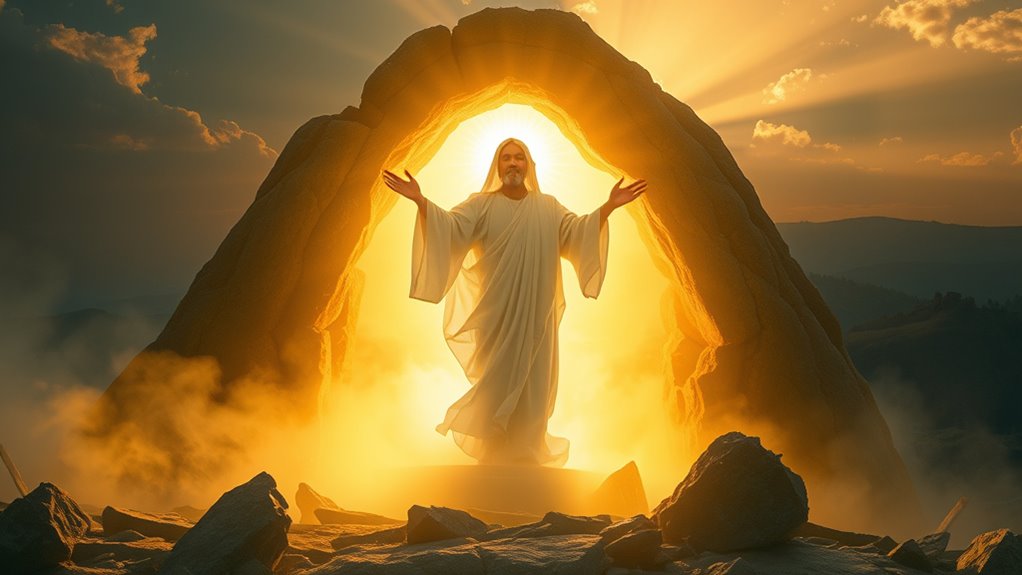
The resurrection of Jesus has long been a cornerstone of Christian faith, but whether it’s a historical fact or a religious myth remains a topic of intense debate. If you’re exploring this event, you’ll find that many believers point to miraculous events as divine proof of resurrection. These include accounts of Jesus appearing to his disciples after death, his tomb being found empty, and transformations in the lives of early followers. Such stories are deeply rooted in faith, but skeptics often question whether these events can be verified through historical evidence. They argue that miraculous events, by their very nature, defy natural laws and are difficult to substantiate with objective data.
When examining the historical evidence, you’ll notice that the primary sources are biblical texts written decades after the events supposedly occurred. These texts, while rich in detail, are religious documents that aim to inspire faith rather than serve as impartial historical records. Some scholars suggest that these writings reflect the beliefs and motivations of early Christian communities, making it challenging to separate fact from theological interpretation. There are a few non-Christian sources from the first and second centuries, like Jewish historian Josephus and Roman historian Tacitus, which mention Jesus and his followers. However, these references are brief and sometimes contested, leading many to question their reliability as concrete evidence of the resurrection. Additionally, the concept of miraculous divine intervention often plays a central role in the narratives, but such claims are inherently difficult to verify through empirical means.
Despite the limited direct evidence, some argue that the rapid growth of Christianity in the first century hints at a powerful event that convinced many. The transformation of Jesus’ followers from frightened disciples into bold evangelists is often cited as indirect evidence of a profound experience, possibly an encounter with the risen Jesus. Still, critics contend that psychological factors, cultural context, or even legends could explain these developments without requiring a miraculous event.
In the end, whether you see the resurrection as a miraculous event rooted in divine power or as a story shaped by faith and tradition depends largely on your perspective. The historical evidence, while suggestive to some, remains inconclusive and open to interpretation. For believers, the event exemplifies divine intervention and hope; for skeptics, it’s a compelling story that may lack verifiable proof. Regardless of where you stand, understanding the debate around miraculous events and historical evidence deepens your appreciation of this pivotal moment in history and faith.
Top picks for "resurrection jesu fact"
Open Amazon search results for this keyword.
As an affiliate, we earn on qualifying purchases.
Frequently Asked Questions
What Are the Earliest Sources Mentioning Jesus’ Resurrection?
You should look at ancient manuscripts and oral traditions as the earliest sources mentioning Jesus’ resurrection. The earliest written accounts appear in the New Testament, particularly in the Gospels, which were based on oral traditions passed down by witnesses. These traditions, preserved in manuscripts like Mark and Paul’s letters, provide the initial historical records of the resurrection, although their exact origins and historicity continue to be debated.
How Do Different Religions Interpret the Resurrection Story?
You’ll find that different religions interpret the resurrection story through a lens of myth versus history and cultural symbolism. Christians see it as a literal event confirming Jesus’s divine power, while others view it as a powerful symbol of hope and renewal. Some interpretations emphasize historical fact, while others focus on its spiritual meaning. These varying perspectives shape how each faith understands and values the story’s significance.
What Scientific Evidence Supports or Refutes the Resurrection Claim?
You probably realize that there’s no scientific evidence supporting miraculous claims like the resurrection, which many see as extraordinary and impossible by natural laws. Scientific skepticism remains strong because no physical proof has emerged to verify such events. While some argue for spiritual or historical significance, the absence of empirical data keeps the resurrection in the domain of faith rather than scientific fact. You can see why skepticism dominates this debate.
How Do Historians Authenticate Miraculous Events Like the Resurrection?
You rely on evaluating sources, corroborating accounts, and understanding the context to authenticate miraculous claims like the resurrection. Historians approach these events with skepticism, analyzing whether the accounts are consistent and supported by other evidence. They consider the credibility of witnesses and the cultural or religious motivations behind the stories. While they can’t prove miracles scientifically, they assess whether the claims are plausible within the historical framework.
What Are the Psychological Explanations for Post-Resurrection Appearances?
Coincidences often shape our perceptions, especially during grief responses, leading you to interpret visions as post-resurrection appearances. Your mind, overwhelmed by loss, may create vivid visions or hallucinations to comfort you. These psychological explanations suggest that what you see might stem from subconscious grief responses, blending memory, hope, and emotional need—making these appearances feel real, even if they’re rooted in your mind’s response to trauma.
Conclusion
As you stand at the crossroads of faith and history, remember that the resurrection is like a flickering flame—some see it as a sign of hope, others as mere shadows. Whether fact or fiction, it sparks a fire in the hearts of millions, illuminating their beliefs and doubts alike. The truth may remain hidden in the depths of history, but its impact glows brightly, like a lighthouse guiding souls through the stormy sea of life.