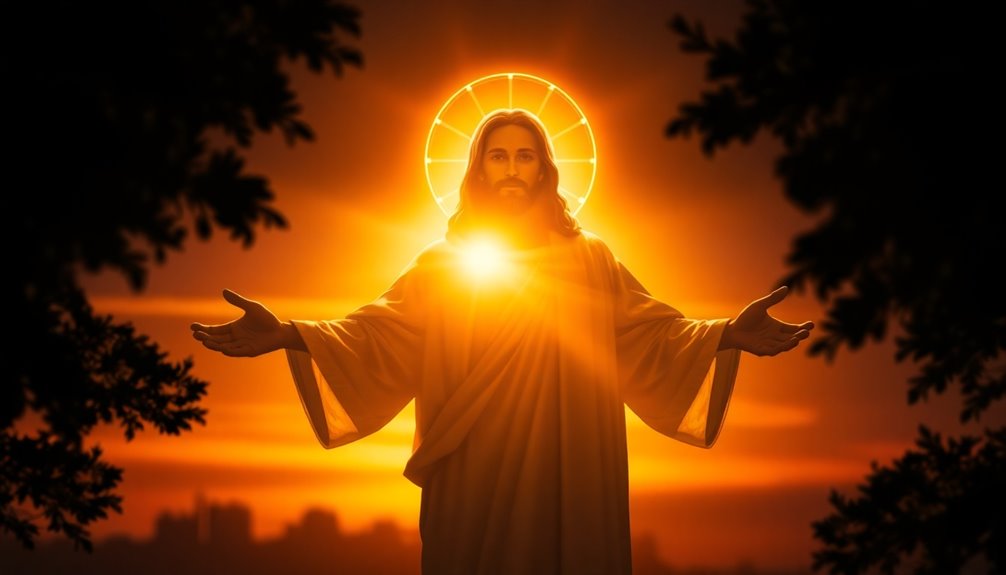
Understanding Jesus as the Son of Man helps you see his role as both fully human and divine. This title connects him to biblical prophecy, especially in Daniel, where a divine figure is given authority forever. It highlights his humility, humanity, and divine sovereignty, showing that he fulfills God’s promises and mission. Recognizing this deepens your view of his purpose and authority, inviting you to explore how this title shapes his role in salvation.
Key Takeaways
- The title “Son of Man” emphasizes Jesus’ humanity and divine authority simultaneously.
- It links Jesus to biblical prophecy, especially the figure in Daniel with everlasting dominion.
- Referring to himself as the Son of Man signals fulfillment of messianic prophecies and God’s salvation plan.
- The title highlights Jesus’ role as the divine messianic figure appointed to establish God’s kingdom.
- It underscores the balance between humility and divine sovereignty in Jesus’ mission and identity.

Have you ever wondered why Jesus is often referred to as the Son of Man? This title carries deep significance, rooted in both his messianic identity and biblical prophecy. When you hear “Son of Man,” you’re tapping into a rich tradition that connects Jesus to Old Testament scriptures and the expectations of a coming Savior. The phrase emphasizes his humanity, highlighting that he fully experienced life as a person, yet it also points to his divine mission. It’s a title that balances humility with authority, reminding you that Jesus is both approachable and powerful.
In biblical prophecy, the term “Son of Man” appears prominently, especially in the Book of Daniel. When Daniel describes a figure coming with clouds of heaven, he calls him “one like a son of man” who is given authority and everlasting dominion. By using this phrase, the prophecy indicates a messianic figure who would fulfill God’s promises of salvation. When you see Jesus referring to himself as the Son of Man, he’s aligning himself with these ancient prophecies, signaling that he’s the promised Messiah foretold by prophets. This connection isn’t accidental; it reveals that Jesus consciously identifies with the divine plan laid out in Scripture and that he sees his mission as the culmination of God’s covenant with Israel.
Understanding Jesus as the Son of Man also deepens your appreciation for his role in God’s salvation plan. It confirms that he is the one chosen to usher in God’s kingdom, fulfilling the messianic expectations embedded in biblical prophecy. When Jesus speaks about coming “in glory” with angels or sitting at God’s right hand, he’s reminding you that he embodies both the divine authority and the humble servant role prophesied centuries earlier. This title invites you to see him as the fulfillment of God’s promises, bridging the gap between divine sovereignty and human experience. Recognizing the messianic identity embedded in this title can enrich your understanding of his mission and divine authority.
Top picks for "jesu mean significance"
Open Amazon search results for this keyword.
As an affiliate, we earn on qualifying purchases.
Frequently Asked Questions
How Does the Title “Son of Man” Relate to Jesus’s Divine Nature?
You see, the title “Son of Man” highlights Jesus’s messianic identity and angelic authority, connecting his divine nature to his earthly role. It signifies his unique relationship with God and his authority to fulfill God’s plan. This title emphasizes that Jesus isn’t just a prophet but the divine Son of Man, embodying both humanity and divine authority, reinforcing his divine nature and his role as the Messiah.
What Old Testament Prophecies Are Linked to the “Son of Man”?
Did you know that over 300 Old Testament prophecies relate to the Messiah? The “Son of Man” links to these Messianic expectations and prophetic symbolism, especially in Daniel 7:13-14, where a divine figure is given authority. These prophecies, like Isaiah’s suffering servant, foreshadow Jesus’s role as the prophesied Savior, emphasizing his divine authority and fulfillment of ancient Messianic hopes.
How Was the Term “Son of Man” Understood in First-Century Jewish Culture?
In first-century Jewish culture, you’d understand the term “son of man” through its cultural context and linguistic origins. It often referred to a human figure or messianic expectation rooted in Old Testament prophecy. The phrase emphasized Jesus’s humanity and divine authority, linking him to visions of a future messianic figure. People saw it as a title that highlighted both his earthly role and divine significance within their cultural and linguistic framework.
Does “Son of Man” Emphasize Jesus’s Humanity or Divinity?
When you hear “Son of Man,” think of a bridge connecting human vulnerability to divine authority. It emphasizes Jesus’s divine authority and Messianic identity, highlighting both his humanity and divinity. This title shows he’s fully human, experiencing life’s struggles, yet also possesses divine power. Like a lighthouse guiding ships, it reveals his role as the divine mediator, blending human nature with his divine mission on Earth.
How Is the “Son of Man” Portrayed in Different Christian Denominations?
You’ll find that different Christian denominations portray the “Son of Man” through ecumenical perspectives and theological debates. Catholicism emphasizes Jesus’ divine authority and role as Savior, while Protestant groups focus on his humanity and personal relationship with believers. Orthodox Christianity highlights his divine-human nature, and some evangelical communities stress his return and messianic mission. These diverse views shape how each denomination understands Jesus’ significance in faith and practice.
Conclusion
Just like a bridge connecting two lands, calling Jesus the Son of Man links divine authority with human experience. Imagine walking across that bridge, seeing both worlds clearly—your faith and understanding growing stronger. This title reminds you that Jesus isn’t distant but relatable, walking alongside us in our struggles and joys. Embracing this truth helps you find comfort and purpose, knowing that the divine truly becomes personal when you see Jesus as the Son of Man.