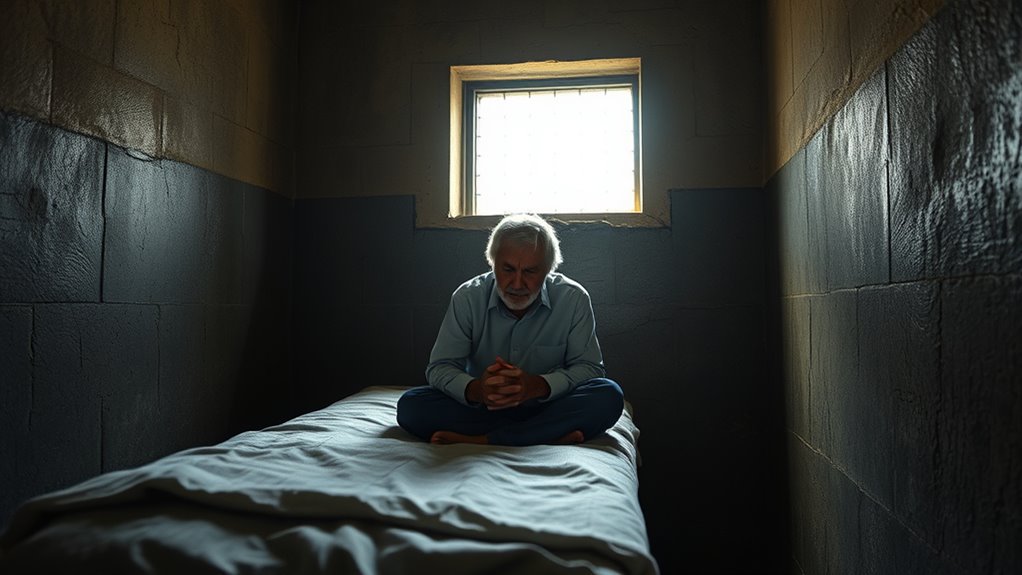

Many inmates find profound transformation behind bars by discovering Jesus and embracing faith. This journey often begins with small steps like prayer, scripture, or support groups, leading to forgiveness, hope, and a renewed sense of purpose. Faith acts as a catalyst to break down walls of anger and regret, showing that genuine change is possible. If you want to see how lives are truly transformed in prison, there’s more to uncover.
Key Takeaways
- Many inmates experience spiritual awakening through faith-based programs, leading to genuine transformation and a renewed relationship with Jesus.
- Confronting their past and seeking forgiveness allows prisoners to find hope and purpose in their faith journey.
- Faith acts as a catalyst for breaking down walls of anger and despair, fostering personal redemption behind bars.
- Support systems like chaplains and fellow believers provide encouragement and accountability in the process of spiritual rebirth.
- Stories of inmates’ lives changing through faith demonstrate that true salvation and renewal are possible even in prison walls.
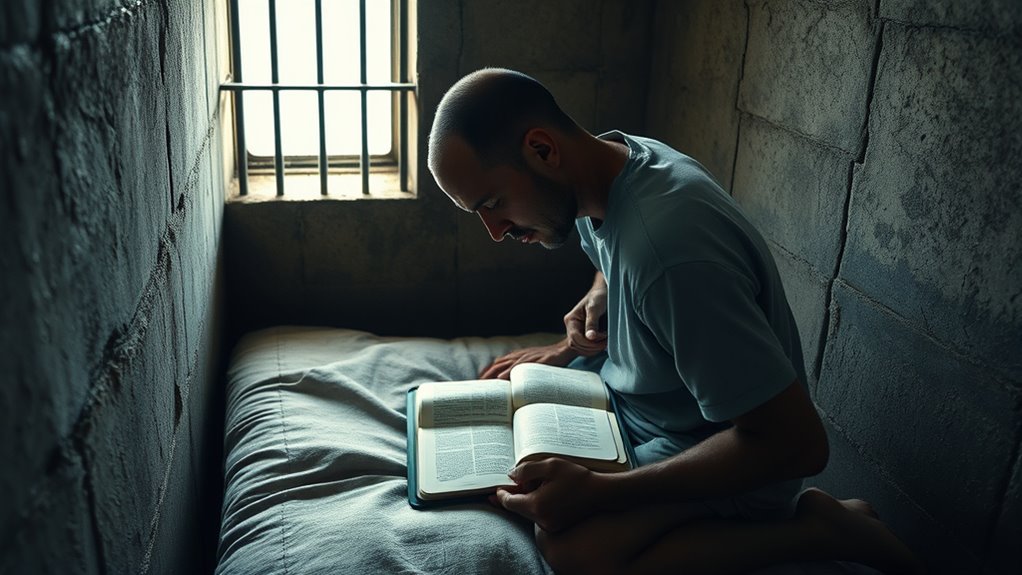
Have you ever wondered if redemption is possible behind bars? It’s a question many people ask, especially when they hear about those who turn their lives around after years of wrongdoing. The truth is, countless redemption stories have unfolded within prison walls, demonstrating that transformation is not only possible but often profound. These stories aren’t just about serving time; they’re about discovering hope, purpose, and faith in the most unexpected places. When inmates set out on faith journeys, they often find a new sense of identity and a way to make amends, both to themselves and to those they’ve harmed. It’s inspiring to see how faith can serve as a catalyst for change, breaking down walls of anger, regret, and despair.
Inside prison, many find that their previous lives no longer hold meaning, and they’re forced to confront their pasts. For some, this confrontation sparks a desire for genuine change. They begin to explore faith, seeking answers and solace in spirituality. These faith journeys often start with small steps—prayer, reading scripture, or joining a support group—but can lead to dramatic life shifts. Through these spiritual experiences, they discover forgiveness, not just from others but from themselves, which is essential for true redemption.
Many inmates find faith as a path to forgiveness and transformative change behind bars.
Many inmates share stories of how faith has given them a new purpose. They realize that their past doesn’t have to define their future. Instead, they choose to embrace hope and work toward a better life, even behind bars. Their stories serve as powerful reminders that redemption is a process, not a moment. It involves ongoing effort, humility, and a genuine desire to change. These individuals often become leaders within their communities, demonstrating that transformation is real and lasting. Additionally, participation in faith-based programs can significantly support their ongoing growth and healing.
Faith journeys in prison are often supported by chaplains, faith-based programs, and fellow inmates who share similar beliefs. These relationships foster a sense of belonging and accountability, helping individuals stay committed to their new paths. As they grow in faith, many find peace and purpose, which can outlast their time behind bars. Their stories of renewal and hope inspire others, proving that no matter how dark the past may seem, there is always a possibility for redemption. Behind prison walls, lives are being transformed daily—proof that faith can truly change even the most broken hearts.
Top picks for "born again behind"
Open Amazon search results for this keyword.
As an affiliate, we earn on qualifying purchases.
Frequently Asked Questions
How Do Prison Ministries Support Spiritual Growth?
Prison ministries support your spiritual growth through targeted prison outreach programs that foster faith development. They provide Bible studies, counseling, and mentorship, helping you deepen your relationship with God. By connecting you with fellow believers and encouraging prayer, these ministries create a supportive environment for spiritual renewal. They inspire hope and transformation, guiding you toward a stronger faith and a renewed sense of purpose during and after your time in prison.
What Challenges Do Inmates Face When Converting?
When you convert, you face rehabilitation barriers like adjusting to new routines and overcoming past habits. Faith misunderstandings may cause confusion or doubts about your beliefs. You might also struggle with skepticism from others or internal doubts about your sincerity. Staying committed requires patience, support, and a genuine desire for change. Remember, overcoming these challenges is part of your journey toward spiritual growth and a transformed life.
Are There Specific Programs for Different Faiths?
Yes, many prisons offer specific programs for different faiths, including interfaith dialogues and faith-based counseling. These programs aim to respect diverse beliefs, fostering understanding and spiritual growth. You can participate in these activities to deepen your faith, connect with others of similar backgrounds, and find support. Such initiatives help inmates explore their spirituality in a safe environment, encouraging personal transformation regardless of specific religious traditions.
How Do Released Inmates Reintegrate Into Society?
You can reintegrate into society by actively seeking community support groups and faith-based organizations that offer guidance and encouragement. Engage in job training programs to build skills and boost your confidence. Stay connected with mentors and counselors who understand your journey. By embracing these resources, you’ll find a supportive network, gain stability, and create a positive path forward, making your progression smoother and more successful.
What Impact Does Faith Have on Reducing Recidivism?
Faith-based rehabilitation often substantially reduces recidivism by strengthening spiritual resilience. When you embrace faith, it provides hope, purpose, and a sense of community, helping you stay on a positive path after release. This spiritual resilience empowers you to overcome challenges and resist old habits. As a result, your commitment to faith can become an essential tool in maintaining your newfound freedom and building a productive, crime-free life.
Conclusion
As you walk through the prison gates, remember that even behind cold, unyielding walls, hope can bloom like a fragile seed breaking through concrete. The journey of rebirth isn’t just about redemption—it’s about awakening a new dawn within, shining brighter than the bars that confine. When you find Jesus behind these walls, you realize that true freedom begins from within, transforming even the darkest night into a dawn of endless possibility.