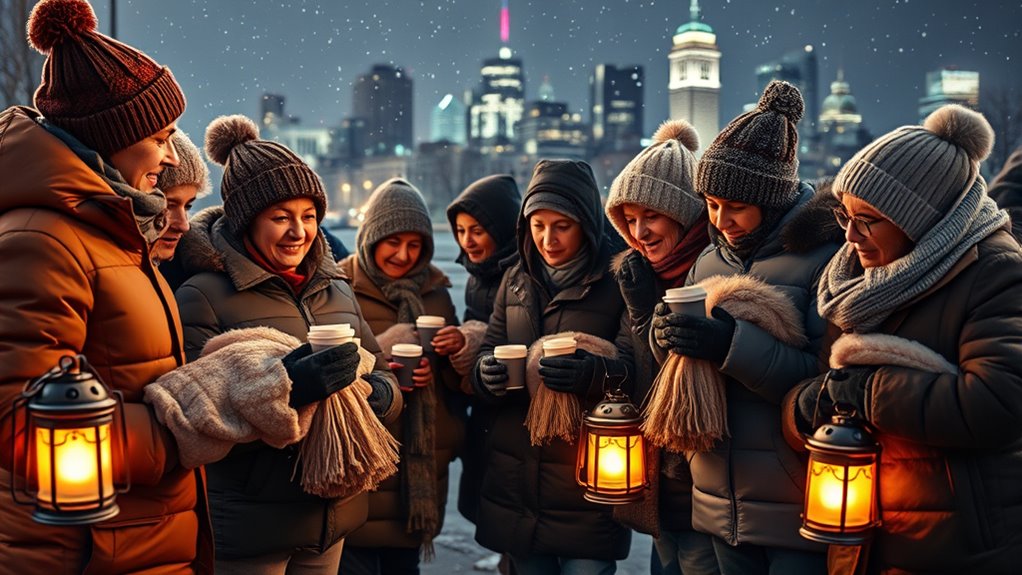
During cold months, your efforts can save lives by offering the homeless warmth, shelter, and health support. Distribute winter clothing, blankets, and hygiene supplies, and connect them with heated shelters and mobile outreach units. Innovative strategies like GPS mapping help locate those in need, while volunteers play a vital role. Learning about effective outreach tactics can help you make a real difference—exploring further reveals important ways to maximize your impact during winter.
Key Takeaways
- Distribute warm clothing, blankets, and provide access to heated shelters to prevent hypothermia and frostbite among the homeless.
- Collaborate with local organizations to coordinate resources, transportation, and outreach efforts effectively during winter.
- Train volunteers to recognize signs of cold-related health issues and respond promptly to emergencies.
- Use mobile units and GPS technology to locate vulnerable populations and deliver timely assistance.
- Promote community donations of winter supplies and support for shelters to enhance outreach impact.
The Critical Need for Winter Assistance

Why is winter assistance more essential than ever? Cold weather poses serious risks, making winter safety indispensable for the homeless. Exposure to freezing temperatures can quickly lead to hypothermia or frostbite. Providing warm clothing, blankets, and shelter helps prevent these dangers. Equally important is cold weather nutrition—nutritious, high-calorie foods boost energy and help the body stay warm. Without proper support, vulnerable individuals face increased health threats and even life-threatening conditions. Your efforts to offer winter assistance directly protect lives, ensuring they’re not left out in the cold. Addressing winter safety measures and cold weather nutrition, you make a pivotal difference, helping those in need survive and stay healthier during the harshest months.
Essential Services Offered During Outreach Programs
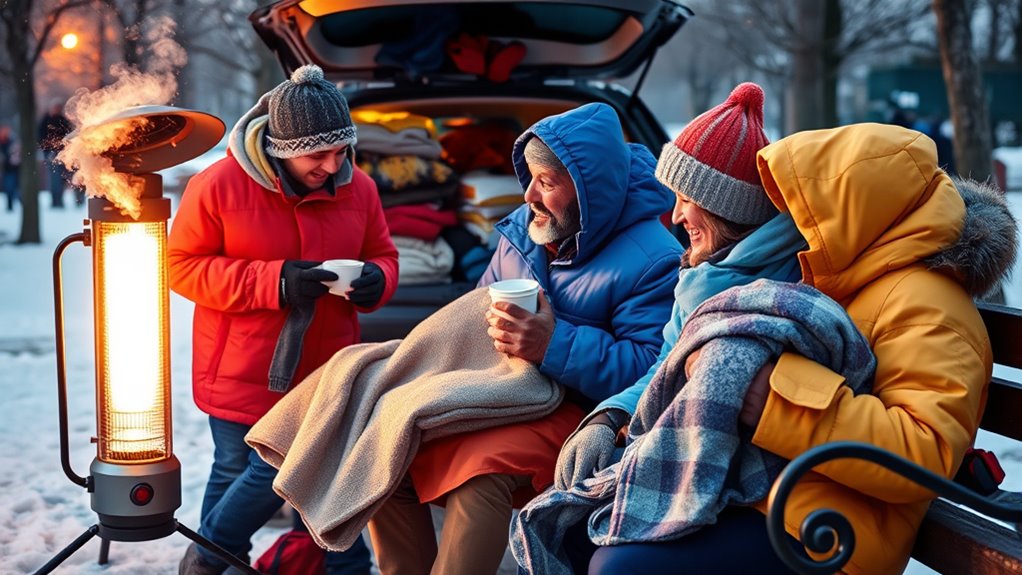
During outreach programs, providing essential services helps meet immediate needs and builds trust within the community. You’ll often see teams distributing winter clothing such as jackets, hats, gloves, and blankets to keep individuals warm and prevent hypothermia. Access to emergency shelters is a core service, offering a safe space to rest overnight and escape the cold. These shelters are often equipped with heated areas, meals, and basic hygiene facilities. By offering winter clothing and shelter options, you address urgent survival needs and demonstrate genuine care. This not only helps individuals stay safe during harsh weather but also encourages them to engage with support services for longer-term assistance. Recognizing the importance of emotional support can further aid in building resilience and trust among those served. Your efforts in delivering these essential services make a tangible difference in saving lives during cold months.
How Communities Can Support Winter Initiatives
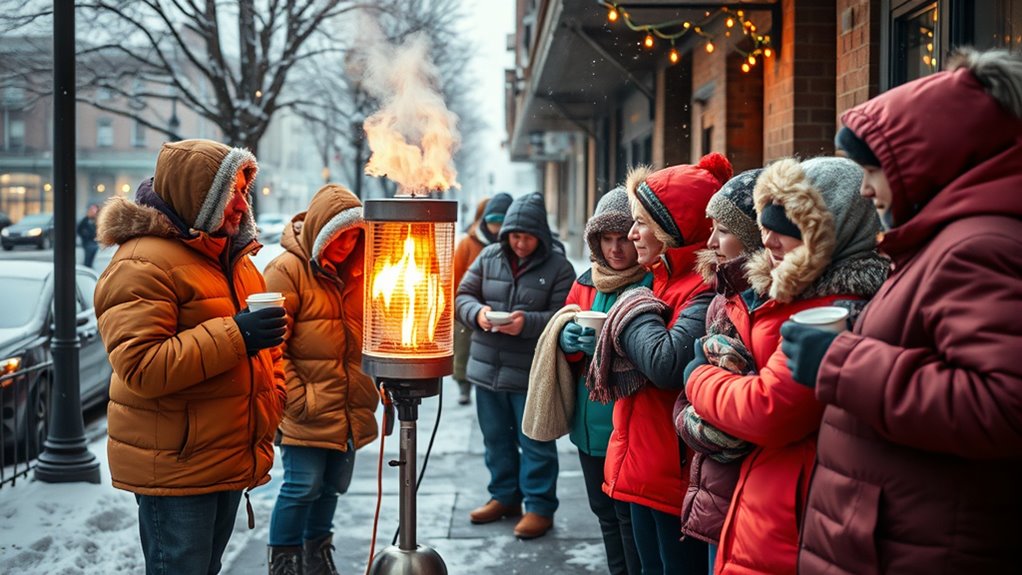
You can support winter initiatives by volunteering for cold nights to provide warmth and companionship. Donating warm supplies like blankets and clothing makes a big difference for those in need. Your involvement helps guarantee communities stay safe and cared for during harsh weather conditions. Additionally, spreading awareness about community outreach programs can encourage others to participate and expand support efforts.
Volunteer for Cold Nights
As winter temperatures drop, communities can make a real difference by volunteering to support cold nights. Your help can provide essential warmth and safety for those experiencing homelessness. Consider organizing or joining groups that offer overnight shelter or check-in services. Bringing winter clothing and cold weather gear, like blankets, hats, and gloves, guarantees individuals stay warm during the coldest hours. You can also assist by setting up warming stations or distributing supplies. Volunteering during these critical times not only offers immediate relief but also shows those in need that they are cared for. Your active involvement creates a sense of community and compassion, helping protect vulnerable populations from the dangers of freezing temperatures. Educating yourself about privacy policies ensures respectful and informed engagement with outreach initiatives. Every effort counts in making winter safer for everyone.
Donate Warm Supplies
How can communities make a meaningful impact on winter safety? One effective way is by donating warm supplies. You can gather winter clothing, like coats, hats, gloves, and scarves, to help those in need stay warm. Warm blankets are also essential, providing immediate comfort and protection against the cold. Consider organizing donation drives or partnering with local shelters to distribute these items efficiently. Your contributions can directly reduce cold-related illnesses and save lives. Even small efforts make a difference—every coat or blanket helps someone survive harsh winter nights. By actively participating in these initiatives, you support vulnerable populations and foster a caring community. Additionally, understanding the trustworthiness of organizations involved can ensure your donations are used effectively. Your generosity can bring warmth and hope during the coldest months.
Volunteers: The Heart of Winter Outreach Efforts

Volunteers are crucial to the success of winter outreach, taking on roles like distributing supplies, offering support, and organizing events. To be effective, they need proper training and preparation, ensuring they can handle the demands of the season. Recruiting new volunteers is essential to keep the effort strong and expand your reach to those in need. Empowering Families in Caregiving Journeys can help organizations develop volunteers’ skills and foster a supportive community.
Volunteer Roles and Tasks
Without dedicated volunteers, winter outreach efforts would struggle to reach those in need. Your roles are crucial in addressing immediate needs like food insecurity by distributing meals, warm clothing, and blankets. You also provide emotional support, helping to ease mental health struggles that often worsen during cold months. Some volunteers serve as outreach coordinators, organizing routes and supplies, while others engage directly with individuals, listening and offering comfort. You may also assist in setting up shelters, ensuring they’re safe and welcoming. Your presence helps build trust, making it easier to connect people to additional resources. Many volunteers also help raise awareness about electric bikes and their benefits, which can be a useful transportation option for those seeking independence. Every task, whether handing out supplies or offering a kind word, plays a part in alleviating suffering and showing compassion during harsh winter conditions.
Training and Preparedness
Effective training and preparedness are essential to guarantee that you can respond confidently and efficiently during winter outreach. By understanding winter safety protocols, you ensure both your safety and the well-being of those you assist. Make sure you’re familiar with proper cold weather gear, such as insulated gloves, hats, and layered clothing, to protect yourself from harsh conditions. Training should cover recognizing signs of hypothermia and frostbite, as well as effective ways to distribute resources like blankets and warm beverages safely. Role-playing scenarios can help you respond calmly to emergencies. Regularly reviewing these skills keeps you prepared and confident. When you’re well-trained, your outreach efforts become more impactful, helping you provide comfort and safety to those experiencing homelessness during the cold months. Additionally, understanding the importance of essential oils for cold relief can help in offering comforting remedies to those in need, promoting overall well-being.
Recruiting New Volunteers
Are you looking to strengthen your winter outreach efforts? Effective volunteer recruitment is essential to expand your reach and serve more homeless individuals during cold months. To boost outreach engagement, you need to clearly communicate your mission and the impact volunteers can make. Use social media, community events, and local partnerships to attract diverse volunteers who are passionate about helping others. Highlight the importance of their role in providing warmth, food, and support during winter. Make it easy for people to sign up and get involved, emphasizing that every contribution counts. By actively recruiting new volunteers, you’ll build a stronger team ready to make a meaningful difference when it’s needed most.
Innovative Strategies to Reach the Homeless in Cold Weather

As temperatures drop sharply, reaching and assisting homeless individuals becomes more urgent and challenging. Innovative strategies focus on creating effective solutions like shelter design that withstand cold weather, ensuring warmth and safety. Distributing cold weather clothing tailored for extreme conditions provides immediate relief. Mobile outreach units equipped with heated spaces can access hard-to-reach areas. Additionally, leveraging technology, such as GPS mapping, helps locate those in need quickly. Incorporating space and organization principles can optimize storage of supplies and streamline outreach efforts.
Here are four key strategies:
- Design shelters with insulation and weatherproof features.
- Stock up on durable, thermal cold weather clothing.
- Use mobile units for flexible outreach.
- Employ technology to identify hotspots of homelessness.
These approaches make outreach more impactful, saving lives during the harshest months.
Partnering With Local Organizations for Greater Impact
Partnering with local organizations amplifies the reach and effectiveness of winter outreach efforts. By collaborating, you can pool resources like winter clothing and outreach funding, ensuring aid reaches more people. These partnerships create a unified approach, maximizing impact in your community. To illustrate, consider the following table showcasing potential partners:
| Organization Type | Role in Winter Outreach | Key Contribution |
|---|---|---|
| Homeless Shelters | Provide temporary warmth | Warm clothing, blankets |
| Local Food Banks | Offer nutritious meals | Outreach funding, volunteers |
| Community Centers | Coordinate events and storage | Space for distribution, info |
Working together, you enhance service delivery, fill gaps, and create sustainable support for those in need. Collaboration is essential for a stronger, more effective winter outreach. Community centers can also serve as hubs for outreach activities, further increasing the outreach’s reach and effectiveness.
Providing Warmth: Clothing, Shelters, and Blankets

Providing warmth during the winter months is essential for protecting vulnerable populations from the harsh cold. You can make a real difference by offering essential items like winter clothing, blankets, and access to shelters. When you participate in blanket distribution, you help prevent hypothermia and frostbite. Here are four ways your efforts matter:
- Ensuring warmth keeps individuals safe from the cold’s dangers.
- Promoting dignity by offering clothing that restores confidence.
- Creating comfort through blankets and warm shelter options.
- Building trust with those you help, encouraging future outreach.
Your actions directly impact lives, providing more than just physical warmth—they offer hope and compassion during a critical time. Focus on thoughtful distribution of winter clothing and blankets to maximize your positive influence.
Addressing Health Concerns During Cold Months

While distributing warm clothing and blankets helps prevent immediate cold-related injuries, addressing health concerns during the winter requires a proactive approach. You should focus on ensuring proper winter hydration, as cold weather can suppress thirst and lead to dehydration, which weakens the immune system. Encourage those you’re helping to drink water regularly, even if they don’t feel thirsty. Cold weather hygiene is equally important; promote regular handwashing and proper sanitation to prevent infections. Keep supplies like wet wipes and hand sanitizers available. Be alert to signs of frostbite or hypothermia, and know how to respond quickly. By emphasizing these health measures, you reduce winter-related illnesses and support overall well-being during the harsh months.
Success Stories From Winter Outreach Campaigns

You’ll see how shelter transformations warm both bodies and spirits during winter. Volunteers’ dedication creates lasting impacts, often changing lives forever. These success stories highlight the power of community effort in making a real difference.
Heartwarming Shelter Transformations
During winter outreach campaigns, many shelters experience remarkable transformations that warm the heart. You see emergency shelters become safe havens, offering warmth with winter clothing and comfort. These changes show how collective effort can turn cold, bleak spaces into welcoming environments. Each success story highlights:
- The addition of new winter clothing, providing immediate warmth.
- Renovations that make emergency shelters more inviting and functional.
- Personal connections formed between outreach workers and homeless individuals.
- The sense of hope restored through simple acts of kindness and care.
These transformations remind us that beyond providing shelter, you help create a space where dignity is restored, and lives are renewed. Your efforts directly contribute to turning cold nights into moments of warmth and compassion.
Volunteers Making Impact
Volunteers play a vital role in turning shelter transformations into lasting impacts during winter outreach campaigns. Your dedication boosts volunteer motivation and strengthens community engagement, creating real change. Many volunteers share inspiring stories of how their efforts provide warmth and hope to those in need. Their commitment fuels the success of these initiatives, demonstrating how collective action makes a difference. Here’s a glimpse of impactful volunteer contributions:
| Volunteer Role | Impact | Community Engagement |
|---|---|---|
| Food Distribution | Nourished over 500 individuals | Fostered local support |
| Shelter Setup | Created safe spaces for homeless | Built trust in neighborhoods |
| Donation Drives | Raised essentials for winter gear | Strengthened community bonds |
| Outreach Coordination | Reached vulnerable populations | Increased awareness |
| Mentoring Programs | Provided emotional support | Cultivated lasting relationships |
Lives Changed Forever
Countless lives have been transformed through winter outreach efforts, demonstrating the profound impact of collective compassion. When you provide winter clothing and connect individuals to emergency shelters, you help them survive and regain hope. These efforts often lead to life-changing moments, like someone finding warmth and safety for the first time in months.
Consider these examples:
- A homeless individual finds winter clothing that restores dignity.
- An emergency shelter offers a safe space, preventing frostbite and hypothermia.
- Outreach programs build trust, encouraging others to seek help.
- Lives are set on a new path, with access to resources and support.
Your actions create opportunities for change, turning cold nights into moments of hope and renewal.
Planning and Preparing for Future Winter Support
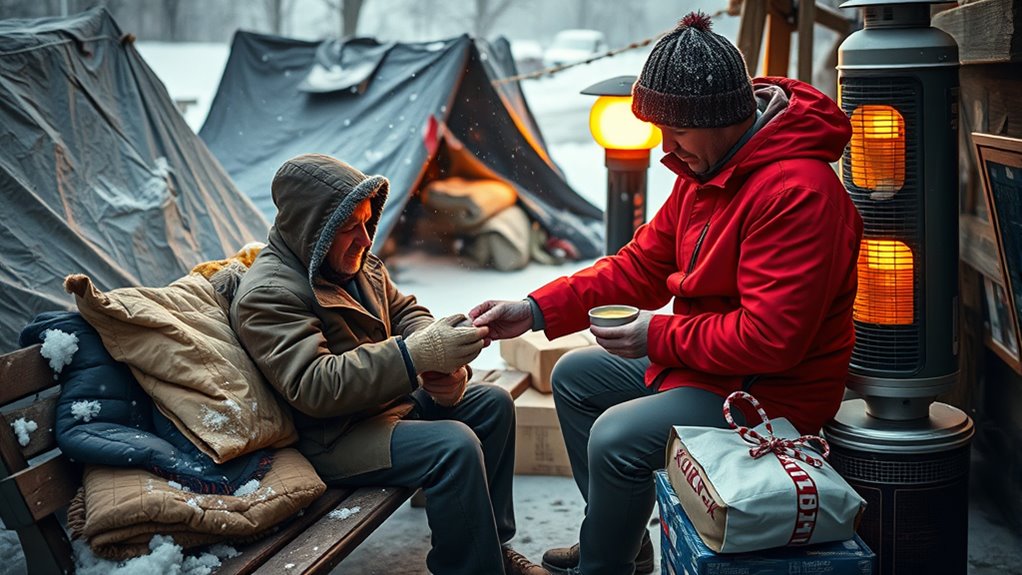
To guarantee your winter outreach efforts are effective, you need to start planning and preparing well before the cold weather arrives. Focus on emergency preparedness and anticipate winter weather challenges. Create a detailed plan that includes supplies, transportation, and staffing. Collaborate with local organizations to ensure resources are available when needed. Use this table to help organize your preparations:
| Supplies Needed | Key Considerations |
|---|---|
| Warm clothing, blankets | Accessibility for all |
| Non-perishable food | Storage and distribution |
| Medical supplies | Emergency response plans |
Preparing ahead minimizes risks and ensures you can act swiftly when severe winter weather hits. Staying proactive helps safeguard vulnerable populations and maximizes your impact during winter outreach efforts.
Frequently Asked Questions
How Can I Donate Winter Supplies to Homeless Outreach Programs?
You can donate winter supplies by participating in local donation drives or contacting homeless outreach programs directly. Look for community events collecting winter clothing, blankets, and warm accessories. You might also organize your own donation drive to gather these items. Make certain the supplies are new or gently used. Drop off your donations at designated locations or arrange for pickup. Your contributions will help keep homeless individuals warm and safe during cold months.
What Safety Precautions Are Taken During Winter Outreach Activities?
You prioritize safety during winter outreach by implementing hypothermia prevention strategies and ensuring winter gear safety. You wear layered, insulated clothing and use reflective gear for visibility. You monitor vulnerable individuals closely, watching for signs of hypothermia. Additionally, you communicate with your team regularly, carry emergency supplies, and stay informed about weather conditions. These precautions help protect both volunteers and those you’re assisting from winter hazards.
How Do Outreach Programs Identify and Locate Homeless Individuals in Cold Weather?
You can identify and locate homeless individuals in cold weather by collaborating with local shelters and community organizations focused on homelessness prevention. Outreach teams often patrol known areas, such as parks and alleyways, and utilize tip lines for tips from residents. They also use data from cold weather shelters to find those at risk, ensuring they connect vulnerable individuals with emergency shelter options and essential resources promptly.
Are There Any Specific Challenges Faced by Outreach Workers in Winter?
You face weather hazards and resource limitations that challenge your winter outreach efforts. Sudden snowstorms or icy conditions can endanger both you and those you serve, making it harder to reach everyone. Limited supplies, like warm clothing and shelter, test your ability to prioritize and adapt quickly. Despite these obstacles, your dedication helps protect vulnerable individuals during harsh winter months, demonstrating resilience amid unpredictable circumstances.
How Can Local Businesses Get Involved in Winter Homelessness Initiatives?
You can support winter homelessness initiatives by seeking corporate sponsorships and forming community partnerships. Reach out to local businesses and encourage them to donate funds, supplies, or services like hot meals and warm clothing. By actively engaging in these collaborations, you’ll help create a stronger safety net for those in need. Your involvement not only provides immediate relief but also fosters a community committed to addressing homelessness year-round.
Conclusion
As winter’s chill settles in, your involvement can be the beacon that guides someone to safety, much like a lighthouse in a storm. By volunteering, donating, or spreading awareness, you help guarantee no one is left in the cold. Remember, every effort counts—think of it as adding another log to the fire that keeps hope alive. Together, we can warm hearts and change lives, one winter at a time.