
To foster inclusivity in your church, focus on creating accessible worship spaces, such as ramps and clear signage, and develop services that consider diverse needs. Raise awareness through training and open conversations, encouraging a welcoming attitude. Involve people with disabilities in leadership and planning, and continually seek feedback for improvement. A supportive, compassionate environment shows your commitment to full participation. Keep exploring ways to build a truly inclusive community that reflects Christ’s love and acceptance.
Key Takeaways
- Design worship spaces with accessible features like ramps, clear signage, and assistive listening devices to ensure full participation.
- Educate congregation members about disabilities to foster empathy, understanding, and reduce stereotypes.
- Involve individuals with disabilities in leadership roles and volunteer opportunities to promote inclusion.
- Incorporate ongoing feedback and regular assessments to improve accessibility and address evolving needs.
- Cultivate a welcoming, compassionate atmosphere that celebrates diversity and encourages open dialogue about inclusion.
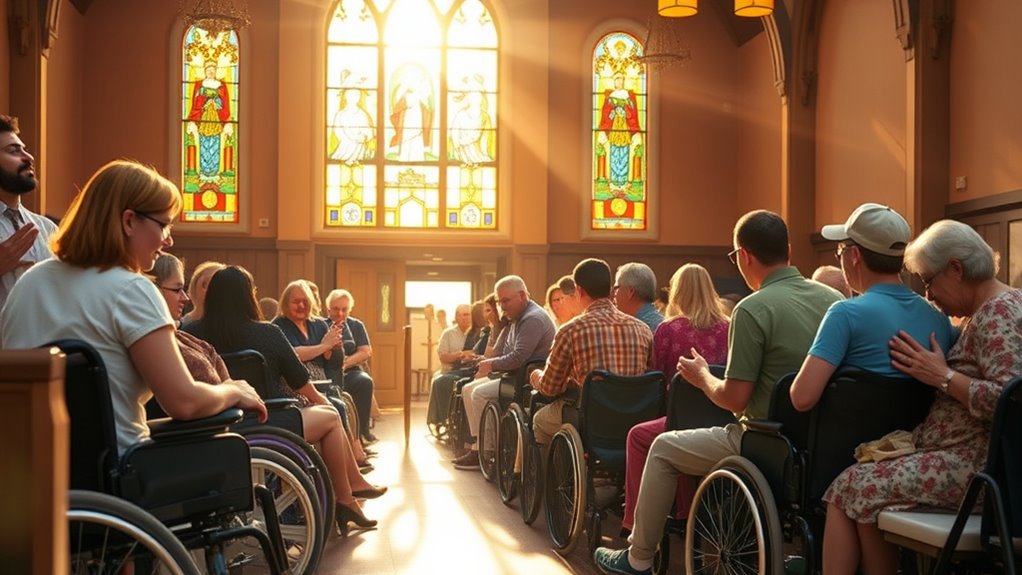
Creating an inclusive church environment requires intentional effort and a genuine commitment to welcoming everyone. When you prioritize accessible worship, you send a clear message that your church values every individual, regardless of physical or mental abilities. Accessible worship means more than just providing ramps or elevators; it involves designing services that cater to diverse needs. Think about clear signage, large-print bulletins, and assistive listening devices to help individuals with visual or hearing impairments participate fully. By making these accommodations, you guarantee that everyone can engage with worship in a way that feels natural and meaningful.
Prioritizing accessible worship demonstrates your church’s commitment to valuing every individual’s participation.
Disability awareness is also essential in fostering inclusivity. It’s about educating yourself and your congregation on the challenges faced by those with disabilities. When you understand these experiences, you can better identify barriers—both physical and attitudinal—that might prevent full participation. Hosting training sessions or inviting speakers who have disabilities can increase awareness and empathy. This knowledge helps you create an environment where people feel safe to express their needs without fear of judgment or misunderstanding. It’s also vital to challenge stereotypes and misconceptions that may exist within the congregation, promoting a culture of acceptance and respect.
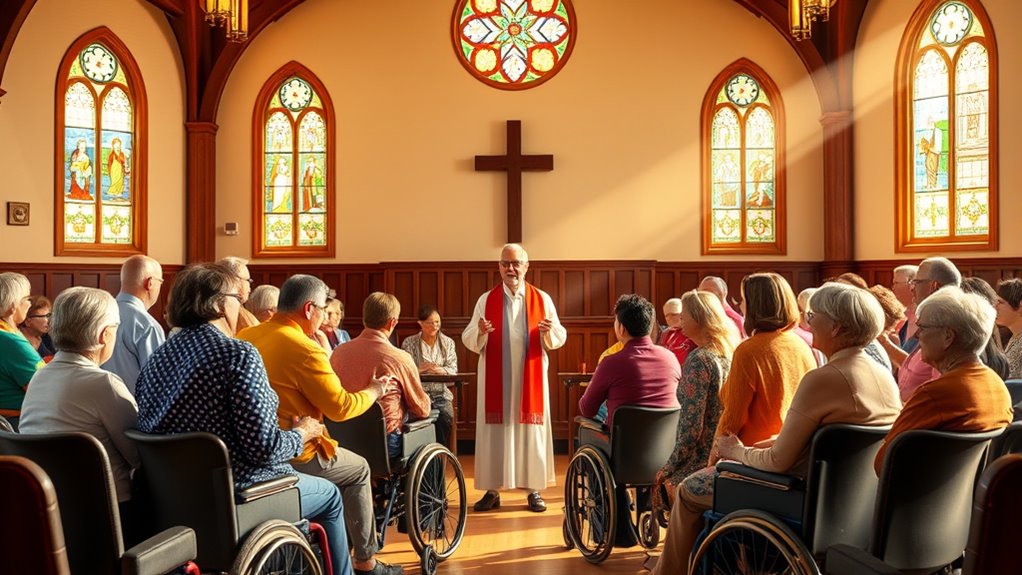
You can integrate disability awareness into your church’s ongoing efforts by incorporating it into your leadership training and regular discussions. Encourage your team to consider accessibility when planning events, sermons, and community activities. Involving people with disabilities in leadership roles or as volunteers can provide valuable insights and foster a sense of belonging. Remember, accessibility isn’t a one-time fix; it’s a continuous process that evolves as your congregation grows and changes. Regularly seek feedback from those with disabilities to understand what’s working and what needs improvement. Incorporating essential oils for accessibility can also support creating a calming and welcoming environment for all attendees.
Fostering an inclusive environment also means actively promoting a welcoming attitude among your congregation. When members see their church making tangible efforts toward accessibility and understanding, they’re more likely to embrace diversity. Encourage open conversations about inclusion and disability, and celebrate the unique contributions of every individual. By doing so, you create a ripple effect—spreading awareness, compassion, and unity throughout your community. In the end, an inclusive church isn’t just about physical accommodations; it’s about cultivating a spirit of acceptance that reflects Christ’s love for all. Your intentional actions can transform your church into a place where everyone feels valued, supported, and empowered to participate fully in worship and fellowship.
Frequently Asked Questions
How Can Churches Assess Their Current Inclusivity Levels Effectively?
You can assess your church’s inclusivity levels by conducting accessibility audits to identify barriers for people with disabilities. Use inclusion metrics, like participation rates and feedback from attendees with disabilities, to gauge how welcoming your environment is. Regularly review these data points, involve diverse perspectives, and set measurable goals. This proactive approach helps you understand gaps and improve your church’s inclusivity effectively.
What Training Is Recommended for Staff and Volunteers to Support Disabled Attendees?
Think of your team as skilled navigators guiding a diverse fleet through calm and stormy waters. You should provide disability awareness and sensitivity training so they understand different needs and communicate compassionately. This equips staff and volunteers to recognize barriers, adapt their approach, and warmly welcome all attendees. Regular training keeps your crew prepared, fostering a truly inclusive environment where every individual feels valued and supported.
How Can Church Programs Be Adapted for Various Disabilities?
You can adapt church programs for various disabilities by incorporating assistive technologies like hearing loops and captioning, making services more accessible. Implement adaptive worship practices such as sensory-friendly activities or flexible seating options to accommodate different needs. These adjustments create an inclusive environment where everyone can participate fully, ensuring your church welcomes and supports people with diverse disabilities effectively.
What Funding Options Are Available to Improve Accessibility Features?
You can open a world of funding options like grant opportunities and donation strategies that can transform your church’s accessibility. Think big—apply for grants from local or national organizations dedicated to inclusion, and craft compelling donation campaigns that inspire your congregation to invest in life-changing accessibility features. With these funds, you’ll create an environment where everyone feels welcome, valued, and able to participate fully.
How Do We Encourage Ongoing Feedback From People With Disabilities?
You can encourage ongoing feedback from people with disabilities by establishing clear feedback mechanisms like suggestion boxes, surveys, or dedicated listening sessions. Use inclusive communication to guarantee everyone feels comfortable sharing their experiences and needs. Regularly invite input, show genuine appreciation for their insights, and act on their suggestions. This ongoing dialogue demonstrates your commitment to accessibility and helps create a more inclusive environment where everyone’s voice matters.
Conclusion
By embracing inclusivity, you create a welcoming space where everyone, regardless of abilities, can feel valued and connected. Did you know that nearly 15% of the world’s population lives with some form of disability? This highlights the importance of intentional efforts to serve and include people with disabilities in your church community. When you prioritize accessibility and understanding, you foster a truly inclusive environment where all can grow spiritually and feel truly at home.