

If you want to address bullying at school from a Christian perspective, start by understanding its roots in human sinfulness like pride and anger. Teach your child about forgiveness, compassion, and biblical values, showing them how to respond with kindness and humility. Model Christ-like behavior yourself, and encourage prayer and faith to build inner strength. Creating a supportive, loving community rooted in faith can make a real difference. Explore more ways to help your child face bullying with love and confidence.
Key Takeaways
- Address the roots of bullying by teaching children about humility, patience, and kindness through biblical principles.
- Model Christ-like behavior at home and school to demonstrate respect, forgiveness, and compassionate responses.
- Encourage prayer and trust in God’s guidance to build inner strength and emotional resilience.
- Teach children to forgive, apologize, and understand others’ perspectives to foster empathy and reconciliation.
- Promote a supportive Christian community that emphasizes kindness, inclusion, and mutual respect to prevent bullying.
Christian children's forgiveness books
As an affiliate, we earn on qualifying purchases.
As an affiliate, we earn on qualifying purchases.
Understanding the Roots of Bullying Through a Christian Lens

Understanding the roots of bullying through a Christian lens requires examining the nature of human behavior and the influence of spiritual principles. Sinful tendencies, like pride, anger, and envy, often drive aggressive actions and mistreatment of others. These tendencies stem from a fallen nature that all humans share, making it essential to recognize the importance of spiritual growth. When you focus on developing virtues like humility, patience, and kindness, you counteract these harmful impulses. Spiritual growth isn’t about perfection but progress—becoming more like Christ in your thoughts and actions. By understanding that bullying can originate from inner struggles rooted in sin, you’re better equipped to address its causes and promote healing, both for yourself and others. Additionally, recognizing the role of water in physical recovery can serve as a metaphor for healing emotional wounds and fostering renewal.
bullying prevention Christian children's books
As an affiliate, we earn on qualifying purchases.
As an affiliate, we earn on qualifying purchases.
Teaching Children the Power of Forgiveness and Compassion
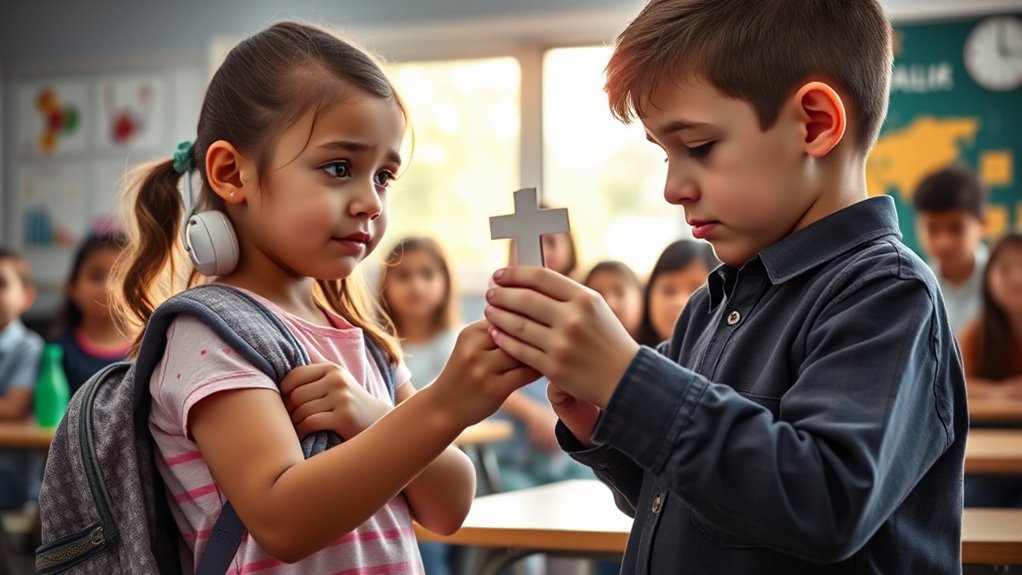
Have you ever considered how teaching children about forgiveness and compassion can transform their relationships and reduce bullying? When you focus on developing peer empathy, children learn to see others’ feelings and understand their perspectives. This awareness encourages kindness and diminishes aggressive behaviors. Additionally, teaching apology skills empowers kids to take responsibility and repair harm after conflicts. When children practice genuine apologies, they understand the importance of humility and reconciliation, which fosters a more compassionate environment. Reinforcing these values helps children realize that forgiveness isn’t just for others, but also for themselves, promoting emotional growth. Moreover, understanding electric horsepower can serve as a helpful analogy for children to grasp the concept of energy and power in relationships. By emphasizing peer empathy and apology skills, you equip your child with tools that build healthier friendships and create a safer, more caring school community.
faith-based empathy and kindness toys for kids
As an affiliate, we earn on qualifying purchases.
As an affiliate, we earn on qualifying purchases.
Modeling Christ-like Behavior at Home and School

Modeling Christ-like behavior at home and school provides children with a powerful example of compassion, kindness, and humility to follow. Children are heavily influenced by peer interactions and adult behavior, making your actions essential. When you demonstrate patience, respect, and forgiveness, you influence their understanding of how to treat others. Behavior modeling through your daily choices helps children see humility in action and understand the importance of caring for others, especially when faced with peer influence that might encourage bullying. By consistently showing Christ-like love and humility, you set a standard that guides children to respond to conflict with grace. Additionally, understanding appliance maintenance plans can serve as a metaphor for teaching children about the importance of regular care and attention in relationships. Your example becomes a fundamental tool in shaping their character and fostering an environment where kindness and respect thrive.
Christian prayer and meditation for children
As an affiliate, we earn on qualifying purchases.
As an affiliate, we earn on qualifying purchases.
Encouraging Prayer and Faith as Tools for Strength and Courage

When facing bullying, turning to prayer can build your inner strength to stay calm and centered. Faith helps you find the courage to stand up for yourself and others, even in difficult moments. Trust in God’s protection can give you peace and confidence, knowing you’re not alone in your struggles. Developing safety awareness and understanding how to seek help can further empower you to handle bullying situations effectively.
Prayer Builds Inner Strength
Prayer serves as a powerful tool for building inner strength, especially when facing challenges like bullying. Through meditative prayer, you can quiet your mind and connect deeply with God’s presence, fostering spiritual resilience. Regular prayer helps you process emotions, find peace, and gain clarity during tough times. As you focus on God’s love and guidance, you develop a sense of calm and confidence that bolsters your ability to stand strong against bullying. Prayer reminds you that you’re never alone and that God’s strength is always available to support you. By cultivating this inner resilience through prayer, you build a foundation of courage and faith that can help you navigate difficult situations with grace and perseverance. Incorporating mindfulness practices alongside prayer can further enhance your emotional stability and resilience.
Faith Fosters Courage
Faith and prayer work together to build your courage in difficult situations like bullying. When you turn to God through prayer, you invite spiritual empowerment and strengthen your faith resilience. This connection helps you face challenges with confidence, knowing you’re not alone. Your faith reminds you of God’s love and protection, giving you the courage to stand firm. To boost your spiritual resilience, try these practices:
- Pray regularly for strength and wisdom
- Memorize inspiring Bible verses about courage
- Talk with trusted adults about your feelings
- Reflect on God’s promises during tough times
- Remember that key traits of successful quality assurance engineers like patience and attention to detail can also help in building your confidence and resilience.
Trust in God’s Protection
Trust in God’s protection gives you a powerful source of strength and courage when facing bullying. Through prayer and faith, you can build spiritual trust, knowing divine protection is always available. Remember, you’re never alone—God is watching over you, ready to provide comfort and guidance. To visualize this support, consider the following:
| Faith in God’s Power | Your Confidence Grows |
|---|---|
| Prayer as a Shield | Inner Strength Emerges |
| Divine Protection | Courage to Stand Firm |
Additionally, understanding spiritual trust can deepen your sense of security and resilience in challenging times.
Building a Supportive Community With Christian Values

Building a supportive community rooted in Christian values starts with fostering genuine compassion and respect among students and staff. When you encourage peer support and inclusive friendships, everyone feels valued and safe. These connections help create an environment where bullying is less likely to thrive. You can promote kindness by organizing group activities that emphasize teamwork and understanding. Model Christ’s love through your actions, showing others how to treat one another with dignity. Remember, a strong community isn’t just about preventing hurt; it’s about building trust and unity rooted in faith. By prioritizing these principles, you help children develop empathy and resilience, making your school a place where everyone can flourish in Christ’s love. Incorporating practices like mindfulness can further support emotional well-being and foster a peaceful environment conducive to positive interactions.
Practical Strategies for Parents to Address Bullying Biblically

Parents play a pivotal role in addressing bullying by applying biblical principles that foster understanding, forgiveness, and love. To promote bullying prevention, focus on teaching your child to treat others with kindness, reflecting Christ’s love. Encourage open conversations about feelings and experiences, helping your child develop empathy and strong character. Model respectful behavior and reinforce biblical values like patience and humility. When bullying occurs, respond calmly and with compassion, guiding your child to forgive and seek reconciliation when appropriate. Emphasize character development by instilling virtues such as integrity and self-control. Understanding the importance of scenic views and natural beauty in outdoor environments can also inspire appreciation and respect for others’ differences. Remember, consistent reinforcement of biblical truths helps shape your child’s moral compass, making them less likely to engage in or tolerate bullying. Your proactive approach can create a safer, more loving environment rooted in faith.
Inspiring Kids to Stand up With Love and Confidence

You can help your kids build inner confidence by encouraging them to trust God’s love and their unique worth. Show them how to practice Christ’s compassion by treating others with kindness, even in tough situations. When you lead by example, you’re empowering them to stand up with love and confidence. Additionally, fostering emotional resilience can help children better cope with challenges and bullying.
Cultivate Inner Confidence
When children develop inner confidence, they become better equipped to handle bullying with kindness and strength. Building self-esteem helps them see their worth, making negative words less damaging. Resilience allows them to bounce back from hurtful experiences and stay grounded in God’s love. Encourage your child to recognize their unique gifts and remind them that their identity is rooted in Christ. Praise their efforts, not just achievements, to boost their self-esteem. Teach them that mistakes are opportunities to learn and grow. Through prayer and Bible stories, they’ll learn to trust God’s plan for their lives. This inner confidence empowers kids to stand up for themselves and others, always with love and courage. Remember, a strong foundation in Christ nurtures resilient, confident kids ready to face any challenge.
Model Christ’s Compassion
Modeling Christ’s compassion teaches children how to respond to bullying with love and confidence. When you demonstrate peer empathy, you show your kids the importance of understanding others’ feelings, even in difficult situations. Incorporate kindness routines into daily life, like greeting classmates warmly or offering help to someone upset. These actions reinforce Christ’s example of love and compassion, encouraging children to act kindly instead of retaliating. As kids observe your behavior, they learn to stand up with confidence and grace, trusting that love is a powerful response. By consistently showing compassion, you help children develop a Christ-like mindset that guides them to respond to peer conflicts with kindness, humility, and courage. This approach nurtures a safe, respectful environment rooted in love.
Frequently Asked Questions
How Can Parents Identify Subtle Signs of Bullying in Children?
You can spot subtle signs of bullying by paying attention to changes in your child’s behavior. If they start avoiding social situations, seem unusually anxious, or withdraw emotionally, it might be due to peer pressure or bullying. Watch for unexplained injuries or lost belongings, and listen closely when they talk about friends or classmates. Staying involved and open helps you notice these small signs before they escalate.
What Role Does Church Community Play in Preventing School Bullying?
Have you considered how your church community can shape a safer environment? Church involvement plays a crucial role in preventing school bullying through faith-based initiatives that promote kindness, respect, and inclusion. By engaging in these programs, you help create a supportive network that teaches children Christian values, encourages accountability, and fosters empathy. Isn’t it powerful when faith guides actions, making your community a beacon of love and protection for all kids?
How Do Christian Teachings Address Cyberbullying Specifically?
Christian teachings address cyberbullying by emphasizing online accountability and fostering spiritual resilience. You’re encouraged to take responsibility for your online actions, speaking kindly and avoiding harmful words. Through prayer and scripture, you build inner strength to resist peer pressure and cyberbullying. By practicing empathy and forgiveness, you create a positive digital environment, reflecting Christ’s love and demonstrating resilience in the face of online negativity.
What Biblical Stories Best Illustrate Forgiveness in Bullying Situations?
Imagine a story where mercy flows like a river—that’s biblical forgiveness in action. The story of Joseph forgiving his brothers, despite their betrayal, exemplifies profound forgiveness in bullying examples. Similarly, Jesus forgave those who mocked and hurt Him on the cross. These stories show you that biblical forgiveness isn’t just words; it’s a powerful act that heals wounds and models grace, even in the face of cruelty.
How Can Teachers Incorporate Christian Values Into Anti-Bullying Programs?
You can incorporate Christian values into anti-bullying programs by integrating Christian counseling and faith-based mentorship into your approach. Encourage students to practice compassion, forgiveness, and kindness through scripture-based activities and discussions. Promote a supportive environment where faith guides behavior, and involve mentors who model Christ’s love. This helps students understand the importance of grace and respect, fostering a community rooted in Christian principles that actively discourages bullying.
Conclusion
By embracing Christian values, you become the gardener nurturing kindness and resilience in your child’s heart. Just as a garden blooms with care and patience, your guidance can transform challenges like bullying into opportunities for growth. When you model forgiveness, faith, and love, you help your children build a strong foundation rooted in Christ’s teachings. Together, you can create a safe, nurturing environment where love blossoms and courage takes root.