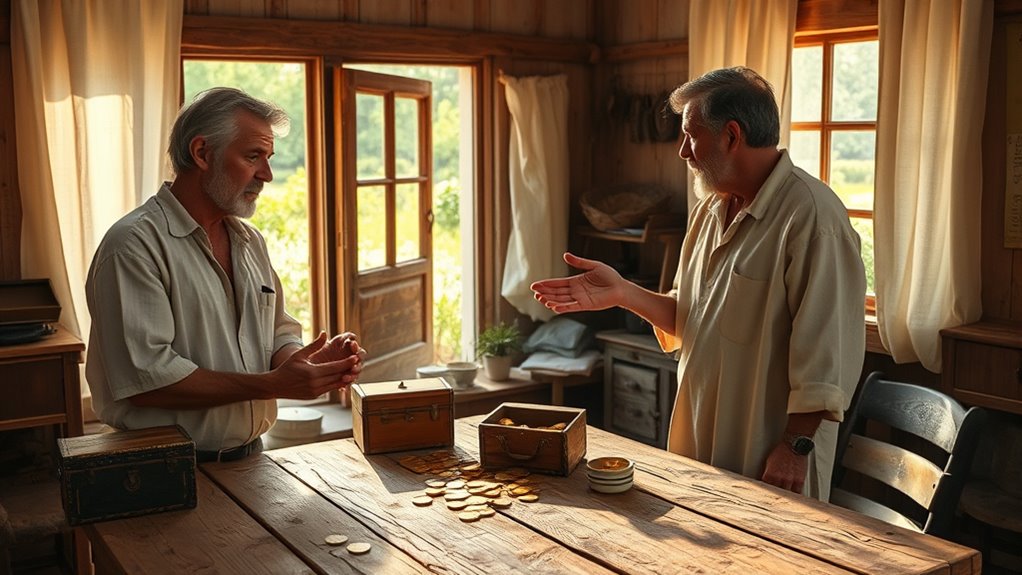

The Parable of the Talents teaches you about being a faithful steward of God’s gifts. It shows that you’re responsible for using your skills, opportunities, and resources wisely, whether by investing or serving others. Taking action and trusting in divine justice honors the gifts you’ve received. Neglect or fear lead to consequences, but faithfulness results in blessings and reward. If you want to understand how this applies to your life, explore further to see what Jesus teaches about responsibility and trust.
Key Takeaways
- The parable emphasizes faithful stewardship by investing and managing divine gifts responsibly.
- It highlights the importance of trusting in God’s principles and acting boldly with entrusted resources.
- The master’s return symbolizes divine judgment, rewarding faithfulness and punishing neglect or fear.
- Using talents wisely reflects obedience and demonstrates trust in God’s plan for growth and multiplication.
- Personal responsibility involves serving others and advancing God’s kingdom with the gifts provided.

The Parable of the Talents is a powerful story told by Jesus in the Gospel of Matthew to teach about responsibility and stewardship. As you reflect on this story, you realize it’s not just about money but about how you handle the gifts and opportunities entrusted to you by God. When the master entrusts his servants with talents—different amounts of money—it’s a clear illustration of divine justice. Each servant’s responsibility is to use what they’ve been given wisely, showing faith and obedience in their actions. Your response to these gifts reveals your trust in God’s plan and your willingness to serve with diligence. The master’s return symbolizes divine justice, where everyone will give an account for how they managed their resources and talents.
If you’re like the first servant, who received five talents, you understand that faith and obedience are essential to fulfilling your responsibilities. You’re called to actively invest and multiply what’s been given to you, trusting that God’s principles of stewardship will guide your efforts. When you obey God’s commands, you demonstrate faith that He will bless your work and reward your faithfulness. Conversely, the servant who buried his talent shows what happens when obedience is absent and fear prevails. Instead of trusting in divine justice and acting boldly, he chose to hide his gift, fearing failure or judgment. This act of neglect highlights the importance of faith in God’s goodness and justice. You are reminded that God expects you to step out in obedience, even when the outcome isn’t guaranteed, trusting that divine justice will prevail. Recognizing the importance of stewardship can help you understand your role in managing what you’ve been entrusted with.
The story challenges you to examine your own life—are you using your talents, skills, and opportunities to serve others and advance God’s kingdom? When you act with faith and obedience, you align yourself with divine justice, knowing that God honors faithfulness and diligence. It’s not just about the results but about your attitude and trust in God’s plan. The master’s praise for the faithful servants reminds you that obedience rooted in faith leads to rewards, both here and in eternity. If you neglect your responsibilities, you risk facing divine justice in a way that emphasizes accountability. Ultimately, this parable calls you to be a responsible steward of everything God has given you, trusting that divine justice will hold you accountable and that faithfulness will be rewarded. Your role is clear: steward wisely, act obediently, and trust in God’s perfect justice.
Top picks for "parable talent stewardship"
Open Amazon search results for this keyword.
As an affiliate, we earn on qualifying purchases.
Frequently Asked Questions
How Does the Parable Relate to Modern Financial Management?
The parable relates to modern financial management by highlighting the importance of responsible investment strategies and financial responsibility. You’re encouraged to wisely use your resources, just like the servants who invested their talents. By actively managing your finances, taking smart risks, and avoiding complacency, you demonstrate stewardship. This aligns with current principles of growing wealth responsibly, emphasizing that good financial habits and responsible decision-making lead to fruitful outcomes.
What Cultural Contexts Influenced the Parable’s Original Interpretation?
Did you know that in ancient Jewish society, wealth and responsibility were seen as divine trust? Cultural influences like this, along with the historical context of Roman occupation, shaped how people interpreted the parable. These influences emphasized stewardship and accountability, making the story resonate deeply with audiences of that time. Understanding these cultural nuances helps you see how the parable’s message about responsibility remains relevant today.
Are There Different Versions of This Parable Across Denominations?
Yes, there are different versions of this parable across denominations. You’ll find interpretative differences, such as emphasizing stewardship, responsibility, or faithfulness. Some denominations highlight the talents as gifts from God, urging you to use your abilities wisely. Others focus on accountability and judgment. These variations reflect each denomination’s teachings, shaping how you understand and apply this parable’s message within your faith community.
How Can Individuals Apply This Parable in Everyday Life?
You can apply this parable in everyday life by embracing personal accountability for your actions and talents. Use your skills and resources wisely, seeking opportunities to grow and help others. Practice responsibility by managing your time and finances diligently, and avoid laziness or fear-based inaction. Practical application means continuously developing your abilities and sharing your gifts, knowing you’re entrusted with responsibilities that contribute positively to your community and personal growth.
What Are Common Misconceptions About the Talents in the Story?
You might believe misinterpretation myths that talents only refer to money or skills, but in reality, modern misconceptions often see talents as limited or static. People sometimes think the story encourages only financial gain or success, ignoring its broader message about responsibility and growth. Don’t restrict the talents to specific areas; instead, recognize that your unique abilities and opportunities require stewardship and can be developed through effort and faith.
Conclusion
You see, the parable teaches that your talents are gifts you must actively nurture and use wisely. By investing your abilities responsibly, you fulfill your purpose and grow both personally and spiritually. Think of it like planting seeds; with care and effort, they flourish into fruitful trees. Embracing stewardship transforms potential into reality, proving that responsibility isn’t just a duty—it’s an opportunity to create lasting impact and fulfillment in your life.