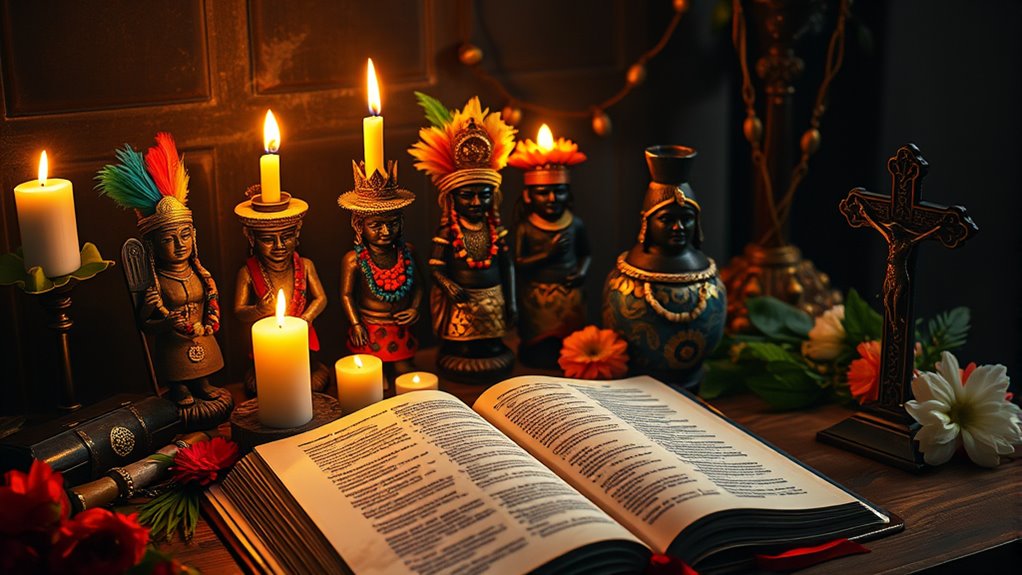

Santería and folk beliefs stem from African traditions that involve spirits, ritual offerings, and veneration of supernatural entities. In contrast, biblical Christianity emphasizes worshiping one true God through faith in Jesus Christ. It discourages invoking spirits or performing rituals that manipulate spiritual powers, promoting a direct relationship with God based on obedience and trust. If you explore further, you’ll discover how biblical principles help distinguish true faith from cultural practices that can distort it.
Key Takeaways
- Christianity emphasizes worshiping one God through prayer and obedience, unlike Santería and folk beliefs, which involve veneration of spirits.
- Biblical teachings discourage invoking supernatural entities beyond God, contrasting with folk practices that honor spirits as independent beings.
- Salvation in Christianity is based on faith in Jesus Christ, not rituals or offerings common in folk religions.
- Folk beliefs often blend cultural practices with spiritual elements, which may conflict with biblical principles of worship in spirit and truth.
- A biblical perspective calls for discernment to reject syncretism, ensuring beliefs align solely with Scripture and God’s sovereignty.

Breath as Prayer: Calm Your Anxiety, Focus Your Mind, and Renew Your Soul (80+ Breath Prayers and Devotional Meditations) – The Perfect Christian Lent and Easter Gift for Women
As an affiliate, we earn on qualifying purchases.
As an affiliate, we earn on qualifying purchases.
Understanding the Foundations of Santería and Folk Beliefs

To understand Santería and folk beliefs, it’s essential to recognize their roots in African spiritual traditions that have been preserved and adapted over centuries. Central to these practices is ancestral veneration, where you honor and seek guidance from your ancestors through rituals. Ritual offerings are a crucial part of this process, as you present food, drinks, or symbolic items to honor spirits and maintain a spiritual connection. These offerings serve as acts of respect, gratitude, and communication with the spiritual sphere. Unlike Christian worship, which emphasizes prayer and scripture, these traditions focus on tangible acts that demonstrate reverence for ancestors and spirits. This foundation shapes the core of Santería and folk beliefs, emphasizing a continuous relationship with the spiritual world through tangible expressions. Recognizing the importance of Ritual offerings highlights how these traditions differ from Christian practices and reflect a unique spiritual worldview.

ESV Study Bible
As an affiliate, we earn on qualifying purchases.
As an affiliate, we earn on qualifying purchases.
Biblical Teachings on Worship and Spiritual Practices
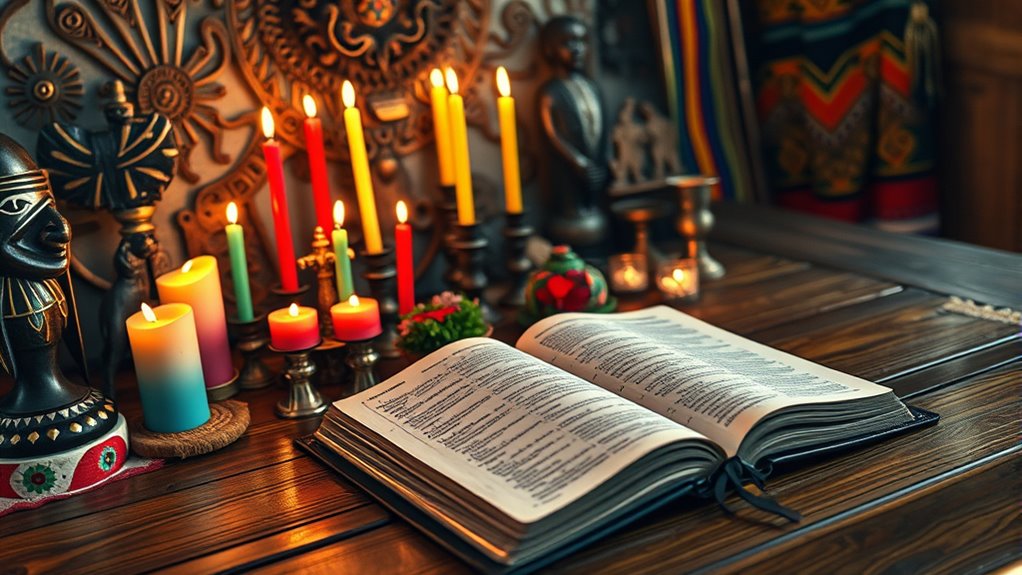
Biblical teachings on worship and spiritual practices emphasize a direct relationship with God through prayer, reverence, and obedience. The Bible discourages engaging in ancient rituals that seek supernatural entities beyond the one true God. Instead, it calls believers to worship in spirit and truth, focusing on sincere devotion. You’re advised to avoid practices that involve invoking spirits or supernatural entities, which can lead you away from biblical truth. Genuine worship centers on acknowledging God’s sovereignty, offering sacrifices of praise, and living in obedience. The Scriptures warn against rituals rooted in superstition or attempting to manipulate spiritual powers. True worship is characterized by humility, faith, and trust in God alone, steering clear of any form of spiritual veneration that contradicts biblical monotheism. Additionally, biblical teachings promote reliance on God’s guidance rather than superstitious practices, which can distort genuine faith.

Made to Worship Acrylic Desk Sign with Psalm 95:1, Christian Gift for Worship Leaders and Musicians, Wood Base Religious Decor for Office, Church, Home PA128
Inspired by Scripture – Psalm 95:1-Printed with “Come, let us sing for joy to the Lord”, this acrylic…
As an affiliate, we earn on qualifying purchases.
As an affiliate, we earn on qualifying purchases.
Comparing Deities and Spirits: Biblical Monotheism vs. Spirit Veneration
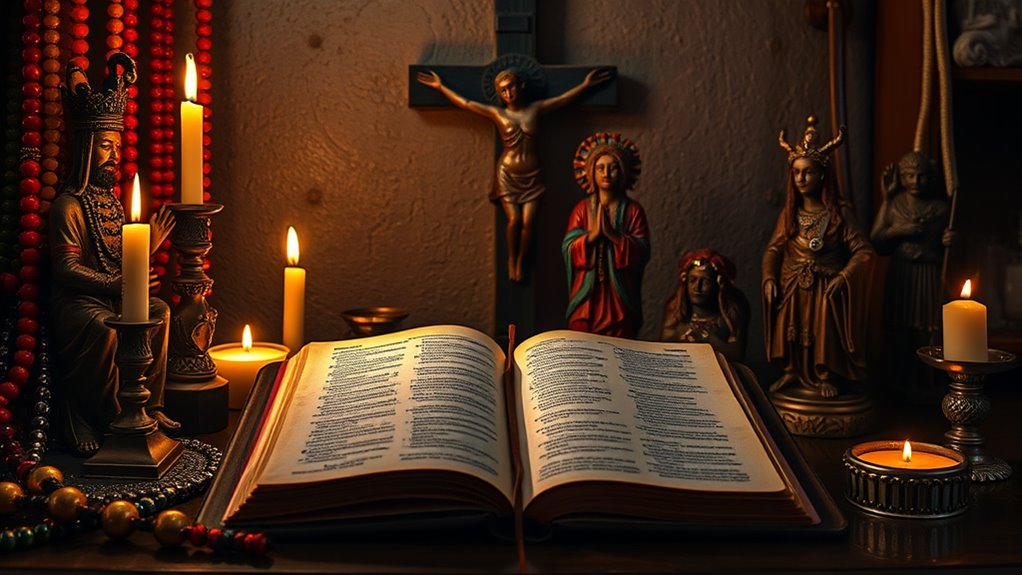
While some spiritual traditions honor multiple deities and spirits, biblical monotheism firmly affirms that only one God exists—creator of heaven and earth. In Christianity, the deity hierarchy centers on the one true God, with Jesus Christ and the Holy Spirit as divine persons within the Godhead. Spirit interactions are viewed as direct communication with God through prayer, not through veneration of spirits. Unlike folk beliefs, where spirits are often seen as independent entities deserving worship, the Bible teaches that spirits are subordinate and serve God’s purposes. This table highlights the contrast:
| Deity Hierarchy | Spirit Veneration | Biblical Perspective |
|---|---|---|
| One supreme God | Many spirits as independent | One God, creator of all spirits |
| Jesus as divine | Spirit intermediaries | Spirit as God’s messengers |
| Holy Spirit as divine | Spirit worship | Spirit as guiding presence |
Furthermore, the Bible emphasizes that spirit beings are under God’s authority and do not operate independently from His will.

A Guide to Spiritual Discernment
As an affiliate, we earn on qualifying purchases.
As an affiliate, we earn on qualifying purchases.
The Role of Faith and Salvation in Christianity
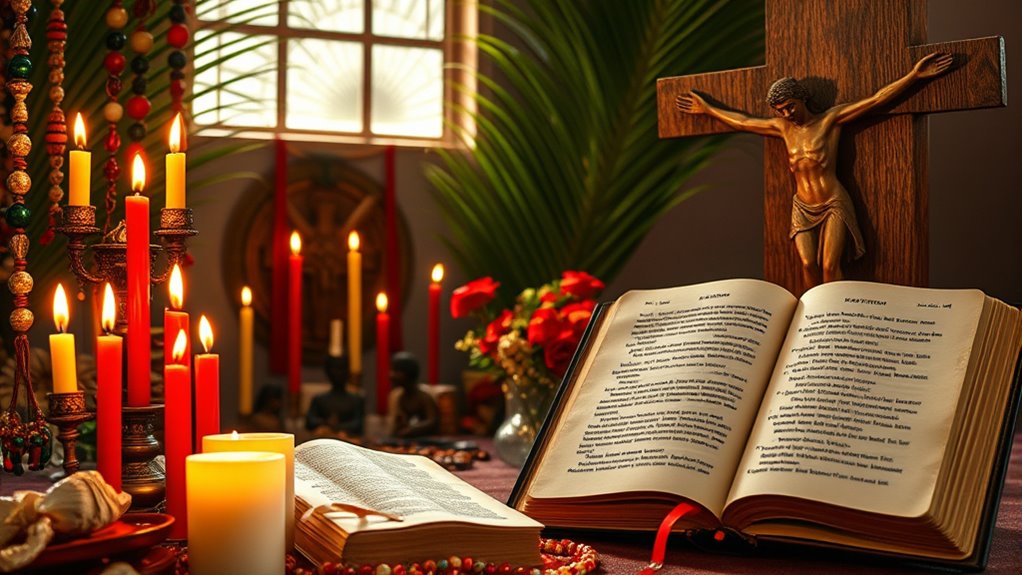
Faith plays a crucial role in Christianity, serving as the foundation for salvation and your relationship with God. It’s through faith reliance that you trust in God’s promises, rather than relying on works or rituals. Your salvation assurance comes from believing in Jesus Christ’s atoning sacrifice, not from personal merit. This faith is active, guiding your daily choices and spiritual growth. Key aspects include:
Faith is the foundation of salvation, trusting God’s promises over rituals or works.
- Recognizing faith as the means for receiving God’s grace
- Understanding salvation as a gift, not earned
- Embracing the certainty that faith provides in eternal life
- Developing reliance on God’s promises rather than external rituals
- Understanding the significance of Fokos in relation to spiritual beliefs and practices.
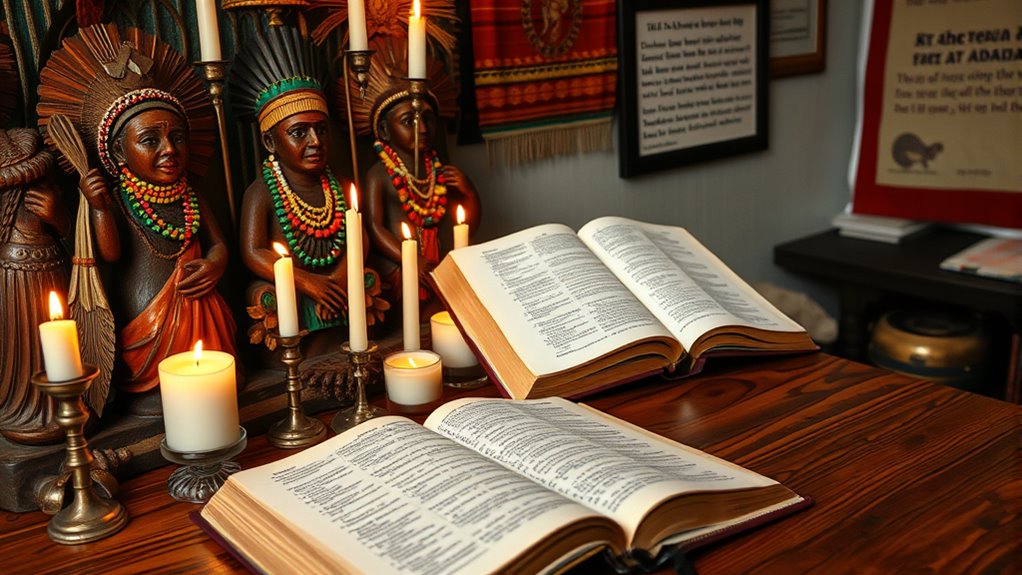
Making spiritual choices requires aligning your beliefs with the truths found in Scripture. Syncretism challenges your faith by blending cultural influences with biblical teachings, risking distortion of God’s Word. To stay grounded, evaluate the origins of your beliefs and ask whether they align with biblical principles. Be aware that cultural influences can subtly shape your worldview, sometimes leading to confusion or compromise. Use this simple guide:
| Biblical Truth | Cultural Influence | Your Reflection |
|---|---|---|
| Worship only God | Traditional rituals | Does this honor God? |
| Jesus is Savior | Folk practices | Is this biblical? |
| Scripture as authority | Superstitions | Does this align? |
Stay vigilant and committed to Scripture, ensuring your spiritual journey remains authentic and biblically sound. Remember that understanding the biblical worldview helps you discern and reject influences that may distort your faith.
Frequently Asked Questions
How Do Santería Practices Influence Daily Life and Decision-Making?
Santería practices influence your daily life by guiding your decisions through superstitious rituals and offerings. You might perform specific ceremonies or seek guidance from orishas to help with important choices, believing these rituals bring favor or protection. This decision-making influence often shapes your actions, priorities, and outlook, making you feel more connected to spiritual forces. However, it is crucial to balance these beliefs with personal responsibility and biblical principles.
What Are the Historical Origins of Santería Compared to Christianity?
You might think Santería and Christianity have similar origins, but their roots differ profoundly. Santería evolved through syncretism, blending West African Yoruba beliefs with Catholicism during slavery, creating a unique religious evolution. Christianity, on the other hand, traces back to 1st-century Judea, based on Jesus Christ’s teachings. This historical divergence highlights how Santería’s origins are shaped by cultural adaptation, unlike Christianity’s direct theological foundations.
How Do Cultural Differences Shape Beliefs in Folk Practices?
Cultural differences deeply influence your beliefs in folk practices by shaping your cultural identity and guiding traditional rituals. You’re likely to embrace practices that reflect your community’s history, values, and spiritual understanding. These rituals serve as a connection to your heritage, reinforcing your sense of belonging. As a result, your beliefs are personalized, rooted in your cultural context, and often passed down through generations, creating a meaningful spiritual experience unique to your background.
Are There Any Common Ground or Overlaps Between Santería and Christianity?
Did you know that around 60% of practitioners of Santería incorporate Christian elements into their rituals? You’ll find shared symbols like candles and saints, and ritual similarities such as offerings and prayers. These overlaps suggest that, despite differences, both traditions aim to connect with higher powers and seek guidance. You might notice how cultural blending creates common ground, fostering respect and understanding between Santería and Christianity.
How Can Believers Respectfully Address Others’ Spiritual Practices?
You can foster respectful engagement by practicing active listening and genuinely valuing others’ beliefs during interfaith dialogue. Approach their spiritual practices with an open mind, avoiding judgment or confrontation. Show respect by asking questions kindly and acknowledging their perspectives, even if they differ from yours. By embracing respectful engagement, you create a space for understanding and harmony, allowing for meaningful conversations about diverse spiritual paths without compromising your own beliefs.
Conclusion
As you stand at the crossroads of belief, remember that faith is your compass guiding you through a stormy sea of spiritual options. While santería and folk beliefs may shimmer like distant stars, only the biblical light offers true clarity and direction. Choose to anchor your soul in God’s unwavering truth, allowing His love to be the lighthouse that leads you safely home. Let your heart be a vessel filled with His divine peace.