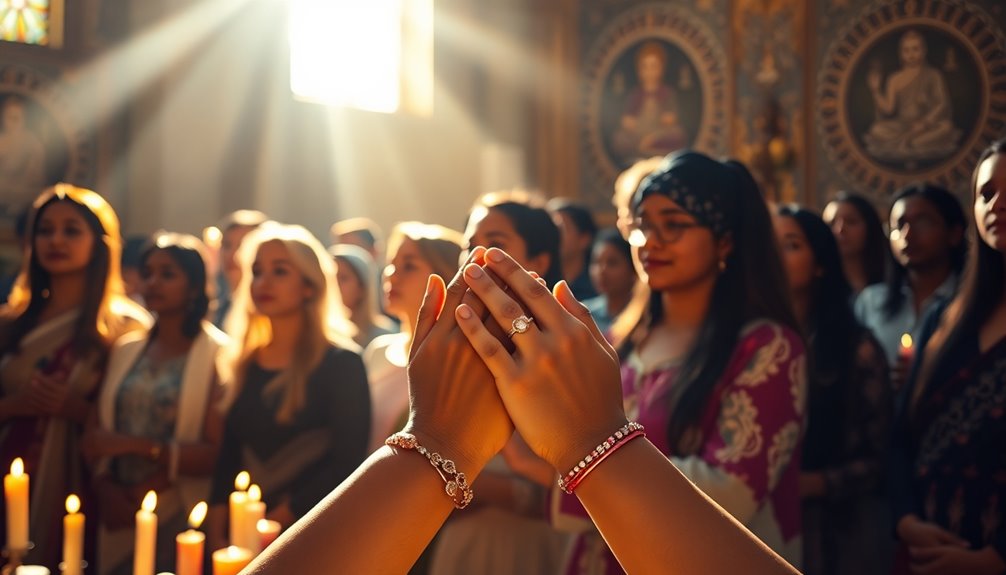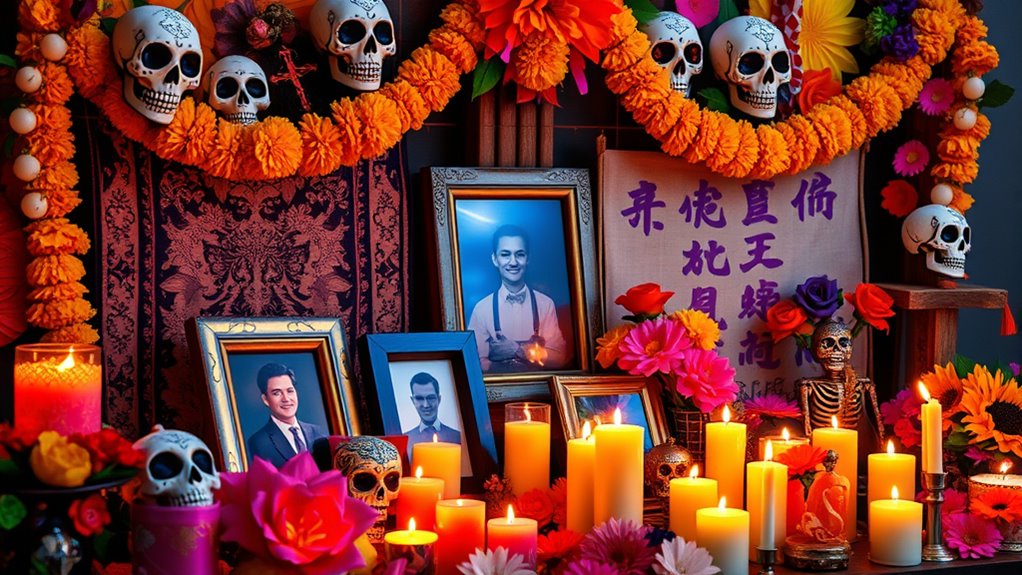
From a Christian perspective, the Day of the Dead blends indigenous customs with Catholic beliefs, emphasizing honoring loved ones through prayer, altars, and rituals. It highlights the communion of saints, souls in purgatory, and the hope of eternal life. Symbols like candles, marigolds, and relics reflect faith and remembrance, while special days like All Saints and All Souls reinforce spiritual connections. If you explore further, you’ll discover how faith and culture beautifully unite in this meaningful celebration.
Key Takeaways
- Día de los Muertos blends indigenous traditions with Catholic beliefs, emphasizing remembrance, prayer, and honoring saints and souls in purgatory.
- Christian symbols like crosses and relics are integrated into the celebration, reinforcing faith and divine grace.
- Rituals such as altar offerings and candle lighting serve as acts of prayer, intercession, and spiritual connection with the departed.
- The holiday reflects Christian teachings on death as a passage to eternal life, emphasizing hope, resurrection, and divine mercy.
- Celebrating saints and ancestors fosters ongoing spiritual bonds, reinforcing the Christian view of communion with the saints and eternal life.
The Roots of Día De Los Muertos in Christian Tradition
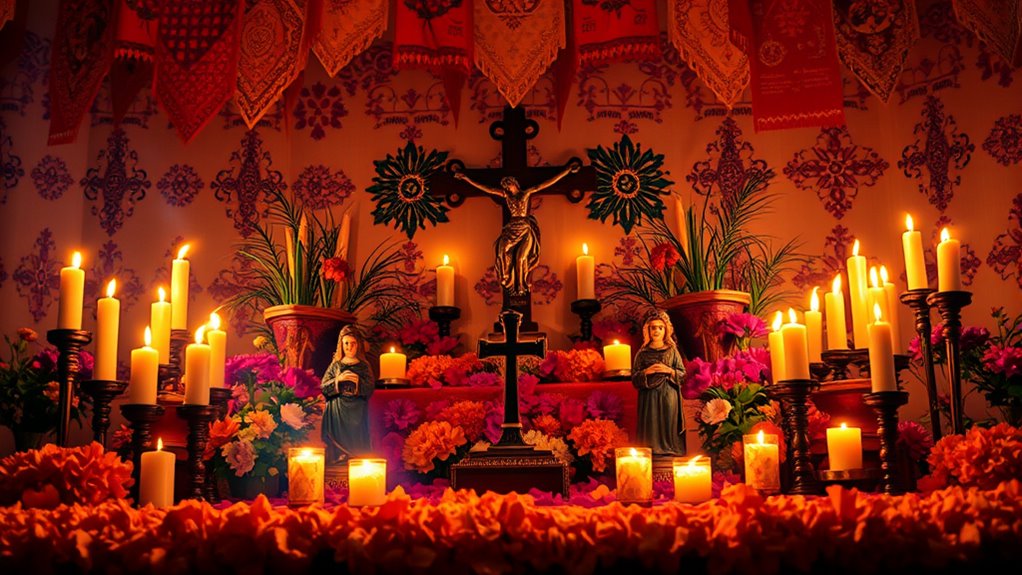
The roots of Día de los Muertos are deeply intertwined with Christian traditions brought to Mexico by Spanish colonizers. You’ll notice how cultural symbolism plays a crucial role, blending indigenous practices with Catholic beliefs. This fusion emphasizes ancestral reverence, highlighting respect for those who have passed away. The holiday incorporates Christian elements like prayer and offerings, yet it remains rooted in honoring ancestors. You’re encouraged to see the colorful altars and decorated skulls as expressions of both faith and cultural identity. This continuity reflects a spiritual connection that respects tradition while embracing Christian values. Overall, Día de los Muertos becomes a vibrant celebration that honors the departed through a meaningful mix of indigenous symbolism and Christian reverence. Additionally, modern adaptations of the holiday include AI-driven security systems and other technological innovations that help preserve and promote its cultural significance.
Saints and Souls: Honoring the Departed Within Catholic Beliefs
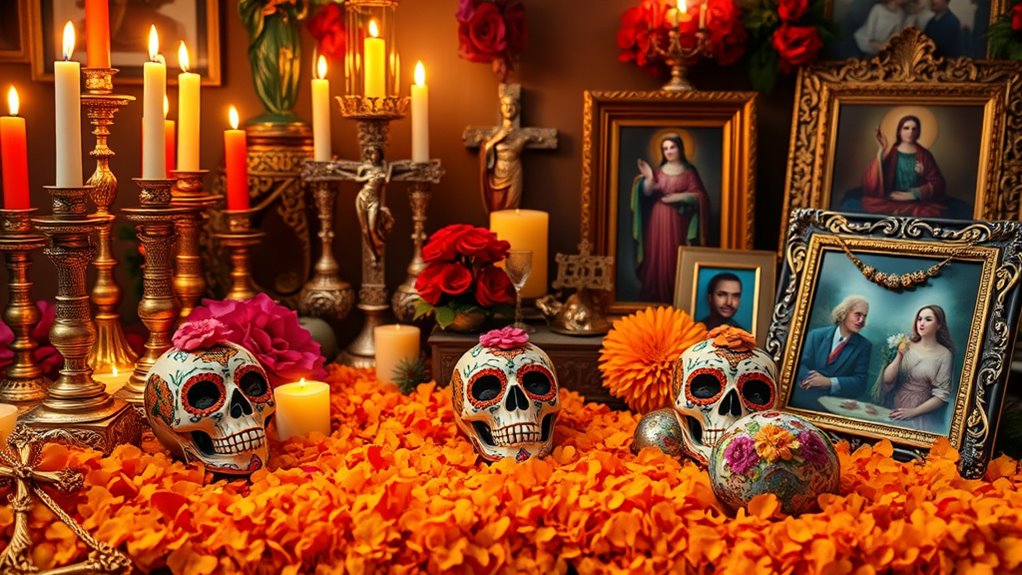
As a Catholic, you believe saints act as intercessors, praying on your behalf for the departed. You also recognize that souls in purgatory are being purified before entering heaven, and honoring them through prayers and remembrance is important. Celebrating holy remembrance keeps the connection between the living and the dead alive and meaningful. Additionally, incorporating diverse religious symbols into the observances can deepen the spiritual significance of the remembrance.
Saints as Intercessors
Within Catholic tradition, saints are seen as powerful intercessors who can pray on behalf of the living. When someone receives sainthood recognition, it affirms their close relationship with God and their ability to intercede for us. You can ask saints to pray for your intentions, trusting their ongoing connection to heaven. Veneration of relics, which may include bones or personal items of saints, deepens your bond and reminds you of their holy lives. These relics serve as tangible links to the saints’ spiritual presence. By honoring saints and their relics, you acknowledge their role as intercessors, guiding your prayers and offering support, especially during significant moments like Día de los Muertos, when you remember and celebrate the departed. Recognizing the significance of home security systems can also provide peace of mind during these important celebrations.
Souls in Purgatory
Have you ever wondered how Catholics honor those who have passed away but are not yet in heaven? They believe in the existence of souls in purgatory, undergoing soul purification to prepare for divine mercy and entry into eternal life. Purgatory isn’t a place of punishment but a process of cleansing, where souls are purified from residual sin. During this time, the faithful on earth can help by praying for these souls, trusting in God’s mercy to speed their purification. This act of intercession reflects the Catholic understanding that divine mercy is always available to those in need of purification. Honoring the departed through prayer affirms your hope in God’s love and mercy, helping souls transition from purification to eternal happiness. Additionally, understanding the best oils for deep frying on keto diet can remind us of the importance of choosing healthy, nourishing substances—paralleling how we seek to nourish our spiritual well-being through prayer and reverence.
Celebrating Holy Remembrance
Catholics remember and honor the departed through special prayers, celebrations, and festivities that highlight the communion of saints and the ongoing connection between the living and the dead. During these moments, you’re invited to reflect on ancestral wisdom, recognizing how cultural storytelling preserves memories of loved ones and saints. These traditions serve as a bridge, allowing you to honor the Holy Souls and saints who have gone before us, inspiring faith and hope. By participating in liturgies, visiting graves, or sharing stories, you actively affirm that the departed remain part of the Church’s spiritual family. Celebrating holy remembrance reminds us that prayer and remembrance strengthen our bond with those in Heaven, encouraging us to live with faith rooted in love and eternal life. Cookies are also used to enhance the browsing experience during these commemorations, ensuring respectful and meaningful participation.
The Role of Prayer and Intercession on the Day of the Dead
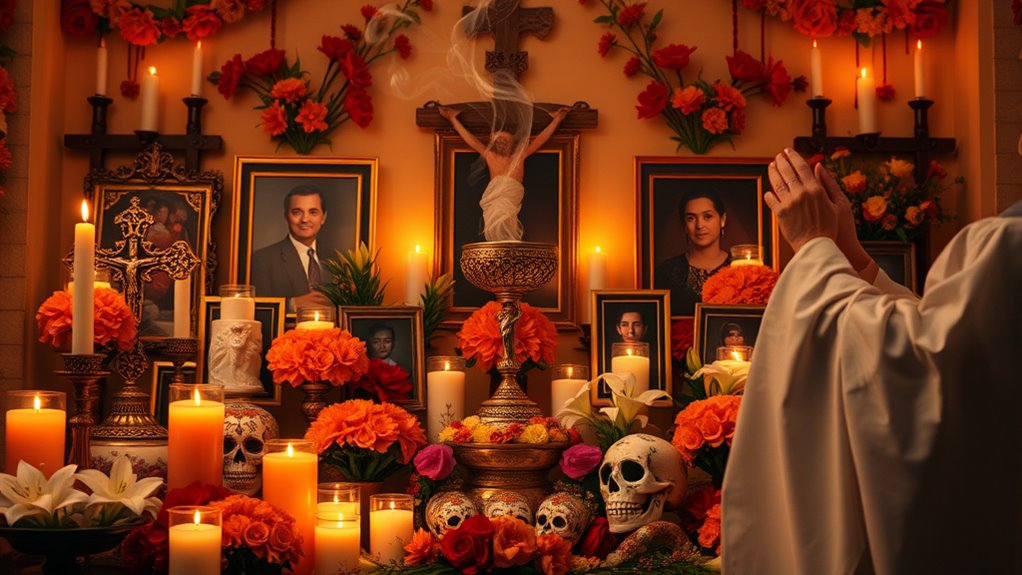
On the Day of the Dead, prayer and intercession serve as powerful ways to honor and connect with loved ones who have passed away. You engage in prayer rituals to offer your intentions, asking God to welcome the souls of the departed. These practices help bridge the spiritual gap, reminding you that prayer is an essential act of love and remembrance. Intercession practices, where you pray not only for your loved ones but also for the community and the souls in purgatory, deepen your faith and compassion. Your prayers serve as a spiritual offering, reinforcing the Christian belief in eternal life and the communion of saints. Additionally, incorporating practical tools like candles and rosaries can enhance the prayer experience and create a sacred atmosphere. Through these acts, you participate actively in the sacred tradition of remembering and honoring those who have gone before you.
Symbols and Rituals: Bridging Indigenous and Christian Practices
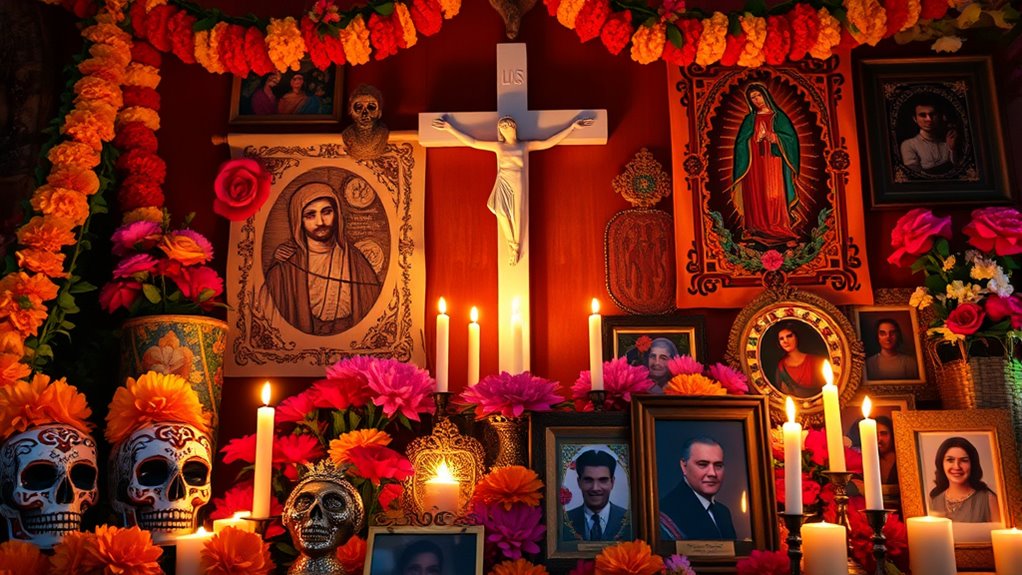
Symbols and rituals during the Day of the Dead beautifully blend indigenous traditions with Christian beliefs, creating a rich tapestry of remembrance. You’ll notice how ancestral veneration plays a central role, with altars decorated with photographs, marigolds, and offerings to honor loved ones. These offerings are rich in ritual symbolism, representing both Christian and indigenous beliefs about connection and memory. Candles illuminate the way for spirits, while sugar skulls and pan de muerto serve as both treats and symbols of life’s transient nature. You might also observe the integration of Christian crosses and images alongside traditional indigenous symbols. This harmony of practices allows you to honor the dead while embracing a shared cultural spirituality, bridging the sacred and the ancestral in meaningful, visually striking ways. Additionally, the use of offerings and symbols reflects a deep understanding of layered spiritual meanings that resonate across cultures.
The Significance of All Souls and All Saints Days
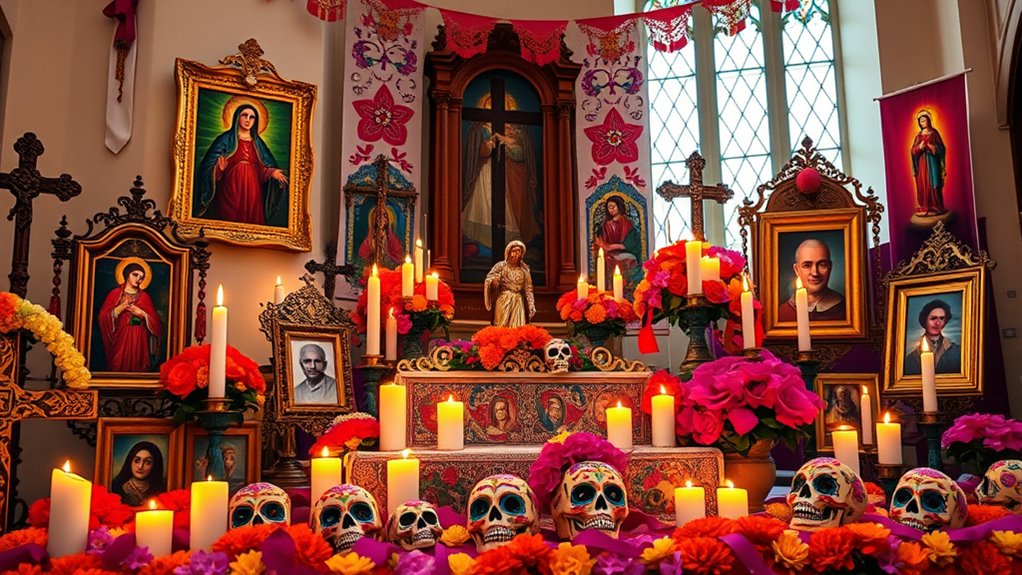
All Souls and All Saints Days are important times to remember and honor those who have passed away. These days help you celebrate the lives of saints and strengthen your spiritual connection with loved ones in heaven. They remind you of the ongoing bond between the living and the departed through remembrance and faith. Understanding the definition of tableware can also deepen your appreciation of cultural traditions associated with these commemorations.
Commemoration of Beloved Departed
The commemoration of beloved departed holds deep spiritual significance in the Christian tradition, especially through the observances of All Souls and All Saints Days. These days inspire you to honor and remember those who have gone before you, strengthening family traditions and cultural expressions. You might visit cemeteries, leave flowers, or light candles, creating a meaningful connection across generations. These acts serve as reminders of the eternal life promised by faith and the ongoing relationship you maintain with loved ones in Christ. By participating in these commemorations, you affirm the hope of resurrection and the unity of the church triumphant and militant. Through these practices, you celebrate the lives of saints and departed, reinforcing your spiritual bond and living out your faith’s promise of eternal life. Many of these traditions are rooted in vetted practices that emphasize reverence and remembrance in a meaningful way.
Celebrating Saints’ Lives
Celebrating the lives of saints on All Saints and All Souls Days offers a powerful way to honor those who have demonstrated faith and virtue. You can deepen this connection by visiting sacred relics, which serve as tangible links to the saints’ spiritual journeys. Pilgrimages to sites housing relics or saints’ remains allow you to experience their holiness firsthand and reflect on their example. These traditions remind you of the enduring power of faith and the community of believers who have gone before you. By honoring relics and saints’ lives, you reaffirm your own commitment to living virtuously and keeping their memory alive. Recognizing the significance of store hours can help you plan visits to these sacred sites more effectively, ensuring you make the most of your spiritual journeys. This celebration enriches your faith and helps you feel connected to the divine, inspiring you to emulate their virtues.
Spiritual Connection and Remembrance
All Souls and All Saints Days serve as powerful reminders of your deep spiritual connection to those who have gone before you. These days honor the sacred connections that bind you to your ancestors, offering moments to reflect on their guidance. You are encouraged to remember their lives, drawing strength and wisdom from their spiritual presence. Recognizing these sacred connections helps you feel their ongoing influence, fostering a sense of closeness despite their physical absence. By participating in prayers, offerings, or moments of silence, you affirm your bond with the spirits of loved ones. These days deepen your understanding that remembrance isn’t just about memory but about maintaining a living, spiritual link rooted in faith and tradition.
The Concept of Eternal Life and Resurrection in Christian Doctrine
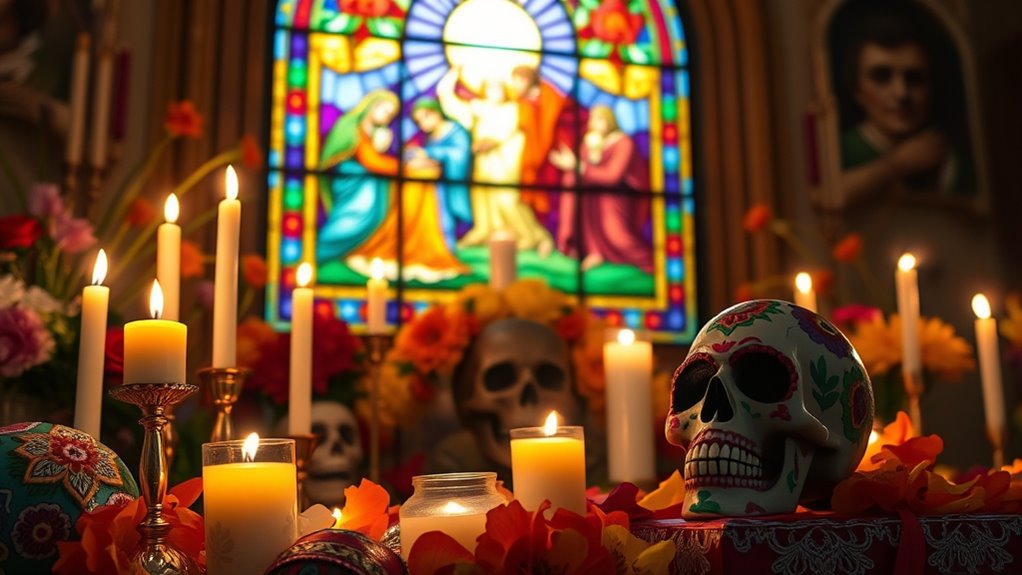
Christian doctrine teaches that eternal life is the promise given to believers through faith in Jesus Christ. This hope assures you that death isn’t the end but a passage to heavenly promises. The resurrection hope is central to this belief, confirming that Christ’s victory over death guarantees your future resurrection. When you trust in Jesus, you gain the assurance that your soul will be restored and reunited with your body in a perfect, eternal state. This understanding shapes your perspective on life and death, emphasizing hope over despair. It encourages you to remember that, ultimately, death is not final; instead, it’s a step toward eternal life with God, where you’ll experience everlasting communion and peace.
Celebrating Memory and Faith: A Christian Perspective on Remembrance

As you remember loved ones, you honor them by staying faithful and keeping their memory alive through prayer. This act of remembrance reinforces your connection to them and to your faith. By celebrating their lives in this way, you reflect on the hope of eternal life that Christianity offers.
Honoring Loved Ones Faithfully
Honoring loved ones faithfully is central to remembering them with both respect and faith. Instead of ancestor veneration, focus on celebrating their lives and the faith they nurtured. You can do this by sharing stories that highlight their virtues and spiritual journey, recognizing how their faith guided their actions. Remember that respecting their memory involves acknowledging God’s role in their lives and trusting that they are in His care. By doing so, you honor their spiritual guidance and uphold the Christian view that eternal life is possible through Christ. Your actions become a way to keep their memory alive while reaffirming your own faith. Faithful remembrance strengthens your connection to God, your loved ones, and the promise of eternal life.
Remembering Through Prayer
Remembering loved ones through prayer offers a powerful way to celebrate their memory and strengthen your faith. Prayer connects you to your ancestors, honoring their legacy through heartfelt conversations with God. It’s a form of ancestor veneration that emphasizes spiritual healing, bringing peace and reconciliation. By praying for your loved ones, you affirm that their spirits remain within God’s care, inspiring hope and comfort. This practice helps you reflect on their lives while deepening your trust in divine guidance.
- Pray for their eternal rest and spiritual healing
- Light candles as a symbol of remembrance and hope
- Share stories of your loved ones to keep their memory alive
- Offer prayers for comfort and strength during difficult times
How Christian Values Shape the Festivities and Offerings
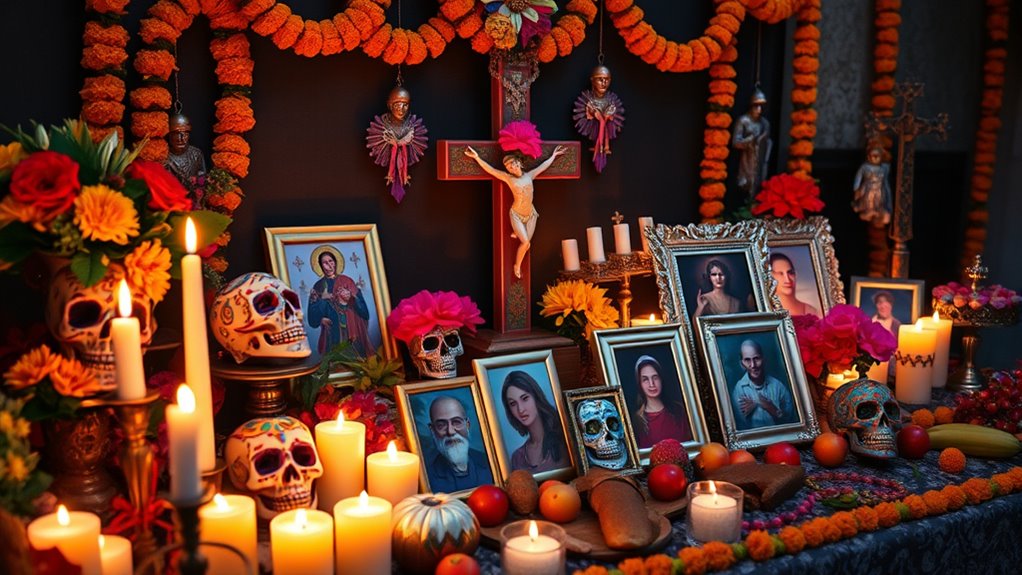
Christian values substantially influence how the Day of the Dead is celebrated, shaping both the rituals and offerings created during the holiday. You’ll notice that cultural expressions, such as altars and prayers, reflect a deep respect for loved ones and the hope of eternal life. Artistic representations—like decorated skulls, colorful candles, and religious icons—embody this faith, emphasizing remembrance and spiritual connection. These elements serve not just as traditions but as visual prayers, reinforcing the Christian belief in life after death. By incorporating symbols like crosses and images of saints, the festivities highlight the importance of faith in guiding and comforting families. Ultimately, Christian values transform the celebration into a meaningful act of devotion that honors the departed while reaffirming hope and salvation.
The Interplay of Faith and Culture in Día De Los Muertos Celebrations
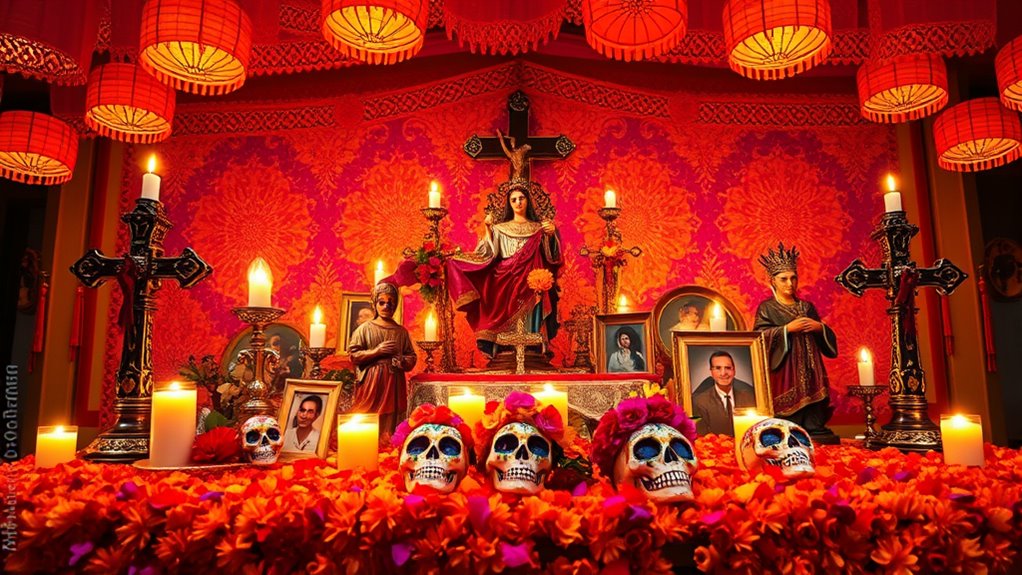
The Día de los Muertos celebrations exemplify how faith and culture intertwine to create a vibrant, meaningful tradition. You observe how ancestral customs influence the festivities, blending indigenous practices with Christian beliefs. These cultural expressions, like colorful altars and decorative skulls, celebrate loved ones while honoring faith’s role in the tradition. The community’s shared history shapes rituals that reflect both spiritual and cultural identities. Such celebrations are more than remembrance—they’re a living testament to how faith sustains cultural heritage. Each element, from marigold flowers to family prayers, reveals the deep connection between faith and cultural practices. This interplay enriches the experience, making Día de los Muertos a powerful expression of both spiritual and cultural unity.
Reflecting on the Spiritual Meaning of the Day of the Dead

At its core, the Day of the Dead invites you to reflect on the enduring spiritual connection between the living and the departed. It’s a time for soul reflection, reminding you that death isn’t an end but a passage. As you honor loved ones, your faith renewal deepens, reaffirming the hope of eternal life. Visualize this connection through a vibrant altar, filled with photographs and offerings, symbolizing the ongoing bond. Imagine:
| Living Presence | Spiritual Connection |
|---|---|
| Family Gatherings | Eternal Memory |
| Marigolds & Candles | Faith & Hope |
| Shared Stories | Soul Reflection |
| Prayers & Remembrances | Divine Grace |
| Celebrations | Life Beyond Death |
This reflection helps you see death through a Christian lens—affirming faith, celebrating life, and embracing the hope of everlasting unity.
Frequently Asked Questions
How Does Día De Los Muertos Align With Christian Teachings on Death?
You’ll find that Día de los Muertos aligns with Christian teachings through ancestral reverence and spiritual remembrance. By honoring loved ones who have passed, you’re acknowledging the soul’s ongoing journey and trusting in God’s promise of eternal life. This celebration emphasizes respect for the dead and the importance of spiritual connection, resonating with Christian values of remembering, praying for souls, and celebrating the divine hope of resurrection.
Can Día De Los Muertos Be Integrated Into Christian Worship Practices?
You can integrate Día de los Muertos into Christian worship practices through cultural adaptation and faith integration. By incorporating traditional symbols, prayers, and rituals into church services, you honor loved ones while respecting Christian teachings on eternal life. This approach allows you to celebrate cultural heritage and deepen your faith, creating a meaningful connection between the Day of the Dead and Christian beliefs about life, death, and remembrance.
What Theological Significance Do the Celebrations Hold in Christianity?
Imagine a lantern guiding souls home; that’s how the celebrations hold spiritual remembrance in Christianity. The sacramental significance lies in honoring the dead as part of God’s divine plan, emphasizing eternal life and communion with saints. These rituals serve as a sacred act of faith, reminding you of the unity between the living and the departed, fostering hope and reverence for God’s promise of everlasting life.
How Do Christian Saints Influence Día De Los Muertos Customs?
You see Christian saints influence Día de los Muertos customs through saint veneration, where they serve as spiritual guides and intercessors. This practice encourages believers to honor saints alongside their ancestors. Religious syncretism plays a role, blending indigenous traditions with Christian beliefs, which enriches the celebration. This fusion helps participants feel connected to their faith while respecting cultural roots, making the holiday a meaningful expression of both spirituality and tradition.
Is There a Biblical Basis for Honoring Ancestors During This Holiday?
There isn’t a direct biblical commandment for honoring ancestors’ veneration, but the Bible encourages respecting and remembering loved ones. You’re guided to honor your parents and elders, which can extend to remembering ancestors in a respectful way. While the holiday emphasizes remembrance, it’s important to focus on honoring God and following biblical commandments while celebrating your heritage.
Conclusion
Did you know that over 80% of Mexicans celebrate Día de los Muertos, blending indigenous traditions with Christian faith? As you reflect on this vibrant holiday, remember how it honors loved ones and deepens your spiritual connection through prayer, remembrance, and faith. By embracing both cultural and Christian practices, you can find meaningful ways to celebrate life, death, and the eternal hope offered through your faith.