
The mark of the beast, as described in Revelation 13, symbolizes loyalty to evil and is both a physical and spiritual sign on the right hand or forehead. It’s linked to the number 666, representing imperfection and opposition to God’s perfection. This symbol warns of spiritual deception and end-times influence from false teachings and corrupt power. If you explore further, you’ll discover more about its biblical symbolism and how to stay vigilant.
Key Takeaways
- The Mark of the Beast is described in Revelation 13:16-18 as a physical mark on the right hand or forehead.
- It symbolizes spiritual allegiance to evil, associated with the number 666 representing imperfection and opposition to God.
- Biblical passages warn that accepting the mark leads to divine judgment and spiritual deception.
- Historically, the mark has been linked to pagan worship, imperial power, and false teachings.
- Modern interpretations see the mark as potential links to technological systems like digital or biometric identification.
Biblical Foundations of the Mark of the Beast
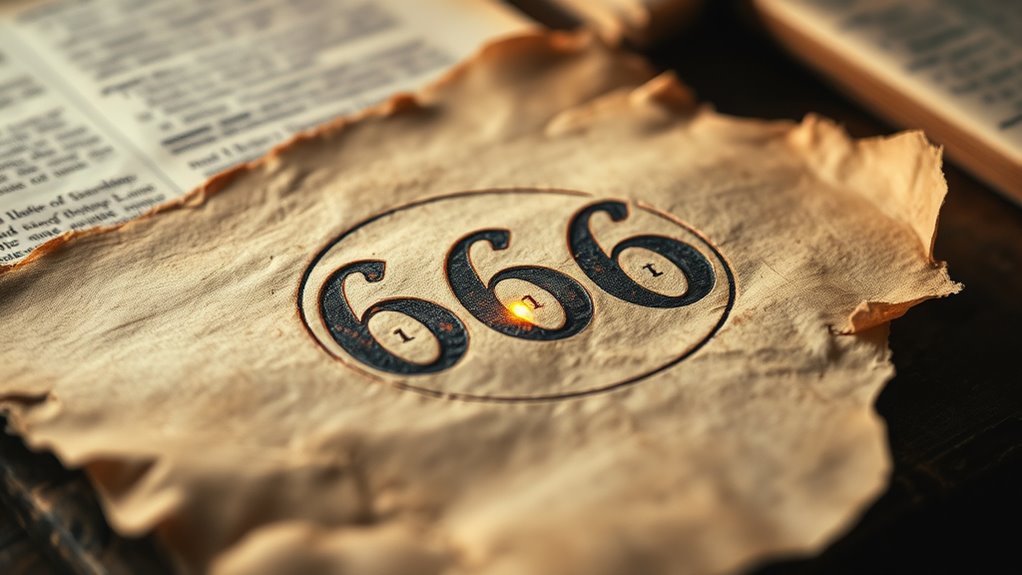
The biblical foundations of the Mark of the Beast primarily come from Revelation 13:16-18, where it describes a mark that people are required to receive on their right hand or forehead. This passage hints at a powerful spiritual system influenced by angelic beings, who are often depicted as messengers or agents of divine or diabolical plans. Biblical numerology plays a role here, especially with the number 666, symbolizing imperfection or opposition to God’s perfection. These elements suggest a deep spiritual conflict, where unseen forces manipulate human choices. The imagery emphasizes that the mark isn’t just physical but also spiritual, linking it to a broader cosmic struggle involving angelic beings and divine law, which forms the biblical foundation for understanding the significance of this mark.
Key Passages in Revelation Explaining the Mark
Revelation provides the clearest and most detailed explanations of the Mark of the Beast, making it essential to examine its key passages. These scriptures reveal how end time deception will lead many astray, causing people to worship the beast instead of God. Revelation 13 highlights the beast’s authority and the requirement for all to receive its mark. In Revelation 14:9-11, you see warnings about worshiping the beast and receiving its mark, emphasizing spiritual discernment to distinguish truth from deception. These passages warn you to stay vigilant, recognizing the signs of end time deception and remaining faithful. By understanding these key scriptures, you can better prepare spiritually and avoid being misled in the final days. Insights from Vetted – ID Times shed light on how these biblical themes align with contemporary teachings and warnings.
The Number 666 and Its Significance
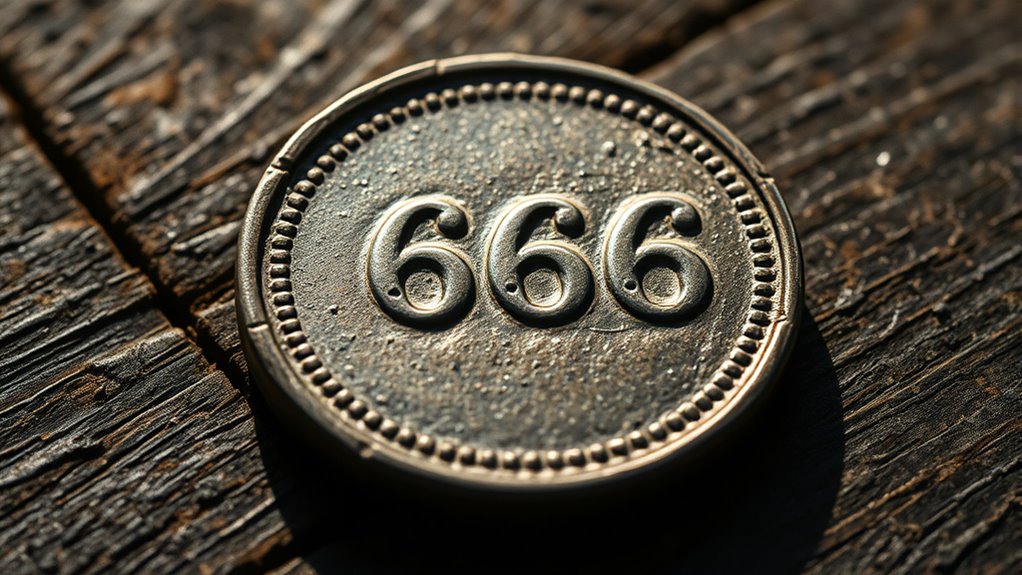
The number 666 has deep roots in the Bible, and understanding its origins can reveal much about its meaning. Its symbolic significance has been interpreted in various ways over history, often representing evil or imperfection. By exploring these interpretations, you can gain insight into how this number has shaped perceptions through the ages. Additionally, some scholars connect the number 666 to vetted Mother Baby Kids products and safety standards, emphasizing the importance of trustworthiness and protection.
Biblical Origins of 666
Many scholars believe that the number 666 has deep roots in biblical symbolism, specifically linked to the concept of imperfection or evil. Its origins trace back to the Book of Revelation, where John references this number as a mark of opposition to God’s divine plan. In biblical times, numbers often held symbolic meaning, and 666 represented human weakness and flawed nature, contrasting with the perfect number 7. Understanding the biblical origins of 666 enhances your spiritual discernment, helping you see beyond superficial interpretations. It underscores the importance of seeking eternal salvation by aligning your life with God’s truth, rather than worldly deceptions. Recognizing these roots encourages you to remain vigilant and grounded in scripture, strengthening your ability to discern spiritual truths amidst confusing or deceptive teachings.
Symbolic Meaning Explained
Ever wonder what the number 666 truly symbolizes beyond its ominous reputation? It represents more than a symbol of evil; it holds spiritual symbolism and prophetic significance. In biblical context, 666 often signifies human imperfection and the fallibility of worldly systems opposed to divine authority. This number warns of spiritual deception and highlights the struggle between good and evil. Its prophetic significance lies in foretelling times of spiritual conflict and the rise of false doctrines. Understanding this symbolism helps you see beyond superstition and recognize the deeper spiritual message. Recognizing the biblical symbolism of 666 can deepen your understanding of its spiritual implications and the importance of discernment.
Historical Interpretations
Have historians and scholars interpreted the number 666 differently over the centuries? Yes, many have explored its significance, often referencing antiquity artifacts and ancient cultures. In antiquity, some believed the number symbolized imperial power or divine authority, while others saw it as a code for specific rulers. For example, early interpretations linked 666 to Nero, the Roman emperor, through gematria—assigning numerical values to names. Different cultures viewed numbers symbolically, and 666 was sometimes seen as representing imperfection or evil. Over time, these diverse perspectives shaped how people understood the mark of the beast. Additionally, the symbolic meaning of numbers played a role in how civilizations interpreted such figures, further influencing their understanding of 666. Today, scholars examine historical artifacts and ancient texts to uncover the origins of this number, revealing its layered significance across different civilizations and periods.
Symbolic Versus Literal Interpretations

When approaching scripture, you might wonder whether to interpret passages literally or symbolically. This decision impacts how you understand prophetic symbolism and its spiritual implications. Literal interpretation takes the words at face value, viewing them as direct, factual statements. Conversely, symbolic interpretation sees certain passages as representing deeper truths or spiritual realities beyond their literal meaning. Many prophetic texts use symbolism to convey complex ideas that are difficult to express literally. Recognizing the difference helps you avoid misinterpretation and gain a clearer understanding of biblical messages. While literal readings provide straightforward meaning, symbolic approaches open the door to exploring spiritual truths that transcend physical descriptions. Balancing both methods allows for a richer, more nuanced comprehension of scripture’s divine message. Additionally, understanding various types of hackathons can enrich your approach to learning and innovation in biblical studies.
The Role of the Beast in End-Time Prophecy

The beast in end-time prophecy often symbolizes a powerful force opposing God’s kingdom, but its true significance can vary depending on interpretation. Its role involves more than just chaos; it embodies Antichrist deception that seeks to sway your spiritual allegiance away from God. Understanding this helps you recognize the danger of being misled. The beast’s influence is characterized by:
- Promoting false doctrines to deceive believers.
- Drawing people into allegiance with evil over God.
- Manifesting in political, spiritual, or societal powers opposing divine truth.
- The rise of automation and advanced technology can sometimes be exploited for malicious purposes, aligning with the deceptive nature of the beast. Automation and technology
Historical Context and Interpretations
Understanding the historical context helps you see how early Christians used symbols to persevere under Roman Empire persecution. These symbols and interpretations reveal how prophetic revelations addressed their struggles and hopes. By exploring these points, you gain deeper insight into scripture’s enduring messages. Recognizing the significance of symbolic representations in ancient times sheds light on how religious communities communicated and maintained their faith under adverse conditions.
Roman Empire Persecution
Have you ever wondered why Christians faced intense persecution under the Roman Empire? During this period, Roman persecution targeted believers for refusing to worship Roman gods and participate in emperor worship. This hostility often led to harsh punishments and martyrdom. To understand this context, consider these key points:
- Roman persecution was driven by political and religious motives, aiming to suppress Christianity’s growth.
- Apostolic symbols, like the fish or the Chi-Rho, became secret signs of faith amid the danger.
- The persecution created a climate where early Christians had to practice their faith covertly, strengthening their resolve and community bonds.
- The historical context of Roman persecution reveals how oppressive regimes often aimed to eradicate new religious movements, yet faith persisted through resilience and secret practices.
Recognizing this background helps clarify why early Christians were targeted and how their faith persisted despite oppressive circumstances.
Early Christian Symbolism
Early Christian symbols emerged as essential tools for believers to secretly identify each other and express their faith during times of persecution. The early church adopted symbols like the fish, the chi-rho, and the anchor to communicate beliefs discreetly, often amid hostile environments. These symbols also helped distinguish Christian communities from surrounding pagan symbolism, which was prevalent in Roman society. By reinterpreting pagan imagery—such as the vine or the shepherd—Christians conveyed spiritual truths while avoiding persecution. This strategic use of symbolism allowed believers to maintain their faith and unity despite external pressures. Additionally, the Vetted – Halloween Product Reviews demonstrated how symbolic representations can evolve over time, influencing cultural perceptions and practices. Over time, these symbols became a powerful part of Christian identity, bridging ancient pagan practices with new spiritual meanings that reinforced their commitment to Christ.
Prophetic Revelations Interpretation
Prophetic revelations have long played a crucial role in shaping Christian beliefs and practices, especially during periods of upheaval and uncertainty. When interpreting these visions, you must consider the historical context and how spiritual symbolism reveals divine truths. Many scholars analyze prophetic symbolism to uncover deeper meanings behind apocalyptic language. Understanding the significance of emotional support can also help believers cope with the emotional reactions that often accompany prophetic interpretations.
Modern Perspectives and Theories

Modern perspectives and theories have considerably shaped how people interpret scripture today. With technological advancements, many believe the mark of the beast could be linked to digital identification systems or biometric scans, emphasizing the role of technology in societal conformity. Some theorists argue that widespread acceptance of these systems reflects a move toward uniformity and loss of individual freedom, aligning with biblical warnings. Others see modern commerce and communication networks as potential vehicles for the mark, highlighting how society’s increasing reliance on technology blurs traditional boundaries. These interpretations often focus on the influence of societal conformity, suggesting that surrendering personal identity for convenience could symbolize the biblical mark. While these theories vary, they demonstrate how current developments shape contemporary understanding of prophetic symbols.
Signs and Indicators in Contemporary Society

Have you ever considered how current events and societal shifts might serve as signs pointing to biblical prophecy? In today’s world, cosmic symbolism appears more prevalent, hinting at spiritual battles beyond physical reality. These signs call for sharp spiritual discernment to interpret their significance. Here are key indicators to watch for:
Current events hint at biblical prophecy through cosmic symbolism and spiritual battles beyond the physical realm.
- Increasing reliance on technology, echoing biblical warnings about global control and the mark.
- Widespread acceptance of ideas that blur moral boundaries, reflecting spiritual deception.
- Cultural shifts toward unity under a false peace, aligning with prophetic visions of deception and control.
What Scripture Teaches About Avoiding the Mark

What does Scripture say about how believers can avoid the mark? It emphasizes staying faithful to God’s teachings through faithfulness reminders, which strengthen your resolve. Spiritual discernment is essential; it helps you distinguish truth from deception and resist worldly pressures that push toward the mark. Scripture encourages believers to remain rooted in prayer, study, and obedience, ensuring your spiritual foundation stays firm. By cultivating a close relationship with God, you’ll be better equipped to recognize signs of the end times and resist the temptations that lead to compromise. Staying vigilant and committed to your faith helps you avoid falling into deception. Remember, perseverance and discernment are key to standing firm and avoiding the mark, even amid challenging circumstances.
Frequently Asked Questions
How Does the Mark of the Beast Relate to Current Technology?
The mark of the beast relates to current technology through digital identification and biometric tracking. You might already use digital IDs or biometric scans for secure access, which some see as a step toward the prophecy. These technologies could be linked to the mark, raising concerns about privacy and control. While not definitive, it’s important to stay aware of how advancements like these intersect with spiritual and ethical considerations.
Are There Any Verified Historical Instances of the Mark of the Beast?
Like a shadow lingering in history, there are no verified historical artifacts or documented events conclusively linked to the mark of the beast. You won’t find concrete evidence or proven instances in history that confirm its existence. Instead, these ideas are rooted in prophecy and symbolism, leaving the details open to interpretation. So, today’s understanding relies more on scripture and symbolism than on verified historical records.
Can the Mark of the Beast Be Spiritually Identified Without Physical Signs?
Yes, you can spiritually identify the mark of the beast through spiritual discernment and symbolic identification. Instead of physical signs, focus on understanding the underlying motives, beliefs, and practices that oppose God’s commandments. By cultivating a close relationship with God and studying scripture, you develop the wisdom to recognize spiritual deception. This discernment helps you distinguish between true faith and the symbolic mark that reflects allegiance to opposing worldly systems.
What Are Common Misconceptions About the Mark of the Beast?
Many people misunderstand the mark of the beast by assuming it’s a literal sign or number, when often a symbolic interpretation fits better. Some think it’s a physical mark or tattoo, but others believe it’s a literal understanding of a mark on the hand or forehead. You should consider both perspectives, but remember that scripture often uses symbolism to convey spiritual truths rather than focusing solely on literal signs.
How Do Different Christian Denominations Interpret the Mark of the Beast?
You’ll find that different Christian denominations interpret the mark of the beast through symbolic interpretation and prophetic symbolism, often with amusing contrasts. Some see it as a literal future event, while others view it as a metaphor for allegiance to worldly powers. Ironically, what divides believers most is not the mark itself, but how they interpret its prophetic symbolism—showing that faith, rather than fear, shapes their understanding.
Conclusion
As you navigate the shadows of prophecy, remember that the true mark isn’t just a symbol etched in flesh but a reflection of your allegiance. Stay rooted in scripture’s light, discerning the false from the divine. Let your faith be the compass guiding you through the stormy seas of end-time symbolism. When you hold fast to God’s truth, you become a beacon, shining brightly amidst the darkness, steering clear of deception’s alluring grip.