

The Old Testament contains many prophecies about Jesus’ birth, including promises of a divine Savior born from the lineage of David, in Bethlehem, and of a virgin birth foretold in Isaiah. These predictions are confirmed by celestial signs like the star guiding the Wise Men and divine messages emphasizing Jesus’ royal and divine origin. If you want to explore how these ancient promises were fulfilled, you’ll find the details revealing God’s plan woven throughout biblical history.
Key Takeaways
- Old Testament prophecies in Genesis and Isaiah foretell Jesus’ miraculous birth and divine identity as Immanuel.
- Micah predicts the Messiah will be born in Bethlehem, fulfilling God’s specific location for Jesus’ birth.
- Jeremiah and Numbers emphasize Jesus’ royal lineage from David and Judah, confirming His messianic kingship.
- Isaiah’s sign of Immanuel and divine confirmations affirm Jesus’ divine origin and mission.
- The star and Wise Men’s journey symbolize divine guidance fulfilling biblical promises of a special king’s birth.
Bible prophecy study guide
As an affiliate, we earn on qualifying purchases.
As an affiliate, we earn on qualifying purchases.
The Messianic Prophecy in Genesis
The Messianic prophecy in Genesis is a foundational promise that points to Jesus’ future arrival. It uses Old Testament symbolism to foreshadow His coming, such as the seed of the woman who will crush the serpent’s head. This symbolizes the ongoing struggle between good and evil and hints at Jesus’ ultimate victory. The prophecy also introduces Messianic titles like “Seed,” emphasizing His role as the promised Savior. These symbolic images reveal God’s plan of redemption from the very beginning. By understanding these early signs, you recognize how Genesis sets the stage for Jesus’ birth, reaffirming His role as the fulfillment of God’s promises. This declaration not only hints at His coming but also highlights His significance in the divine plan. Additionally, recognizing the prophetic symbolism embedded in Genesis helps deepen the understanding of God’s unwavering commitment to His promises throughout history.
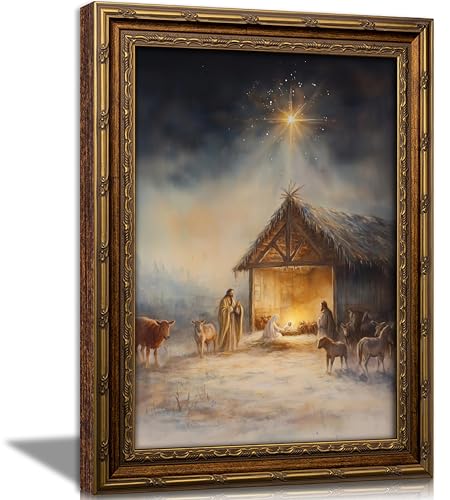
Vintage Nativity Scene Gold Framed Wall Art Birth of Jesus Christmas Christian Painting Canvas Prints Mary Joseph Holy Family Picture Star of Bethlehem Poster Artwork for Church Prayer Room, 9x11in
Antique Gold Framed – Jesus: Celebrate the true spirit of Christmas with this beautifully painted Nativity scene art…
As an affiliate, we earn on qualifying purchases.
As an affiliate, we earn on qualifying purchases.
The Promise in Isaiah of the Virgin Birth
Isaiah’s prophecy offers a profound promise of a virgin giving birth to a child who will be called Immanuel, meaning “God with us.” This prophecy stands out because it directly links the Messiah’s birth to a miraculous and divine origin, emphasizing that His arrival will be extraordinary and rooted in God’s divine plan. You see how this prophecy uses biblical symbolism, portraying the virgin birth as a sign of divine intervention. It’s a powerful fulfillment of ancient prophecies, reinforcing the idea that God’s promises are trustworthy. Isaiah’s words connect the divine with the earthly, highlighting that the coming Savior will embody both human and divine qualities. This prophecy not only foretells the birth but also underscores the divine nature of Jesus, fulfilling long-held hopes rooted in ancient scriptures. Additionally, the prophecy’s emphasis on divine intervention mirrors the significance of fulfilled biblical promises, such as those seen in various Old Testament texts.

Fovths 12 Pieces LED Easter Scene and Cross Decoration Easter Resin Tabletop Decorations Resurrection of Jesus Statue Jesus Nativity Scene Decorations for Christian Figurines Home Office Tabletop
Comprehensive Set for Easter Display: this carefully curated resin Easter scene and cross decoration collection features a total…
As an affiliate, we earn on qualifying purchases.
As an affiliate, we earn on qualifying purchases.
Micah’s Prediction of the Birthplace of the Messiah

Micah’s prophecy pinpoints the specific birthplace of the Messiah, offering a clear geographical detail that solidifies the divine plan behind Jesus’ birth. He predicts that the Messiah will come from Bethlehem Ephrathah, a small but significant town with ancient symbols of hope and promise. This prophecy reflects cultural influences from surrounding nations, emphasizing Bethlehem’s importance in biblical history. By mentioning this specific location, Micah connects ancient symbols of kingship and divine favor to Jesus’ birth. It’s not just a random detail but a deliberate marker of God’s plan, rooted in cultural influences that shaped Jewish expectations. Recognizing the geographical significance of Bethlehem Ephrathah helps deepen the understanding that this prophecy was divinely orchestrated, fulfilling the ancient symbols embedded in biblical history.

Old Testament: Poetry and Prophecy (Standard Reference Library)
Used Book in Good Condition
As an affiliate, we earn on qualifying purchases.
As an affiliate, we earn on qualifying purchases.
The Scepter and Ruler Prophecy in Numbers
In Numbers 24:17, God makes a divine promise of leadership that highlights a future ruler. This prophecy emphasizes the significance of a royal lineage that’s destined to bring justice and authority. Understanding this promise helps you see how it points directly to the prophetic royal line that leads to Jesus. Additionally, the prophecy’s focus on a wall organization underscores the importance of clear and symbolic structures in illustrating divine plans.
Divine Promise of Leadership
The divine promise of leadership in Numbers emphasizes that a ruler from Judah will hold authority forever. This leadership prophecy assures you that God’s plan includes an eternal king from Judah’s line. It highlights the significance of this lineage and its fulfillment in Jesus Christ. Additionally, the connection between the prophecy and the dog names reflects how meaningful names can embody the qualities of leadership and heritage.
Numbers 24:17 Significance
Numbers 24:17 holds great significance because it foretells the coming of a ruler whose impact will reach beyond the immediate era. This verse uses biblical symbolism to describe a star rising out of Jacob and a scepter emerging from Israel, symbolizing leadership and authority. The prophecy points to a future king who will bring salvation and establish divine justice. Its prophetic fulfillment becomes clear when you see how it aligns with the birth of Jesus, confirming God’s plan for a righteous ruler. This verse connects the promise of a messianic king with Old Testament symbolism, emphasizing that Jesus’ birth fulfills this divine prophecy. It highlights God’s ongoing promise to establish a ruler whose influence will extend throughout history.
Prophetic Royal Lineage
The prophecy in Numbers 24:17 reveals a divine promise of a royal lineage that will lead with authority and justice. This lineage prophecy emphasizes the importance of a royal descent that fulfills God’s promise of a ruler from Israel’s line. As you explore this, you’ll see how it connects to Jesus’ royal descent, fulfilling the divine plan. Key points include:
- The promise of a ruler coming from Jacob’s descendants
- The significance of a scepter symbolizing authority
- The connection to King David’s royal line
- The prophecy’s fulfillment in Jesus’ kingship
- The royal lineage outlined in the Old Testament confirms the divine plan for a righteous ruler, culminating in Jesus’ kingship.
This lineage prophecy affirms that Jesus inherits the throne of righteousness, fulfilling God’s promise of a righteous ruler through the royal descent foretold in the Old Testament.
The Sign of Immanuel in Old Testament Writings

Many Old Testament writings point to a remarkable sign that would confirm the coming of Immanuel, meaning “God with us.” This prophecy appears in Isaiah 7:14, where the prophet predicts that a young woman will give birth to a son named Immanuel, signaling God’s presence with His people. This sign involves angelic messages and prophetic symbols that reinforce God’s promise. The birth of Immanuel serves as a divine confirmation, illustrating God’s direct involvement. The Virgin birth is a key element of this prophecy, emphasizing the miraculous nature of the event and its significance in biblical prophecy. The table below highlights key aspects of this sign:
| Prophetic Symbols | Angelic Messages |
|---|---|
| Virgin birth | Message of hope from angels |
| Divine name | Confirmation of God’s presence |
| Sign of Emmanuel | Fulfillment of God’s promises |
The Descendant of David Foretold in Jeremiah

Have you ever wondered how the promise of a future king from David’s line was foretold centuries before Jesus’ birth? In Jeremiah’s ancient texts, God promises a righteous branch from David’s descendants who will reign wisely and justly. This prophecy aligns with Jewish customs, emphasizing God’s covenant with David. Key points include:
Jeremiah foretells a righteous king from David’s line who will reign with justice and restore Israel.
- The promise of a “righteous Branch” emerging from David’s lineage
- A focus on justice, safety, and eternal stability
- The fulfillment of God’s covenant through a descendant who restores Israel
- The connection to messianic expectations rooted in Jewish tradition
- This prophecy reflects the ongoing importance of divine promises in biblical history and prophecy.
The Significance of the Star and Wise Men in Old Prophecies
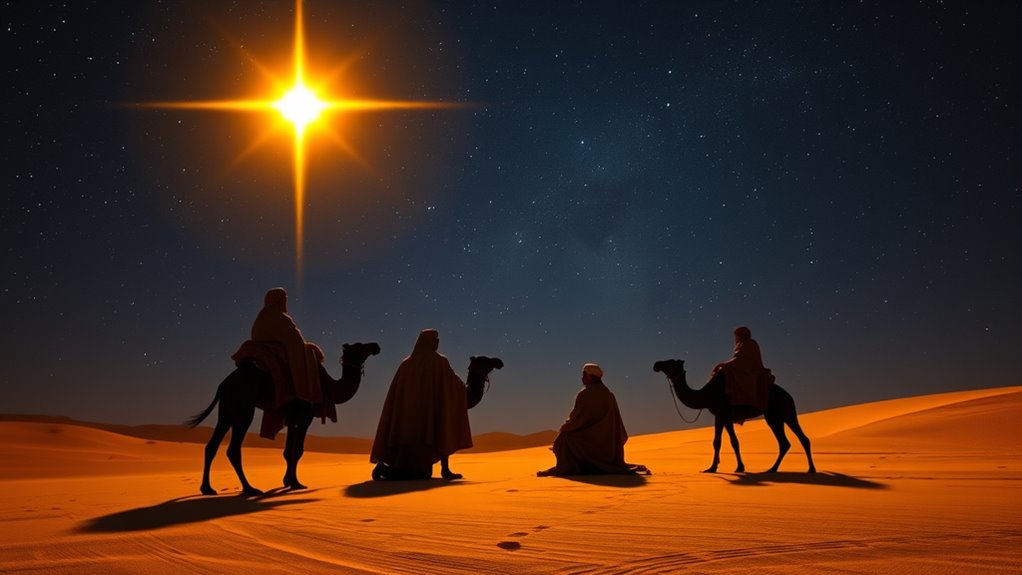
The star in the sky serves as a divine sign, guiding the Wise Men to the newborn King. Their journey confirms old prophecies about a special child arriving to fulfill God’s plan. Together, these elements highlight how ancient predictions align with the events surrounding Jesus’ birth. The symbolic significance of the star and the Wise Men’s journey underscores the fulfillment of prophecy and divine orchestration in these historic events.
Star as Divine Sign
Throughout ancient prophecies, the appearance of a bright star signaled a divine event, guiding wise men to a moment of profound significance. This celestial phenomenon was seen as a divine sign, often linked to angelic messengers delivering God’s plans. The star’s brightness symbolized hope and divine guidance, confirming the arrival of the Savior. Many interpret this star as a miraculous celestial event, not just an ordinary astronomical occurrence. It served as a divine sign to alert the wise men and others of an important prophecy unfolding. The star’s role underscores its spiritual significance in Old Testament promises. It reminds you that celestial phenomena often carried divine messages, acting as signs of God’s intervention and the fulfillment of His promises in history. Additionally, the star’s unique appearance and significance are often associated with waterproofing treatments, linking celestial signs to divine protection and preservation of God’s plans.
Wise Men’s Journey
The journey of the Wise Men illustrates the profound significance of the star as a divine sign in Old Prophecies. Guided by this celestial marker, they trusted divine messages through angelic visions and prophetic dreams, which confirmed their path. The star’s appearance fulfilled ancient expectations of a special king’s birth, emphasizing God’s active role in guiding Gentiles to Jesus. These wise men’s commitment reflects the fulfillment of Old Testament promises about nations seeking the Messiah. Their journey symbolizes divine guidance through heavenly signs, showcasing how God reveals His plan across cultures and eras. The following table highlights key aspects of divine guidance in Old Testament revelations:
| Divine Signs | Significance |
|---|---|
| Angelic visions | Confirm divine messengers and purpose |
| Prophetic dreams | Reveal God’s detailed plans and timing |
| Celestial signs | Signal fulfillment of Old Testament promises |
| Personal guidance | Direct individuals toward God’s plan |
Old Prophecies Confirmed
Old prophecies vividly foretold the birth of a remarkable ruler, and the journey of the Wise Men brings these predictions into striking focus. The star they followed is a powerful ancient symbol, representing divine guidance and prophetic symbols pointing to Jesus’ significance. These signs confirm Old Testament promises fulfilled in real time. You can see how:
- The star aligns with ancient symbols of kingship and divine authority
- Wise Men’s arrival echoes prophetic symbols of nations recognizing the Messiah
- The journey highlights the fulfillment of specific Old Testament prophecies
- The star’s movement signifies divine direction and fulfillment of prophecy
These elements reinforce the connection between ancient symbols and biblical promises, emphasizing how Old Testament prophecies were confirmed through observable signs, making Jesus’ birth a pivotal moment in biblical history.
Frequently Asked Questions
How Do These Prophecies Align With New Testament Accounts of Jesus’ Birth?
You’ll see that these prophecies align seamlessly with the New Testament accounts of Jesus’ birth through prophecy fulfillment and biblical consistency. The New Testament vividly confirms that Jesus’ birth fulfills Old Testament promises, such as the Messiah being born in Bethlehem and from the lineage of David. This harmony demonstrates how divine prophecy and biblical narratives work together, reinforcing the trustworthiness of Scripture and God’s plan for salvation.
Were These Prophecies Understood as Literal or Symbolic by Ancient Readers?
You might wonder if ancient readers saw these prophecies as literal expectations or symbolic interpretations. Many understood them literally, expecting specific events about Jesus’ birth. However, some also viewed certain prophecies symbolically, seeing them as broader messages about God’s promises. Overall, interpretations varied depending on individual beliefs and cultural contexts, but both literal and symbolic understandings shaped how people anticipated the Messiah’s arrival.
What Other Ancient Cultures Had Similar Messianic Prophecies?
You’ll find that ancient cultures like the Egyptians, Persians, and Greeks held similar messianic expectations, often anticipating a savior or divine figure. Comparative prophecy analysis reveals these cultures envisioned a future leader bringing justice and peace. While their prophecies differ in details, they reflect a universal desire for a transformative figure. Recognizing these parallels helps you understand how ancient messianic expectations transcend individual civilizations, shaping broad spiritual hopes across history.
How Do These Prophecies Influence Christian Theology Today?
These prophecies serve as a guiding star, illuminating Christian theology with messianic symbolism that shapes belief and practice. They anchor faith in divine promises, reinforcing the hope that Jesus fulfills God’s plan. Theological implications run deep; they affirm Jesus as the Messiah and inspire moral and spiritual growth. Today, these prophecies continue to influence Christian doctrine, anchoring it in a divine narrative that offers hope, purpose, and a connection to God’s eternal promise.
Are There Historical Records Confirming the Anticipation of These Messianic Predictions?
You won’t find direct archaeological evidence or clear historical corroboration confirming the anticipation of messianic predictions in ancient records. While some artifacts and inscriptions hint at expectations for a future savior, mainstream scholarship sees these prophecies primarily in religious texts rather than confirmed historical documents. So, the anticipation remains more a matter of faith and theological interpretation rather than verifiable historical proof.
Conclusion
As you journey through these ancient prophecies, you see the tapestry of God’s promises woven with divine threads. Each prophecy lights your path like stars guiding travelers in the night, revealing that Jesus’s birth was no accident but the fulfillment of heaven’s eternal plan. Embrace this unfolding story, knowing that every prophecy is a brushstroke in the masterpiece of salvation, inviting you to trust in God’s perfect design and His unwavering promise.