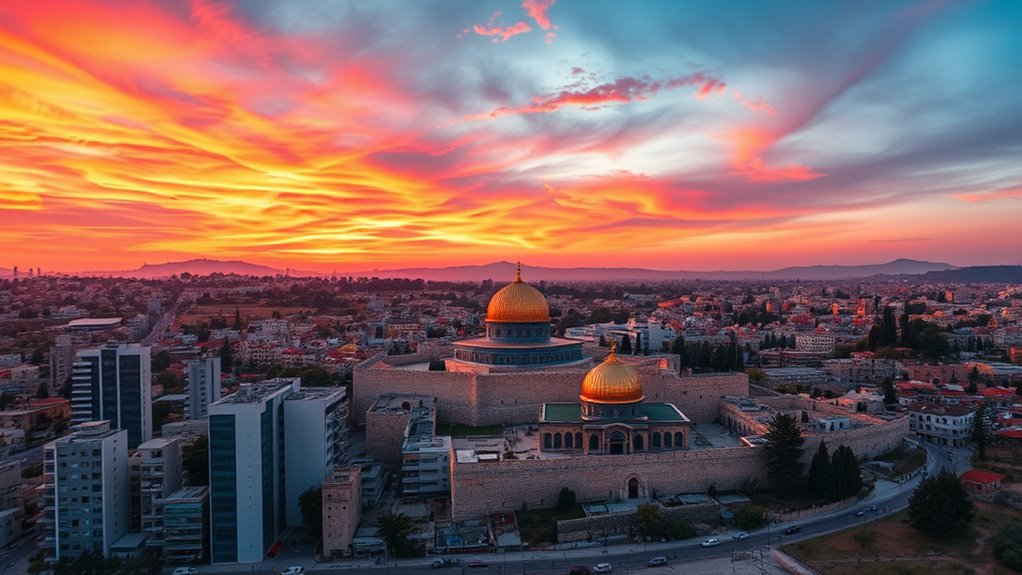

Israel plays a central role in biblical end-time prophecy, serving as both a geopolitical stage and a spiritual symbol. Its significance is tied to biblical predictions about conflict, restoration, and divine promises. Jerusalem, in particular, is seen as a key city in spiritual warfare and divine sovereignty. Current events in the region reflect these prophecies, with alliances forming against Israel and ongoing disputes. To understand how these unfold, you’ll see how biblical themes continue to influence modern geopolitics.
Key Takeaways
- Israel is central to biblical end-time prophecies, especially regarding its geopolitical significance and divine promises.
- Jerusalem symbolizes divine sovereignty and spiritual conflict in biblical prophecy, emphasizing its end-times importance.
- Current conflicts and alliances in the Middle East are seen as fulfillments of biblical predictions about nations gathering against Israel.
- Israel’s role is viewed as a catalyst for apocalyptic events described in Revelation and other prophecy texts.
- Modern developments in Israel are interpreted as part of God’s divine plan to fulfill biblical promises and prophetic narratives.
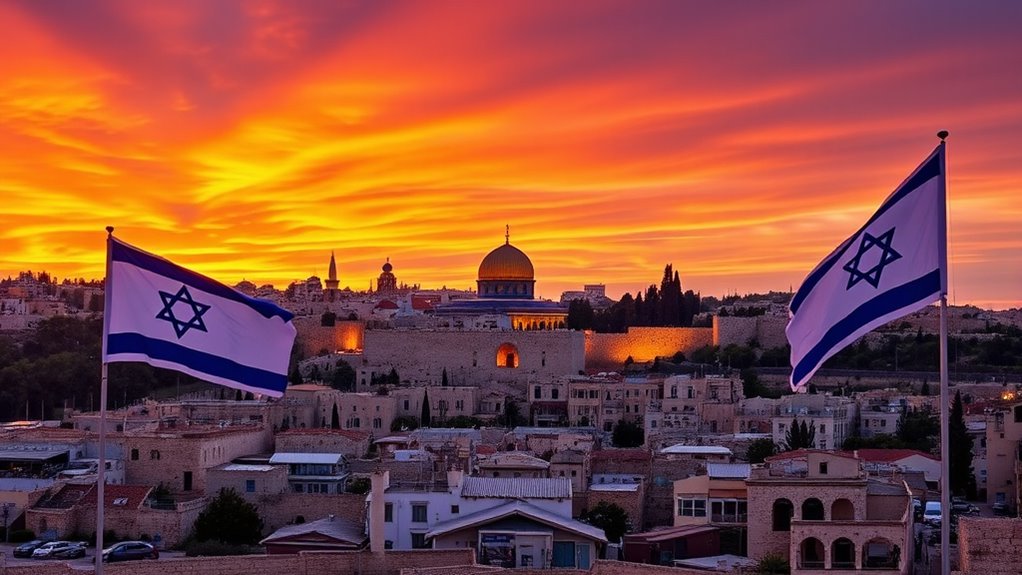
Many prophecy scholars believe that Israel plays a central role in end-time events, serving as a key player in biblical forecasts of the final days. As you examine the landscape of Middle East geopolitics, it becomes clear that Israel’s position is not only strategic but also deeply symbolic within biblical prophecy. The region’s complex political tensions and alliances mirror the biblical imagery of nations lining up against Israel during the last days, reinforcing the idea that modern events are fulfilling ancient predictions. The geopolitical significance of Israel is intertwined with biblical symbolism, where the land represents more than territory—it embodies divine promises and spiritual conflict.
Israel’s strategic and symbolic role in biblical prophecy highlights its importance in end-time events and divine promises.
You see, biblical symbolism often points to Israel as a focal point of divine activity and judgment. Prophecies speak of Jerusalem as a city set on a hill, a symbol of divine sovereignty and a nexus of spiritual warfare. When you observe current conflicts and diplomatic shifts in the Middle East, it’s easy to see how these worldly events echo the biblical themes of conflict and restoration. The ongoing disputes over Jerusalem, the rise of new alliances, and the unrest across neighboring nations are often interpreted as signs that biblical prophecies are unfolding. These events suggest that Israel’s role isn’t merely political but also prophetic, serving as a catalyst for events described in Revelation and other apocalyptic texts.
Furthermore, the geopolitical intricacies of the Middle East influence how prophecy scholars interpret end-time scenarios. For instance, the alliances forming between Israel and certain nations may fulfill biblical predictions about the final unification of nations against Israel. This aligns with the symbolism found in Scripture, where Israel’s enemies gather to oppose her, only to face divine intervention. You can see this reflected in recent developments, as nations like Russia, Iran, and Turkey are often linked to biblical prophecies about Gog and Magog. These alliances and conflicts reinforce the idea that the Middle East’s shifting geopolitics are not random but part of a divine plan unfolding before your eyes.
In essence, understanding Israel’s role in end-time prophecy requires recognizing the deep biblical symbolism embedded in current geopolitics. It’s not just about land or politics; it’s about a divine narrative that continues to unfold through modern events. As you watch the region’s developments, keep in mind that biblical prophecy presents Israel as a spiritual and prophetic epicenter—an essential piece in the puzzle of the final days. The convergence of geopolitical realities and biblical symbolism suggests that what’s happening today is shaping the fulfillment of ancient promises and prophecies for the days ahead. Additionally, the divine promises associated with Israel highlight its unique significance within biblical prophecy, emphasizing its central role in the unfolding of end-time events.
Frequently Asked Questions
How Do Different Religious Traditions Interpret Israel’s End-Time Significance?
You see that different religious traditions interpret Israel’s end-time significance through Messianic expectations and eschatological symbols. Jews often view Israel as the promised land fulfilling ancient prophecies, symbolizing hope and divine promise. Christians see Israel as central to eschatological events, with many believing it’s key to the Messiah’s return. Muslims respect Israel’s religious history but interpret its end-time role differently, focusing on spiritual renewal and justice in eschatological symbols.
What Geopolitical Events Are Most Linked to End-Time Prophecy Involving Israel?
You might believe that key geopolitical events like Antichrist alliances and the Temple rebuilding are strongly linked to end-time prophecy involving Israel. These events often symbolize the fulfillment of biblical predictions, with alliances forming around Israel’s sovereignty and the rebuilding of the Temple signaling a pivotal moment. While some see these as literal signs, others interpret them metaphorically, but they remain central to many end-times scenarios.
How Does Israel’s Modern Political Status Influence Prophetic Interpretations?
Your view on Israel’s modern political status deeply influences your prophetic interpretations. As diplomatic shifts occur, some see these changes as aligning with Messianic expectations, believing they signal the approaching fulfillment of end-time prophecy. You might interpret Israel’s recognition by nations or conflicts as signs of prophecy unfolding, reinforcing your belief that current events are part of divine plans, especially in relation to Messianic expectations and the fulfillment of biblical prophecy.
Are There Specific Biblical Passages That Predict Israel’s Role in Future Events?
You’ll find that many biblical passages, like Zechariah 12 and Ezekiel 38-39, predict Israel’s future role. These messianic prophecies and apocalyptic symbols illustrate its significance in end-time events. Imagine a nation at the heart of divine plans, with scriptures foretelling its pivotal part in future conflicts and salvation. These passages stir anticipation, emphasizing Israel’s key role in prophetic fulfillment.
How Do Recent Developments in Israel Impact Eschatological Expectations?
Recent developments in Israel heighten your awareness of Messianic expectations and prophetic symbolism, fueling anticipation of biblical end-times events. As Israel advances politically and territorially, it aligns with prophetic signs that many see as signals of approaching fulfillment. These changes may intensify your focus on biblical prophecy, encouraging you to interpret current events through a lens of eschatological significance, deepening your understanding of Israel’s pivotal role in future prophetic scenarios.
Conclusion
As you see, Israel’s pivotal role in end-time prophecy isn’t just a minor detail—it’s the heartbeat of divine plans that could shake the very foundations of the universe. Recognize how every event tied to Israel might be the universe’s loudest wake-up call. Stay watchful and spiritually alert, for the unfolding of these prophecies could be the most astonishing event in human history, surpassing even the wildest dreams.