
The Week of Prayer for Christian Unity encourages you to build bridges with other churches through prayer, dialogue, and collaboration. It’s a time to foster understanding, overcome divisions, and work together on shared goals like charity and social justice. By participating in joint events and embracing interfaith conversations, you help strengthen trust and unity among Christians. Continuing with this spirit, you’ll discover practical ways to deepen relationships and promote lasting harmony across denominations.
Key Takeaways
- The Week of Prayer for Christian Unity promotes reconciliation and collaboration among churches through ecumenical prayers and joint initiatives.
- It emphasizes building relationships, understanding, and mutual respect across different Christian denominations.
- Interfaith dialogue and community outreach are central to fostering trust and shared faith expressions.
- Prayer, collaboration, and patience are essential to overcoming theological differences and historical mistrust.
- Practical steps include faith-sharing, participating in community activities, and maintaining ongoing dialogue among church leaders.

Blessed Trinity Book of Catholic Prayers Black Deluxe Cover 408 Pages (Prayers for Almost Every Occasion, Colored Ribbon Bookmarks)
Comprehensive Prayer Book: Blessed Trinity Book of Catholic Prayers with 408 pages of traditional and inspirational prayers.
As an affiliate, we earn on qualifying purchases.
As an affiliate, we earn on qualifying purchases.
The Significance of Unity in Christian Faith
Unity among Christians reflects the core message of Jesus’ teachings and strengthens the witness of the Church in the world. You can see this clearly through ecumenical partnerships, where different Christian communities come together to demonstrate solidarity. Shared faith practices, like prayer and service, help build trust and mutual understanding, emphasizing what unites rather than divides. When you work across denominational lines, you show that Christ’s love transcends differences and that unity is essential to fulfilling your collective mission. This unity isn’t just symbolic; it deepens your faith experience and makes your collective voice more powerful in advocating for justice, peace, and compassion. Additionally, fostering interdenominational collaboration can lead to more effective community outreach and a stronger collective impact. Ultimately, Christian unity affirms the truth of Christ’s message and inspires others to believe in His love.

LIBERATION AND UNITY: 2026 Lenten Devotional: A Guide for Meditation and Action
As an affiliate, we earn on qualifying purchases.
As an affiliate, we earn on qualifying purchases.
History and Origins of the Week of Prayer for Christian Unity
The observance of the Week of Prayer for Christian Unity has a rich history that dates back over a century. It emerged from early ecumenical movements seeking to bridge divides between Christian denominations. In 1908, the first ecumenical prayer service was organized, marking a significant milestone for fostering unity. The International Anglican-Roman Catholic Commission on Unity and Mission and other ecumenical groups helped formalize the observance. In 1968, the World Council of Churches and the Pontifical Council for Promoting Christian Unity officially endorsed the week, giving it a global scope. These historical milestones reflect ongoing efforts to promote understanding and collaboration among different Christian communities. Today, the Week of Prayer continues to build on this legacy, encouraging believers worldwide to seek unity through shared prayer and dialogue.

Interfaith Dialogue: A Guide For Muslims
As an affiliate, we earn on qualifying purchases.
As an affiliate, we earn on qualifying purchases.
Themes and Focus Areas for This Year’s Observance

This year’s observance centers on emphasizing unity and reconciliation among different Christian communities and beyond. You’ll find opportunities to promote interfaith dialogue that builds understanding and respect. Additionally, fostering community outreach helps strengthen bonds and demonstrates Christian love in action. Incorporating diverse designs and approaches can further enrich the experience of building bridges across faiths and communities.
Emphasizing Unity and Reconciliation
As communities around the world face divisions and disagreements, focusing on unity and reconciliation becomes more essential than ever. During this week, you’re encouraged to deepen your commitment to ecumenical dialogue, fostering understanding among different Christian traditions. Emphasizing unity involves actively listening to one another’s perspectives and seeking common ground. Reconciliation efforts should go beyond words, demonstrating genuine openness and humility. By prioritizing these themes, you help rebuild trust and break down barriers that divide believers. Remember, unity doesn’t mean uniformity but celebrating our shared faith and purpose. Your efforts to promote reconciliation inspire others and create a more inclusive, compassionate Christian community. Consider incorporating mindful decluttering practices to clear away misunderstandings and misconceptions, making space for genuine connection and harmony. Together, you can build bridges that lead to genuine harmony and renewed fellowship.
Promoting Interfaith Dialogue
Building on the foundation of unity and reconciliation within Christian communities, promoting interfaith dialogue extends that spirit of understanding beyond Christian borders. By engaging in open conversations with members of other faiths, you foster mutual understanding that bridges cultural and religious differences. Interfaith dialogue encourages respectful listening and shared learning, helping to dispel misconceptions and build trust. Your active participation demonstrates a commitment to peace and cooperation in a diverse world. As you promote these conversations, remember that genuine dialogue requires patience, humility, and a willingness to listen. This year’s focus emphasizes creating safe spaces for dialogue, where mutual respect can flourish and common values can be celebrated, ultimately strengthening relationships across faith communities. Recognizing the importance of establishing trust and credibility in interfaith interactions can significantly impact the effectiveness of these efforts.
Fostering Community Outreach
Engaging your community through outreach efforts creates meaningful opportunities to demonstrate Christian love and service. Fostering community outreach helps build trust and unity among different faith groups. Here are three ways to focus your efforts: 1. Organize interfaith dialogue events that promote understanding and respect among diverse religions. 2. Launch community service projects that address local needs, encouraging collaboration across church borders. 3. Create shared initiatives, such as food drives or neighborhood clean-ups, that demonstrate collective compassion. Incorporating elements of Bedroom design can also foster a welcoming environment that encourages fellowship and connection during these activities.

Tenveo 4K NDI PTZ Camera, AI Auto-Tracking, 20X Optical Zoom, 3G-SDI USB3.0 HDMI LAN PoE IP Live Streaming for Church Worship Events Broadcast Video Conference YouTube OBS vMix Zoom Teams
⭐【𝐔𝐧𝐫𝐢𝐯𝐚𝐥𝐞𝐝 𝟒𝐊 𝐔𝐥𝐭𝐫𝐚 𝐇𝐃 𝐈𝐦𝐚𝐠𝐞 𝐐𝐮𝐚𝐥𝐢𝐭𝐲】Powered by an an 8.29MP 1/2.8" CMOS, this PTZ camera delivers crisp 4K@30fps…
As an affiliate, we earn on qualifying purchases.
As an affiliate, we earn on qualifying purchases.
Ways Churches Can Participate and Collaborate
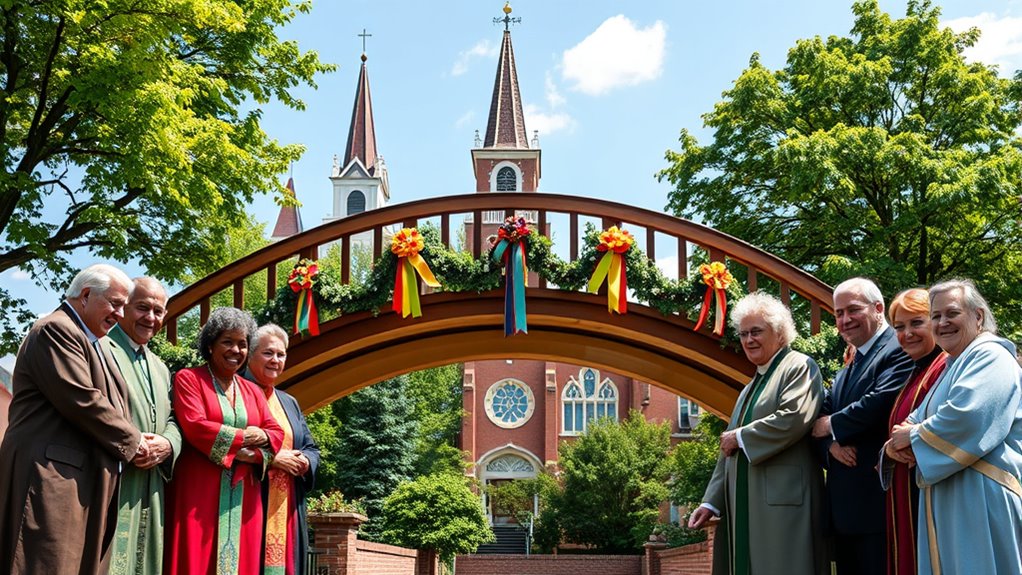
Churches can actively participate in fostering unity by planning joint worship services, prayer gatherings, and community outreach events. These activities create opportunities for meaningful interfaith dialogue and demonstrate a shared commitment to serving others. Collaborating on community service projects allows different congregations to work side by side, breaking down barriers and building trust. To deepen your engagement, consider this table of ideas:
| Activity | Purpose | Key Focus |
|---|---|---|
| Interfaith Dialogues | Promote mutual understanding | Respect & Tolerance |
| Combined Outreach | Serve diverse community needs | Unity in Action |
| Joint Worship Services | Celebrate spiritual commonality | Worship & Prayer |
| Community Clean-ups | Improve local environment | Collaboration |
| Educational Events | Share faith perspectives | Learning & Respect |
Fostering these activities helps nurture interfaith cooperation and strengthens bonds among different communities, advancing Christian unity.
The Role of Prayer in Fostering Christian Unity
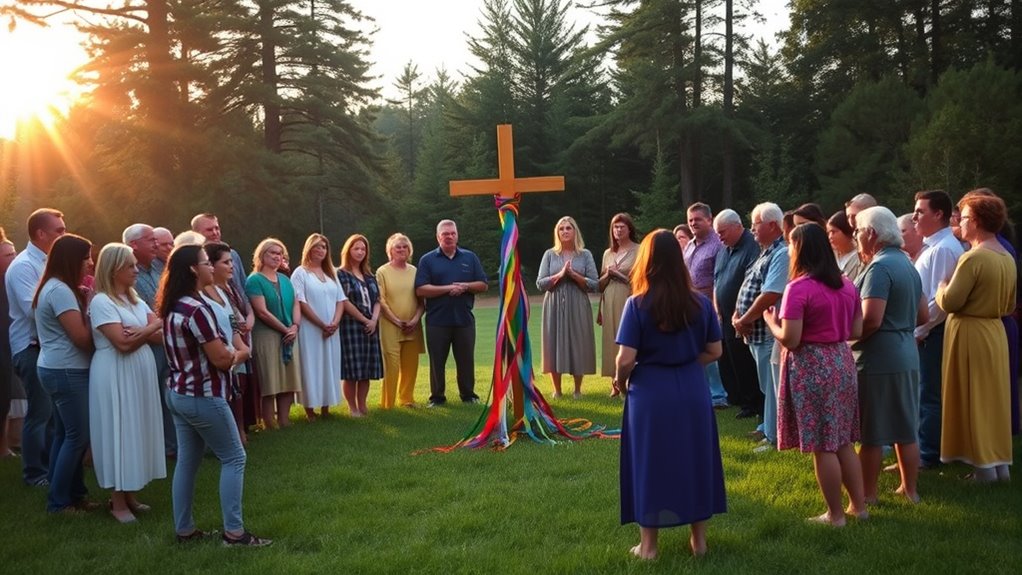
Prayer acts as a powerful unifying force that brings Christians together beyond differences. When you pray together, you cultivate spiritual connections that deepen mutual understanding and respect. These shared moments of prayer remind us of our common faith and purpose in Christ. Additionally, engaging in collective prayer can foster a sense of community and shared identity, much like how interoperability in blockchain networks allows different systems to work seamlessly together.
Prayer as a Unifying Force
When believers come together in prayer, it becomes a powerful force that bridges divides and fosters unity among Christians. Prayer creates a space for shared spiritual experience, strengthening bonds and encouraging mutual understanding. Through prayer, you can:
- Promote interfaith dialogue that respects diverse beliefs while emphasizing common faith in Christ.
- Cultivate spiritual harmony by focusing on shared values and goals.
- Break down barriers of mistrust, opening hearts to collaboration and reconciliation.
- Enhancing cultural intelligence helps believers recognize and respect different cultural expressions of faith, promoting more meaningful and inclusive unity.
Cultivating Spiritual Connections
Fostering spiritual connections among Christians requires intentional effort to deepen relationships through prayer. When you engage in interfaith dialogue, you create opportunities to build understanding and mutual respect across different Christian traditions. Prayer serves as a powerful tool to nurture spiritual friendships, allowing you to share hopes, struggles, and faith journeys. By praying together, you open your hearts to God’s presence, fostering a sense of unity that transcends denominational differences. These shared spiritual experiences strengthen bonds and remind you that, despite diverse practices or beliefs, you are part of one Body of Christ. Cultivating these connections through prayer not only enriches your faith but also builds bridges that promote genuine Christian unity. Incorporating practices like mindfulness and structured prayer exercises can further enhance these efforts, encouraging an imaginative mindset that fosters openness and understanding among diverse Christian communities.
Celebrating Ecumenism: Success Stories From Around the World
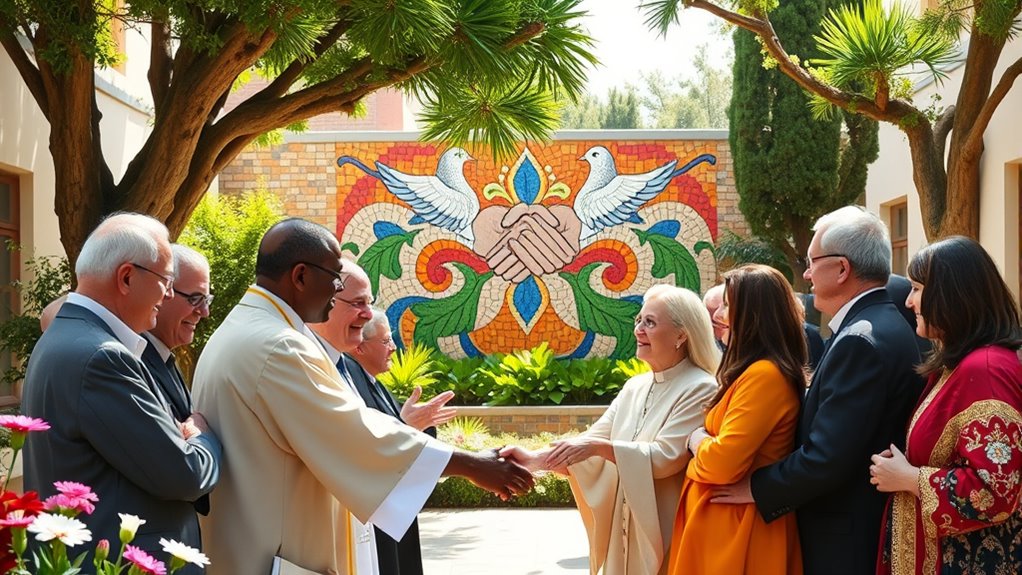
Around the world, communities are breaking down barriers and building bridges through ecumenical efforts that foster unity among Christian denominations. These success stories showcase how ecumenical dialogue and interdenominational cooperation can lead to meaningful progress. One key factor in these efforts is church cooperation, which enables diverse groups to work together effectively. Here are some inspiring examples:
- Churches in South Africa jointly organized relief efforts, demonstrating unity amid crises.
- Catholic and Protestant leaders in Germany collaborated on social justice initiatives, strengthening mutual understanding.
- Ecumenical prayer services in the Philippines drew diverse communities together, emphasizing shared faith.
These achievements prove that when churches work together, they can overcome divisions and promote Christian unity. Celebrating these successes inspires you to actively participate in ecumenical efforts, creating a more unified church worldwide.
Challenges to Building Bridges Between Denominations
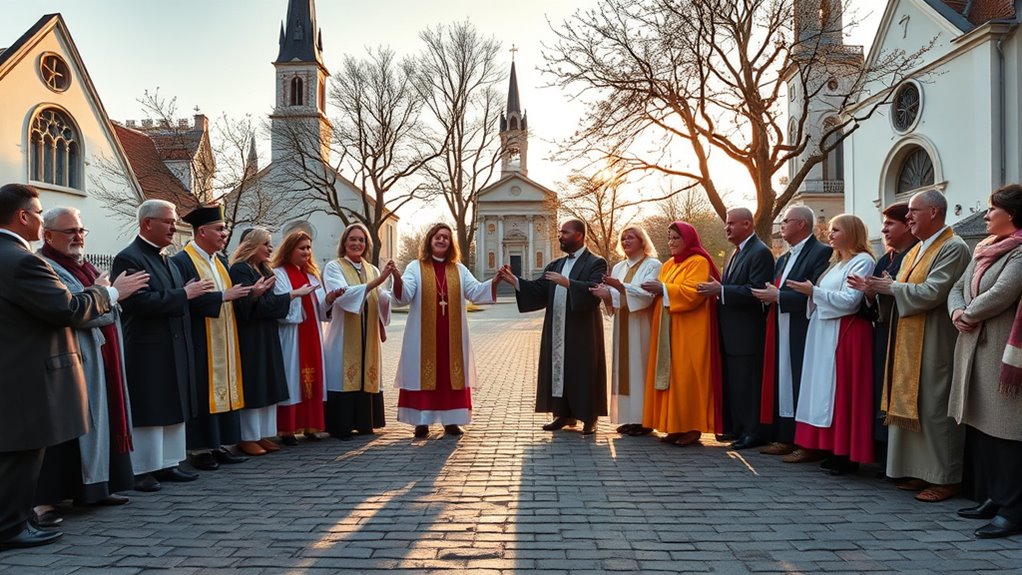
Building bridges between denominations faces significant challenges rooted in historical disagreements, theological differences, and deeply ingrained mistrust. These obstacles often hinder open interdenominational dialogue, making it difficult to find common ground. Doctrinal differences, such as varying beliefs about sacraments, authority, and doctrine, can create barriers that seem insurmountable. Past conflicts and misunderstandings have fostered suspicion, making church leaders hesitant to engage fully with others. Additionally, differing traditions and interpretations of scripture can lead to disagreements that slow progress toward unity. Overcoming these challenges requires patience, humility, and a genuine willingness to listen. Recognizing shared values and focusing on Jesus’ teachings can help break down barriers, but addressing doctrinal differences remains an essential step toward building lasting bridges.
Practical Steps for Promoting Understanding and Cooperation
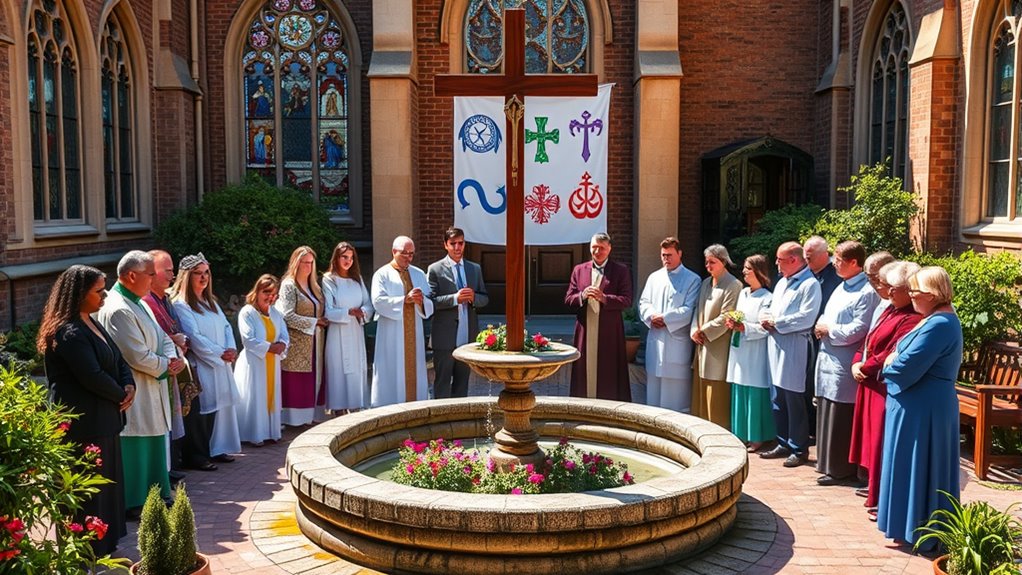
You can start fostering understanding by building personal relationships with members of different denominations, opening doors for meaningful conversations. Participating in community events together allows you to see common goals and values beyond denominational differences. These practical steps help create trust and cooperation, laying a stronger foundation for Christian unity.
Foster Personal Relationships
How can we effectively foster personal relationships to promote understanding and cooperation among Christians? Building genuine personal connections is key. Here are three practical steps:
- Initiate one-on-one conversations to share faith stories and experiences, fostering empathy and trust.
- Invite members from other churches for informal gatherings, strengthening relationship building beyond formal settings.
- Offer support during life events like baptisms, funerals, or celebrations, showing care and deepening bonds.
Engage in Community Events
Participating in community events offers a powerful way to foster understanding and cooperation among Christians. By engaging in local activities, you create opportunities for interfaith dialogue, allowing different churches to share beliefs and experiences openly. These conversations build trust and break down misconceptions. Additionally, getting involved in community service projects demonstrates a shared commitment to helping others, regardless of church affiliation. When you collaborate on service efforts, you show unity in action, emphasizing common values and goals. Attending events like charity drives, festivals, or neighborhood clean-ups encourages meaningful interactions and strengthens bonds across faith communities. Your active participation not only promotes understanding but also models the importance of working together to serve the broader community.
Inspiring Biblical Passages on Unity and Fellowship
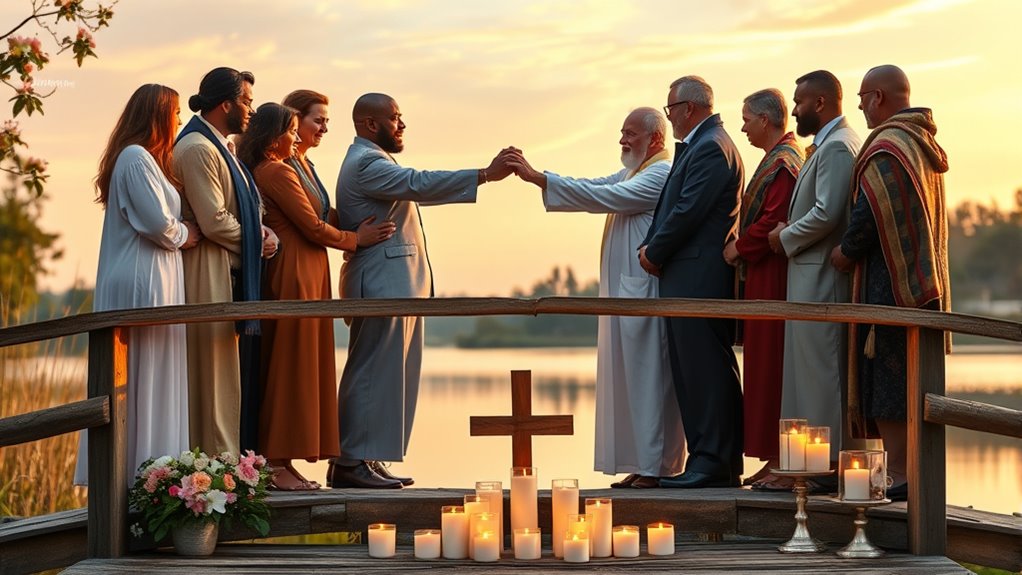
The Bible offers powerful passages that emphasize the importance of unity and fellowship among believers, serving as a foundation for the Week of Prayer for Christian Unity. These scriptures inspire you to foster interfaith dialogue and deepen spiritual fellowship. Here are key passages to reflect on:
- John 17:21 – Jesus prays for all to be one, encouraging unity among diverse believers.
- Ephesians 4:3 – Urges you to maintain the bond of peace through spiritual fellowship.
- 1 Corinthians 1:10 – Calls for harmony and unity in mind and spirit, transcending divisions.
These passages remind you that biblical unity isn’t just about shared beliefs but about building bridges across different churches and faiths, strengthening interfaith dialogue and spiritual fellowship.
How to Continue the Spirit of Unity Beyond the Week
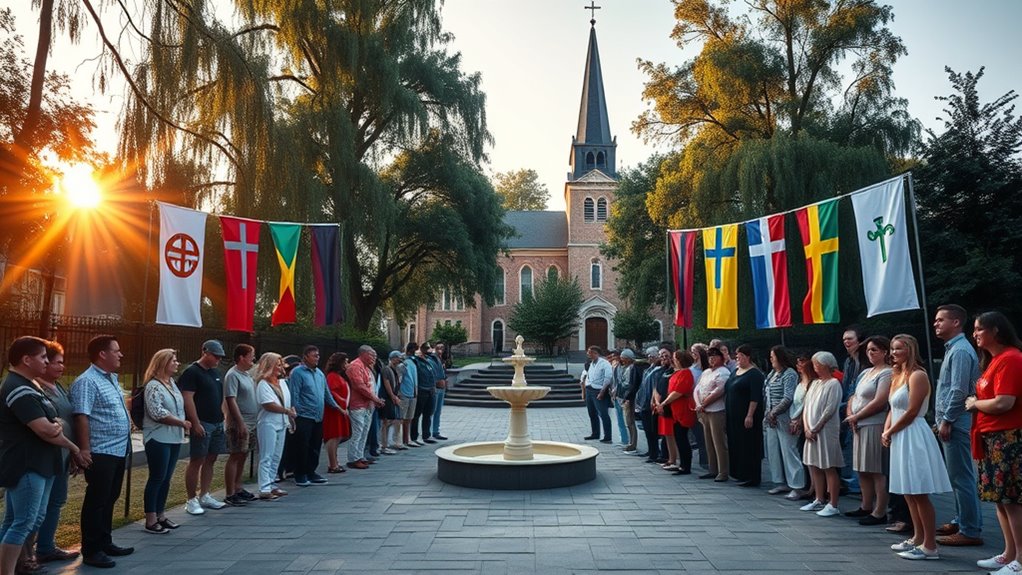
Maintaining the spirit of unity beyond the Week of Prayer requires intentional effort and ongoing commitment. You can foster this by engaging in interfaith dialogue, opening conversations with other churches and faith communities to build understanding and respect. Participating in joint community service projects also strengthens bonds, demonstrating shared values and commitment to the common good. Make it a habit to meet regularly with leaders from different churches, sharing ideas and addressing local issues together. Celebrate milestones of collaboration and encourage your congregation to see unity as a continuous journey rather than a temporary event. By actively practicing interfaith dialogue and community service, you help sustain the spirit of unity, transforming it into lasting relationships that extend well beyond the designated week.
Frequently Asked Questions
How Can Local Congregations Effectively Promote Unity Beyond the Church Community?
You can promote unity beyond your church by actively engaging in interfaith dialogues and community service projects. Invite leaders from other faiths to discuss common values and collaborate on local initiatives. Organize joint charity events and community clean-ups to foster relationships. By showing genuine respect and working together on shared goals, your congregation builds bridges, demonstrating that unity extends beyond church walls and benefits the entire community.
What Are Common Misunderstandings Between Different Christian Denominations?
You often find that misunderstandings between Christian denominations stem from differing scriptural interpretations and worship practices. You might assume others don’t value tradition, but they simply interpret scripture differently. You may also think worship styles are incompatible, yet many traditions share core beliefs. Recognizing that these differences enrich rather than divide helps you build bridges, fostering respect and unity across denominations.
How Does Ecumenism Impact Interfaith Relations Outside Christianity?
Ecumenism fosters interfaith dialogue and promotes religious tolerance beyond Christianity. When you build bridges with other churches, it encourages understanding and respect for diverse faiths, helping to reduce conflicts and misconceptions. This openness can inspire you to engage in meaningful conversations, appreciate different spiritual perspectives, and strengthen community bonds. Ultimately, ecumenism‘s spirit of unity encourages you to embrace shared values, fostering peace and cooperation across all religious boundaries.
What Role Do Youth and Children Play in Fostering Church Unity?
You know what they say, “Children are the future,” and that rings true in fostering church unity. As you encourage youth leadership and children’s participation, you help build bridges within your congregation. By empowering young people to lead discussions and participate actively, you nurture understanding and respect early on. Their fresh perspectives and enthusiasm can inspire unity, making them essential in shaping a more inclusive and harmonious church community.
How Can Digital Platforms Enhance Ecumenical Dialogue and Collaboration?
You can enhance ecumenical dialogue and collaboration through digital platforms by hosting virtual worship services and creating online prayer groups that bring different church communities together. These tools allow you to connect across boundaries, share faith experiences, and foster understanding. By actively participating in online discussions and joint prayer initiatives, you help build bridges, promote unity, and strengthen relationships among diverse Christian traditions in a flexible, accessible way.
Conclusion
As you reflect on this week’s efforts to build bridges, remember that true unity isn’t achieved overnight. It’s a journey filled with moments of challenge and hope. Will your actions today spark lasting change? The bonds you nurture could transform not just your community, but inspire a movement beyond what you can imagine. Stay committed—because the future of Christian fellowship depends on the steps you take now. The next chapter is waiting to be written.