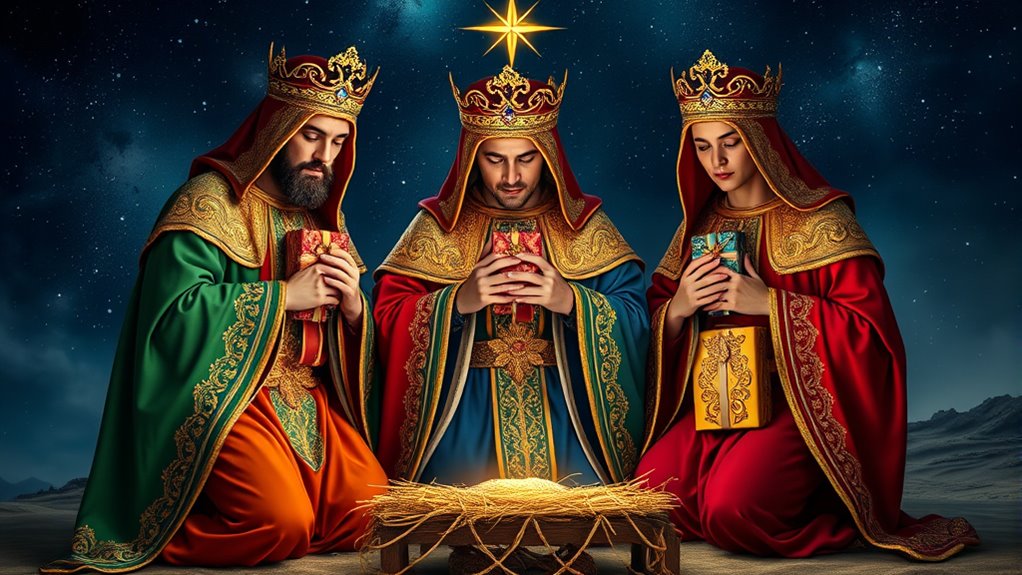

The Wise Men, or Magi, were skilled astrologer-priests from ancient Persia or Babylon who traveled to honor Jesus’ birth, guided by a special star. They recognized signs in the sky that pointed to a new king and brought valuable gifts like gold, frankincense, and myrrh, symbolizing His kingship, divinity, and sacrifice. Their story highlights divine guidance and hope—if you explore further, you’ll discover even more fascinating details about their journey and significance.
Key Takeaways
- The Wise Men, or Magi, were scholars or astrologers from the East who recognized a celestial sign indicating Jesus’ birth.
- They likely originated from Persia, Babylon, or Arabia, and traveled following a special star.
- Their gifts of gold, frankincense, and myrrh symbolized Jesus’ kingship, divine nature, and suffering.
- They served as royal advisors and spiritual interpreters in ancient cultures, blending astrology with nobility.
- Today, they symbolize divine guidance, faith, and recognition of Jesus by Gentile nations.
Biblical References and Scriptural Accounts

The biblical references to the Wise Men, also known as the Magi, primarily appear in the Gospel of Matthew. In this account, they are described as wise scholars or astrologers who observed a special star, giving the event astrological significance. Their journey reflects ancient traditions of interpreting celestial phenomena as signs of important events. The Magi traveled from the East, guided by the star, to find and honor the newborn King of the Jews. Their story emphasizes their role as seekers of divine truth through celestial signs. While the scriptures offer limited details about their origins, they highlight their recognition of a divine event rooted in astrological symbolism, linking their actions to long-standing traditions of using stars to understand and anticipate significant moments in history. Additionally, their journey underscores the importance of astrological symbolism in understanding biblical narratives and cultural practices related to divine guidance.
Theories About Their Origin and Identity
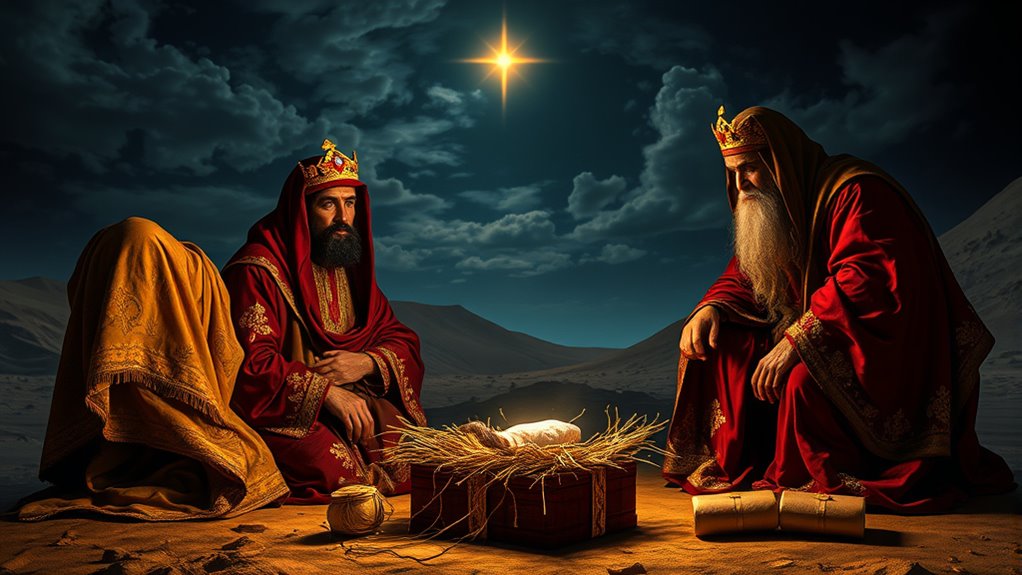
Scholars have proposed various theories about the origins and identities of the Wise Men, reflecting both historical curiosity and religious tradition. Some believe they were astrologers skilled in decoding astrological symbolism, interpreting celestial signs pointing to Jesus’ birth. Others suggest they came from royal lineage, possibly kings or nobles seeking divine guidance. To visualize, consider this table:
| Theory | Description |
|---|---|
| Astrological Symbolism | They observed stars and planets, linking celestial events to prophecy. |
| Royal Lineage | They belonged to noble or royal families, emphasizing their status. |
| Middle Eastern Origin | They hailed from Persia, Arabia, or Babylon, regions known for astrology. |
These theories emphasize different aspects of their background, blending ancient astronomy with notions of nobility. Additionally, some scholars posit that their journey was influenced by ancient trade routes, which facilitated cultural and astronomical exchanges across regions.
The Significance of Their Gifts
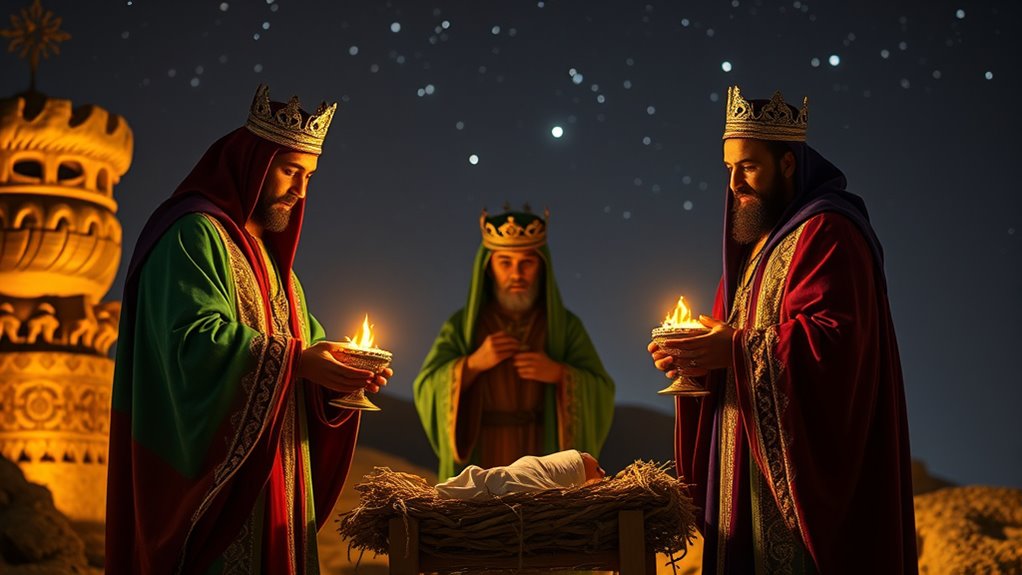
The gifts brought by the Wise Men carry deep symbolic meaning, highlighting their acknowledgment of Jesus’ significance. Gold represents kingship and Jesus’ royal status, emphasizing his role as King of Heaven and Earth. Frankincense symbolizes divinity and worship, pointing to Jesus’ divine nature and his priestly role. Myrrh, often used in embalming, foreshadows Jesus’ suffering and death, hinting at his future sacrifice. These gift symbolism choices reflect a profound recognition of Jesus’ identity and purpose. Each gift not only honors him but also reveals key aspects of his mission: kingship, divine nature, and sacrificial death. By presenting these valuable gifts, the Wise Men demonstrate their understanding of Jesus’ importance and the significance of his coming into the world.
Cultural and Historical Context of the Magi
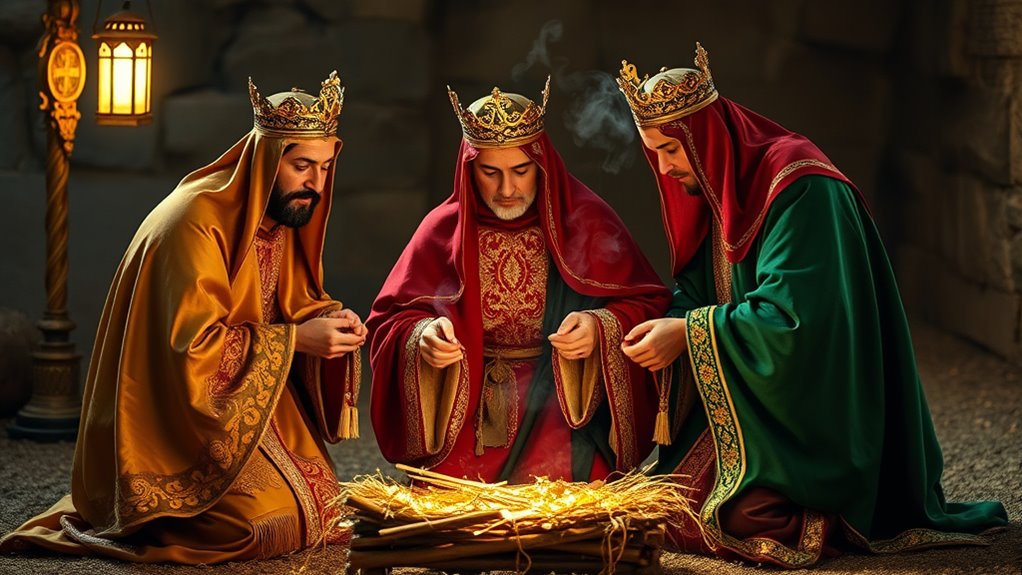
Understanding the cultural and historical background of the Magi helps us appreciate their significance in the Nativity story. During that time, the Magi were seen as royal visitors and scholars skilled in ancient astrology, interpreting celestial signs. They likely came from Persia or Babylon, regions known for their interest in astrology and astronomy. Their status as wise men connected to royal courts made their presence notable. This context explains why they might have traveled far to see the newborn king. Their knowledge of celestial movements and royal associations added weight to their visit. Here’s a quick picture:
| Aspect | Details |
|---|---|
| Origin | Persia or Babylon |
| Profession | Astrologers, scholars |
| Status | Royal visitors |
| Significance | Interpreted celestial signs, linked to kingship |
| Cultural Role | Advisors to rulers, spiritual guides |
Additionally, their journey reflects the enduring influence of astrological knowledge in shaping historical and religious narratives.
Modern Interpretations and Legacy
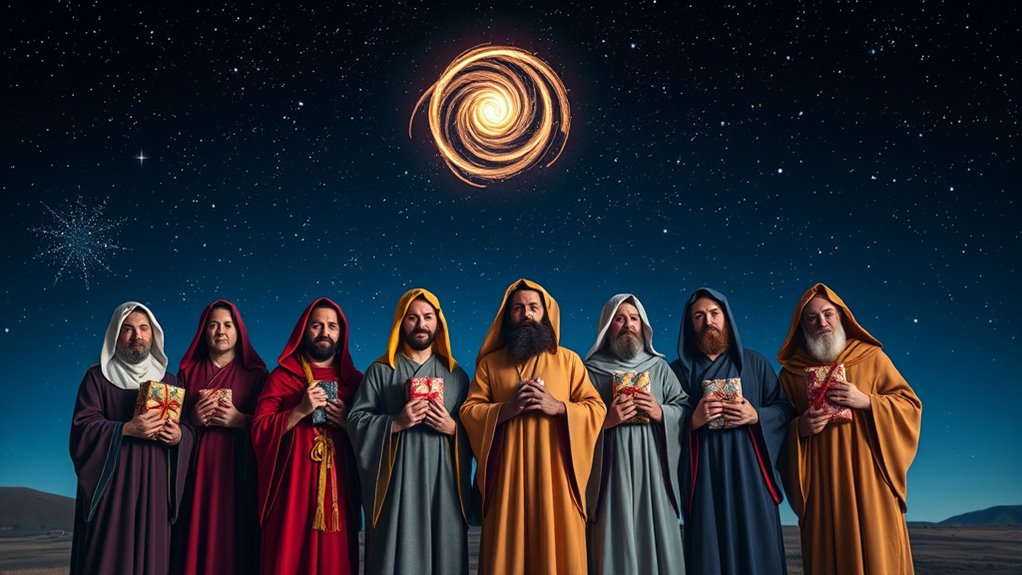
Modern interpretations of the Magi’s visit continue to inspire artistic, religious, and cultural reflections today. Many see the Magi’s journey as rooted in astrological significance, linking celestial events to divine revelations. This perspective influences nativity scenes, artwork, and holiday traditions worldwide. Early Christian traditions often depict the Magi as symbolic figures representing Gentile nations recognizing Jesus’ significance. Over time, their story has been interpreted as a metaphor for spiritual enlightenment and divine guidance. Contemporary scholars and artists explore these themes, emphasizing the Magi’s role in illustrating the universality of Christ’s message. Their legacy endures as a symbol of hope, faith, and the pursuit of truth, inspiring countless representations that bridge historical understanding and spiritual meaning across generations. Additionally, creative practice can play a role in exploring and expressing these rich themes through various artistic mediums.
Frequently Asked Questions
What Names Are Traditionally Given to the Magi?
You’ll find that the traditional names of the Magi are Caspar, Melchior, and Balthazar. These names originated from early Christian writings and legends, reflecting their historical origins as wise men or astrologers from the East. These figures symbolize wisdom and the recognition of Jesus’ significance, and their names have become part of Christian tradition over centuries, inspiring countless stories and depictions of the Magi’s journey.
How Many Magi Visited Jesus According to Tradition?
According to tradition, three magi visited Jesus, representing the number of magi’s origin from the East, likely Persia or Babylon. You’ll find that their number is based on the three gifts they brought—gold, frankincense, and myrrh. While some stories suggest more, the classic account emphasizes three magi, highlighting their journey from distant lands to honor the newborn King with their wisdom and gifts.
Did the Magi Recognize Jesus as the Messiah Initially?
You might think the Magi recognized Jesus as the Messiah immediately, but their understanding was more symbolic than clear from the start. Their cultural origins from Persia or Arabia influenced their interpretation of celestial signs, leading them to seek a king. Although they initially saw Jesus as a newborn king, it’s likely their recognition deepened over time, influenced by the symbolic significance of their journey and gifts.
Are There Any References to Magi Outside the Bible?
You’ll find mentions of the Magi outside the Bible as echoes from ancient Persian astrology, where wise men studied stars for guidance. Historical references, like in Greek and Roman texts, hint at these wandering astrologers, though they lack detailed stories like those in scripture. These clues suggest the Magi’s influence extended beyond biblical times, serving as symbols of wisdom and celestial guidance in various ancient cultures.
How Do Different Christian Denominations View the Magi?
Different Christian denominations interpret the Magi’s story in various ways, emphasizing their theological significance differently. For example, Catholics see them as symbolic of the Gentiles’ recognition of Christ, while some Protestant groups focus on their role as faithful seekers. Interpretation differences influence how each denomination views the Magi’s gifts and journey, shaping their teachings and celebrations, like Epiphany, highlighting the story’s spiritual and theological importance.
Conclusion
As you reflect on the story, you realize the Magi’s journey symbolizes the pursuit of truth and enlightenment. Their visit is like a guiding star, leading you to see that seeking wisdom transcends time and culture. Though their true identity remains a mystery, their gift of gold, frankincense, and myrrh reminds you that faith, hope, and love are treasures worth searching for in your own life.