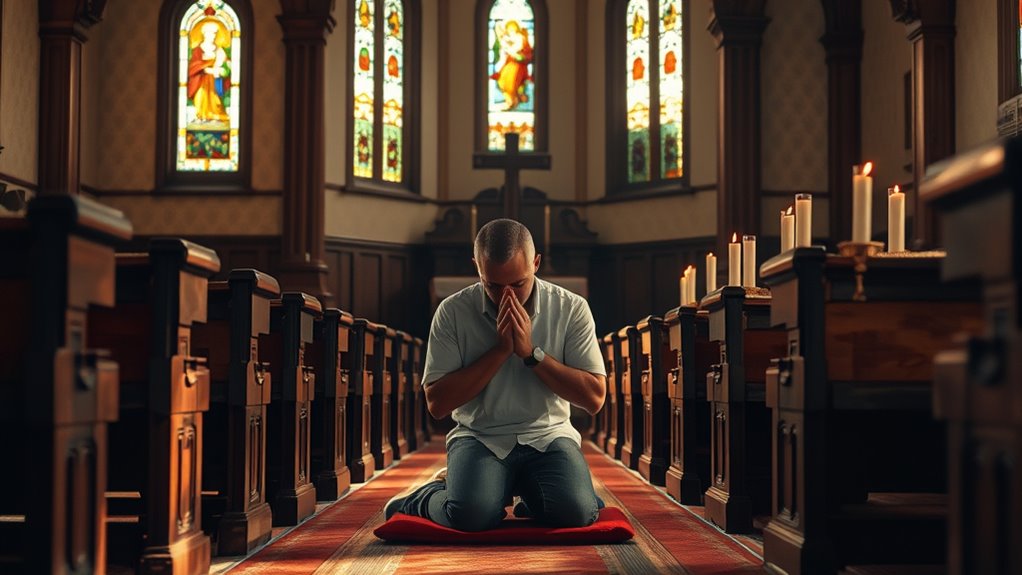

Prayer is your heartfelt communication with a higher power, often called God. It involves more than just words; it’s a personal dialogue where you express gratitude, ask for guidance, or find comfort. Rituals like kneeling or lighting candles can help focus your mind, while meditation techniques deepen your connection. This flexible practice allows you to grow spiritually, fostering a meaningful relationship. If you keep exploring, you’ll discover how to make your prayers more personal and impactful.
Key Takeaways
- Prayer is a heartfelt communication with a higher power, involving speaking, listening, and personal connection.
- It can take various forms, including words, rituals, or silent meditation, tailored to individual or cultural preferences.
- Rituals and practices, such as kneeling or lighting candles, help focus the mind and prepare for meaningful prayer.
- Incorporating mindfulness and meditation techniques enhances awareness and deepens spiritual experience during prayer.
- Prayer fosters emotional comfort, gratitude, guidance, and a personal relationship with the divine or spiritual beliefs.

Have you ever wondered what prayer truly is? At its core, prayer is a way to communicate with a higher power, often seen as God. It’s more than just reciting words; it’s a personal, heartfelt connection that can take many forms. Some people approach prayer as a quiet conversation, others see it as a series of rituals. You might find that integrating meditative practices into your prayer can deepen your experience, helping you focus and create a sense of calm. Prayer rituals, whether formal or informal, serve as a structured way to set aside time for this connection. They might include kneeling, bowing, or lighting candles—acts that help you shift your focus inward and prepare your mind for sincere communication.
When you engage in prayer, you’re participating in a spiritual dialogue that often involves both speaking and listening. It’s not just about asking for things; it’s also a time to express gratitude, seek guidance, or find comfort. Many find that establishing specific prayer rituals can make this practice more meaningful and consistent. These rituals act as cues, signaling to your mind that it’s time to step into a moment of reflection and openness. For example, you might start your day with a prayer ritual that includes lighting a candle or repeating a particular phrase. Over time, these acts become familiar anchors, helping you stay connected to your faith or spiritual beliefs amid life’s chaos.
Incorporating meditative practices into your prayer can help quiet your mind and heighten your awareness. Techniques like deep breathing, visualization, or silent meditation can make your prayer more intentional. Instead of rushing through words, you focus on the present moment, allowing your thoughts to settle and your heart to open. This approach turns prayer into a mindful experience, where you’re not just speaking but also listening inwardly. The combination of meditative practices and prayer rituals creates a sacred space within yourself—one where you can truly feel your connection to the divine or your inner spiritual truth. Understanding that prayer can be enhanced by techniques that promote focus and relaxation aligns with the idea of engaging in a spiritual dialogue.
Ultimately, prayer is a deeply personal act. Whether you see it as a formal ritual or a spontaneous conversation, it’s about reaching beyond yourself to forge a meaningful relationship. As you explore different meditative practices and develop prayer rituals that resonate with you, you’ll likely find your connection grows stronger and more authentic. Prayer isn’t a one-size-fits-all; it’s a flexible, evolving practice that invites you to open your heart and mind to the divine, no matter how you choose to do it.

Florensi Meditation Mat Zabuton, Velvet Floor Cushions for Sitting, Meditation Cushions and Pillows with 100% Cotton Insert, Yoga Cushion for Women and Men, Pairs Perfectly with Yoga Bench
Soft Meditation Mat: Sit and meditate for longer amounts of time with this thick floor cushion by Florensi….
As an affiliate, we earn on qualifying purchases.
As an affiliate, we earn on qualifying purchases.
Frequently Asked Questions
Can Anyone Pray, Regardless of Religion?
Yes, anyone can pray, regardless of religion. You don’t need to follow specific prayer rituals to connect spiritually. Interfaith dialogue shows that people from diverse backgrounds find value in prayer, expressing their hopes and gratitude. You can create your own way to pray, making it a personal experience. Prayer becomes more meaningful when it’s genuine, allowing you to communicate your thoughts and feelings, no matter your faith or beliefs.
How Long Should a Prayer Last?
The length of your prayer depends on what feels meaningful to you. Some people find a few minutes enough, while others prefer longer, more contemplative sessions. Focus on quality over duration—make your prayer meaningful by truly connecting and expressing yourself. There’s no set prayer duration; listen to your heart, and let your prayer be as long or as short as needed to feel spiritually fulfilled.
Is There a Right or Wrong Way to Pray?
You might be surprised to learn that over 80% of people believe there’s no single “right” way to pray. Personal preferences and cultural variations shape how you connect with God, so there’s no strict method you must follow. Whether you speak silently, aloud, or use gestures, what matters most is your sincerity. Trust your heart and traditions, and remember, prayer is about genuine communication, not perfection or rules.
What Should I Say in My Prayers?
In your prayers, speak honestly and openly, sharing your thoughts, gratitude, and concerns. Use meditation techniques to focus your mind, and consider different prayer postures, like kneeling or sitting, to deepen your connection. You don’t need to say perfect words—trust that your genuine feelings matter most. Let your words flow naturally, and remember, prayer is about building a sincere relationship with God.
Can Prayer Really Change Outcomes?
Many doubt prayer’s power, but your faith practice can truly influence outcomes. When you pray sincerely, you invite spiritual influence into your life, which can lead to positive changes. While prayer isn’t a magic solution, it strengthens your connection with God and aligns your intentions with His will. Trust that your heartfelt communication can open doors, shift perspectives, and even alter circumstances in ways beyond what you can see.

Generic White 8" Prayer Glass Candles – 12 Pack Devotional Candles for Vigils, Prayers, Blessings, Ceremonies | Bulk White Candles in Glass
White 8" Prayer Glass Candles – 12 Pack White Prayer Candles for Vigils, Prayers, Cemetery, Blessing Ceremonies, Candles…
As an affiliate, we earn on qualifying purchases.
As an affiliate, we earn on qualifying purchases.
Conclusion
In the end, prayer is your direct line to connect with the divine, a moment to share your hopes, fears, and gratitude. It’s like planting seeds in a fertile garden—what you nurture through sincere communication can blossom into peace and strength. Remember, you hold the key to opening that door whenever you need guidance or comfort. So, don’t hesitate—talk to God, and watch how your words can light up even the darkest days.

Prayer Journal for Women: 52 Week Scripture, Devotional & Guided Prayer Journal
As an affiliate, we earn on qualifying purchases.
As an affiliate, we earn on qualifying purchases.

LOYALLOOK 12Pcs 108 Mala Bead Bracelets 8MM Buddhist Prayer Strand Sandalwood Wood Beaded Bracelet Necklace Elastic Handmade Multilayer Tibetan Buddha Link Wrist Bracelets Meditation Necklace Chain
Economical Mala Bead Bracelet Set: 8 pcs wood bead bracelet for a set, multilayer bracelets set with different…
As an affiliate, we earn on qualifying purchases.
As an affiliate, we earn on qualifying purchases.