The “third heaven” is considered the highest divine domain beyond Earth’s atmosphere and celestial spheres, symbolizing God’s dwelling and the ultimate spiritual sphere. It represents a sacred space of divine presence, enlightenment, and transcendence, often seen as the pinnacle of spiritual achievement. Different traditions view it as a layered realm filled with divine beings and pure light. To discover more about its rich symbolism and meanings across beliefs, keep exploring deeper insights.
Key Takeaways
- The “third heaven” is a biblical term referring to the highest divine realm where God’s throne resides.
- It is part of a layered view of heavenly realms, beyond the atmosphere and stars.
- Symbolically, it represents the ultimate spiritual state and divine proximity.
- Different cultures see the third heaven as a sacred, radiant realm inhabited by angels or saints.
- Modern interpretations view it as a spiritual level symbolizing divine union rather than a physical location.
Biblical Foundations and Scriptural References

The concept of the “third heaven” finds its biblical roots primarily in 2 Corinthians 12:2, where Paul describes being caught up to “the third heaven.” This phrase indicates a layered view of the heavenly realms within the divine hierarchy. The first heaven refers to the sky or atmospheric domain, visible in the clouds and weather. The second encompasses the celestial or starry heavens, the universe’s vastness. The third sky, however, signifies the innermost domain—the throne room of God, the divine dwelling place. Additional scriptural references, such as Genesis 1:1 and Isaiah 66:1, reinforce this layered understanding of heaven, emphasizing its structured nature. These passages establish the biblical foundation for understanding the third heaven as the highest, most sacred level within the divine hierarchy.
Historical and Cultural Perspectives

Throughout history, different cultures and religious traditions have interpreted the concept of the “third heaven” in diverse ways, shaping how believers understand this divine domain. In many mythological interpretations, celestial realms are imagined as layered worlds, each with unique qualities. You might envision the first heaven as the sky, the second as the stars and planets, and the third as a divine realm beyond physical reach. For example:
Celestial realms are layered worlds, with the third heaven as a divine realm beyond physical reach.
- Ancient Greeks saw the heavens as multiple layers of celestial realms inhabited by gods and spirits.
- In Hindu cosmology, different heavens correspond to various levels of spiritual achievement.
- Medieval Christian thought often depicted the third heaven as the throne of God, a sacred celestial realm beyond earthly existence.
These perspectives reveal how cultures visualize the universe’s divine architecture.
Symbolism and Spiritual Significance
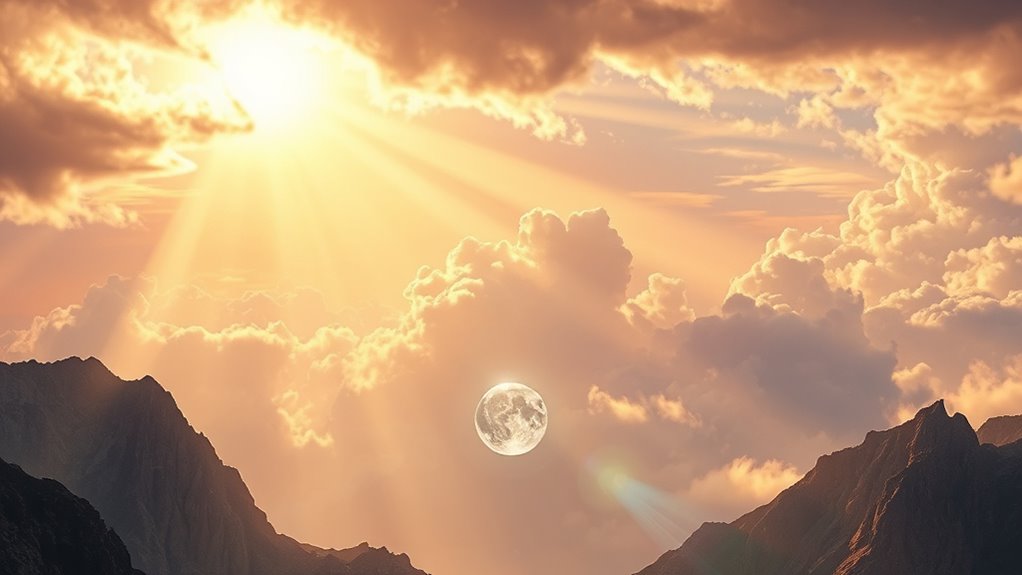
The concept of the third heaven holds deep symbolic and spiritual meaning across various traditions, often representing the ultimate divine domain or the highest state of spiritual consciousness. It embodies celestial symbolism that points to a sphere beyond earthly existence, where divine realms intersect with human spirituality. To many, the third heaven signifies a sacred space of divine presence, enlightenment, and transcendence. It serves as a reminder of higher truths and spiritual aspirations, encouraging you to seek connection with the divine. This domain symbolizes purity, perfection, and the ultimate goal of spiritual growth. Recognizing its symbolic significance can deepen your understanding of the divine and inspire you to pursue spiritual elevation and closeness to the divine realms beyond the material world.
Interpretations Across Different Religions
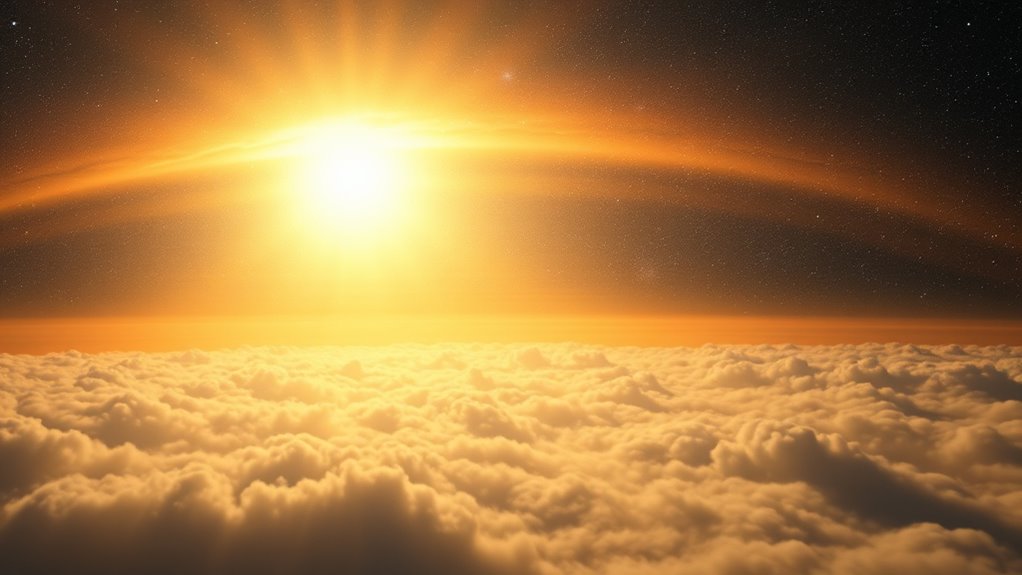
Different religions interpret the concept of the third heaven in unique ways that reflect their spiritual beliefs and cosmologies. In many faiths, the celestial realms are layered within a divine hierarchy, with the third heaven representing a higher state of spiritual existence.
Imagine:
- A radiant sky filled with angelic beings, symbolizing divine purity.
- An endless expanse where prophets and saints dwell in harmony.
- A realm shining with divine light, beyond earthly grasp, where God’s presence is most direct.
These interpretations highlight how the third heaven is viewed as an elevated level within the celestial realms, serving as the ultimate connection to the divine hierarchy. Different religions see it as the pinnacle of spiritual achievement and divine proximity.
Modern Understandings and Debates
How do modern scholars and theologians interpret the concept of the third heaven today? Many view it as part of the heavenly realms within a spiritual hierarchy, rather than a physical place. Some see it as a symbolic level representing divine proximity or ultimate union with God. Others debate whether the third heaven should be understood literally or metaphorically, considering contemporary insights into spiritual experiences. Scholars often analyze biblical texts alongside mystical traditions, emphasizing that the third heaven signifies a higher state of spiritual awareness or divine presence. This ongoing debate reflects broader discussions about how spiritual hierarchy functions in religious thought. While interpretations vary, most agree that the third heaven remains a key concept in understanding the divine order and the soul’s journey.
Frequently Asked Questions
How Does the Concept of the Third Heaven Compare Across Different Christian Denominations?
You might wonder how the concept of the third heaven varies across Christian denominations. Some interpret the heavenly realms literally, seeing the third heaven as a divine domain where God’s throne resides, while others view it more metaphorically. Doctrinal differences shape these views, with some denominations emphasizing a literal hierarchy of heavens, and others focusing on spiritual realities. These perspectives influence how believers understand the spiritual journey and divine presence.
Are There Any Modern Spiritual Practices That Reference the Third Heaven?
You explore modern spiritual practices that reference the third heaven through meditative journeys and mystical visions. These practices often aim to connect with divine spheres, seeking higher understanding and spiritual awakening. Whether through guided meditation, contemplative prayer, or visionary experiences, you find that many traditions interpret these journeys as a way to access the divine, the celestial, or the sacred, echoing ancient concepts of the third heaven in a contemporary spiritual context.
What Are Some Common Misconceptions About the Third Heaven?
You might think the third heaven is a literal place, but many hold symbolic interpretations, viewing it as a spiritual domain or divine dimension. Some believe it’s a physical location, while others see it as a metaphor for higher spiritual consciousness. Common misconceptions include literal beliefs that it’s a physical realm, ignoring its symbolic significance. Understanding its context helps clarify that it’s more about spiritual meaning than physical geography.
How Has the Idea of the Third Heaven Influenced Religious Art and Literature?
Imagine yourself in a cathedral, surrounded by heavenly imagery that echoes divine domains. The idea of the third heaven shapes religious art and literature through rich theological symbolism, inspiring artists and writers to depict divine perfection and celestial mysteries. This concept elevates visual and literary works, encouraging believers to envision higher spiritual truths beyond earthly existence, much like modern sci-fi explores realms beyond our universe.
Is There Any Scientific Evidence Supporting the Existence of the Third Heaven?
You might wonder if scientific skepticism supports the existence of the third heaven. Currently, there’s no empirical evidence to prove its existence, as it’s a spiritual or theological concept rather than a scientific one. Science relies on observable, measurable data, and so far, the idea of the third heaven remains outside its domain. Until new evidence emerges, it’s a matter of faith rather than scientific fact.
Conclusion
As you explore the mysteries of the “third heaven,” you realize there’s still so much to uncover. Could it hold secrets beyond our understanding, or is it a divine domain waiting to reveal itself? With each interpretation, you’re drawn deeper into the spiritual and historical layers that surround it. The true nature of the “third heaven” remains elusive—an intriguing puzzle that leaves you questioning what lies beyond the known, just out of reach.