
Saint Nicholas was a Christian bishop born around 270 AD in what is now Turkey, known for his kindness, gifts, and miracles. Stories tell of him secretly giving coins to the poor, saving sailors, and protecting children. Over centuries, his legend grew across Europe, blending religious faith with local traditions. His generous acts inspired the modern figure of Santa Claus, symbolizing charity and goodwill. If you keep exploring, you’ll discover how his story evolved into today’s festive customs.
Key Takeaways
- Saint Nicholas was a 4th-century Christian bishop known for his generosity and miracles, especially helping the poor and children.
- His acts of kindness and gift-giving inspired legends that evolved into the modern figure of Santa Claus.
- Originally venerated in Byzantine and European Christian traditions, he became a symbol of charity and protection.
- Over centuries, his story merged with local customs, transforming into a jolly, gift-bringing Santa Claus.
- Today, Saint Nicholas is celebrated worldwide for his legacy of kindness, inspiring holiday traditions and charitable acts.
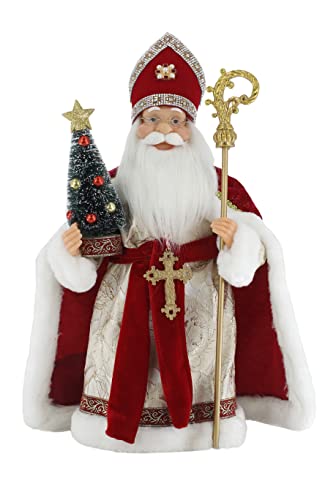
Windy Hill Collection Netherlands Dutch Sinterklaas Saint Nicholas 16" Inch Santa Claus Standing Figurine Decoration 163054
Sinterklaas is ready to celebrate the holiday season.
As an affiliate, we earn on qualifying purchases.
As an affiliate, we earn on qualifying purchases.
The Life and Origins of Saint Nicholas
Have you ever wondered where the legendary figure of Saint Nicholas came from? His story originates in medieval folklore, where stories of his kindness and generosity spread across regions. Born around 270 AD in what’s now Turkey, he was a Christian bishop known for helping the poor and protecting children. Over centuries, these tales evolved, merging with local customs and beliefs. As time went on, Saint Nicholas became a symbol of charity and goodwill, inspiring countless stories and legends. Modern adaptations have transformed him from a historical bishop into the jolly, gift-giving figure we recognize today as Santa Claus. Despite these changes, his core qualities—generosity, compassion, and care—remain central to his legacy.

LEGO Santa's Sleigh – Building Toys for Kids, Boys & Girls, Ages 9+ – Indoor Christmas Decorations for Home W/Santa Claus Figurine & Reindeer – Gifts for Boys & Girls – 40499
Lego Santas Sleigh (40499 – 343 pcs)
As an affiliate, we earn on qualifying purchases.
As an affiliate, we earn on qualifying purchases.
The Acts of Generosity and Miracles
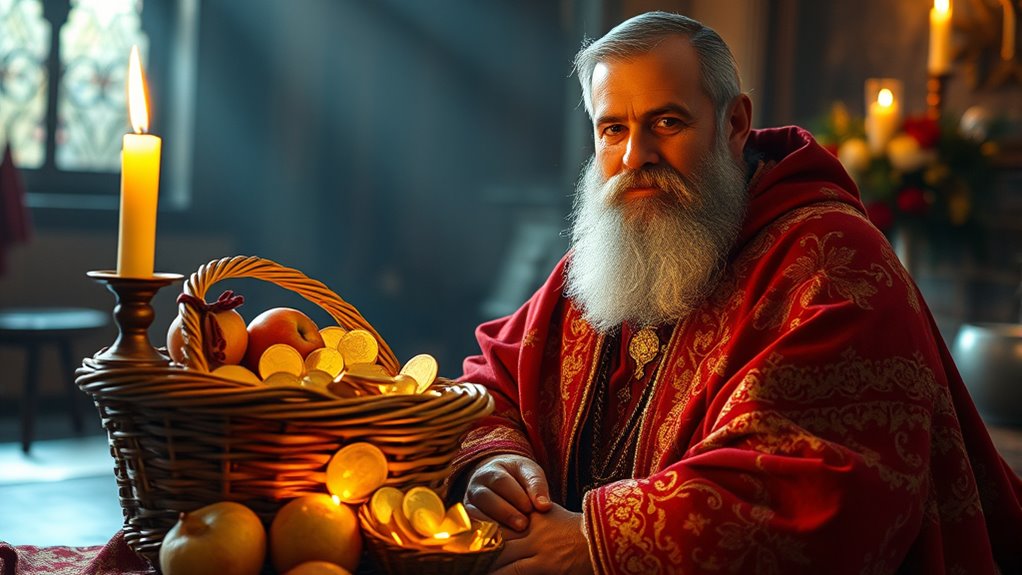
Saint Nicholas’s reputation as a generous and miraculous figure is rooted in numerous stories of his acts of kindness. These tales, often depicted in medieval art, highlight his extraordinary acts of charity and divine intervention. For example, he is said to have saved impoverished families by secretly providing gold coins, inspiring holiday folklore that emphasizes giving without expecting recognition. His acts of generosity became symbols of hope and compassion. Sometimes, miracles are also associated with him, such as calming storms or healing the sick. These stories emphasize his role as a protector and benefactor. His legendary deeds continue to inspire modern Christmas traditions, shaping the image of Santa Claus as a gift-bringer driven by kindness and miracles. Additionally, his association with sustainable materials and community acts echoes the timeless values of generosity and care.

Hallmark Keepsake Christmas Ornament 2023, UNICEF Every Color of Amazing Papercraft Ornament, Charity Gifts
The Every Color of Amazing Hallmark Keepsake Christmas ornament features children holding hands around the earth. Text reads:…
As an affiliate, we earn on qualifying purchases.
As an affiliate, we earn on qualifying purchases.
The Historical Context of the 4th Century
During the 4th century, the Roman Empire’s influence shaped many aspects of daily life and religious practice. You’ll notice how early Christian communities faced persecution while also adapting to changing societal customs. Understanding this context helps explain Saint Nicholas‘s significance amid such a turbulent era. Additionally, the spread of Christianity prompted the development of unique and wicked planters that incorporated religious symbolism and community identity.
Roman Empire Influence
The 4th century was a pivotal period when the Roman Empire’s influence deeply shaped Christian practices and figures like Saint Nicholas. During this time, medieval iconography began to develop, blending Roman artistic styles with emerging Christian symbolism. Religious imagery became important for conveying spiritual messages, often using symbols like the fish, the cross, or the lamb. The empire’s support for Christianity transformed it from a persecuted religion into the state religion, which increased the prominence of saints. This shift led to the standardization of religious symbolism, helping believers connect with saints like Nicholas through visual cues. The Roman Empire’s political and cultural power therefore played a key role in shaping how saints were depicted and venerated, influencing their legacy for centuries to come. Additionally, the use of visual storytelling techniques in religious art helped solidify saints’ identities and foster devotion among followers.
Early Christian Persecution
As Christianity gained official support from the Roman Empire, believers faced increasing risks of persecution. Early Christians, including saints like Nicholas, often practiced their faith secretly to avoid punishment. During this period, persecution shaped medieval iconography, depicting saints as martyrs and symbols of unwavering faith. These images reinforced their spiritual resilience and inspired future generations. Today, modern adaptations of Saint Nicholas often overlook this harsh history, transforming him into a jolly, gift-giving figure. Yet, understanding the early persecution reveals the true strength of these early Christians, who endured great danger to maintain their beliefs. Their courage laid the foundations for Christian tradition and helped forge the enduring legacy of saints like Nicholas, whose story continues to resonate beyond the superficial cheer of holiday celebrations. Recognizing the importance of biodiversity in our surroundings can also serve as a reminder of the resilience and diversity needed to preserve cultural and spiritual heritage.
Societal Customs Evolution
In the 4th century, societal customs across the Roman Empire were undergoing significant transformations as Christianity shifted from a persecuted minority religion to an increasingly influential force. As these changes took hold, folklore began blending Christian stories with local traditions, giving rise to medieval folklore that shaped community identities. Over time, these evolving customs influenced modern festivities, especially around religious holidays, where stories of saints like Nicholas gained prominence. You might notice how ancient legends transformed into cherished traditions, blending religious reverence with communal celebration. This period laid the groundwork for the festive practices we recognize today, where religious figures like Saint Nicholas became symbols of generosity and kindness. These shifts reflect an ongoing process of cultural adaptation that continues to influence societal customs.

DITAIX 9PCS Santa Claus Costume for Kids: Velvet Christmas Suit Set with Accessories for Holiday Party Cosplay
【Complete 9-Piece Santa Set】Everything needed for the perfect Santa transformation! Includes: Santa coat, pants, hat, gift bag, beard,…
As an affiliate, we earn on qualifying purchases.
As an affiliate, we earn on qualifying purchases.
Saint Nicholas’ Role in Christianity and the Church

Saint Nicholas played a significant role in shaping Christian practice and devotion during his lifetime, serving as a model of charity and faith. His influence extended into medieval art, where depictions of his deeds inspired believers and reinforced church teachings. Nicholas’s reputation for generosity was central to his veneration, emphasizing the importance of charity within Christianity. During his lifetime, theological debates about saintly authority and intercession highlighted his significance, as followers looked to him as an example of virtuous living. His role in the church also involved supporting the clergy and defending orthodoxy. Overall, Saint Nicholas’s legacy strengthened Christian values and practices, making him a crucial figure in religious life and a symbol of compassion rooted in the faith’s doctrinal foundations.
Legends and Stories That Shaped His Legacy
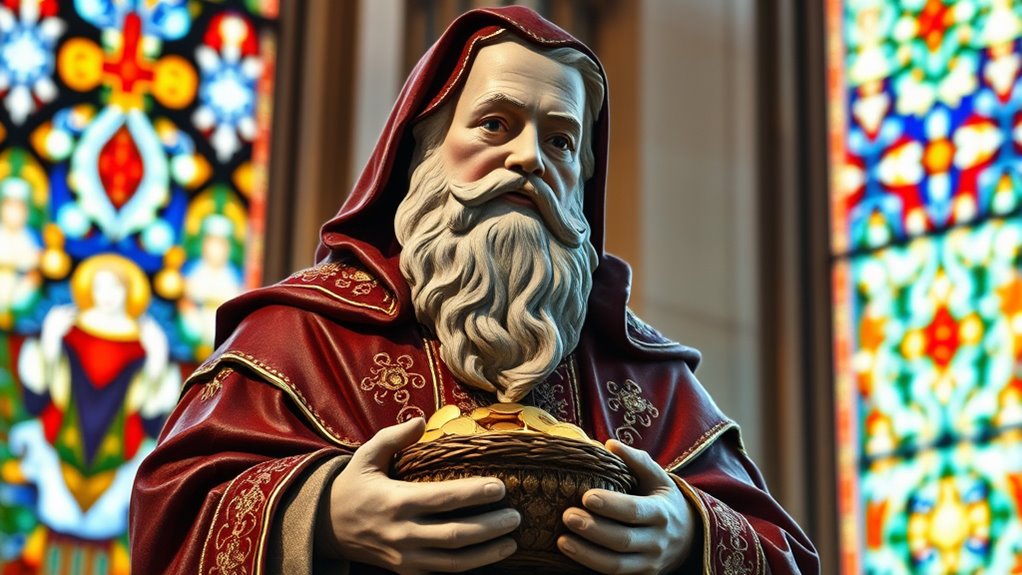
Many stories highlight Saint Nicholas’s miracles and acts of generosity, shaping how he’s remembered today. You’ll learn how he protected children and sailors, earning their trust and admiration. These legends also inspired the iconic gift-giving traditions we associate with him now. His legacy is also celebrated through home decoration inspiration, reflecting the warmth and generosity he embodies.
Miracles and Generosity
Legends of Nicholas’s miracles and generosity have cemented his reputation as a compassionate and divine figure. Stories of his kindness spread through medieval art, depicting him performing extraordinary deeds. One famous tale tells of him secretly providing gold coins to a poor family, saving them from despair, which inspired many pilgrimage sites dedicated to him. These acts of generosity became symbols of hope and charity, reinforcing his role as a protector of the vulnerable. Visitors to his shrines often leave offerings, hoping to receive similar blessings. His legendary deeds highlight a life dedicated to giving and miracles, shaping how people remember him today. These stories continue to inspire acts of kindness, making Saint Nicholas a timeless symbol of compassion.
Protecting Children and Sailors
Stories about Nicholas’s efforts to protect children and sailors reveal his deep compassion and unwavering dedication. You can picture him guiding sailors through treacherous waters, his prayers helping them navigate safely. Legend has it he secretly provided coins to poor children, ensuring their safety and well-being. During medieval markets, he became a symbol of hope for families worried about their loved ones at sea. His protective nature extended to sailors facing unpredictable maritime navigation, risking storms and shipwrecks. Imagine a table representing his legacy:
| Protective Acts | Symbols | Impact |
|---|---|---|
| Saving children from harm | Coins, gifts | Ensured safety and hope |
| Assisting sailors | Compass, anchor | Guided through storms |
| Supporting families | Medals, charms | Strengthened community |
| Inspiring trust | Light, lanterns | Fostered faith and resilience |
His stories continue to inspire trust in divine protection, highlighting the maritime safety that he championed.
Iconic Gift-Giving Traditions
The gift-giving traditions associated with Saint Nicholas have profoundly shaped his legacy, blending legend and practice into a timeless celebration. In medieval mythology, stories depict him secretly providing dowries for impoverished girls and saving sailors from storms, emphasizing generosity and protection. These tales evolved into modern folklore, where he’s depicted as a benevolent figure who leaves gifts in shoes or stockings. As these stories spread across Europe, they transformed into festive customs, reinforcing kindness and charity. You might imagine children waking up to small presents, inspired by legends that highlight Saint Nicholas’s compassion. These traditions have persisted through centuries, merging legendary deeds with cultural practices, ultimately shaping what we now recognize as the iconic gift-giving figure behind Christmas. Additionally, the cultural significance of such traditions highlights how symbolic acts of generosity can foster community bonds and reinforce shared values across generations.
The Spread of Saint Nicholas’ Cult Across Europe
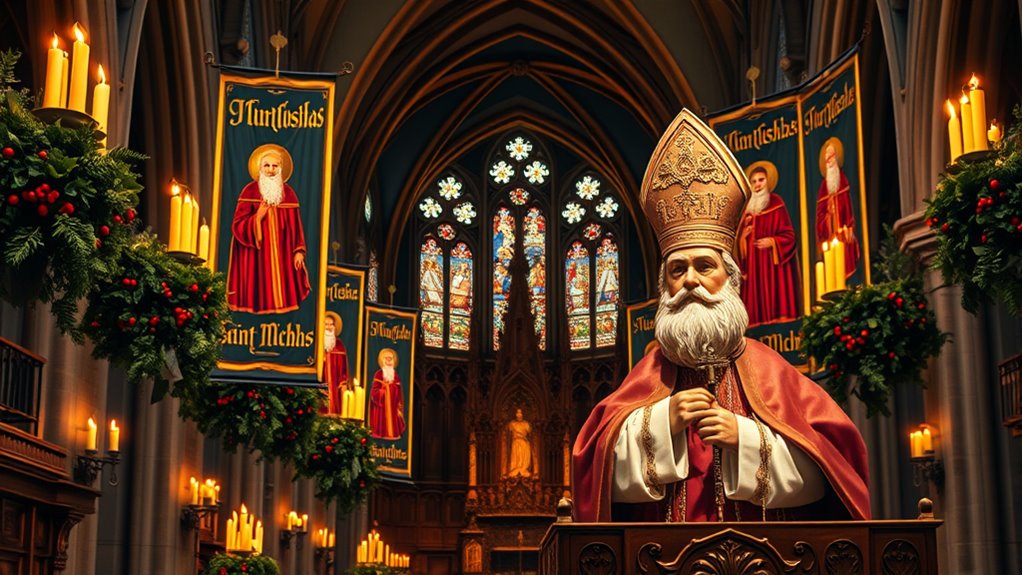
As the veneration of Saint Nicholas spread beyond his original Byzantine roots, his cult gained momentum across much of Europe, adapting to local traditions and cultures. Medieval legends transformed his story, emphasizing miracles and acts of kindness that resonated locally. In each region, there were regional variations in how people honored him, often blending his story with existing folklore. For example, in parts of Western Europe, Saint Nicholas became closely associated with gift-giving and charitable acts, shaping local customs. These regional variations helped embed his cult into diverse communities, making him a beloved figure across different countries. The spread of his veneration reflected both the universal appeal of his virtues and the adaptability of his legend to various cultural contexts. Additionally, the cultural adaptation of his story facilitated its integration into local religious practices, ensuring his enduring legacy throughout Europe.
From Saint to Symbol: the Evolution Into Santa Claus

Over time, the figure of Saint Nicholas transformed from a revered Christian saint into a globally recognized symbol of generosity and joy. During the Middle Ages, medieval iconography depicted him as a bishop, highlighting his religious significance. As his story spread across different regions, cultural adaptations shaped his image, blending local traditions with his legacy. These changes influenced how people visualized and celebrated him, turning him into a more approachable, gift-giving figure. By the 19th century, this evolving image merged with popular culture, leading to the modern Santa Claus. You now see Santa as a jolly, rotund man in a red suit—an iconic symbol rooted in centuries of religious, artistic, and cultural transformations. This evolution was largely influenced by the cultural adaptations that helped shape his current image.
Celebrations and Traditions Honoring Saint Nicholas

Celebrations and traditions honoring Saint Nicholas are celebrated with great enthusiasm across many countries, reflecting his enduring influence. During this time, people visit medieval markets decorated with lights and ornaments, creating festive atmospheres. Children ardently await the arrival of Saint Nicholas, who is often associated with holiday feasts and gift-giving. In some regions, special church services honor his life, while others hold parades featuring figures dressed as Saint Nicholas. In many places, families leave out shoes or stockings, hoping for small gifts. These customs have evolved over centuries but remain rooted in honoring his generosity. The table below highlights common traditions:
| Tradition | Description |
|---|---|
| Medieval markets | Festive markets with crafts and treats |
| Holiday feasts | Special meals celebrating his legacy |
| Gift-giving | Exchanging small presents in his honor |
| Shoes or stockings | Leaving them out for gifts |
| Religious services | Prayers and church celebrations |
Additionally, the legacy of Saint Nicholas continues to influence modern holiday customs worldwide.
Frequently Asked Questions
How Did Saint Nicholas Become Associated With Gift-Giving?
You might think the association between Saint Nicholas and gift-giving is just a myth, but it’s rooted in cultural traditions. As stories spread, people started celebrating his generosity by exchanging gifts, especially on his feast day. Over time, these traditions evolved, blending myth and fact, to create the modern Santa Claus. Your customs reflect centuries of honoring his spirit of kindness and giving, making him a symbol of holiday generosity worldwide.
Are There Any Historical Inaccuracies in the Santa Claus Stories?
You should know that many Santa Claus stories blend myth vs. fact, leading to some inaccuracies. The legend evolution over centuries has shaped a figure who delivers gifts on Christmas, but some tales are exaggerated or invented. For example, the flying reindeer or the North Pole workshop aren’t based on factual history. Recognize that these stories are part of cultural myth, meant to inspire joy, rather than historical truth.
Did Saint Nicholas Have Any Family or Descendants?
You might wonder if Saint Nicholas had family or descendants. Historical records suggest he came from a Christian family with notable origins, but there’s little evidence about direct descendants or family stories. Most legends focus on his charitable actions rather than his family origins. While some stories mention relatives or heirs, these are often part of local traditions rather than confirmed historical facts, leaving his family details largely uncertain.
What Other Saints Have Similar Legends to Saint Nicholas?
Imagine a biblical superhero like Saint Nicholas, but with legendary miracles across cultures. Other saints, such as Saint Anthony and Saint Barbara, share similar stories rooted in patronage traditions and miraculous deeds. These saints are celebrated for their compassion, healing, and protection. Their legends, passed down through generations, often involve acts of kindness and divine intervention, echoing Saint Nicholas’s reputation for generosity and wonder.
How Has Modern Culture Influenced the Image of Santa Claus?
Modern culture has heavily shaped Santa Claus’s image through cultural adaptations and commercial influences. You see Santa as a jolly, bearded man in a red suit, thanks to advertising and popular media. Retailers promote him to boost sales during the holidays, turning him into a symbol of gift-giving and joy. These influences blend tradition with commerce, making Santa a universal figure, even beyond his original Christian roots.
Conclusion
Now that you know Saint Nicholas’s true story, imagine a child waking up on December 6th, excitedly finding small gifts left in their shoes—just like the legend. His acts of kindness and miracles remind you that generosity and compassion can truly inspire centuries of traditions. Whether as a saint or Santa Claus, his legacy encourages you to spread joy and kindness, making every holiday season a celebration of giving and hope.