
Yes, the Church did suppress many gospels to control Christian doctrine and authority. They selected certain texts for the canonical Bible while excluding others considered heretical or unreliable. This effort helped create a unified theological narrative and maintain church power. Many influential gospels circulated among different groups but were intentionally left out. If you explore further, you’ll discover how this shaping of the canon influenced Christian history and beliefs.
Key Takeaways
- The early Church deliberately excluded certain gospels to promote specific doctrines and maintain doctrinal orthodoxy.
- Many influential texts were suppressed or marginalized because they conflicted with the emerging orthodox teachings.
- The canon was shaped through church councils, reflecting theological, political, and social motives rather than divine decree.
- Some suppressed gospels, such as Gnostic texts, circulated privately or resurfaced centuries later through archaeological discoveries.
- Recognizing the canon’s constructed nature invites critical reflection on early Christian history and the church’s role in shaping scripture.
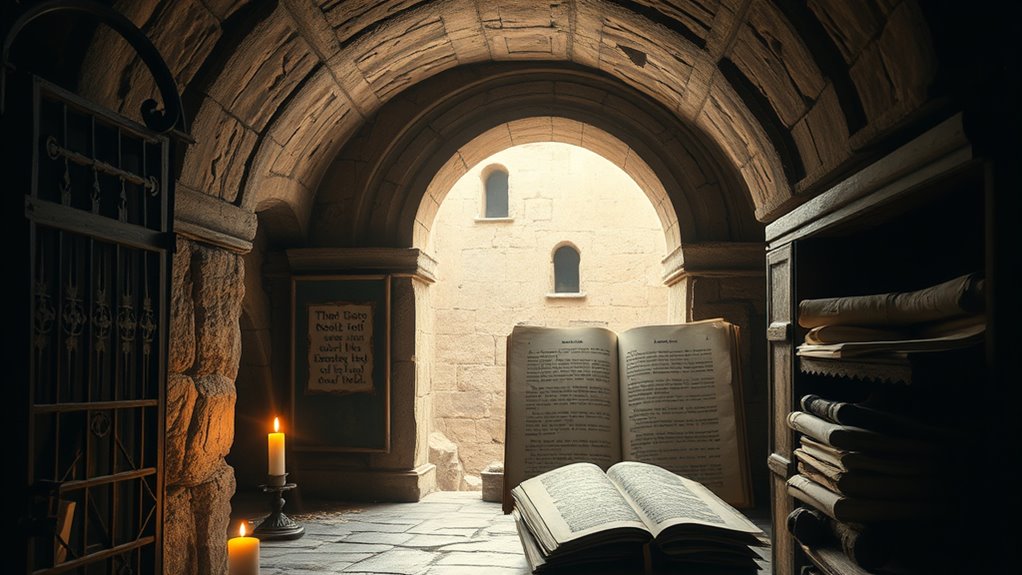
Have you ever wondered why some of the most influential church gospels remain hidden or suppressed? The answer lies in a complex history of early Christian diversity and the process of canon formation. During the earliest days of Christianity, there was no single, uniform set of beliefs or texts. Instead, a wide array of writings circulated among different communities, each with their own interpretations of Jesus’ teachings and spiritual insights. Some of these texts, often called apocryphal or Gnostic gospels, presented alternative views that challenged the emerging orthodox doctrines. These writings offered insights into early Christian thought, but they also contained ideas deemed heretical or incompatible with the developing church’s authority. As Christian leaders sought to unify and define their faith, they faced the challenge of selecting which writings would be considered authentic and authoritative. This process, known as canon formation, was not merely about choosing the most accurate texts but also about establishing theological orthodoxy and consolidating power. The formation of the biblical canon was a deliberate effort to promote certain teachings while suppressing others, which included many of these lesser-known gospels. Church leaders aimed to create a cohesive narrative that supported their theological and political agendas, and in doing so, they marginalized writings that did not fit this framework. It’s important to realize that early Christian communities were far from monolithic; they held diverse beliefs and texts. Yet, through councils and debates, the church gradually curated a collection of texts that defined orthodox Christianity. This selection process led to the exclusion of many influential gospels, which, despite their popularity among certain groups, were deemed heretical or unreliable. This suppression wasn’t just about theological disagreements, but also about maintaining control over doctrine and authority. Consequently, many of these suppressed gospels remained hidden for centuries, only to resurface later through archaeological discoveries or scholarly research. Additionally, the early Christian diversity played a significant role in shaping which texts were preserved or suppressed. Today, understanding the diversity of early Christianity and the motives behind canon formation helps you see that the story of which texts survived and which didn’t was shaped by political, theological, and social forces. It’s a reminder that the canon wasn’t simply handed down from divine inspiration, but carefully constructed to serve particular interests. This history invites you to question what might have been left out and why, encouraging a more nuanced view of early Christian history and the texts that shaped it.
Frequently Asked Questions
Were Any Heretical Gospels Intentionally Destroyed by the Church?
Yes, some heretical gospels were intentionally destroyed by the Church to protect gospel authenticity and maintain doctrinal unity. The Church prioritized texts that aligned with its teachings and believed were more authentic, ensuring textual authenticity. This effort aimed to preserve the core message of Christianity and prevent heretical ideas from spreading. While some texts were lost or destroyed, others were preserved, shaping the canon we recognize today.
How Were Canonical Gospels Selected Over Others?
You might be surprised to learn that about 80% of early Christian writings didn’t make it into the canon. The Church selected canonical gospels based on strict Gospel criteria and canonical standards, emphasizing apostolic origin, widespread usage, and consistency with Christian doctrine. These criteria helped guarantee the texts reflected authentic teachings, guiding believers and shaping Christian doctrine while excluding writings that didn’t meet these rigorous standards.
Did Early Church Leaders Have Biases Influencing Gospel Inclusion?
Early church leaders’ decisions about gospel inclusion were indeed influenced by their biases and concerns about gospel authenticity. You should recognize that their preferences for texts aligned with orthodox teachings, which sometimes led to dismissing or excluding writings they viewed as heretical or inconsistent. While their intentions aimed to preserve doctrinal unity, these biases shaped the canon, impacting which gospels were ultimately recognized as authentic and authoritative.
Are There Surviving Texts of Suppressed Gospels Today?
You’d be amazed to learn that some surviving texts of suppressed gospels still exist today, hidden in ancient manuscripts. These incredible discoveries reveal secret truths long buried. While most suppressed gospels remain lost to history, a few rare copies have been uncovered, offering glimpses into alternative early Christian beliefs. These ancient manuscripts challenge what you think you know, illustrating the mysterious and fascinating world of gospel survival beyond the canonical texts.
How Do Suppressed Gospels Differ From the Canonical Ones?
Suppressed gospels often differ from canonical ones because they reflect Gnostic beliefs, which emphasize secret knowledge and spiritual enlightenment. You’ll notice textual discrepancies, such as different stories or teachings not found in accepted texts. These variations show how suppressed gospels promote alternative views, often conflicting with orthodox doctrines. Their differences highlight diverse early Christian ideas, but the Church ultimately favored texts that aligned with its theological and doctrinal standards.
Conclusion
So, as you see, the story of suppressed scriptures sparks suspicion and stirs curiosity. The church’s control, countered by countless claims, continues to conjure questions about credibility and concealment. While some scriptures seem silenced, others shine brighter, shedding light on diverse doctrines. Remember, history hides hints, and understanding unfolds through open inquiry. Don’t dismiss discovery—dare to explore, defy, and decipher the mysterious, making your own meaning amidst the maze of myths and memories.