
Many argue that similarities between Jesus and pagan gods show he’s a myth, but these parallels mainly reflect shared cultural themes, not fiction. Early Christianity emerged in a world full of myths about death, resurrection, and divine births, which helped shape its stories. These motifs are common across many ancient traditions and stem from human efforts to explain life’s mysteries. To understand the true connections behind these parallels, you’ll find insightful details if you keep exploring further.
Key Takeaways
- Parallels between Jesus and pagan deities often stem from shared human themes like death, rebirth, and miraculous births.
- Cultural exchanges in the Roman Empire led early Christians to incorporate familiar myth motifs into their stories.
- Similarities do not imply that Jesus was a myth or borrowed directly; they reflect universal human storytelling themes.
- Mythological motifs served to interpret natural phenomena and moral lessons across diverse cultures.
- Recognizing these parallels highlights broader cultural influences rather than evidence that Jesus is a myth.
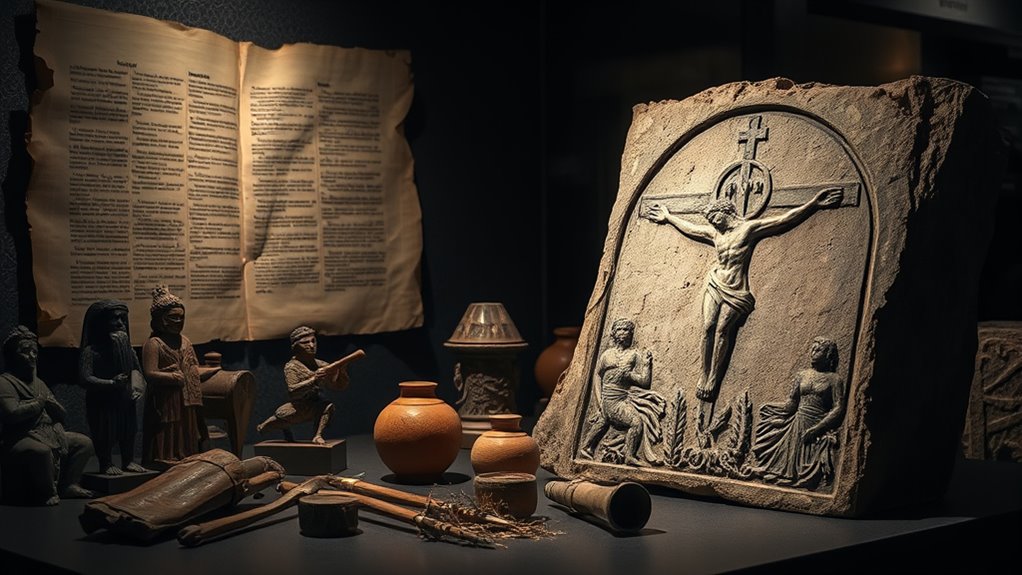
Throughout history, many scholars and critics have pointed out similarities between the stories of Jesus and various pagan deities, suggesting that Christian narratives may have drawn from existing mythologies. To understand these parallels, you need to contemplate the historical context and cultural influences that shaped early religious stories. During the rise of Christianity in the Roman Empire, diverse cultural traditions and religious beliefs coexisted, often blending or influencing one another. This environment fostered the exchange of myths, symbols, and narratives, which could explain similarities between Jesus and other deities.
Early Christian stories reflect cultural exchanges and mythological influences from diverse traditions.
In many ancient cultures, gods and heroes shared common themes: death and resurrection, miraculous births, or divine missions. For example, some pagan gods were believed to have been born of divine or miraculous origins, similar to Jesus’ virgin birth. Others, like Osiris or Mithras, were associated with death and rebirth cycles, mirroring Jesus’ death and resurrection story. These stories weren’t developed in isolation but reflected the broader cultural influences of the time, where mythologies served to explain natural phenomena, moral lessons, or the cycle of life and death.
You should also recognize that these parallels often stem from shared human experiences expressed through myth. Cultures across different regions devised stories to make sense of life’s mysteries—birth, mortality, suffering, and renewal. When Christianity emerged, it adopted some of these familiar motifs, adapting them within its new theological framework. This adaptation doesn’t necessarily mean that Jesus was invented based on pagan myths, but rather that early Christians used existing cultural symbols to communicate their beliefs more effectively to a diverse audience.
Understanding the cultural influences behind these stories helps you see that similarities are often the result of common human storytelling practices rather than direct borrowings. Early Christian communities operated within a landscape rich with mythologies, and they selectively incorporated and reinterpreted these elements to define their faith. The historical context shows that religious narratives evolve, influenced by the surrounding culture and shared human themes, making these parallels a reflection of broader cultural exchanges rather than a straightforward case of copying. Mythological motifs have played a significant role in shaping storytelling across civilizations, illustrating the universal nature of human myth-making.
Frequently Asked Questions
How Do Scholars Determine Historical Accuracy of Jesus’ Life Events?
Scholars determine the historical accuracy of Jesus’ life events through historical methodologies like textual analysis of ancient sources and cross-referencing accounts. They also examine archaeological evidence that supports or challenges these narratives. By critically evaluating the reliability and context of available documents, you can assess which events are likely historical. This approach helps distinguish between legendary embellishments and historically grounded facts about Jesus’ life.
What Are the Earliest Sources Mentioning Jesus Outside the Bible?
You’ll find the earliest sources mentioning Jesus outside the Bible in ancient manuscripts and extrabiblical references. Notable examples include Tacitus, a Roman historian who mentions Jesus in his Annals, and Josephus, a Jewish historian who references Jesus in Antiquities. These sources, written decades after Jesus’s death, support his historical existence and provide context beyond biblical accounts.
How Do Pagan Myths Influence Modern Christian Traditions?
Pagan rituals and myths heavily influence modern Christian traditions through their mythical origins. You might notice Christmas and Easter incorporate pagan symbols and celebrations, like winter solstice festivals and fertility rites. These influences shape traditions such as gift-giving and seasonal observances. By blending these pagan elements, Christianity adapted and sustained its appeal, making religious practices more familiar and meaningful to converts rooted in earlier pagan customs.
Are Similar Pagan Deities Worshiped Today?
Yes, similar pagan deities are worshiped today through adaptations and modern syncretism. You might see pagan deity adaptations in contemporary spiritual practices, where ancient gods are integrated into new rituals or beliefs. This blending reflects ongoing cultural exchanges, allowing ancient pagan figures to influence modern spirituality. As a result, some individuals honor these deities, demonstrating how pagan traditions continue to evolve and thrive within today’s diverse spiritual landscape.
What Is the Impact of Myth Comparisons on Christian Faith?
You might find myth comparisons challenge your faith, but they can also reinforce it. By investigating these theories, you gain a clearer understanding of religious origins, which can deepen your trust. While myth skepticism questions historical claims, exploring pagan parallels helps you appreciate unique Christian beliefs. Ultimately, engaging with these ideas encourages critical thinking and strengthens your faith, rather than weakening it, as you see the distinctiveness of Jesus’ story.
Conclusion
So, as you consider these pagan parallels, remember that history isn’t a marble statue frozen in time; it’s more like a whirlpool constantly shifting. While similarities might seem striking, they don’t prove Jesus is just a myth, like a mirage in a desert. Instead, they invite you to see how stories evolve and intertwine. In the end, whether myth or history, your journey to understanding is like steering through an endless, star-lit sky—full of wonder and questions.