Catholics don’t worship Mary as divine but honor her as the Mother of Jesus and a model of faith through veneration. This respect includes prayers, reverent images, and special feast days, but it’s distinct from worship, which is reserved for God alone. Marian devotion reflects her important role in salvation history and spiritual life, without equating her with the divine. Exploring further will clarify how Catholics respectfully express their love and honor for Mary.
Key Takeaways
- Catholics honor Mary with veneration (dulia), but worship (latria) is reserved solely for God.
- Marian prayers and symbols express respect and devotion, not divine worship.
- The Catholic Church explicitly distinguishes between honoring Mary and worshiping God.
- Marian devotion involves asking for her intercession, not attributing divine status to her.
- Proper understanding of veneration clarifies that Catholics do not worship Mary as divine.
The Origins of Marian Devotion in Catholic Tradition
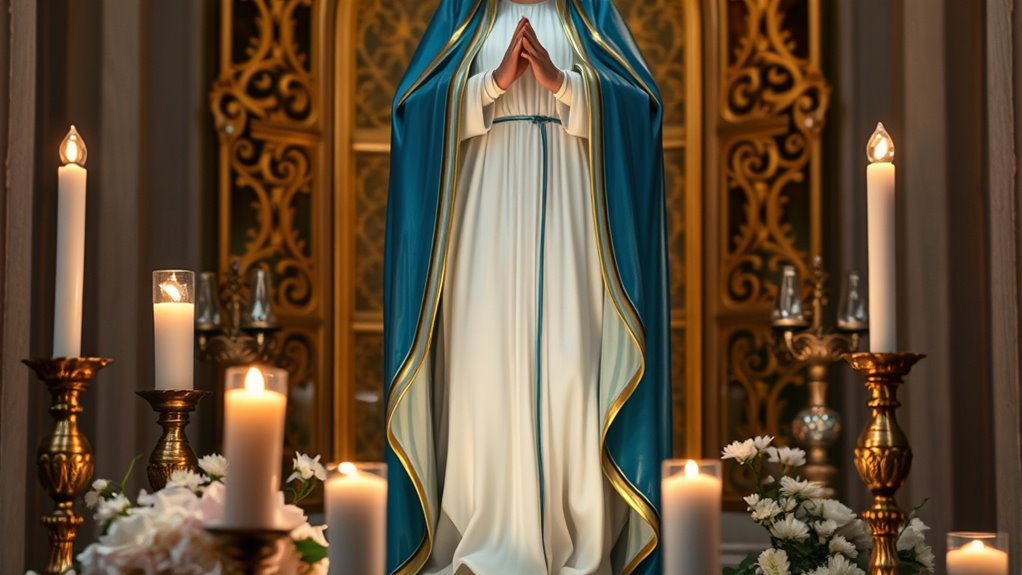
Have you ever wondered how devotion to Mary began within Catholic tradition? It all started with Marian symbolism and Marian art, which visually expressed her role in salvation history. Early Christians used symbols like the crescent moon and the crown to honor her purity and queenship. Over time, artists depicted Mary in sculptures and paintings, emphasizing her as the Mother of God and a compassionate intercessor. These visual representations helped believers connect with her virtues and remind them of her special place in faith. Marian devotion grew as stories and iconography spread, inspiring prayers and celebrations. This tradition was rooted in both Scripture and popular piety, fostering a deep respect that eventually developed into the veneration seen today.
Distinguishing Worship From Veneration
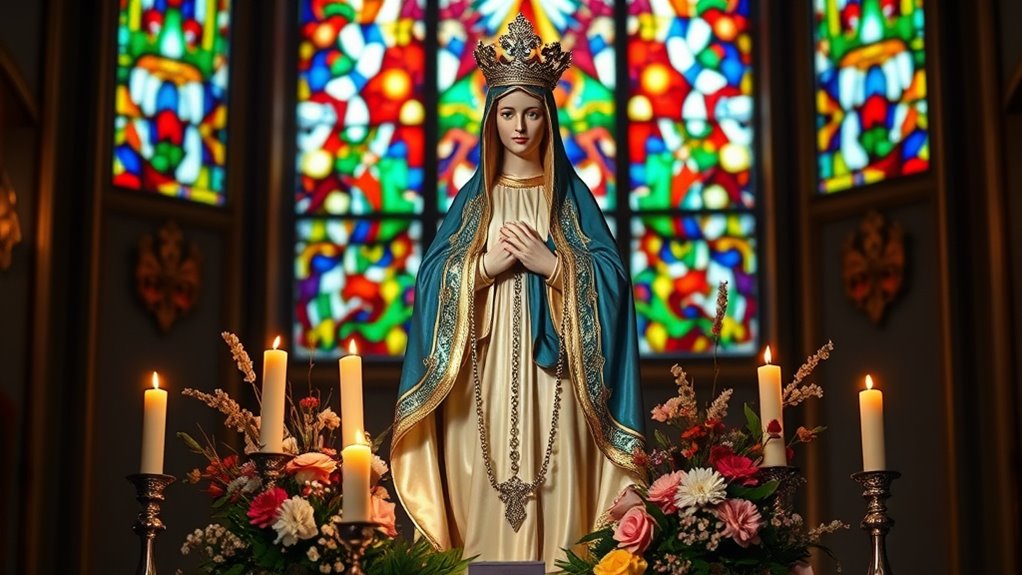
Understanding the difference between worship and veneration is essential to appreciate Catholic Marian devotion. Worship (latria) is reserved for God alone, while veneration (dulia) honors saints and Mary. You might see marian symbolism in icons and prayer traditions that express respect, not divine worship. To clarify, Catholics honor Mary through prayers like the Hail Mary, recognizing her special role without elevating her to divine status. Here’s a simple comparison:
| Aspect | Worship | Veneration |
|---|---|---|
| Purpose | Honor God alone | Honor saints, Mary |
| Marian symbolism | Respectful imagery | Reverence and love |
| Prayer traditions | Prayers to God | Prayers asking for intercession |
Additionally, the distinction is important because Worshiping God is considered the highest form of reverence, which is distinct from the veneration given to Mary and the saints.
The Role of Mary in Catholic Theology
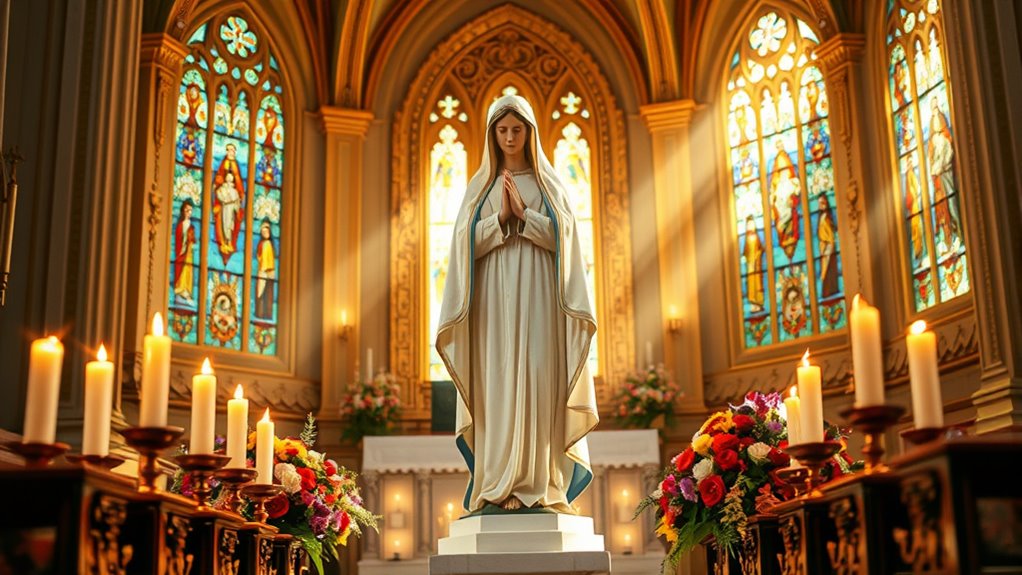
In Catholic theology, Mary holds a unique and honored position that goes beyond mere veneration. She is seen as the Mother of the Church and a powerful intercessor, playing a crucial role in salvation history. Marian symbolism emphasizes her purity, humility, and closeness to God, reinforcing her importance in faith. Marian prayers, such as the Hail Mary and the Rosary, are used to seek her intercession and express devotion. These practices reflect the belief that Mary actively participates in God’s plan and supports believers spiritually. Her role is not worship but honoring her as a model of faith and a compassionate guide. Understanding this distinction helps clarify her significance within Catholic theology as a revered figure who leads believers closer to Christ. Additionally, her influence is often highlighted through Marian symbolism that underscores her virtues and divine connection.
Catholic Practices of Honoring Mary
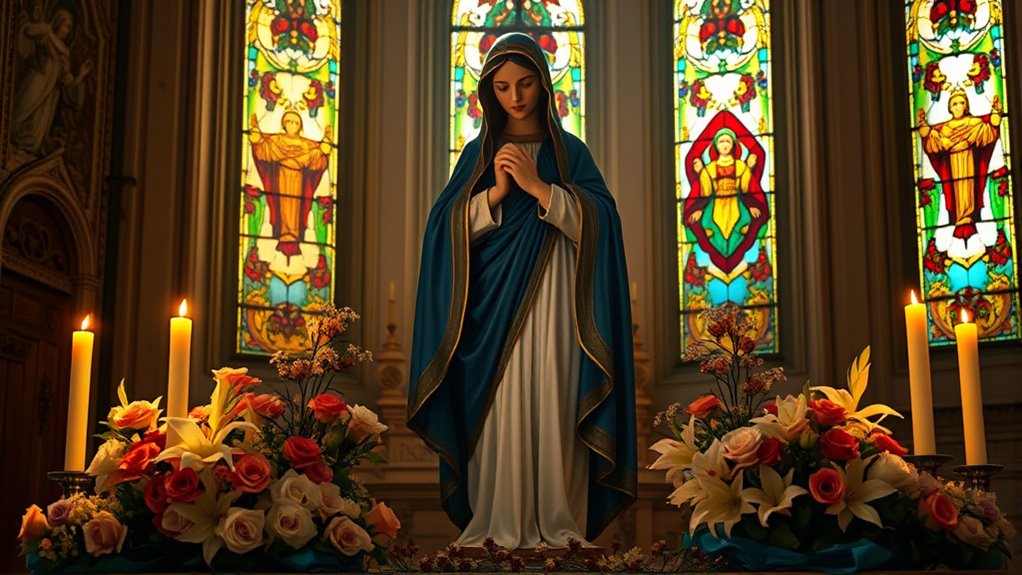
Catholics honor Mary through a variety of devout practices that express their love and reverence for her. These include participation in Marian feast days, which celebrate her role in salvation history, and prayer practices like the Rosary. Many also honor her through veneration of Marian images and statues, seeing them as symbols of her presence and intercession. Marian apparitions, such as those at Lourdes or Fatima, deepen believers’ connection to her message and guidance. These practices serve to strengthen faith and remind you of her compassionate care.
- Celebrating Marian feast days with special prayers and processions
- Praying the Rosary regularly to meditate on her life and virtues
- Visiting Marian shrines and sites of Marian apparitions
- Displaying Marian images and statues at home or in churches
- Offering prayers and acts of devotion to seek her intercession
Biblical Foundations for Marian Honor
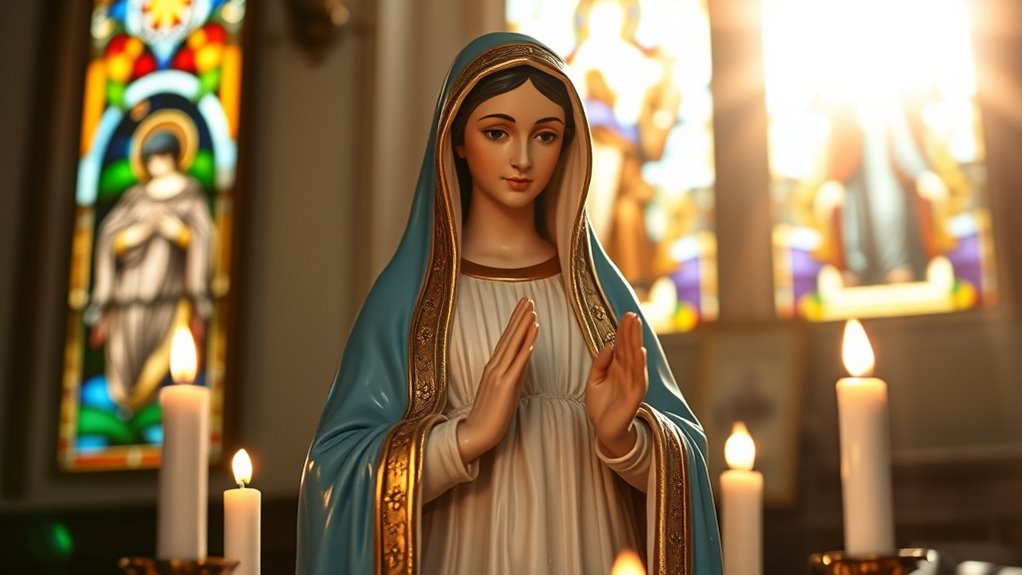
Have you ever wondered what biblical evidence supports honoring Mary? The Bible highlights Marian symbolism, like her role at the Wedding at Cana, where she intercedes with Jesus, showing her special connection. In Luke 1:48, Mary is called “blessed,” emphasizing her honored status among believers. Marian prayers, such as the Hail Mary, draw from Scripture, echoing the Angel Gabriel’s greeting and Elizabeth’s blessing. These prayers and references underscore her importance without worship, recognizing her as the Mother of Jesus and a model of faith. The biblical foundation for Marian honor lies in these scriptures that celebrate her obedience and unique role in salvation history, inspiring believers to respect and venerate her as a revered figure rooted in God’s Word. Additionally, understanding biblical honor helps clarify the distinction between veneration and worship, emphasizing her role as a revered but not divine figure.
Historical Perspectives on Marian Practices

Throughout history, Marian devotions have played a significant role in shaping Catholic practices, reflecting deep cultural and spiritual connections. You’ll notice how veneration of Mary evolved from simple prayers to elaborate rituals and pilgrimages. Understanding this progression helps clarify how Marian practices developed over time and why they remain meaningful today. The color accuracy of these practices can vary widely depending on cultural context and local traditions, further enriching the diversity of Marian devotion worldwide.
Marian Devotions Through History
Marian devotions have evolved considerably over the centuries, reflecting changing religious, cultural, and social contexts. Throughout history, Marian symbolism has been shaped by diverse cultural influences, blending local traditions with theological themes. You can see this in how different regions venerated Mary, emphasizing her role as a protector, healer, or intercessor. These practices often mirror societal values and artistic expressions, creating a rich tapestry of devotion. Additionally, the popularity of certain Marian titles and festivals demonstrates how devotion adapts to and reflects local identities. These practices also serve to reinforce community bonds and shared beliefs, further integrating Marian veneration into societal life. Forsale 100
Evolution of Marian Veneration
How did Marian veneration develop over the centuries? It evolved from simple prayers to rich Marian symbolism seen in artwork and architecture. Early Christians honored Mary as the Mother of God, emphasizing her role through hymns and icons. As centuries passed, Marian artwork became more elaborate, showcasing her virtues and intercessory power. Marian symbolism, like the lily for purity or the throne for her queenship, deepened believers’ connection. Pilgrimages and feast days grew in prominence, reflecting a rising reverence. Over time, these practices shaped a vibrant tradition of Marian veneration, blending devotion with artistry. The development of Marian symbolism helped foster a personal connection and understanding of her spiritual significance. This development shows how Catholics honored Mary, not worshiped her, through meaningful symbols and expressive representations that fostered a personal connection.
Common Misconceptions About Marian Worship
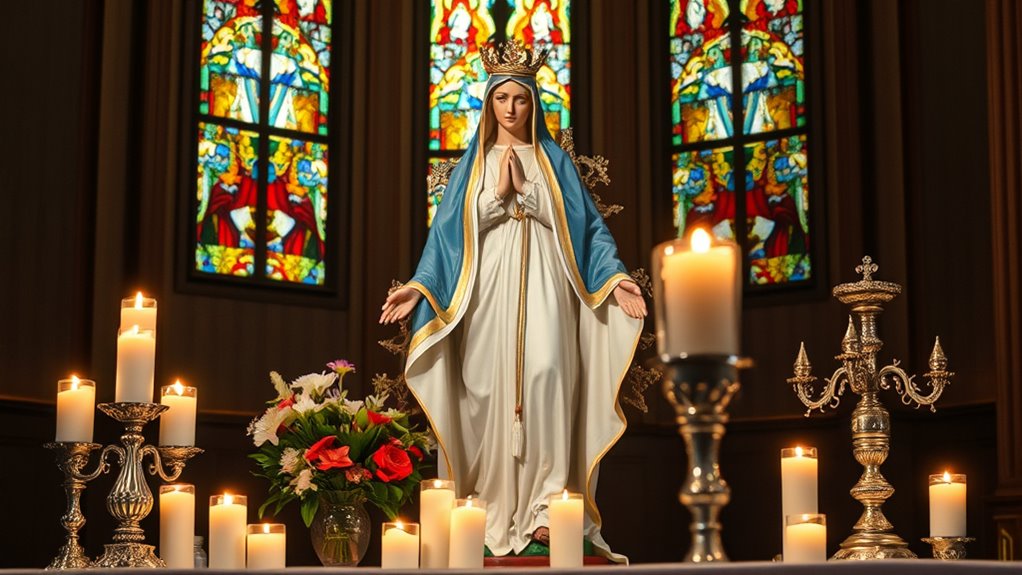
Many people confuse Marian devotion with worship, thinking Catholics honor Mary as divine. However, Catholics see her as a revered mother who points us toward God, not as a deity herself. Understanding this distinction helps clear up common misconceptions about Marian practices. Recognizing the importance of public health initiatives also contributes to a more comprehensive view of how religious communities support well-being and education.
Misinterpreting Marian Devotion
It’s common for people to misunderstand the nature of Marian devotion, often thinking it equates to worshiping Mary as a divine figure. In reality, Marian devotion involves gestures like Marian prayers and recognizing Marian symbolism, which emphasize her special role without assigning her divinity. Many misconceptions stem from confusing veneration with worship.
To clarify, Marian prayers honor her as the Mother of God, fostering a closer connection to Christ. Marian symbolism, like icons and statues, serve as visual reminders of her virtues and role. Recognizing these distinctions helps prevent misinterpretations and deepens your understanding of Marian devotion.
- Marian prayers express respect, not worship
- Marian symbolism highlights her virtues
- Devotion honors her unique role
- Respect differs from divine worship
- Intent matters in Marian practices
- Understanding religious practices can prevent misconceptions
Worship vs. Honor
A common misconception is that Marian devotion involves worshiping Mary as a divine figure, but in reality, honoring her differs profoundly from worship. When you see marian symbolism, like statues or images, it’s meant to remind you of her role and virtues, not to elevate her to divine status. Prayer traditions dedicated to Mary, such as the Hail Mary or the Rosary, are acts of veneration and asking for her intercession, not worship of her as God. Catholics distinguish between the honor given to Mary and the worship reserved for God alone. This respectful recognition helps deepen your faith and connection to Christ, emphasizing her role as a revered guide and supporter, not as a deity. Additionally, understanding Marian symbolism can help clarify the distinction between veneration and worship within Catholic practice.
Theological Clarifications From the Church
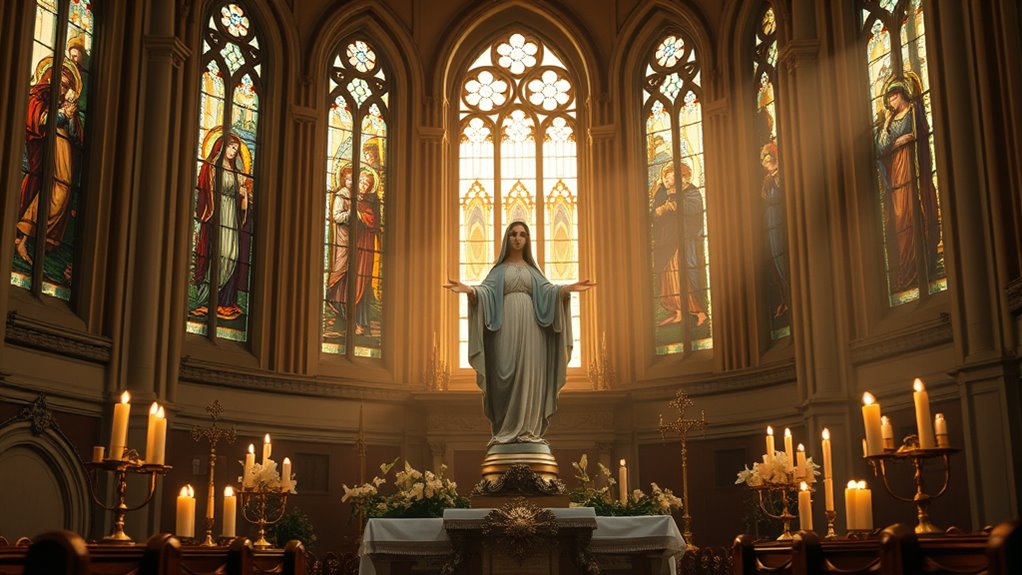
The Catholic Church has issued clear theological clarifications to distinguish between veneration and worship of Mary. It emphasizes that honor given to Mary is rooted in her unique role in salvation history, not worship reserved for God. Marian symbolism and devotional practices serve to deepen your understanding of her special place, but they do not elevate her to divine status. The Church teaches that:
- Marian devotion honors her as the Mother of Jesus
- Marian symbolism highlights her virtues and obedience
- Devotional practices reflect your respect, not worship
- Honor points to her powerful intercession, not divinity
- Worship remains solely for God, the Holy Trinity
- Recognizing her significance helps clarify common misconceptions about Marian devotion.
These clarifications help you see that respecting Mary’s role enriches your faith without conflicting with doctrinal truths.
How Catholics Express Their Respect for Mary
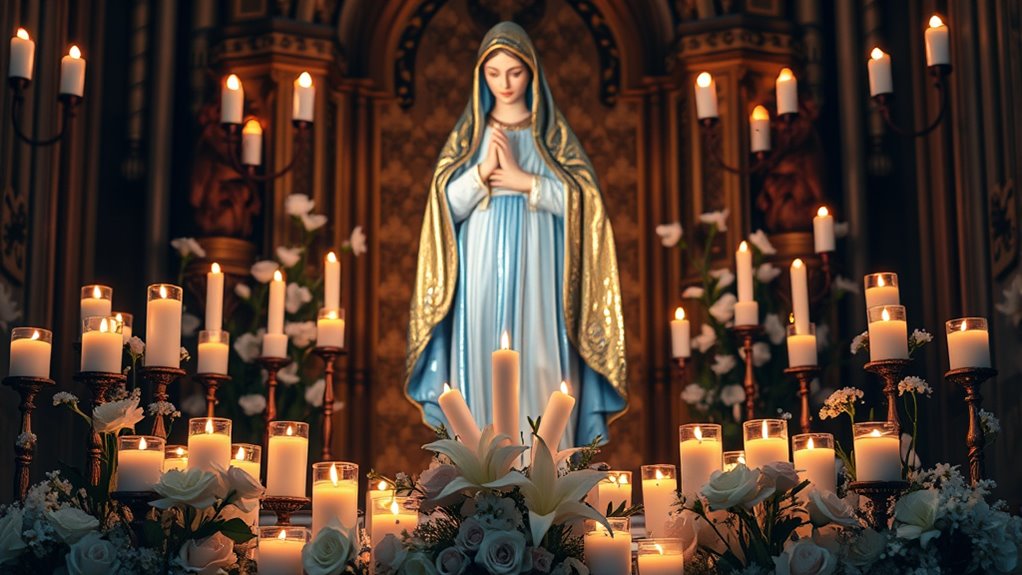
Catholics express their respect for Mary through various devotional practices that honor her unique role in salvation history. Marian symbolism, such as statues, icons, and colors, visually conveys their reverence. Marian prayers, like the Hail Mary and the Rosary, are central to their devotion, allowing personal reflection on her virtues and intercession. These expressions deepen your connection to Mary’s role as a spiritual mother. The table below highlights some common practices:
| Practice | Symbolic Element | Purpose |
|---|---|---|
| Marian prayers | Hail Mary, Rosary | Seek her intercession |
| Marian symbolism | Statues, icons | Visual reverence |
| Marian feast days | Special liturgies | Honor specific Marian titles |
Through these practices, Catholics honor Mary without worshiping her, emphasizing her importance in their faith.
Frequently Asked Questions
Is Praying to Mary Considered Idolatry?
Praying to Mary isn’t considered idolatry because Catholics see Marian prayers as asking for her intercession, not worshiping her as God. Marian symbolism highlights her special role, but it doesn’t replace God’s worship. When you pray to Mary, you’re honoring her and seeking her help, not replacing divine worship. This distinction helps Catholics maintain proper reverence while appreciating her importance in their faith.
How Does Marian Devotion Differ From Worship?
Marian devotion differs from worship through Marian symbolism and Marian theology. You honor Mary by veneration, showing respect and love, but worship is reserved for God alone. Marian symbolism, like statues and prayers, helps you connect spiritually without equating Mary with divine worship. Marian theology emphasizes her role as a revered mother and intercessor, guiding your faith, but it doesn’t mean you worship her as divine.
Do All Catholics Venerate Mary Equally?
Not all Catholics venerate Mary equally; it varies based on cultural backgrounds and personal devotion. You might see Marian symbolism in prayers, icons, and devotional practices like the Rosary, reflecting deep reverence. While some prioritize Marian devotion highly, others focus more on Christ. Your level of veneration depends on your personal faith journey, but universally, Catholics honor Mary as a special figure without worshiping her, emphasizing her role in salvation history.
Can Non-Catholics Participate in Marian Practices?
Yes, non-Catholics can participate in Marian practices, especially during interfaith dialogue and ecumenical activities. You might join prayers or celebrations honoring Mary to foster mutual respect and understanding. While participation varies, engaging in these practices shows openness and promotes unity among different Christian denominations. Just remember, Catholics honor Mary but don’t worship her, and respecting those distinctions helps maintain respectful ecumenical relations.
What Are the Biblical Reasons for Honoring Mary?
Imagine Mary as the queen bee of Marian symbolism, buzzing through Biblical references like Luke 1:28, where the angel greets her as “full of grace.” Honoring her is rooted in Scripture, not worship. Verses like Revelation 12:1 depict her as a woman clothed with the sun, symbolizing purity and divine favor. These references highlight why Catholics honor Mary, respecting her pivotal role without crossing into worship.
Conclusion
Remember, Catholics honor Mary as the Mother of Jesus, not worship her as God. Most Catholics, around 70%, see her as a guiding figure and seek her intercession, but they understand she’s not divine. By distinguishing veneration from worship, you can appreciate the respectful traditions that deepen faith without crossing theological boundaries. So, next time you see Marian devotion, you’ll know it’s about honoring her role—an important part of Catholic life rooted in respect, not idolatry.