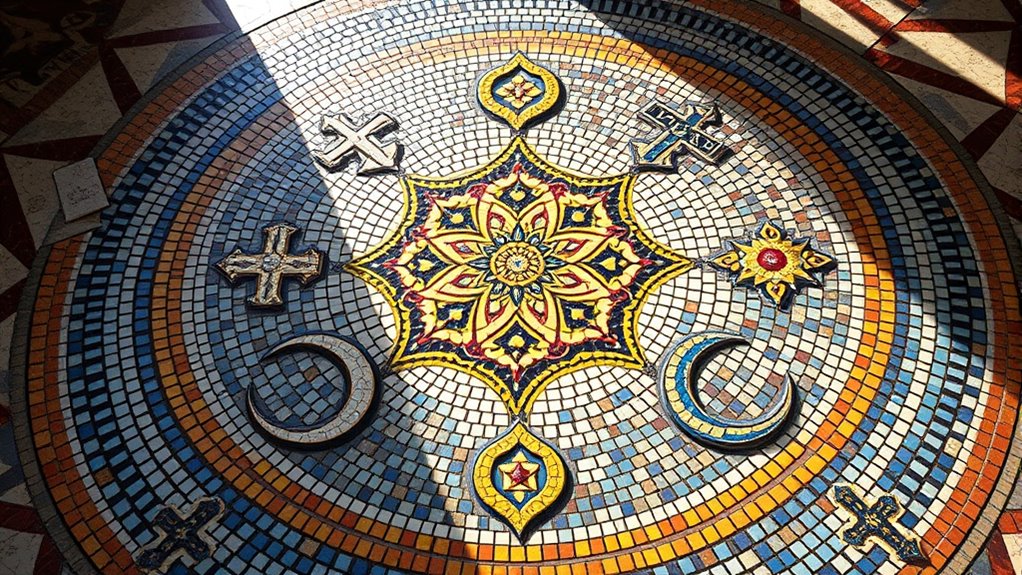

You might wonder if Christianity and other religions are the same. While many faiths share core values like compassion and the pursuit of truth, they have unique beliefs, practices, and worldviews that set them apart. Christianity focuses on the life and teachings of Jesus Christ, emphasizing love and salvation, whereas religions like Islam, Hinduism, and Buddhism have their own central concepts. Exploring these differences helps you understand what motivates followers and their spiritual journeys. Keep exploring to learn more about these diverse beliefs.
Key Takeaways
- Christianity emphasizes the life, teachings, and salvation of Jesus Christ, which differs from other religions’ founders and doctrines.
- Each religion has unique beliefs, rituals, and moral codes, highlighting fundamental differences despite shared values like compassion.
- While many faiths promote values such as love and altruism, their specific practices and worldviews are distinct.
- Interfaith understanding benefits from recognizing these differences and respecting each religion’s unique perspectives.
- Growth mindset and dialogue foster appreciation of both similarities and differences among Christianity and other religions.
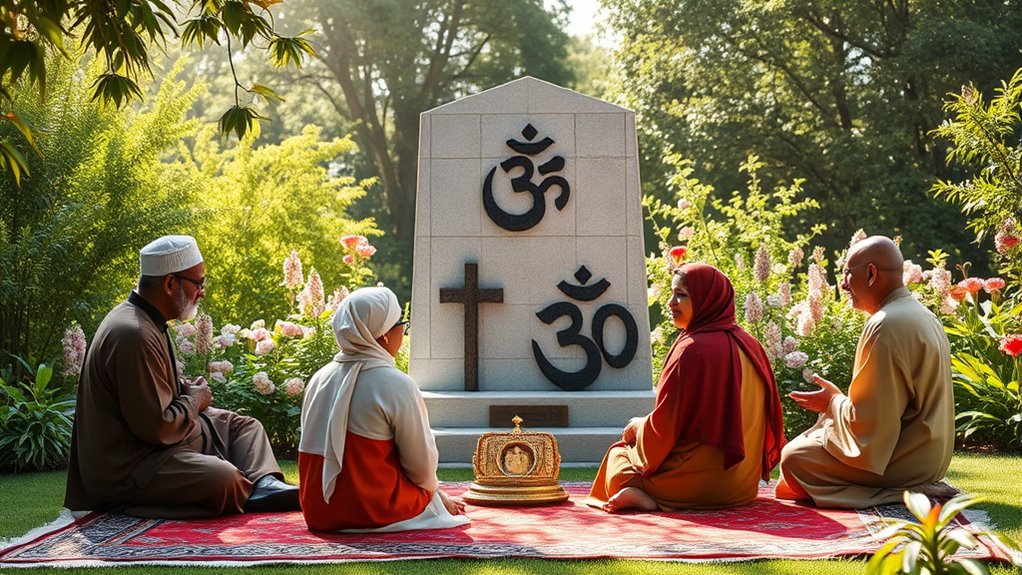
Have you ever wondered how different religions compare in their beliefs and practices? It’s a question that often sparks curiosity and sometimes confusion. When you explore various faiths, you’ll find that each has its unique worldview, rituals, and moral codes. Engaging in interfaith dialogue can help you appreciate these differences and see where common ground exists. This kind of conversation isn’t about convincing others to adopt your beliefs but about understanding and respecting the diverse perspectives that shape people’s lives. By examining comparative beliefs, you gain insight into what motivates followers of different religions and how they find meaning and purpose.
In Christianity, for example, the focus is on the life and teachings of Jesus Christ, emphasizing love, forgiveness, and salvation through faith. Other religions, such as Islam, emphasize submission to the will of Allah and follow the teachings of the Prophet Muhammad, with a strong focus on community and daily practice. Hinduism, on the other hand, encompasses a vast array of beliefs, including karma, dharma, and reincarnation, often expressed through various rituals and philosophies. Buddhism centers on personal enlightenment and the path to Nirvana, emphasizing meditation and ethical living. Despite these differences, many of these faiths promote compassion, altruism, and the search for truth. Recognizing the growth mindset within different religious traditions can foster greater understanding and respect among believers.

So What's the Difference: A Look at 20 Worldviews, Faiths, and Religions and How They Compare to Christianity
As an affiliate, we earn on qualifying purchases.
As an affiliate, we earn on qualifying purchases.
Frequently Asked Questions
How Do Different Religions Define Salvation or Enlightenment?
You see, different religions define salvation or enlightenment uniquely. Christianity often emphasizes faith in Jesus Christ for salvation, while Buddhism seeks enlightenment through meditation and ethical living. Interfaith dialogue helps us understand these differences, even as some hold to theological exclusivism, believing only their religion offers true salvation. By exploring these varied views, you gain a deeper respect for diverse spiritual paths and their unique approaches to ultimate fulfillment.
What Are the Core Rituals Across Various Faiths?
You engage in core rituals like prayer, meditation, and ceremonies that embody ritual symbolism across faiths. You participate in acts like fasting, baptism, or offerings, reflecting shared spiritual goals. These rituals foster interfaith dialogue, promote unity, and deepen your understanding. By recognizing common practices, you see how rituals serve as bridges, connecting diverse beliefs through symbolism and shared devotion, enriching your spiritual journey and fostering mutual respect among different traditions.
How Do Religions Interpret Concepts of Afterlife?
You’ll find that religions interpret afterlife differently, shaping interfaith dialogue and understanding. Christianity often emphasizes theological exclusivism, believing only their faith leads to salvation, while other religions see the afterlife as a continuation of spiritual growth or rebirth. These diverse views influence how followers approach life’s purpose and interfaith conversations, fostering respect or debate about faith’s ultimate goal. Recognizing these differences helps deepen mutual understanding among religions.
Are There Common Moral Teachings Among World Religions?
Imagine a garden where different flowers bloom together, sharing sunlight and water. Many world religions teach similar morals like kindness, honesty, and compassion. These shared values foster interfaith dialogue, helping us understand each other’s beliefs better. However, religious exclusivism can challenge unity. Despite differences, recognizing common morals reveals that, like diverse flowers, faiths can coexist, enriching our collective moral landscape.
How Do Religions View Other Faiths and Spiritual Paths?
You’ll find that many religions approach other faiths differently, with some engaging in interfaith dialogue to foster understanding and respect. Others hold to religious exclusivism, believing their path is the only true way. While some see spiritual paths as diverse but equally valid, others emphasize the importance of their own tradition. Your perspective may depend on your openness to dialogue and how you interpret the nature of truth across different faiths.

Interfaith Dialogue: A Guide For Muslims
As an affiliate, we earn on qualifying purchases.
As an affiliate, we earn on qualifying purchases.
Conclusion
As you stand at the crossroads of beliefs, imagine each religion as a unique river flowing toward the same vast ocean. Some waters shimmer with different colors, yet all lead to the same deep, endless horizon. While their currents may twist and turn, their destination remains shared—a place of hope, love, and understanding. Embrace the journey, knowing that though the streams differ, they all nourish the same sacred source within us all.

The Power of Ritual: Turning Everyday Activities into Soulful Practices
As an affiliate, we earn on qualifying purchases.
As an affiliate, we earn on qualifying purchases.

The Spiritual Growth Bible, Study Bible, NLT – New Living Translation Holy Bible, Faux Leather, Pink (NLT Spiritual Growth Editions)
As an affiliate, we earn on qualifying purchases.
As an affiliate, we earn on qualifying purchases.