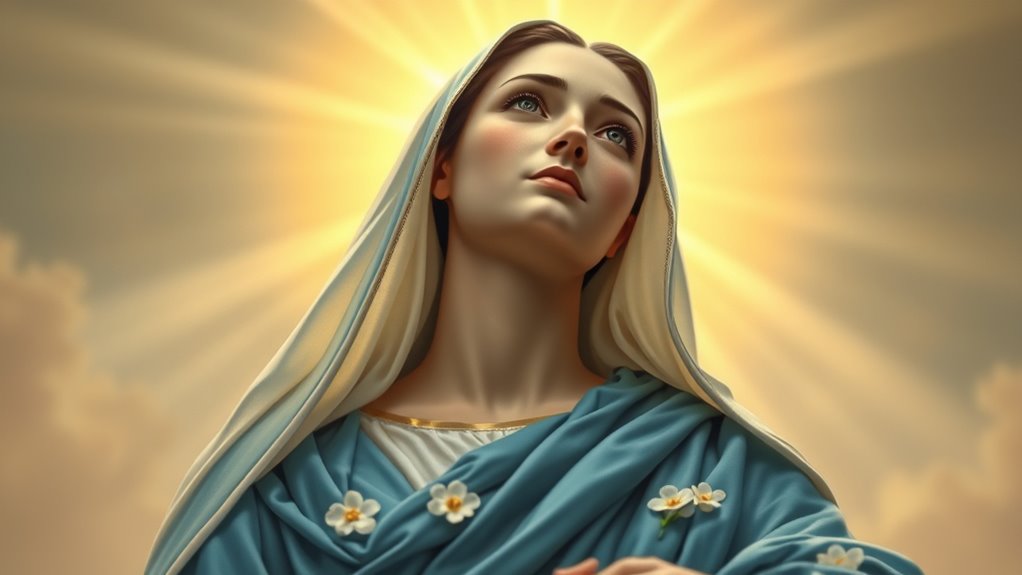

Mary is called the “Mother of God” because she is Jesus Christ’s mother, and Jesus is both fully divine and fully human. This title affirms her essential role in salvation and highlights the unity of Christ’s divine nature and human birth. The title was confirmed by the Council of Ephesus to clarify misconceptions. To understand how this title deepens your appreciation of Mary’s importance in Christian faith, keep exploring its biblical and doctrinal foundations.

Turn your quiet moments into listening time
- Thousands of audiobooks, podcasts and originals
- Listen on your phone, tablet or Echo — also offline
- Cancel anytime
Key Takeaways
- The title affirms that Mary gave birth to Jesus Christ, who is both fully divine and fully human.
- It reflects her role as the vessel through which God’s salvation plan was fulfilled.
- The title is rooted in biblical revelations, such as the angel Gabriel’s greeting in Luke 1:43.
- It emphasizes her unique relationship to Jesus, highlighting her divine motherhood.
- The term “Mother of God” (Theotokos) was officially affirmed at the Council of Ephesus to preserve Christ’s divine nature.
As an affiliate, we earn on qualifying purchases.
The Biblical Foundations of Mary’s Title
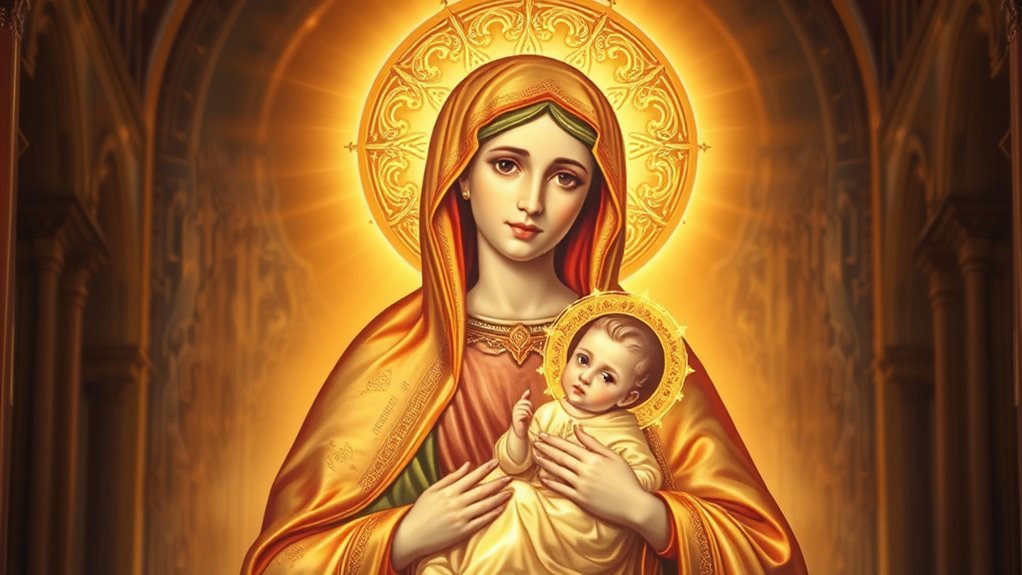
Have you ever wondered why Mary is called the “Mother of God”? This title has deep biblical roots, supported by prophecies and marian symbolism. The Gospel of Luke highlights her pivotal role in God’s plan, emphasizing her unique relationship with Jesus, who is both divine and human. Biblical prophecies, like Isaiah’s promise of a virgin bearing a son, foreshadow Mary’s special role, aligning her with divine intervention. Marian symbolism, such as her portrayal as the Ark of the Covenant, reinforces her significance in salvation history. These biblical foundations help us understand why the Church honors Mary as the Mother of God, recognizing her as the vessel through which God’s promise of salvation was fulfilled. Biblical prophecies also serve as a key element in understanding her divine role.
Historical Development of the Title “Mother of God
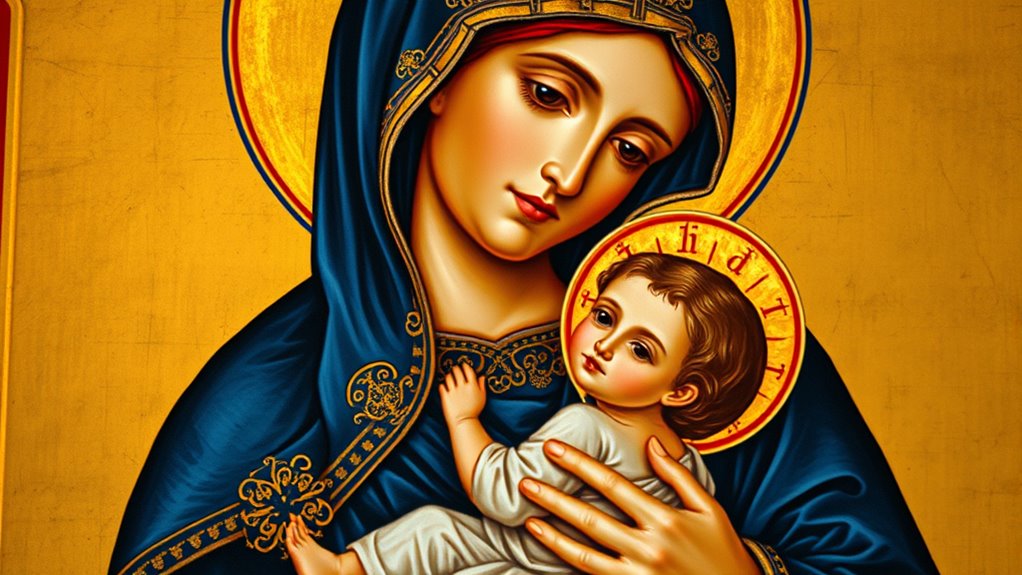
The title “Mother of God” has a rich history that evolved over centuries within the Christian community. Early debates centered on marian symbolism, emphasizing Mary’s unique role in salvation. As theology developed, the term gained prominence in the Eastern and Western Churches, often amid historical controversies. Some critics questioned whether calling Mary “Mother of God” implied her divine nature, fueling debates about her nature and dignity. Over time, Church leaders clarified that the title honors her as the mother of Jesus Christ’s human and divine natures, not as a divine being herself. This development reflects a careful balance, recognizing her importance while avoiding misunderstandings about her divine status. The title’s history reveals both theological growth and efforts to preserve doctrinal clarity. Additionally, understanding the importance of creative practice in theological reflection can deepen appreciation for how doctrines are developed and understood over time.
Theological Significance in Christianity
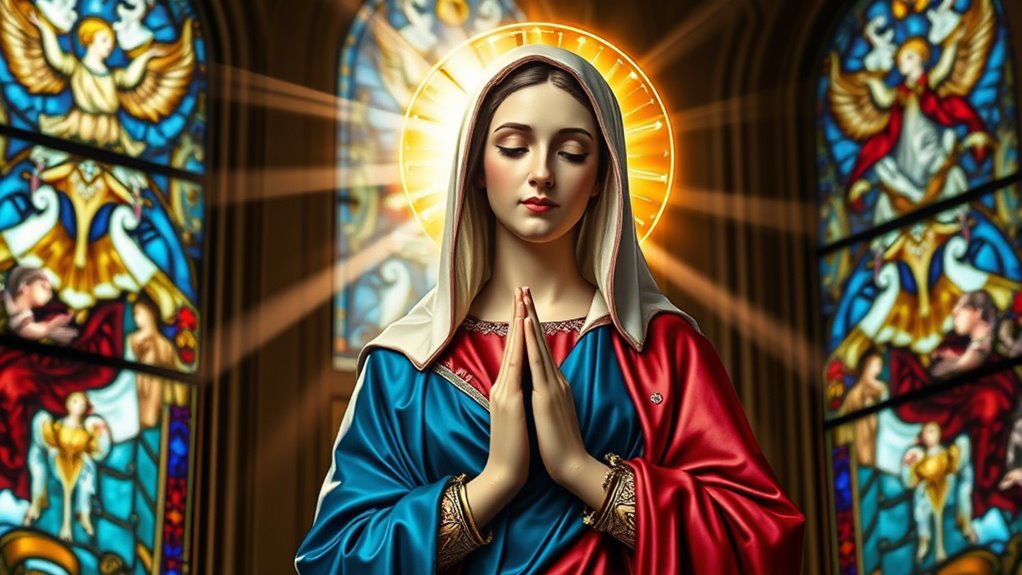
Understanding why Mary is called the “Mother of God” holds deep theological significance because it affirmatively states that Jesus Christ is both fully divine and fully human. This belief shapes core Christian doctrines and influences Marian symbolism, emphasizing her unique role in salvation history. The title underscores the unity of Christ’s divine and human natures, which is central to Christian faith. It also sparks theological debates about the nature of Christ and Mary’s place within the divine mystery. Recognizing Mary as the Mother of God helps believers appreciate her as a model of faith and humility, while also reinforcing the doctrine of the Incarnation. The divinity of Christ is a fundamental aspect of this doctrine, highlighting why this title is so crucial. Ultimately, this title deepens your understanding of Christ’s divine identity and the profound theological truths at the heart of Christianity.
The Council of Ephesus and Its Impact
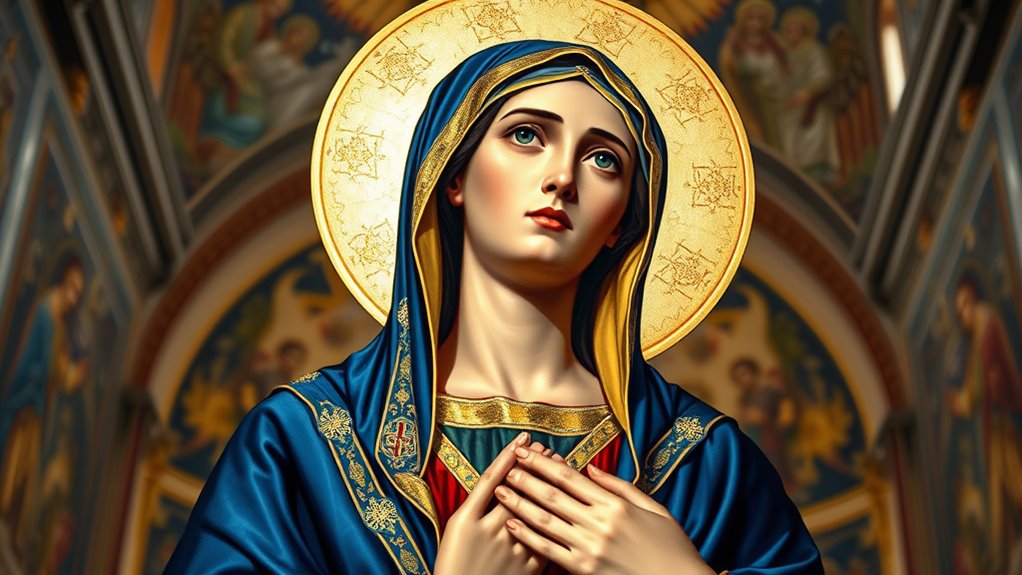
The Council of Ephesus, convened in 431 AD, played a pivotal role in shaping Christian doctrine by affirming the title of Mary as the “Mother of God.” During this council, church leaders debated and ultimately rejected the Nestorian heresy, which sought to divide Christ’s divine and human natures into separate persons. This decision strengthened Mary’s role in early Christianity and clarified her unique position in salvation history. It also marked a turning point in the evolution of Marian devotion, emphasizing her essential connection to Christ’s divine nature. By affirming Mary as Theotokos, the council helped solidify her significance in Christian faith, inspiring future Marian titles and fostering a deeper understanding of her place within the church. Furthermore, this theological affirmation contributed to the development of pop culture around Marian devotion, influencing art, hymns, and religious practices.
Understanding the Doctrine of the Hypostatic Union
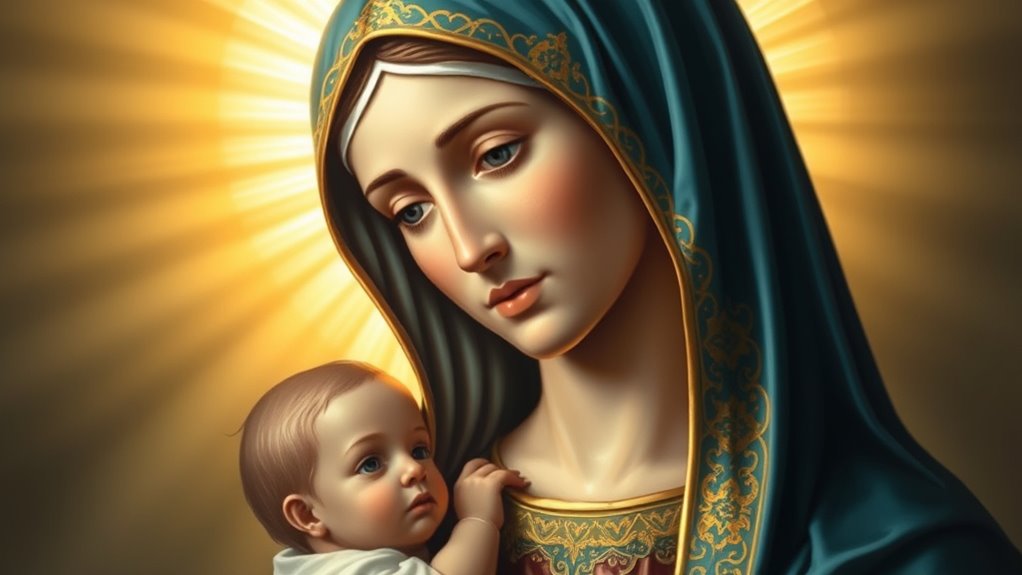
To grasp the significance of Mary being called the “Mother of God,” it’s essential to understand the doctrine of the hypostatic union. This doctrine explains how Jesus Christ is both fully divine and fully human, with these natures united in one person. Recognizing this union helps clarify key doctrinal implications, affirming Jesus’ true divinity. Marian symbolism often reflects this unity, emphasizing Mary’s unique role in salvation. When you see Marian symbols, they point to her profound connection to Christ’s divine nature. Understanding the hypostatic union deepens your appreciation of Mary’s title, highlighting her special relationship with Jesus and reinforcing her significance within Christian faith and doctrine. This doctrine serves as a foundation for many other Marian beliefs and devotions.
Mary’s Role in Salvation History
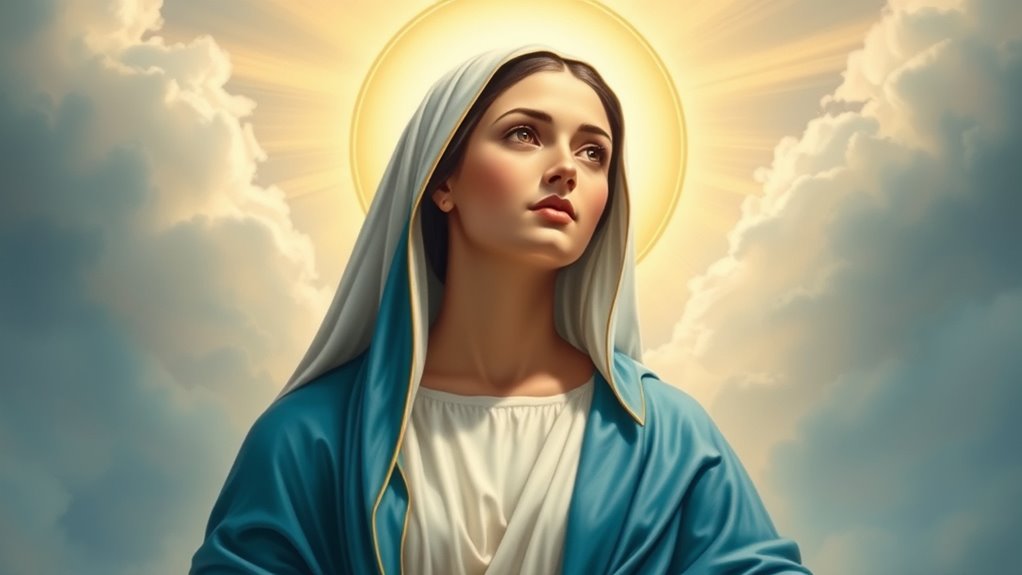
The doctrine of the hypostatic union highlights Jesus’ dual nature as both divine and human, emphasizing his central role in salvation. Mary’s motherhood is essential, as her yes allowed divine intervention to occur through her openness to God’s plan. She played a unique part in salvation history by:
- Carrying the Savior, fulfilling God’s promise of redemption
- Participating in divine intervention, enabling Jesus’ incarnation
- Modeling obedience and faith, guiding believers in trusting God’s plan
- Serving as the bridge between humanity and divine grace
- Her role is further supported by the versatility and reliability of conversion kits, which demonstrate the power of effective collaboration and integration.
Your recognition of Mary’s role helps you see her as more than just Jesus’ mother; she’s a key figure in God’s plan to save humanity. Her cooperation with divine intervention highlights her importance in salvation history.
Common Misconceptions and Clarifications
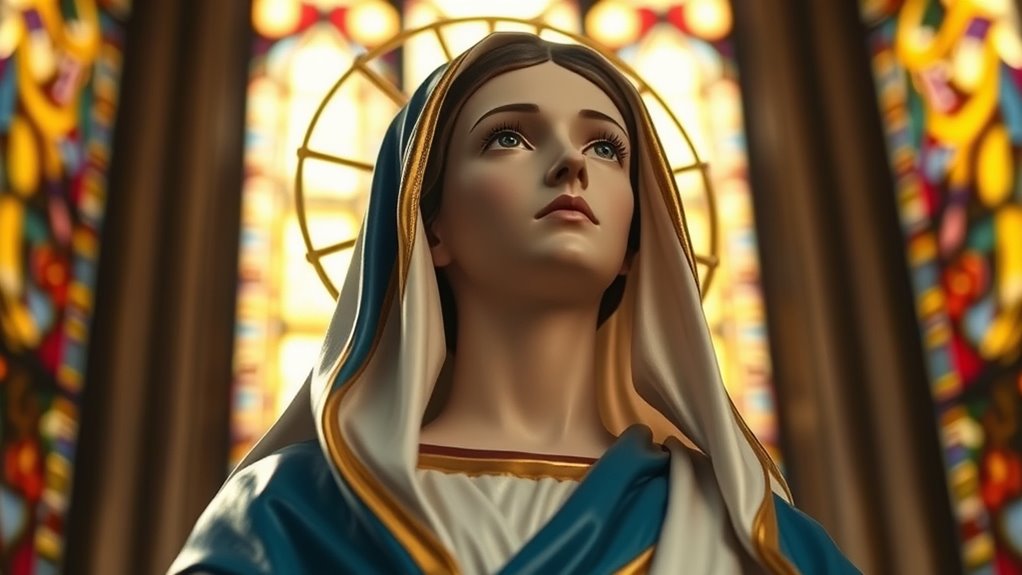
Many misconceptions surround why Mary is called the “Mother of God,” often leading to misunderstandings about her role and significance. Some believe this title suggests she is divine herself, but this is incorrect. It’s essential to recognize Marian symbolism, which emphasizes her unique role in salvation history without implying divinity. Modern interpretations sometimes downplay this title, seeing it as outdated or confusing, but it actually highlights her crucial participation in God’s plan. Clarifying these misconceptions helps you understand that calling Mary the “Mother of God” affirms Jesus’s divine nature and Mary’s special relationship with Him. This distinction prevents misunderstandings about her role, emphasizing her importance as the mother of Jesus Christ, the second person of the Holy Trinity.
The Title’s Importance in Catholic and Orthodox Traditions
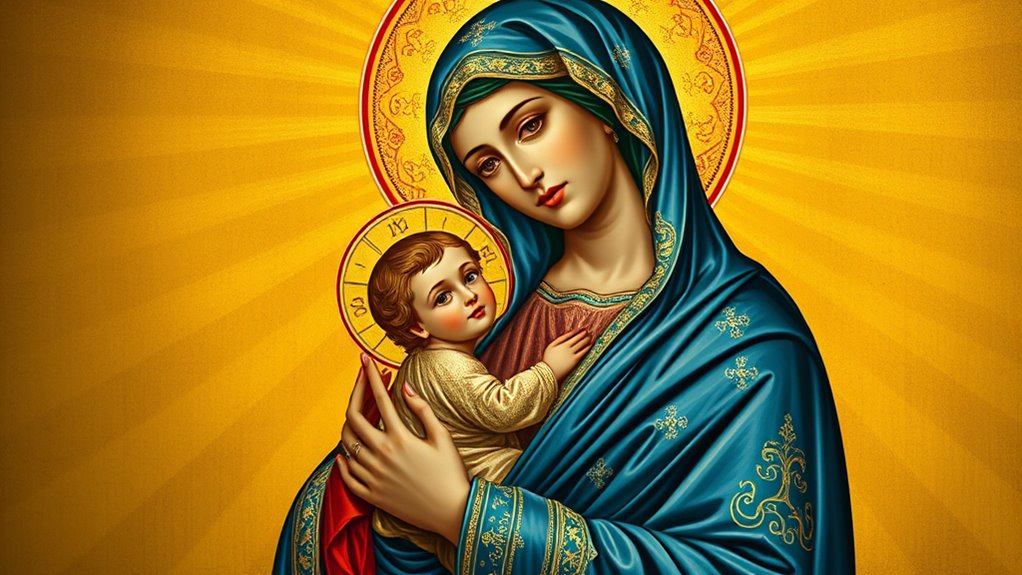
The title “Mother of God” holds deep significance in both Catholic and Orthodox traditions, shaping how believers understand Mary’s role. These titles influence theological debates and foster unity or dialogue among Christian communities. Understanding their importance helps you see how Marian devotion connects to broader faith principles. The recognition of Mary as the “Mother of God” also reflects the importance of Christological doctrines in shaping theological perspectives.
Significance of Marian Titles
Marian titles hold profound significance in both Catholic and Orthodox traditions because they encapsulate key aspects of Mary’s role in salvation history. These titles deepen your understanding of her marian symbolism and inspire devotional practices. They serve as reminders of her unique virtues and divine connection, guiding your spiritual journey. For example, titles like “Our Lady of Guadalupe” or “Queen of Heaven” evoke specific attributes and help you connect personally through prayer. Marian titles also influence your devotional practices by shaping the way you honor and seek her intercession. They reinforce her importance in faith and highlight her diverse roles in different cultural contexts. Additionally, understanding the energetic significance of these titles can enhance your personal connection and spiritual experience. Ultimately, these titles foster a stronger relationship with Mary and enrich your spiritual life.
Ecumenical and Theological Impact
Understanding the significance of Marian titles reveals their deep impact on both Catholic and Orthodox traditions. These titles shape ecumenical dialogue by highlighting shared beliefs while also sparking discussions about doctrinal differences. Modern reinterpretations of Mary’s titles foster greater unity, encouraging respectful conversations between faiths. They remind us that Mary’s role is central to Christology and theology, influencing how we view the nature of God and the church’s unity. By emphasizing her titles, you can see how they serve as a bridge for dialogue, promoting mutual understanding across Christian denominations. Additionally, exploring theological symbolism within Marian titles can deepen believers’ appreciation of her spiritual significance. This impact enhances collaboration, helping believers appreciate both common ground and theological diversity, ultimately enriching the ongoing quest for unity within Christian communities worldwide.
How the Title Influences Christian Devotion and Worship
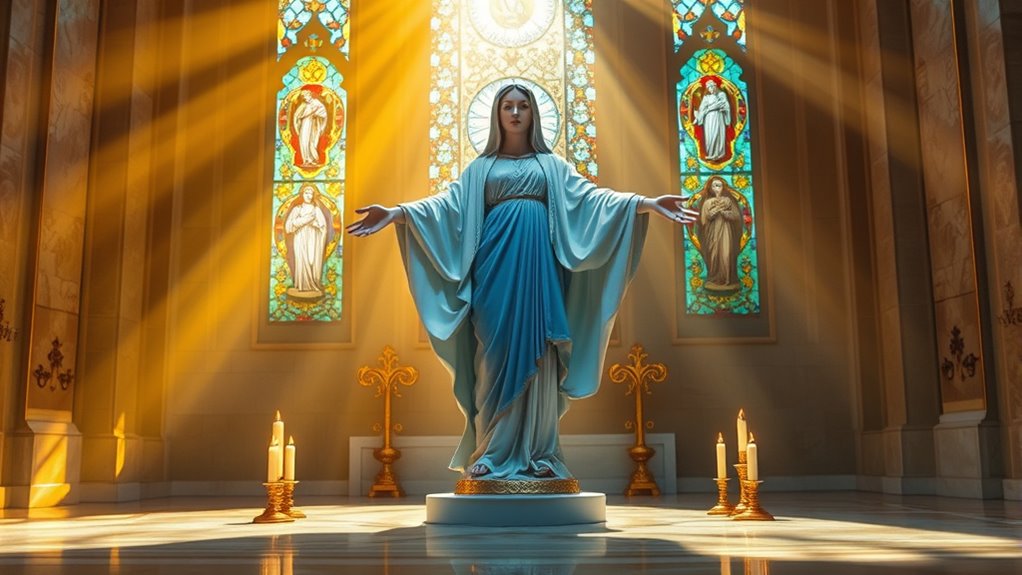
Referring to Mary as the “Mother of God” deepens your sense of her essential role in Christian devotion and worship. This title enhances Marian symbolism, highlighting her unique connection to Christ’s divine nature. It influences devotional practices by inspiring prayers, hymns, and acts of veneration that honor her as the mother of Jesus and, by extension, the church. When you focus on this title, you’re reminded of her intercessory power and loving care. It also encourages you to see her as a model of faith and humility. Understanding the theological significance of this title strengthens personal prayer and intercession, further enriching your spiritual life. It also deepens understanding of Marian symbolism and reinforces the importance of devotional practices. Ultimately, it elevates the reverence and love toward Mary in worship.
Frequently Asked Questions
How Does the Title “Mother of God” Differ From “Mother of Jesus”?
You might think the title “Mother of God” just means Mary gave birth to Jesus, but it highlights Christological distinctions. It affirms Jesus as fully divine and human, emphasizing Mary’s role in salvation. “Mother of Jesus” focuses on her earthly motherhood, but “Mother of God” deepens Marian devotion by acknowledging her unique role in God’s incarnation. This distinction helps believers appreciate her importance in Christian faith and doctrine.
Why Was the Title Controversial Before the Council of Ephesus?
Before the Council of Ephesus, over 70% of theologians debated Mary’s title, causing significant confusion. You see, historical misunderstandings fueled theological debates, with some claiming calling Mary ‘Mother of God’ implied she was divine, which challenged existing beliefs. The controversy arose because people misunderstood the title, seeing it as undermining Jesus’ divine nature. The council clarified that Mary’s title affirms Jesus’ divine nature, easing centuries of misinterpretation.
How Does the Doctrine of the Hypostatic Union Relate to Mary’s Title?
The doctrine of the hypostatic union explains how Jesus is both fully divine and fully human, existing as one person with two natures. This relates to Mary’s divine motherhood because she gave birth to Jesus, who is God incarnate. By calling her the ‘Mother of God,’ we acknowledge her role in the hypostatic union, recognizing her as the mother of the divine person, Jesus Christ, in his full humanity and divinity.
Is the Title “Mother of God” Used in Non-Christian Religions?
In non-Christian religions, the title “Mother of God” isn’t used, but interfaith perspectives often explore similar maternal divine concepts rooted in ancient traditions. You’ll find that many cultures honor divine motherhood through symbols and stories, emphasizing spiritual nurturing and creation. While Christianity uniquely attributes this title to Mary, other faiths recognize maternal figures or gods in ways that reflect their own spiritual views, showing the universality of maternal reverence across diverse beliefs.
How Does This Title Influence Marian Prayers and Worship Practices?
This title profoundly shapes your Marian prayers and worship practices, transforming simple acts into powerful meditative reflections. It elevates Mary’s role in liturgical contexts, inspiring you to honor her as the ultimate intercessor and Mother of divine mysteries. When you pray, this title deepens your connection, urging you to see her as a guiding light through sacred moments, fostering devotion that feels as vast and profound as the universe itself.
Conclusion
So, when you reflect on why Mary is called the “Mother of God,” remember it’s not just a title—it’s a profound reminder of her unique role in salvation. Like a bridge connecting heaven and earth, this title reveals the mystery of Christ’s divine and human natures. Embrace this truth, and you’ll see how it deepens your understanding of faith, inspiring devotion that unites you closer to God’s divine plan for humanity.
Evergreen bestsellers Picks
bestsellers
As an affiliate, we earn on qualifying purchases.