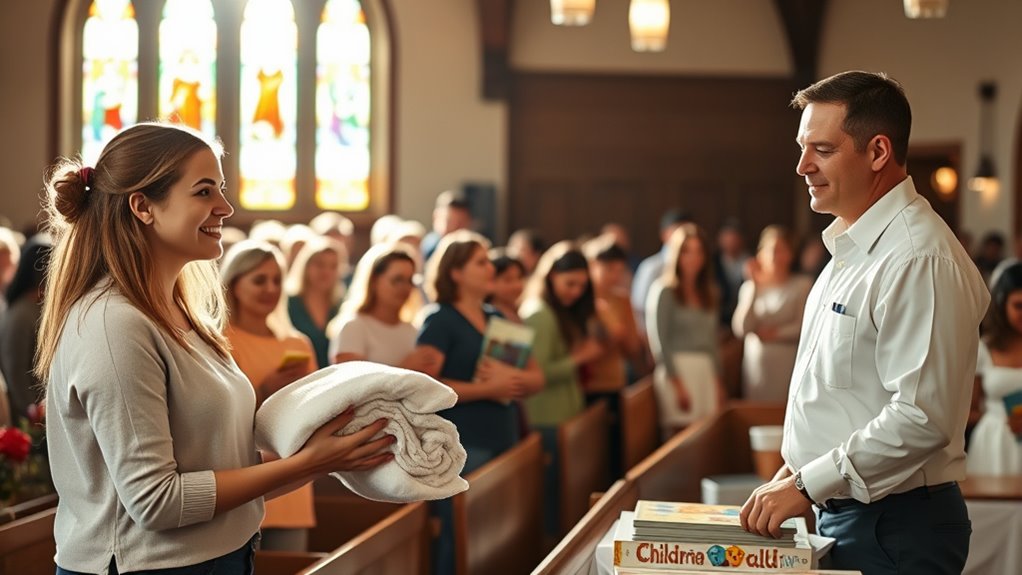

Serving in your church is a great way to uncover your spiritual gifts and make a meaningful impact. By volunteering in different roles, you can discover strengths like teaching, hospitality, or mercy, and align your service with what energizes you most. Active involvement helps you grow in faith, develop leadership skills, and deepen community bonds. Keep exploring different opportunities, and you’ll find how your unique gifts can truly uplift others and bring glory to God.
Key Takeaways
- Participate in church assessments or workshops designed to identify your spiritual gifts.
- Reflect on your passions and previous experiences to recognize areas where you feel most fulfilled.
- Seek guidance from church leaders or mentors to gain insights into your natural abilities.
- Experiment with different volunteer roles to discover where your skills and gifts align best.
- Pray for discernment and openness to understanding how your gifts can serve the church community.
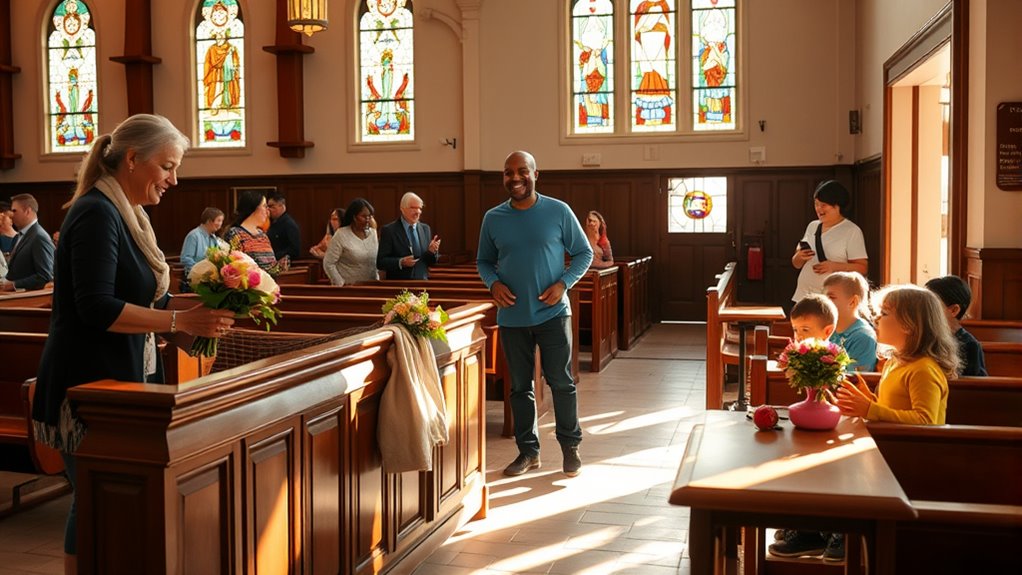
Serving in your church isn’t just about filling roles; it’s about actively participating in the community and using your gifts to make a difference. When you step into your church’s volunteer opportunities, you’re not only helping meet practical needs but also discovering how your unique abilities can serve others and glorify God. Whether it’s greeting visitors, leading small groups, or assisting with outreach programs, each act of service allows you to grow in faith and deepen your connection with the community. These volunteer opportunities are designed to help you identify your spiritual gifts, empowering you to serve more intentionally and effectively.
Serving in your church helps you grow in faith while making a meaningful difference through your unique gifts.
Engaging in church service also plays a crucial role in leadership development. As you take on new responsibilities, you learn how to lead with humility, compassion, and confidence. Serving often involves guiding others, making decisions, and managing projects—all of which sharpen your leadership skills. Over time, you may find yourself stepping into more significant roles, such as ministry coordinator or small group leader, where your influence can inspire and uplift others. The church environment provides a safe space to develop these skills, helping you grow both personally and spiritually.
Recognizing your spiritual gifts is key to maximizing your impact. Many churches offer assessments or workshops to help you understand where your strengths lie—whether it’s teaching, mercy, hospitality, or administration. Once you identify these gifts, you can seek out specific volunteer opportunities that align with them. This alignment ensures that your service feels fulfilling and authentic, and it makes your contributions more effective. When you serve in a way that resonates with your gifts, you’re more likely to experience joy and a sense of purpose, which fuels your ongoing commitment.
Furthermore, serving in your church isn’t a one-time act but a continual journey of growth. As you serve, you’ll face challenges that stretch your abilities and test your faith. These experiences are opportunities for leadership development, helping you become more resilient, patient, and empathetic. The support of fellow volunteers and leaders encourages you to step outside your comfort zone and develop new skills. Over time, your service becomes a catalyst for spiritual maturity, shaping you into a more dedicated, compassionate follower of Christ.
Additionally, understanding market trends in your community can help you tailor your service to meet evolving needs and engage more effectively with others.
Ultimately, serving in your church allows you to use your gifts in meaningful ways that benefit others and bring glory to God. It’s a dynamic process—discovery, growth, and leadership—that transforms not just the church community but also your own spiritual journey. By actively engaging in volunteer opportunities, you participate in something bigger than yourself, making a lasting impact on those around you.

Wyspell Large Witchcraft Kit – 77 PCS – Altar Spell Set – Witchy Gifts
- Complete Witchcraft Altar Kit: Includes herbs, crystals, candles, and tools
- Ideal Starter Kit for Beginners: Includes supplies, tools, and guidebook
- Authentic Natural Materials: Dried herbs, genuine stones, and high-quality candles
As an affiliate, we earn on qualifying purchases.
As an affiliate, we earn on qualifying purchases.
Frequently Asked Questions
How Can I Identify My Specific Spiritual Gifts?
To identify your specific spiritual gifts, start by taking a spiritual gift assessment, which helps you recognize your spiritual talents. Reflect on activities that energize and fulfill you, and seek feedback from trusted church members or leaders. Prayerfully ask for guidance, paying attention to where you feel most effective and passionate. This process will help you pinpoint your unique spiritual gifts, empowering you to serve with confidence and purpose.
What if I Feel Unqualified to Serve?
Feeling unqualified? Maybe you’re just the perfect candidate for personal growth and faith development. You don’t need a cape or a fancy title—serving begins with a willing heart, not perfection. Trust that God equips those who step forward, regardless of doubts. Embrace your imperfections; they’re part of your journey. Your willingness to serve, despite feeling unqualified, shows true faith and opens doors for spiritual growth.
How Do I Balance Serving With Personal Life?
To balance serving with your personal life, prioritize your time management by scheduling dedicated moments for church activities and personal needs. Set clear boundaries to prevent overcommitment, ensuring you don’t sacrifice rest or family time. Remember, serving is important, but your well-being matters too. Regularly evaluate your commitments and adjust as needed to maintain harmony between your spiritual service and personal life.
Can My Spiritual Gifts Change Over Time?
Yes, your spiritual gifts can change over time as you experience spiritual growth and engage in gift development. You might find that new talents emerge or that your existing gifts evolve, reflecting your personal faith journey. Stay open to God’s guidance, and regularly seek opportunities to serve and grow. This ongoing process helps you better understand your gifts and use them effectively to serve others and deepen your faith.
What Are Common Misconceptions About Spiritual Gifts?
Spiritual gifts aren’t magic wands; many believe they’re only for certain people, but the truth is everyone can grow in spiritual maturity. A common misconception is that gift humility means downplaying your talents, but it’s actually recognizing your gifts’ source and using them to serve. Don’t assume your gifts are fixed—God can refine and expand them over time, transforming your service into a true reflection of His love.
Conclusion
Just as a single star shines brightest in the night sky, your unique gifts illuminate your church community. When you serve, you’re like a essential thread in a grand tapestry, each adding strength and beauty. Embrace your role, for together, these threads weave a radiant fabric of faith and love. Your spiritual gifts are the compass guiding you to your divine purpose, transforming your service into a masterpiece that reflects God’s grace through you.