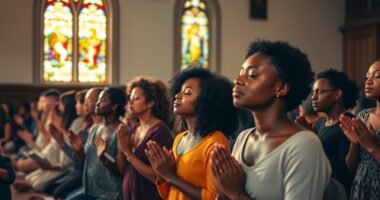

Understanding fasting as a spiritual discipline means recognizing it as a way to deepen your connection with the divine and refine your inner self. It is an act of obedience, demonstrating trust and surrender to higher principles, while enhancing prayer and inner reflection. Fasting cultivates patience, self-control, and resilience, helping you focus on spiritual growth over temporary pleasures. If you choose to explore further, you’ll discover how mindfulness and intentional practice can amplify its transformative power.

Turn your quiet moments into listening time
- Thousands of audiobooks, podcasts and originals
- Listen on your phone, tablet or Echo — also offline
- Cancel anytime
Key Takeaways
- Fasting deepens spiritual connection by focusing attention on divine growth and inner reflection.
- It serves as an act of obedience, demonstrating trust and surrender to divine will.
- Fasting enhances prayer and listening skills, fostering sincere communication with the divine.
- It cultivates resilience, patience, and self-control, supporting inner renewal and spiritual discipline.
- Incorporating mindfulness during fasting amplifies awareness, aligning intentions with divine purpose.

Fasting has long been recognized as a powerful spiritual discipline that deepens your connection with the divine and refines your inner self. When you engage in prayer and fasting, you set aside physical needs to focus more intently on your spiritual growth. This intentional act helps you quiet your mind and open your heart to divine guidance. Prayer and fasting often go hand in hand, reinforcing your faith and fostering a deeper sense of surrender. As you abstain from food or other worldly distractions, you create space for divine insight to enter your life. This process isn’t just about denying yourself; it’s about aligning your spirit with God’s purpose and strengthening your relationship with Him.
Fasting deepens your spiritual connection by aligning your heart with divine purpose and fostering surrender and insight.
Fasting and obedience are closely linked in this spiritual practice. When you choose to fast, you demonstrate your willingness to obey divine commandments or spiritual principles. Obedience isn’t about duty but about trust—trust that your commitment to fasting will draw you closer to spiritual truth. It’s a conscious act of surrender, affirming that your focus is on divine will rather than personal desires. Through fasting and obedience, you learn patience, humility, and reliance on God’s timing. The discipline of fasting helps you develop self-control, which can extend into other areas of your life, fostering a sense of obedience to higher principles rather than fleeting impulses.
As you practice fasting, you may notice how your prayer life deepens. Without the constant distraction of food or worldly concerns, your prayers become more sincere and focused. You start to listen more intently and hear divine responses more clearly. Fasting becomes a form of active worship, a way to show your devotion and commitment. It’s not just about the act itself but about the transformation it brings. Over time, fasting and obedience help you cultivate resilience, patience, and a heightened awareness of your spiritual needs. You begin to see fasting not as a hardship but as a gift—an opportunity to draw nearer to the divine and to understand your true self better.
Additionally, incorporating mindfulness practices during fasting can enhance your spiritual experience by helping you stay present and centered in your intentions. Ultimately, fasting as a spiritual discipline is about more than abstaining; it’s about aligning your will with divine purpose through prayer and obedience. This practice transforms your perspective, helping you prioritize your spiritual journey above temporary pleasures. As you learn to surrender your desires and listen more closely to divine guidance, fasting becomes a powerful tool for inner renewal and spiritual growth.
spiritual fasting prayer journal
As an affiliate, we earn on qualifying purchases.
As an affiliate, we earn on qualifying purchases.
Frequently Asked Questions
Can Fasting Be Harmful to My Health?
Fasting can be harmful if you have health risks or medical concerns like diabetes or heart issues. It might cause dizziness, weakness, or dehydration, especially if not done properly. Always consult your healthcare provider before starting a fast, and listen to your body’s signals. Proper planning and medical guidance help you prevent potential risks and ensure fasting benefits your health rather than harming it.
How Do I Start a Fasting Practice Safely?
To start fasting safely, begin with short fasting durations, like 12 hours, and gradually increase as your body adjusts. Plan your meals carefully to guarantee you’re getting enough nutrients and stay hydrated. Incorporate meal planning to avoid hunger and fatigue. Listen to your body, and consult a healthcare professional if you have health concerns. Consistency and patience will help you build a sustainable fasting practice.
What Are Common Spiritual Benefits of Fasting?
Fasting helps you experience mindful reflection and inner purification, deepening your spiritual connection. As you fast, you become more aware of your thoughts and feelings, fostering clarity and focus. It also encourages humility and gratitude, helping you detach from material desires. Many find that fasting clears mental fog, strengthens faith, and cultivates patience. These spiritual benefits support your growth and bring a sense of peace and renewed purpose.
How Long Should I Fast for Spiritual Growth?
You might worry about the perfect fasting duration for spiritual growth, but it varies for each person. Typically, a fast lasting 12 to 24 hours can deepen your spiritual connection, allowing reflection and clarity. Some find longer fasts, like 3 days, transformative, while others prefer shorter periods. Listen to your body and seek guidance, knowing that consistent, intentional fasting, regardless of duration, nurtures spiritual growth.
Can Fasting Be Combined With Other Spiritual Disciplines?
Yes, you can definitely combine fasting with other spiritual disciplines like prayer, meditation, or scripture reading. Intermittent fasting and fasting rituals can deepen your spiritual experience when integrated thoughtfully. As you fast, focus on mindfulness and reflection, making your discipline more meaningful. By doing so, you strengthen your spiritual growth and create a holistic approach that nurtures your mind, body, and soul simultaneously.
Conclusion
By embracing fasting as a spiritual discipline, you open yourself to a deeper connection with the divine, much like tuning a guitar to perfect harmony. It’s not just about abstaining from food but about clearing the noise to hear the whisper of your soul. As you walk this path, remember that fasting shapes you into a vessel ready to receive grace and guidance, turning your spiritual journey into a symphony of renewed faith and purpose.
Halloween Picks
halloween
As an affiliate, we earn on qualifying purchases.