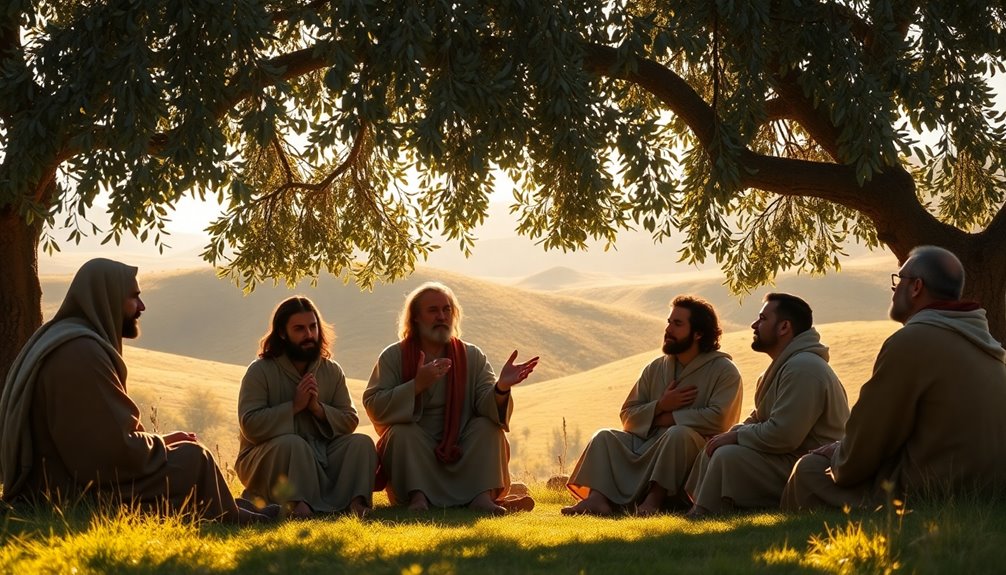

Jesus teaches that true riches come from spiritual values like love, charity, and humility, not material possessions. He encourages you to detach from earthly treasures, which are fleeting, and focus on building treasures in heaven through acts of kindness. Sharing what you have and prioritizing relationships over wealth reflect the true purpose of life. If you want to discover more about how these teachings can transform your perspective, there’s much more to explore.
Key Takeaways
- Jesus encourages detachment from material possessions, emphasizing their transient nature and the importance of storing treasures in heaven.
- He teaches that true wealth lies in love, charity, and spiritual growth rather than material accumulation.
- Jesus advocates sharing resources with those in need to foster generosity and social justice, reflecting compassion.
- He warns against greed and storing riches on earth, urging believers to prioritize relationships and spiritual fulfillment.
- Practical application involves examining one’s attitude toward possessions, practicing generosity, and living with a heart rooted in love.

Jesus’ teachings on wealth and possessions challenge you to reconsider what truly matters in life. He urges you to look beyond material possessions and reflect on the purpose they serve. Central to his message is the idea of material detachment—recognizing that possessions are transient and should not define your worth or happiness. Instead of clinging tightly to wealth, Jesus encourages a mindset of generosity and charity, emphasizing that true riches are found in acts of kindness and love. His teachings push you to evaluate whether your pursuits are aligned with spiritual values or driven solely by material gain.
Jesus teaches that true worth lies beyond possessions, urging generosity and focusing on eternal, spiritual values.
One of Jesus’ most striking calls is for wealth redistribution. He advocates that if you have extra resources, you should share with those in need. This isn’t just about charity but about breaking the grip of greed and self-interest. When you practice wealth redistribution, you participate in creating a more equitable society and demonstrate the love and compassion Jesus models. It’s a radical challenge to the accumulation of wealth for personal security, urging you to see possessions as tools for service rather than status symbols. This perspective shifts your focus from personal gain to collective well-being, embodying Jesus’ emphasis on caring for the poor and marginalized.
Jesus also emphasizes that material possessions are temporary and can distract you from spiritual pursuits. He warns against storing up treasures on earth, where moth and rust destroy, and instead advises investing in treasures in heaven—actions rooted in love, charity, and humility. This teaching calls you to detach from materialism, recognizing that true fulfillment comes from relationships and spiritual growth, not possessions. When you let go of attachments to wealth, you open space for genuine generosity and deepen your connection with others. This doesn’t mean rejecting wealth outright but prioritizing your heart’s focus toward eternal values rather than fleeting comforts. Cultivating a spiritual mindset helps you resist the temptation of materialism and focus on what truly endures.
In practical terms, Jesus’ teachings challenge you to examine your attitude toward money and possessions daily. Are you using your resources to serve others? Do you hold tightly to your wealth out of fear or pride? Or are you practicing material detachment, knowing that your true identity isn’t rooted in possessions but in your relationship with God and others? Embracing these teachings might require sacrifices, but they lead to a richer, more meaningful life. Jesus’s message calls you to reconsider your priorities, urging you to live generously and with a heart rooted in love—not greed or materialism.

Amcortn Prayer Request Box – Offering Boxes for Church, Cross Offering Box Collection Donation Charity Fundraising Box
Secure Lock: To ensure confidentiality, our church offering box is outfitted with secure lock. Two keys are included…
As an affiliate, we earn on qualifying purchases.
As an affiliate, we earn on qualifying purchases.
Frequently Asked Questions
How Did Jesus’ Teachings Influence Early Christian Views on Wealth?
You see, Jesus’ teachings shaped early Christian views on wealth by emphasizing wealth ethics that prioritize generosity and compassion. He encouraged a poverty attitude, urging followers to detach from material possessions and focus on spiritual growth. This influenced how early Christians viewed wealth—not as a sign of divine favor but as something to be managed responsibly, with an emphasis on helping others and fostering humility.
Are There Modern Interpretations of Jesus’ Teachings on Possessions?
Yes, modern interpretations of Jesus’ teachings emphasize wealth mindfulness and possessions ethics. You’re encouraged to reflect on how your possessions impact others and prioritize spiritual over material wealth. Many believe that practicing humility and generosity aligns with his message, urging you to use your resources responsibly. These perspectives challenge you to evaluate your relationship with possessions, fostering a more ethical approach that promotes compassion and social justice in today’s society.
How Do Jesus’ Teachings Compare With Other Religious Views on Wealth?
Like the parable of the talents, Jesus’ teachings emphasize that wealth isn’t just about accumulation but about responsible stewardship and spiritual growth. Compared to other religious views, which may see wealth as a blessing or test, Jesus advocates for detachment from materialism, highlighting that true wealth lies in spiritual richness. You’re encouraged to balance material pursuits with a focus on love, humility, and generosity, fostering material spirituality over greed.
What Are Practical Ways to Apply Jesus’ Teachings on Possessions Today?
To apply Jesus’ teachings today, practice simple giving by regularly donating to those in need, and focus on wealth management that prioritizes generosity over accumulation. You can set aside a portion of your income for charitable causes and avoid material excess. Embrace a mindset of stewardship, using your possessions responsibly to serve others, demonstrating humility and compassion in your daily life. This aligns your actions with Jesus’ call to live generously.
Did Jesus Endorse Charity or Redistribution of Wealth Explicitly?
Did Jesus explicitly endorse charity or redistribution of wealth? While he didn’t directly command wealth redistribution, over 60% of his parables highlight the importance of caring for the poor. He encourages material detachment and generosity, emphasizing that true wealth lies in spiritual riches. You’re called to practice charity, reflecting his teachings by prioritizing compassion over wealth accumulation, fostering a more equitable and compassionate society.

Official Spiral Bible® The Bible in a Year | 52 Week Guided Bible Study & Daily Reading Plan | Spiritual Companion & Journal for Adults & Teens | 8.5" x 11" Notebook
THE ORIGINAL SPIRAL BIBLE THE TRUE BIBLE IN A YEAR EDITION: This is the original edition of Spiral…
As an affiliate, we earn on qualifying purchases.
As an affiliate, we earn on qualifying purchases.
Conclusion
You might find that Jesus’ teachings challenge the common belief that wealth equates to success. Instead, he emphasizes that true riches come from spiritual wealth and generosity. Some scholars suggest that Jesus’ focus on possessions was a response to the materialism of his time, aiming to redirect hearts toward eternal values. By embracing humility and trusting in God’s provision, you can experience a richer, more meaningful life beyond material wealth.

Knowing Jesus as God: A 10-Session Bible Study on the Gospel of John―For Individual or Group Study ―Includes Daily Readings, Teachings, Questions, … (The Bible Recap Knowing Jesus Series)
As an affiliate, we earn on qualifying purchases.
As an affiliate, we earn on qualifying purchases.

Hirten Saint Nicholas Laminated Catholic Prayer Holy Card, Single Card – Patron of Children & Gift-Giving Pocket Devotional for Hope & Generosity
Design and Style; Beautified artwork by world renowned Fratelli Bonnella, laminated yellow background card and prayer on the…
As an affiliate, we earn on qualifying purchases.
As an affiliate, we earn on qualifying purchases.